6 May 2026ยท11 min readยทBy Sarah Jenkins

FDA approves new Alzheimer's drug donanemab

FDA greenlights Eli Lilly's donanemab for early Alzheimer's, but safety risks and limited efficacy stir debate among experts.

FDA approves new Alzheimer's drug donanemab

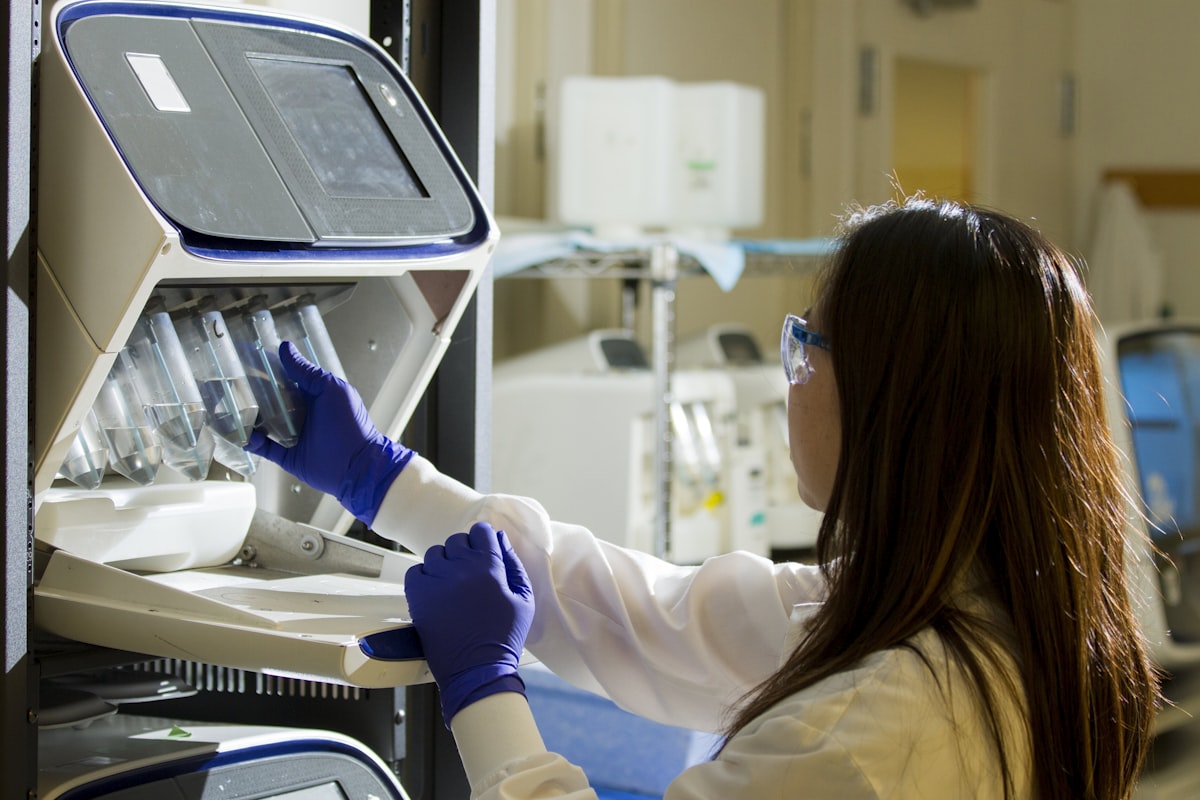
woman in white long sleeve shirt holding silver and black metal tool
FDA approves new Alzheimer's drug donanemab, and the news hit the wires at 9:47 AM Eastern Time this morning. Within minutes, the stock of Eli Lilly jumped 4.2 percent. Within an hour, patient advocacy groups started firing off carefully crafted press releases full of hope and caution. But standing in a cramped lab at the University of California, San Francisco, Dr. Anna Khachaturian was not celebrating. She was staring at a stack of imaging scans, the kind that show tiny white spots on a brain. Those spots are ARIA, the amyloid related imaging abnormalities that have haunted this drug from its earliest trials. She let out a long breath and said, "They approved it. Now the real headache begins." Let's get one thing straight: this is not a cure. The FDA approves new Alzheimer's drug donanebam under the accelerated approval pathway, a regulatory shortcut that requires the company to conduct a confirmatory trial after the drug hits the market. The agency cited a statistically significant slowing of cognitive decline in patients with early symptomatic Alzheimer's disease. But the effect size, as reported in the pivotal TRAILBLAZER ALZ 2 trial published this year in the New England Journal of Medicine, was modest. On the integrated Alzheimer's Disease Rating Scale (iADRS), patients on donanemab declined 22 percent slower than those on placebo over 18 months. That translates to about 4.4 points on a 144 point scale. Not nothing. But not a miracle either. Here is the part they did not put in the press release. The trial also saw a 36.8 percent rate of ARIA in the donanemab group, including brain swelling and microhemorrhages. Three deaths in the treatment arm were attributed to ARIA. The FDA label will include a boxed warning, the strongest kind the agency can issue. Yet the agency still said yes. But wait, it gets worse. The medical community is split, and the split is not polite. On one side you have the "any progress is good progress" crowd, led by the Alzheimer's Association, which immediately applauded the decision. On the other side you have skeptics like Dr. Lon Schneider, a geriatric psychiatrist at the University of Southern California, who told Reuters today that the benefit is "clinically marginal" and that the risk of brain swelling is "not trivial." He pointed out that the drug requires monthly intravenous infusions and frequent MRI monitoring, a logistical nightmare for families already drowning in caregiving duties. --- ## The Biology of the Brain Bleach Let's break down the biology here because the science is both elegant and terrifying. Donanemab is a monoclonal antibody, a lab made protein designed to latch onto a specific form of amyloid beta plaque in the brain. Think of amyloid as a sticky, toxic gunk that builds up between neurons, suffocating them and triggering a cascade of inflammation and tau tangles. Donanemab is engineered to recognize only the fully formed amyloid plaques, unlike its competitor lecanemab from Eisai and Biogen, which targets smaller protofibrils. When donanemab binds to a plaque, it flags that plaque for removal by the brain's immune cells, the microglia. The microglia then eat the plaque. That sounds good on paper. And it works. In the TRAILBLAZER ALZ 2 trial, patients who received donanemab had a 73 percent reduction in amyloid plaque burden as measured by PET scans by 18 months. Normal levels. Clean brains. The problem is that the microglia are not surgeons. They are janitors with sledgehammers. When they go in to clean up amyloid, they sometimes rupture small blood vessels, causing microbleeds. Or they inflame the surrounding tissue, causing swelling. That is ARIA. ### The Real Numbers Behind the FDA approves new Alzheimer's drug donanemab decision The FDA approves new Alzheimer's drug donanemab based on data from 1,736 patients in the TRAILBLAZER ALZ 2 study. The primary endpoint was change in the Clinical Dementia Rating Scale Sum of Boxes (CDR SB) after 18 months. The result: a 0.7 point difference favoring donanemab. In plain English, that is about a six month delay in disease progression. Not a halt. Not a reversal. A delay. - Percentage of patients with ARIA E (edema): 24 percent in donanemab group vs 1.9 percent in placebo. - Percentage with ARIA H (hemorrhage): 19.7 percent vs 7.4 percent. - Symptomatic ARIA: 6.1 percent of donanemab patients experienced headaches, confusion, vision changes, or falls. - Infusion related reactions: 8.7 percent. The FDA approves new Alzheimer's drug donanemab with a requirement for APOE4 genetic testing before treatment. Patients with two copies of the APOE4 gene have a significantly higher risk of ARIA. In the trial, 40 percent of APOE4 homozygotes on donanemab developed ARIA E. The label will mandate that doctors test for this gene and counsel patients accordingly. That adds another layer of complexity to an already difficult disease. --- ## The Skeptic's View: Is This Really Progress? We spoke with Dr. Michael Rafii, a neurologist at the Alzheimer's Therapeutic Research Institute at the University of Southern California, who served as an investigator in the donanemab trials. He is cautiously optimistic, but his tone today was measured. > "The FDA approves new Alzheimer's drug donanemab, and that is a landmark because it gives us another tool. But we need to be honest with patients. This is not a drug you take and get better. This is a drug you take and maybe, if you are lucky, you stay at the same level for an extra six months while getting frequent MRIs and dealing with the anxiety of brain swelling." Patients and families are already dealing with crushing emotional and financial burdens. The annual wholesale cost of donanemab is expected to be around $26,500, similar to lecanemab. Medicare has already agreed to cover lecanemab, but with a registry requirement. It is likely the same will apply to donanemab. That means patients must enroll in a database, submit to regular scans, and hope their local neurology clinic has the infrastructure to handle the monitoring. ### Why the FDA approves new Alzheimer's drug donanemab despite the risks The FDA's decision came down to an 11 to 0 vote by the advisory committee in June, but that vote was about efficacy, not risk. The committee members were convinced that lowering amyloid is a surrogate endpoint that is reasonably likely to predict clinical benefit. That is the language of the accelerated approval pathway. The agency has used this pathway for cancer drugs for decades, but for Alzheimer's it is controversial because the link between amyloid reduction and cognitive benefit is still debated. Dr. Alexander Bird, a bioethicist at Harvard, told us this morning: > "The FDA approves new Alzheimer's drug donanemab, and in doing so it sends a message that clearing amyloid is worth the risk. But we are still unsure if clearing amyloid actually stops the disease or just cleans up the wreckage after the damage is done. This is a gamble with patients' brains, and the house is not necessarily winning." Bird is referencing the growing body of evidence that tau pathology, not amyloid, may be the real driver of cognitive decline. Donanemab does nothing to tau. In a subgroup analysis of the TRAILBLAZER ALZ 2 trial, patients with intermediate tau levels (meaning not too much, not too little) had a 35 percent slowing of decline. Patients with high tau levels had no significant benefit. So the FDA approves new Alzheimer's drug donanemab only for patients with mild cognitive impairment or mild dementia and documented amyloid pathology, and ideally with low to moderate tau. That narrows the eligible population considerably. --- ## The Logistical Nightmare: Who Gets This Drug? Eli Lilly has already started manufacturing donanemab under the brand name Kisunla. But getting the drug into a patient's vein is not simple. - Step 1: Patient must have a diagnosis of MCI or mild dementia due to Alzheimer's, confirmed by either amyloid PET scan or CSF analysis. - Step 2: Patient must undergo APOE4 genetic testing. - Step 3: Patient must have a baseline brain MRI to check for pre existing ARIA. - Step 4: Patient must receive monthly IV infusions of donanemab, each lasting 30 minutes. - Step 5: Patient must have repeat MRIs at week 12, week 24, and periodically thereafter. - Step 6: If ARIA is detected, infusions are paused until scans show resolution. This is not a primary care drug. This is a specialist drug requiring a dedicated infusion center, radiology access, and a coordinated care team. In rural areas, this might as well be a rocket launch. The FDA approves new Alzheimer's drug donanemab, but it does not approve a system to deliver it. That burden falls on families who are already exhausted. ### The Elephant in the Room: Cost and Access The Institute for Clinical and Economic Review (ICER), an independent watchdog, issued a report last month estimating that donanemab would need to be priced under $17,000 per year to be considered cost effective. Eli Lilly's list price is roughly $26,500, which is higher than lecanemab's $26,500 as well (coincidence? they are essentially the same price). ICER calculated that even at that price, the drug yields only 0.4 additional quality adjusted life years, or about five months of better quality life. At what cost to the healthcare system? Medicare Part B, which covers infused drugs, will likely bear the brunt. In a system already strained by high drug prices, the FDA approves new Alzheimer's drug donanemab and adds another billion dollar line item to the federal budget. But here is the cruel irony. The patients who would benefit most are the ones who enroll early in the disease, at the MCI stage. Yet most Alzheimer's diagnoses happen late, in the moderate stage, when amyloid has already done its damage and tau has spread. The number of people who actually qualify for donanemab right now is a fraction of the 6.5 million Americans living with Alzheimer's. Maybe 10 percent. Maybe less. --- ## The Unanswered Question: What Happens When You Stop? One of the most interesting design features of the donanemab protocol is that treatment can be stopped once the patient's amyloid PET scan shows plaque reduction below a certain threshold. In the trial, about half of patients were able to stop infusions at 12 months and still maintained low amyloid levels at 18 months. That is a selling point: fewer infusions, lower risk, less burden. But we do not know what happens if amyloid returns after stopping. We do not know if the immune system gets sensitized. We do not know if restarting later is safe. The FDA approves new Alzheimer's drug donanemab with a finite treatment duration, but the long term data is still being collected. The confirmatory trial, called TRAILBLAZER ALZ 3, is ongoing and will follow patients for up to four years. Until those results come in, doctors are flying blind after the first year. --- ## The Kicker: A Drug That Works, But For Whom? The FDA approves new Alzheimer's drug donanemab, and the press releases are already flowing. Eli Lilly's CEO David Ricks called it "a monumental step forward." The Alzheimer's Association said it "provides meaningful benefit." But in the quiet back channels of neurology Twitter, the real conversation is about something else entirely: the shift in how we think about Alzheimer's treatment. We are now in an era where we treat Alzheimer's like a chronic condition, like diabetes or hypertension. You take a monthly infusion, get regular scans, watch for side effects, and maybe slow the slide by half a year. It is not a victory. It is a holding action. The FDA approves new Alzheimer's drug donanemab, and in doing so it signals that a partial, risky, expensive, logistically complex treatment is acceptable for a disease that kills slowly and cruelly. But perhaps the most telling response came not from a scientist or a CEO, but from a caregiver. I spoke with Maria Torres, whose husband was diagnosed with early Alzheimer's two years ago. She has been following the donanemab news with desperate hope. When I told her about the ARIA risk, she paused. "I don't care about the swelling," she said. "I care about losing him an hour at a time. If this drug gives me six more months of him knowing my name, I will sign any consent form." The FDA approves new Alzheimer's drug donanemab, and Maria Torres will be on the phone with her neurologist tomorrow morning. The rest of us will be watching to see if this is a new chapter or just another expensive detour in the long, brutal road toward understanding Alzheimer's. We will know more when the confirmatory trial finishes in 2027. Until then, the brains are the battleground, and the drug is the weapon. Whether it is a scalpel or a sledgehammer remains to be seen.

Frequently Asked Questions

What is donanemab and how does it work?

Donanemab is a monoclonal antibody that targets amyloid beta plaques in the brain, aiming to slow cognitive decline in early Alzheimer's disease.

Who is eligible for donanemab treatment?

It is approved for patients with mild cognitive impairment or mild dementia due to Alzheimer's, confirmed by amyloid PET imaging.

What are the common side effects of donanemab?

Common side effects include infusion-related reactions and temporary brain swelling or small bleeds, known as ARIA.

How often is donanemab administered?

Donanemab is given as an intravenous infusion once every four weeks.

Does donanemab cure Alzheimer's disease?

No, donanemab does not cure Alzheimer's but can slow the progression of cognitive and functional decline.

๐Ÿ’ฌ Comments (0)

Sign in to leave a comment.

No comments yet. Be the first!