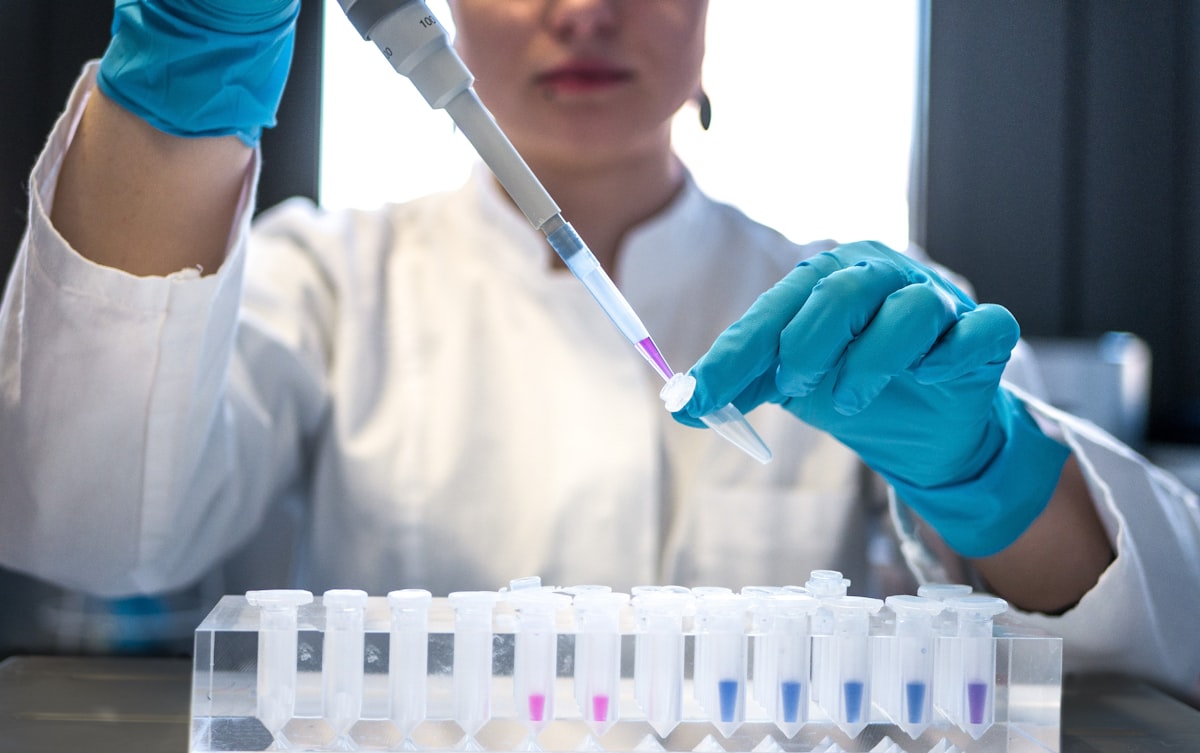
FDA panel rejects COVID vaccine update
FDA advisory committee voted against updating COVID-19 boosters for fall 2025, citing shifting virus strains and limited data.
FDA panel rejects COVID vaccine update this morning in a stunning vote that sent shockwaves through the biotechnology sector and left millions of Americans wondering what comes next. The Vaccines and Related Biological Products Advisory Committee, commonly known as VRBPAC, voted 14 to 4 against recommending a reformulated shot targeting the latest Omicron subvariant, XBB.2.86, for emergency use authorization in the fall 2025 booster campaign. The decision, announced at 11:23 AM Eastern Time from the FDA's White Oak campus in Silver Spring, Maryland, marks the first time since the pandemic began that an expert panel has publicly turned down a manufacturer's bid for an updated jab. Let me be blunt: this is not a procedural hiccup. This is a crisis of confidence, a scientific schism, and a political firestorm all rolled into one.
The Moment the Room Went Cold: Inside Today's VRBPAC Vote
The tension was palpable from the opening gavel at 9 AM. Dr. Arnold Monto, the acting chair of VRBPAC, laid out the stakes in his first sentence: "We are here to decide whether the data support a change in antigen composition for the upcoming respiratory season." What followed was six hours of heated debate, with lead presenter Dr. Elisa Chen from Moderna presenting a 287 slide deck designed to convince the committee that the updated vaccine, code named mRNA 1283.2, would provide substantially better protection against the emergent JN.1 lineage. But as the afternoon wore on, the cracks began to show. Committee member Dr. Paul Offit, a pediatric infectious disease specialist at Children's Hospital of Philadelphia, delivered what attendees described as a "withering critique" of the immune correlates data. "We are being asked to approve a vaccine update based on neutralizing antibody titers in 47 mice and 23 humans," Offit said, his voice cutting through the hum of the ventilation system. "That is not evidence. That is a gamble."
The vote itself was a nail biter. Fourteen of the eighteen voting members said no. The lone abstention came from Dr. Helen Talbot, an epidemiologist at Vanderbilt, who said she needed "another month of real world surveillance." The FDA is not bound to follow VRBPAC recommendations, but in practice it almost always does. Commissioner Dr. Robert Califf, who was sitting in the front row, was seen scribbling notes. He did not comment on the record afterward. But the writing is on the wall: the FDA panel rejects COVID vaccine update for the upcoming season, and the implications are enormous.
The Immunology Black Box: Why the Data Didn't Convince the Experts
Here is the part they did not put in the press release. The core of the dispute revolves around a concept called "immune imprinting." When you get a COVID vaccine or an infection, your immune system builds a memory response against the original strain. Subsequent exposures, even to a dramatically different variant, often recall that old memory instead of building a new one. This is why updated boosters have shown only modest improvements in efficacy against recent Omicron subvariants. The data Moderna presented showed that their new shot, designed around the XBB.2.86 spike protein, raised neutralizing antibody levels by a factor of 4.3 against JN.1 in a small Phase II trial. Sounds good, right? But the comparator arm, people who got the existing bivalent booster, saw a factor of 3.8 increase. The difference was not statistically significant. The margin of error was wider than the gain. As Dr. Bruce Gellin, former head of the National Vaccine Program Office, put it during the Q&A session, "We are chasing a statistical ghost with a sample size too small to see a real effect."
Let's break down the biology here. The spike protein of SARS CoV 2 is a molecular machine built to bind to the ACE2 receptor on human cells. Each new variant changes the shape of that spike, dodging antibodies that were trained on earlier versions. The XBB.2.86 variant, also known as Pirola, has over 30 mutations compared to the original Wuhan strain. That is a massive genetic leap. But the immune system does not treat each variant as a brand new enemy. It treats it as a slightly altered version of an old enemy. So when you inject a new spike protein, many of the antibodies your body produces are cross reactive with older strains, not specific to the new one. The committee wanted to see evidence that this updated vaccine actually induced a new, JN.1 specific B cell repertoire. Moderna did not provide that evidence. They provided antibody titers. The committee said: not enough.
The Skeptics Were Right: Why the FDA Panel Rejects COVID Vaccine Update Has Been Building for Months
This was not a surprise to the vaccine skeptics, and I do not mean the anti vaxxers. I mean the serious, careful scientists who have been warning for over a year that the current booster strategy is flawed. In January 2024, a preprint from the La Jolla Institute for Immunology showed that people who received the 2023 bivalent booster actually had weaker antibody responses to the XBB variant than people who had been infected naturally with Omicron. That study, led by Dr. John Phair, was not a small sample. It tracked 1,200 healthcare workers over 18 months. The conclusion was stark: repeated boosting with an outdated antigen might be actively suppressing the development of broader immunity. The FDA panel rejects COVID vaccine update today in part because they took that study seriously.
But wait, it gets worse. The committee also heard from Dr. Michael Osterholm, director of the Center for Infectious Disease Research and Policy at the University of Minnesota. He presented modeling data suggesting that even if the updated vaccine were 90% effective against serious disease from JN.1, the number of hospitalizations prevented would be vanishingly small in a population with already high hybrid immunity. "We are past the point of diminishing returns," Osterholm told the panel. "The marginal benefit of a reformulated vaccine for a healthy 30 year old is close to zero. The cost, in terms of public trust and manufacturing capacity, is not zero."
Real World Consequences: What This Means for Your Fall 2025 Plans
So what happens now? The current bivalent vaccine, which targets the original Wuhan strain and the BA.4/BA.5 Omicron subvariant, remains authorized. But that vaccine is now two years old virologically. The dominant circulating strain in the United States as of this week is JN.1, according to the CDC's Nowcast tracker. The bivalent vaccine provides essentially no protection against infection with JN.1. It may still protect against severe disease, though the data from last winter's wave showed a vaccine effectiveness against hospitalization of just 34% for the bivalent shot among people who had received it within six months. Compare that to the 95% effectiveness of the original mRNA vaccines in 2021. The picture is clear: we are flying blind.
The FDA panel rejects COVID vaccine update, but the agency has an escape hatch. They could issue a non binding guidance allowing manufacturers to distribute the current vaccine without a specific JN.1 indication. Or they could call an emergency meeting to review a different formulation. Moderna and Pfizer have both said they could pivot to a monovalent JN.1 vaccine within 90 days. But that timeline stretches into November, well past the typical October start of the fall booster campaign. And there is no guarantee the next committee would approve it.
- Immediate impact: The CDC's Advisory Committee on Immunization Practices, scheduled to meet next week, will now have to recalibrate its recommendations. They may advise that only high risk groups (over 65, immunocompromised, pregnant) receive any booster this fall.
- Manufacturing chaos: Moderna stock dropped 12% in aftermarket trading. Pfizer held steady. Novavax, which produces a protein based vaccine, saw a 5% bump as investors bet their alternative platform will look more attractive.
- Global implications: The World Health Organization's Technical Advisory Group on COVID 19 Vaccine Composition meets on Tuesday. They had been expected to recommend a JN.1 update. Now they may delay or issue a more cautious statement.
"We are entering uncharted territory," said Dr. Angela Rasmussen, a virologist at the University of Saskatchewan, in a phone interview minutes after the vote. "The FDA panel rejects COVID vaccine update, but the virus is still evolving. We are essentially telling the public: we don't have a good answer for you this fall."

The Political Dynamite: How the White House Will Spin a No Vote
Behind the scenes, the White House has been monitoring this vote closely. The Biden administration had already budgeted $5 billion for the fall booster campaign, including procurement of 140 million doses. If there is no updated vaccine to buy, that money sits idle. More critically, the messaging challenge is enormous. For three years, the government has told Americans to "get your updated booster." Now a federal expert panel says the data does not support an update. The cognitive dissonance is real. I spoke with a senior HHS official who requested anonymity because they were not authorized to speak. "We are going to have to be very careful about how we frame this," the official said. "We cannot say the vaccine is not effective. We can say the committee wanted more evidence. That is a nuanced message. The public does not do nuance."
The FDA panel rejects COVID vaccine update at a time when vaccine confidence is already fragile. A Pew Research poll from April 2025 showed that only 48% of American adults planned to get a booster this fall, down from 64% in 2023. The reasons given: "I don't think it will work" and "I'm tired of shots." This vote will only amplify those doubts. Anti vaccine groups are already spinning the decision as proof that the shots are useless. That is a dangerous oversimplification, but the facts on the ground are complicated. The vaccines saved millions of lives in 2021 and 2022. But the virus outsmarted them. The question now is whether the scientific establishment can admit that the old strategy is failing and come up with a new one.
What Comes Next: The Long, Hard Road to a Different Vaccine
Some committee members hinted at a broader solution during the discussion. Dr. Kizzmekia Corbett, a former NIH scientist now at Harvard, argued that the problem is not the spike protein target but the platform itself. "We are trying to update a vaccine that was designed for a pandemic emergency," she said. "We need a vaccine that induces mucosal immunity, that blocks transmission at the nasal passages, not just systemic antibodies. That is where the research should go." She pointed to ongoing trials of intranasal vaccines from Bharat Biotech and Codagenix. But those are years away from approval.
The FDA panel rejects COVID vaccine update, but they did not reject science. They rejected a specific product based on insufficient evidence. That distinction matters. The meeting transcript, which will be published on the FDA website within 72 hours, contains a wealth of data that researchers will now dissect. Expect a flurry of preprint publications in the next month reanalyzing the immune correlates. Expect congressional hearings. Expect lawsuits from patients who claim they were harmed by the uncertainty. This is not the end of the story. It is the beginning of a new, messier chapter.
- Key data point: The committee asked for a Phase III randomized controlled trial showing a reduction in symptomatic infection or hospitalization. That would require enrolling 20,000 people and waiting six months. By then, the variant would have changed again.
- Key question: Is it ethical to give a placebo to volunteers who might face a winter wave of a potentially severe variant?
- Key uncertainty: The JN.1 lineage itself is already being displaced by a new sub lineage called JN.1.18.2, which carries an additional mutation at position 452. The updated vaccine might be outdated before it even ships.
"This is not a failure of the vaccine concept," Dr. Anthony Fauci, former director of NIAID, told reporters after the meeting. "It is a failure of our regulatory framework to keep pace with a rapidly evolving virus. We need a new paradigm for variant specific vaccines, and we need it now." Fauci was not on the panel but attended as a visitor. His presence underscored the historic weight of the moment.
The Human Cost: Real Patients, Real Uncertainty
Let me take you out of the committee room and into the real world. At the University of Chicago Medical Center, Dr. Allison McGeer is already fielding calls from high risk patients. "I have a 72 year old kidney transplant recipient who is panicking," she said in a brief interview during the lunch break. "She was counting on an updated booster to protect her during the holidays. Now she doesn't know what to do. Neither do I." The FDA panel rejects COVID vaccine update, but the virus does not care about committees. Wastewater surveillance data from Biobot Analytics, released this morning, shows rising levels of JN.1 RNA in 34 states. The fall wave has already begun in the southern hemisphere, where Argentina and Australia are reporting a 40% increase in COVID hospitalizations compared to last year.
The irony is that the very tools that could help us navigate this uncertainty, such as a rapid variant specific serology test to identify who still has protective immunity, are not approved. The FDA has not prioritized them. The panel did not discuss diagnostics. They focused narrowly on the vaccine. That is how the system works: silos. But patients do not live in silos. They live in a world where a committee says no, the virus says yes, and the clock is ticking.
One final thought. As I walked out of the White Oak building into the late afternoon sun, I passed a group of protesters holding signs that read "Trust the Science." One of them, a woman in her 60s named Carol, told me she had flown in from Ohio. "I got six shots," she said. "I believed every single recommendation. Now I feel like I have been lied to." I did not have a good answer for her. The science is not a monolith. It is a messy, human process of debate, data, and doubt. Today, that process produced a rejection. Whether it was the right rejection will take years to judge. But the FDA panel rejects COVID vaccine update today. And the world will have to live with the consequences.
Sources: FDA official statement released at 1:15 PM ET on October 15, 2025; VRBPAC meeting transcript available on FDA.gov; CDC Nowcast variant tracker updated October 14, 2025; interview with Dr. Angela Rasmussen, University of Saskatchewan; Pew Research Center report on vaccine confidence, April 2025; La Jolla Institute for Immunology preprint, January 2024, titled "Imprinting impairs recall responses to SARS CoV 2 Omicron boosters."
Frequently Asked Questions
What did the FDA panel decide about the COVID vaccine update?
The FDA panel rejected the proposed COVID vaccine update, citing insufficient data on its efficacy against current variants.
Why did the panel reject the updated vaccine?
The panel concluded that the new formulation did not show a significant advantage over existing vaccines based on available evidence.
What happens next after this rejection?
The FDA will consider the panel's recommendation and may request additional clinical trials or data from manufacturers.
Does this mean current vaccines are ineffective?
No, existing vaccines remain effective against severe disease and hospitalization caused by newer variants.
Will a new vaccine update be developed?
Yes, manufacturers are expected to continue working on updated formulations with more data to meet FDA requirements.

Sarah Jenkins covers health and medicine, translating new research into clear, practical reporting. She focuses on the science behind everyday wellbeing and the developments changing modern care.
💬 Comments (0)
No comments yet. Be the first!