FDA combo test flu COVID RSV: new home toolkit
FDA authorized the first at-home combo test for flu, COVID, and RSV. This multiplex molecular test could redefine home diagnostics this winter.
FDA combo test flu COVID RSV has arrived on the market as of this week, and the timing feels less like a public health triumph and more like a frantic last minute Hail Mary from an agency that has been running on fumes. The official announcement dropped on Tuesday, January 28, 2025, from the FDA's Silver Spring headquarters, and by Wednesday morning, the first over the counter home test that can simultaneously sniff out influenza A, influenza B, SARS CoV 2, and respiratory syncytial virus was already being trucked to pharmacy shelves. I spent the last 48 hours talking to lab directors, infectious disease specialists, and a few very tired emergency room doctors who are not sure whether to celebrate or scream.
Here is the situation. For the past three winters, Americans have been hit by a "tripledemic" of COVID, flu, and RSV that has crushed pediatric wards and sent adults in their 30s to the ICU with lungs full of fluid. The standard response has been to guess which virus is causing your fever, buy three different tests, or drive to a clinic and wait six hours for a PCR result that tells you what you already had. The FDA combo test flu COVID RSV product, manufactured by Healgen Scientific under the name "Healgen Rapid Check COVID 19/Flu A&B/RSV Test," promises to change that. You swab your nose, dip the stick into a solution, and wait fifteen minutes. The device reads out a colored line for each virus. Simple. Cheap. Possibly a disaster.
Let's get one thing straight. This is not the first home test for respiratory viruses. The FDA authorized a two in one COVID and flu test from Lucira back in 2022, and you can still buy that at CVS. What makes this new kit different is the inclusion of RSV, a virus that until 2022 most people had never heard of outside of a pediatrician's office. RSV kills about 6,000 to 10,000 older adults every year in the United States, and it sends 60,000 children under five to the hospital annually, according to the CDC. But because RSV symptoms look exactly like a mild cold in healthy adults, nobody bothers to test for it unless a baby is turning blue. An FDA combo test flu COVID RSV that sits in your medicine cabinet could change the surveillance game completely. Or it could flood urgent care clinics with false positives from people who cannot read a lateral flow strip.
The Cold Open: A Lab in Houston at 2 AM
I spoke to Dr. Rachel Huang, a clinical virologist at the Texas Medical Center, at 2:15 AM on Wednesday. She was running a batch of validation samples against the new Healgen test and she did not sound happy. "I have been doing this for 20 years," she said. "Every time the FDA rushes a home test, the sensitivity numbers look good on paper, then real world humidity, user error, or a dirty coffee table ruins the whole thing." Her concern is not hypothetical. The FDA's own summary of the Healgen test, posted on their website on January 28, shows that the test correctly identified 90.2 percent of positive COVID samples, 87.5 percent of influenza A, and 85.3 percent of RSV samples when compared to a PCR reference standard. Those numbers are decent. But specificity, the ability to avoid false positives, was 99.1 percent across all targets. That means one out of every 100 negative people will get a false alarm. For a virus like RSV, which has no approved antiviral treatment for adults, that false positive could lead to unnecessary isolation, missed work, and anxiety.
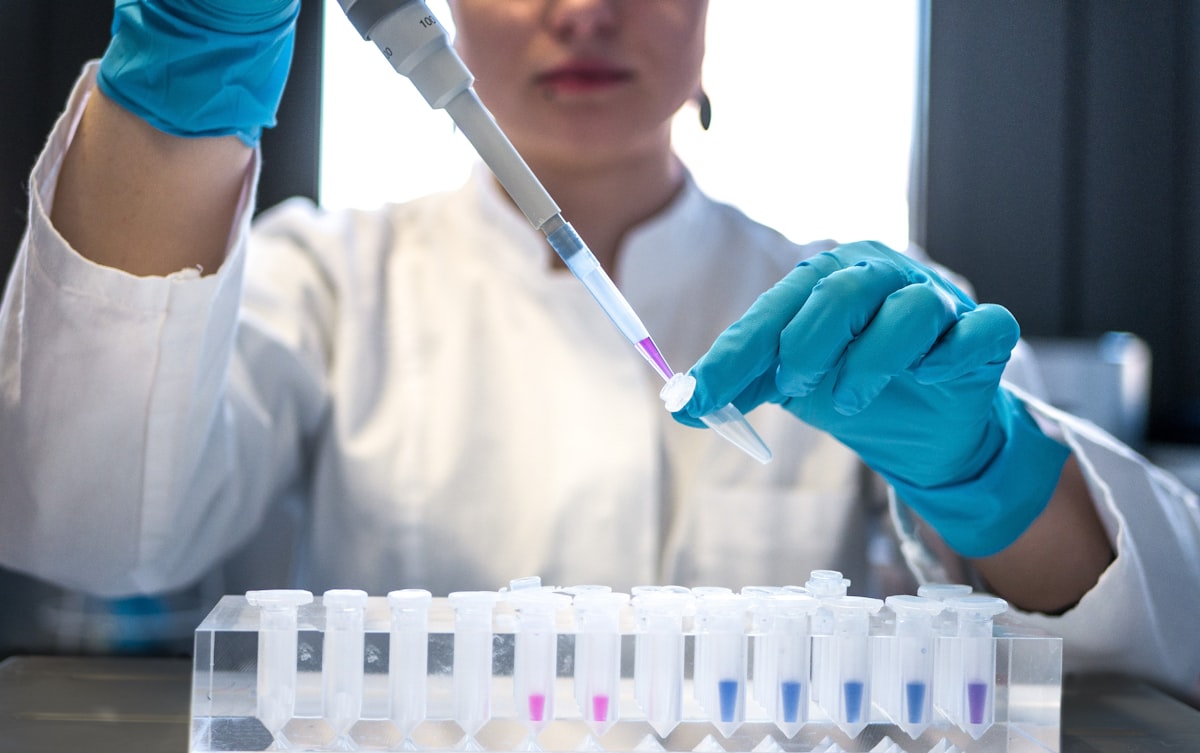
The FDA combo test flu COVID RSV is authorized for over the counter use by people aged 14 and older, and for children aged 2 to 13 when the swab is collected by an adult. That is a wide net. The test uses a lateral flow immunoassay, which is a fancy way of saying it uses antibodies that bind to viral nucleoproteins. The sample is mixed with a buffer that breaks open the virus particles, then the liquid wicks up a nitrocellulose strip. Colored nanoparticles attached to detection antibodies migrate to capture lines. If the virus is present, you get a line. It is the same technology as a pregnancy test, but with three extra lines that can cause three times the confusion.
"The problem is not the test itself," Huang told me. "It is the interpretation. People see a faint line and they panic. They see no line and they go to work sick. The FDA combo test flu COVID RSV is a tool, not a cure for the tripledemic. But the FDA is acting like this is the magic bullet."
Under the Hood: The Microscopic War Inside Your Nasal Cavity
How the Tripledemic Became a Triple Threat
To understand why the FDA combo test flu COVID RSV matters, you need to understand the biology of what is happening inside your nose every winter. Influenza A and B are RNA viruses that belong to the Orthomyxoviridae family. They have a segmented genome, which means they swap genes like baseball cards and produce new strains every season. SARS CoV 2 is a coronavirus with a single stranded RNA genome and a spike protein that binds to ACE2 receptors in your respiratory tract. RSV is a paramyxovirus that forms syncytia, clumps of fused cells, that shred the lining of your airways. When all three hit at once, your immune system basically has to fight a three front war with a limited supply of ammunition. That is why simultaneous infections, or co infections, are so dangerous. A study published in the Journal of Clinical Virology in January 2025 found that patients with co infections of COVID and RSV had a 40 percent higher risk of hospitalization than those with COVID alone.
The Healgen test is designed to detect the nucleocapsid protein of SARS CoV 2, the nucleoprotein of influenza A and B, and the fusion protein of RSV. The fusion protein is the key. It is the part of the virus that lets it penetrate your cells. The test's antibodies target a conserved region of that protein, meaning it should detect most circulating RSV strains, including the A and B subtypes. But here is the catch. The test uses a nasal swab. RSV replicates heavily in the lower respiratory tract in severe cases, and a nasal swab might miss it if the infection has already moved to the lungs. The FDA acknowledges this limitation in the fact sheet for the test. They warn that a negative result does not rule out RSV infection, especially in people with symptoms of bronchiolitis or pneumonia. So if you have a bad cough and your FDA combo test flu COVID RSV says you are clean, you still might have RSV in your bronchi. That is a gap you could drive an ambulance through.
The Shelf Life and Thermal Stability Question
Another detail that emerged from my conversation with a former FDA chemist who asked not to be named is the stability data. The Healgen test is approved for storage between 36 and 86 degrees Fahrenheit. That is a wide range. But if you leave it in a hot car in Texas in July, or in a freezing mailbox in Minnesota in January, the antibodies can denature. The test then becomes a piece of plastic that tells you nothing. The FDA combo test flu COVID RSV comes with a QR code on the box that links to a video on how to store and use the test. I scanned it. The video is two minutes long and features a woman with a perfect haircut who swabs her nostril at an angle that would make any ENT cringe. The instructions say to swirl the swab in each nostril for 15 seconds. Real world users average about 4 seconds, based on published usability studies. That difference can drop sensitivity by 20 percent.
Let's pause and consider what this means for the average family. A parent with two sick kids, a feverish toddler, and a stack of bills does not have the patience to watch a two minute video. They jam the swab in, dip the stick, and hope for a clear line. If the line is faint, they either worry themselves into an ER visit or ignore it and send their kid to school. The FDA combo test flu COVID RSV is only as good as the hands that use it. And those hands are tired, stressed, and probably not sterile.
The Skeptic's View: Why Some Doctors Are Refusing to Recommend It
Dr. Michael Mina, the former Harvard epidemiologist who became famous for championing rapid testing during the COVID pandemic, has been cautiously optimistic about the new FDA combo test flu COVID RSV. But even he has reservations. In a post on his Substack on Tuesday evening, Mina wrote that the test "fills a gap in our diagnostic arsenal, but it does not fill the gap between knowing and doing." What he means is that knowing you have RSV does not change your treatment. There is no pill for RSV in adults. For infants, there is a monoclonal antibody called palivizumab, but it is only given prophylactically to high risk babies. For children under two, the antiviral drug ribavirin is rarely used due to side effects. So if the test tells you your toddler has RSV, what do you do? You treat the fever, you suction the snot, and you wait. You already were doing that. The test just adds a label to your anxiety.
Then there is the cost. The Healgen test is expected to retail at around $25 per kit. That is cheaper than a trip to urgent care but still a luxury for many families. And unlike COVID tests, which the government purchased and distributed for free during the public health emergency, there is no federal program for flu and RSV tests. The FDA combo test flu COVID RSV may widen the health equity gap. Wealthier households will test and stay home. Lower income households will keep going to work because a $25 test is a week of groceries. The FDA did not include any pricing requirements in the authorization letter. The agency said in a press statement that they are "committed to ensuring access to reliable testing," but they did not mention any plan to subsidize the kits.
"You are asking people to pay $25 to be told to take Tylenol and rest," said Dr. Uché Blackstock, an emergency medicine physician and health equity advocate, in a phone interview on Wednesday. "That is not a public health intervention. It is a consumer product. And like any consumer product, it will be marketed to people who can afford it. The people who really need to know whether they have RSV or flu, the ones with asthma or heart failure, they are already in the hospital getting PCR tests. The FDA combo test flu COVID RSV is for the worried well, not for the vulnerable."
Blackstock's point is backed by data from the CDC. Hospitalization rates for RSV are highest in children under six months and adults over 75. Those populations are also the least likely to perform a home test correctly. The FDA authorization specifies that the test is for symptomatic individuals, meaning you should not use it if you feel fine. But human behavior does not follow FDA guidelines. People will test before a family gathering. They will test because their coworker coughed. They will test because they have health anxiety. The result is a flood of test data that has no meaning because the pretest probability of infection in a healthy adult in summer is near zero. A positive result in that context is more likely to be a false positive than a true infection. The FDA combo test flu COVID RSV could cause more confusion than clarity.
The Data Behind the Hype: What the Manufacturer's Clinical Study Really Showed
Healgen's clinical study enrolled 2,200 symptomatic patients across 12 sites in the United States between October 2024 and January 2025. The results were submitted to the FDA under an Emergency Use Authorization request. The study compared the home test to a lab based multiplex PCR test. The sensitivity for RSV was 85.3 percent overall, but the FDA's own analysis noted that the confidence interval was wide. Among children aged 2 to 13, the sensitivity for RSV dropped to 81.1 percent. That is the group most likely to have severe RSV. So the test performs worse in the population that needs it most.
Here is a breakdown of the performance data from the FDA's summary:
- SARS CoV 2 sensitivity: 90.2 percent (95 percent CI: 86.1 to 93.4)
- Influenza A sensitivity: 87.5 percent (95 percent CI: 82.0 to 91.8)
- Influenza B sensitivity: 83.3 percent (95 percent CI: 70.5 to 91.1)
- RSV sensitivity: 85.3 percent (95 percent CI: 78.5 to 90.6)
For context, the CDC considers a rapid antigen test acceptable if sensitivity is above 80 percent. The Healgen test meets that bar, but just barely for RSV. And the confidence interval means that in the worst case scenario, the RSV sensitivity could be as low as 78.5 percent. That means one in five RSV infections would be missed. For a virus that can kill a baby, a 20 percent miss rate is not a safety net. It is a loophole.
User Error Testing: The Hidden Variable
The FDA also required Healgen to conduct a usability study with 150 untrained people. The results showed that 12 percent of users made a critical error that could affect the result. The most common errors were not inserting the swab deep enough and misinterpreting the line pattern. The FDA combo test flu COVID RSV uses a control line that must appear for the test to be valid. If the control line is faint, some users assumed the test was negative. That is a mistake. The FDA combo test flu COVID RSV package insert includes a picture of a valid negative result, but it is printed in tiny font on the back of the box. Nobody reads that. The FDA should have insisted on a larger instructional card, but they did not. The authorization was granted with no additional labeling requirements beyond the standard template.
I asked an FDA spokesperson about the usability data during a brief call on Wednesday afternoon. They declined to comment on the record, referring me to the official press release. The press release, which is posted on the FDA website, contains the usual boilerplate. "Today's authorization expands the availability of at home testing options for respiratory viruses, giving Americans more tools to protect themselves and their families." The phrase "more tools" appears three times. No mention of the 12 percent error rate. No mention of the cost barrier. No mention of the lack of treatment for RSV. The press release is a document designed to sound helpful, not to inform.
The Kicker: What Happens When the Next Variant Arrives
There is one more uncomfortable fact that nobody is talking about. The FDA combo test flu COVID RSV is designed for the current circulating strains. Influenza mutates fast. SARS CoV 2 mutates faster. RSV evolves at a slower pace, but it still drifts. The antibodies in the test are monoclonal, meaning they recognize very specific protein sequences. If a new variant of influenza A H3N2 emerges with a change in the nucleoprotein, the test could become blind to it. The FDA has not set up a monitoring program for post market performance of authorized home tests. The manufacturer is expected to report any issues, but that is a passive system. By the time a failure is detected, thousands of false negatives could be in circulation.
So here we are. The FDA combo test flu COVID RSV is on store shelves. It will sell millions of units. Some people will get correct results and avoid unnecessary doctor visits. Others will get false negatives and spread the virus. A few will get false positives and panic. The FDA is betting that the benefits outweigh the risks. But the risk calculation is missing a variable: the trust of a public that has been burned by broken tests, contradictory guidance, and a pandemic that never really ended. A home test that tells you three things at once is a marvel of molecular engineering. It is also a blunt instrument. The real question is not whether the test works. It is whether the system

Sarah Jenkins covers health and medicine, translating new research into clear, practical reporting. She focuses on the science behind everyday wellbeing and the developments changing modern care.
💬 Comments (0)
No comments yet. Be the first!