Game Changer Legal Paradox: Inside Season 8's Most Daring Episode
Game Changer legal paradox: Sam Reich explains how season 8 premiere got away with Mickey Mouse udders and corporate logos.
The legal paradox emerges when viewers realize that the very action for which a contestant is penalized is simultaneously being broadcast, uncensored, on their screens. Season 8 of Dropout.tv's flagship series premiered on May 18 with an episode titled "Don't Wake Standards & Practices," and within minutes, the show had engineered a scenario where three comedians were actively trying to get the company sued.
A Board Game With Real Legal Stakes
The premise riffs on the old children's board game Don't Wake Daddy, but the sleeping giant here is not a plastic figurine. It is an entire standards and practices regime. Contestants Lou Wilson, Ally Beardsley, and Jeremy Culhane were handed a simple, dangerous instruction: push the limits of what they can say and do without triggering fines or legal action against Dropout. Everything was on the table. Violating Disney copyrights. Taking swings at McDonald's and Nike trademarks. Sexually harassing each other in a simulated workplace environment.
Sam Reich, CEO of Dropout and the writer, producer, and host of the show, told Polygon that the casting was deliberate. "I cast these episodes with a lot of love, and Jeremy and Ally and Lou are three very trustworthy people who I know are going to be able to walk that line judiciously and find stuff that's very funny and creative to do, not merely edgy."
He trusted them. The legal team trusted the premise. That is precisely where the program's legal paradox becomes most evident.
The Animated Sequence That Should Have Been Impossible
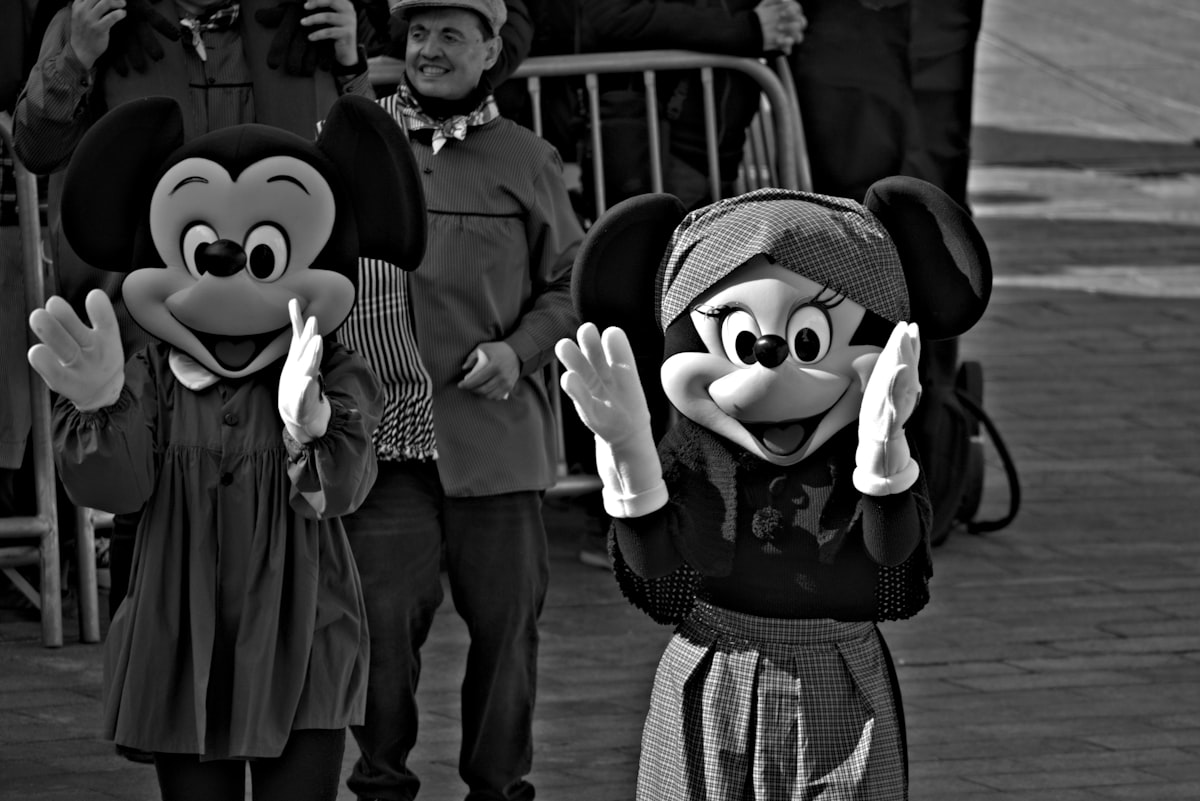
Reich told Polygon there was one detail from the legal review that "floors me to this day." The company's lawyers approved an animated sequence narrated by Beardsley in response to the prompt "Propose a visual effect to go here." The short cartoon features a version of Mickey Mouse. This Mickey has pierced nipples and dangling, swaying udders. The Death Star from Star Wars makes an appearance. So do Nike and McDonald's corporate logos and slogans. All of it cleared.
Here is the part no one expected.
Three guest judges deemed Beardsley's cartoon too provocative, issued a bust rating, sent them back to the starting space on the giant game board, yet audience watches as bust happens and content stays fully visible. But it's a paradox. Reich described it plainly: "You're like, well, wait a second, Ally's busting for this reason, and yet I'm allowed to watch it?" The legal paradox of the program exists in the disparity between what judges penalize and what legal counsel allows.
Not Dropout's Actual Lawyers
The judges are introduced briefly by name, pronouns, and social media accounts, per standard Dropout practice. Nothing is said about who they are or where they work. A viewer might reasonably assume they are Dropout's internal legal staff, though perhaps unusually attractive and camera-ready ones. They are not. Reich confirmed they were guests brought in by Dropout casting.
Devin Stone is YouTube's LegalEagle. The other two, Iya Baclagan and Alexis Noel, they're lawyers with limited on-camera experience who Reich said did such a stellar job and were found by casting director Jazzy Collins. Their specializations run the full spectrum.
- One is a corporate attorney.
- One works in standards and practices as their actual day job.
- One is a recognizable legal content creator.
They didn't always agree. But Reich noted that their differing expertise meant they didn't always see eye to eye, and he said, "I thought some of the more interesting moments of the episode were when they didn't.
The Paradox That Made It All Legal
"Even as you're watching, I feel like you're aware of the paradox of it," Reich told Polygon. The legal paradox of the series, as he frames it, hinges on a single argument from Dropout's legal team: that because the episode itself commented on legality, even the riskiest content could be permitted. The layers are absurd and precise. A contestant creates an infringing cartoon. Judges rule it a violation. The audience sees every frame. No one gets sued.
Reich added a note of playful uncertainty about the intellectual property holders. "And our legal team says '[this is] OK!' What say you, Disney and McDonald's? I guess we'll see."
"Even as you're watching, I feel like you're aware of the paradox of it." , Sam Reich
The Game Changer legal paradox is not just a clever narrative trick but the premiere's structural engine, and the episode doesn't simply flirt with legal boundaries but builds a game around them and scores them. And it broadcasts the result.
The Season 8 Philosophy
Reich described Season 7 of Game Changer as 'very performance-artsy at times,' and he specifically cited the episode 'Who Wants to Be Jacob Wysocki?' as having 'no game' because it was 'pure performance art.' It didn't work. So Reich and the producers wanted a course correction, aiming for something 'very gamey, really playable,' where contestants could compete with each other and pull real levers.
But that framing misses something. The premiere is not a retreat from ambition. It is a different kind of ambition entirely, one where the tension comes from rules rather than spectacle.
Reich described season 8 as an exercise in "right-sizing" the show. "In some ways," he noted, "it's a season focused on redefining what the program even signifies, and seeing if we can adhere to that with some discipline."" He acknowledged the problem of constant escalation: "The idea of topping ourselves gets a little bit problematic at a certain point. A twist every episode is no twist at all."
What to Expect This Season
The season will not abandon outside-the-box thinking. Reich teased episode 5, titled "Count the Rice," as a potential favorite. "It ranks among the more extreme, and is quite experimental," he said. But the guiding principle is a return to the show's game-show origins, with a baseline every episode can meet or build from.
The concept's audacious.
- Season 8 premiered May 18 on Dropout.tv.
- New episodes air on alternate Mondays.
- Lou Wilson, Ally Beardsley, and Jeremy Culhane star in the premiere.
- Guest judges include LegalEagle's Devin Stone alongside two attorneys new to camera.
Reich concluded the conversation with a sentiment that also serves as a mission statement for the direction of the program. After years of escalation, the show is not trying to outdo itself. It is trying to know itself. If the premiere is any indication, this signifies constructing entire episodes around the program's legal paradox and encouraging the audience to confront its complexities.
Frequently Asked Questions
What is the core concept of the "Game Changer legal paradox" as presented in the article?
The "Game Changer legal paradox" emerges when viewers realize that an action for which a contestant is penalized is simultaneously being broadcast, uncensored, on their screens. It exists in the disparity between what the guest judges penalize and what legal counsel allows.
When did Season 8 of Game Changer premiere, and who were the main contestants in the episode exploring this paradox?
Season 8 of Dropout.tv's flagship series premiered on May 18 with the episode "Don't Wake Standards & Practices." The contestants who starred in this premiere episode were Lou Wilson, Ally Beardsley, and Jeremy Culhane.
How did Dropout's legal team permit content that would typically be considered legally risky or infringing?
Dropout's legal team permitted the risky content based on the argument that the episode itself commented on legality. This unique framing allowed even potentially infringing material, such as Disney copyrights and McDonald's or Nike trademarks, to be broadcast.
What specific animated sequence was highlighted as a clear example of the legal paradox in action?
An animated sequence narrated by Ally Beardsley was highlighted, featuring a version of Mickey Mouse with pierced nipples and udders, along with the Death Star and corporate logos from Nike and McDonald's. Despite being cleared by lawyers, guest judges deemed it too provocative, yet the audience watched as the content remained fully visible.
What is the broader philosophy or mission statement guiding Season 8 of Game Changer, as described by Sam Reich?
Sam Reich described Season 8 as a course correction, aiming for something "very gamey, really playable" to move away from pure performance art. The season is focused on redefining what the program signifies, adhering to discipline, and returning to the show's game-show origins.

Julian Beaumont reports on entertainment and the arts, tracking the releases, festivals and figures defining popular culture. He enjoys finding the bigger story behind a film, an album or a viral moment.
💬 Comments (0)
No comments yet. Be the first!