SpaceX IPO: Boon Or Boondoggle?
The SpaceX IPO filing reveals a $75 billion raise, a $1.75 trillion valuation, and a corporate structure handing Elon Musk total control.
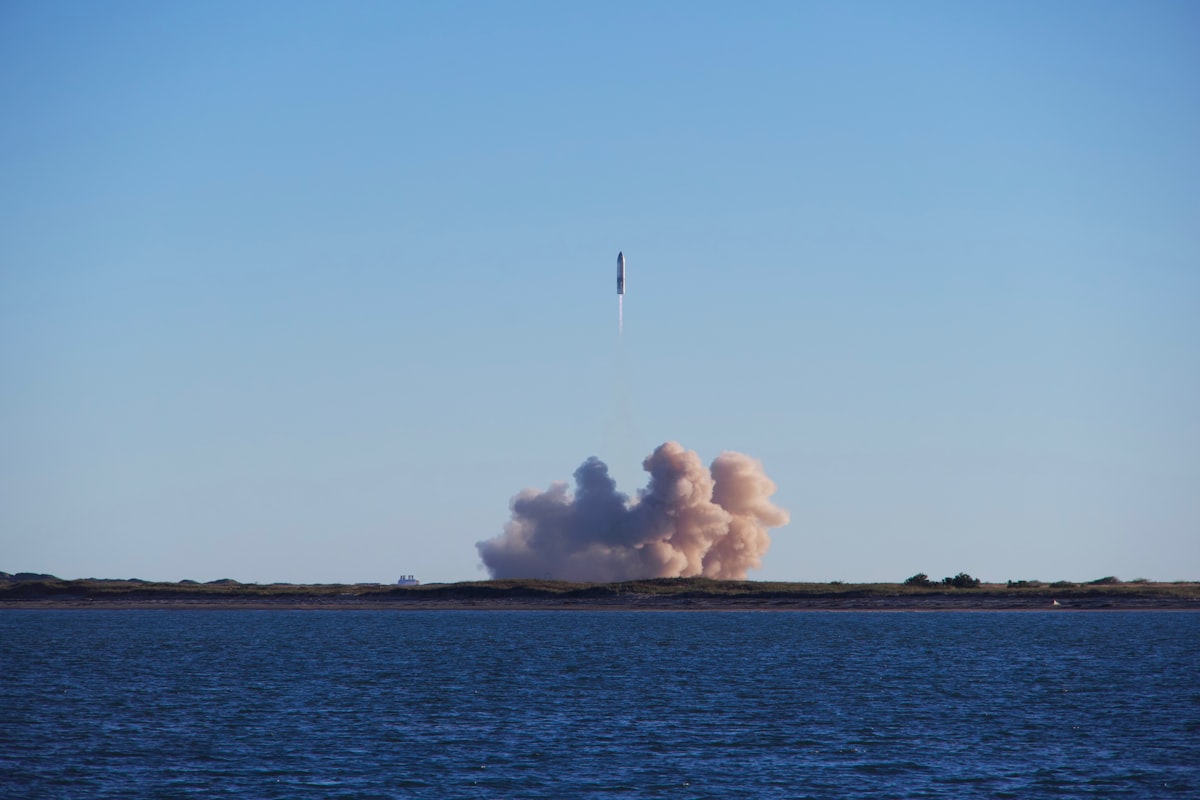
SpaceX's IPO plans to raise $75 billion from public investors, a move disclosed in a filing with the SEC last week that would value the company at roughly $1.75 trillion, and if the offering succeeds, Elon Musk's 42% stake alone becomes worth approximately $735 billion and sets him on track to become history's first trillionaire, while the capital raise expected to begin trading on NASDAQ next month frames a grand narrative of multi-planetary cities and orbital data centers. It's last week's filing. But the fine print in the S-1 document reveals a more tangled reality that future shareholders will inherit.
Total Control, Unfireable CEO
It creates two share classes. Musk and his close associates hold one; everyone else holds the other. He can't be fired. The arrangement cements his command over SpaceX just as it does at Tesla, allowing him to pursue long term high risk projects without pressure from short term investors or activist shareholders. The S-1, relayed by DW, states this clearly. In practice, governance lacks external checks. Musk's vision isn't just launching astronauts; it includes moon-based factories, asteroid mining, self-sustaining Mars cities for up to a million people, and massive space data centers cooled by the void and powered by abundant sunlight. A new Tesla factory in Texas that can produce 100 GW of solar panels will reportedly feed those orbital ambitions more than terrestrial grids.
Insiders Cash In, Investors Take Risk
IPO paperwork maps who benefits first. President Gwynne Shotwell and CFO Bret Johnsen would each see their shares cross $1 billion, while longtime investor Antonio Gracias could gain $70 billion and PayPal co-founder Luke Nosek's stake would near $5 billion. But the company itself remains deeply unprofitable. DW notes a $4.94 billion net loss in 2025, and it's driven by Starship spending, satellite deployments, and AI infrastructure. Space-related hazards litter the filing, including radiation, micrometeoroids, orbital debris, and human injury or death. “We have a history of net losses and may not achieve profitability in the future,” the S-1 warns plainly.
A $20 Billion Bridge To Nowhere
Beneath the interplanetary poetry sits a more urgent financial puzzle. James Thomason, an analyst with 25 years evaluating Silicon Valley’s financial juggling, published a blog post dissecting what he calls “a cosmic dandelion seed engineered to carry humanity’s future across the vastness of space.” But that framing misses something. Thomason argues the real mission is bailing out Elon Musk’s other ventures, X (formerly Twitter) and xAI, by stitching them into SpaceX’s corporate belly and asking the public market to absorb a $20 billion debt load.
A Cosmic Dandelion Seed
“SpaceX is a cosmic dandelion seed engineered to carry humanity’s future across the vastness of space. But beneath the breathless, soaring poetry of human expansion, the [S-1] filing reveals the company’s true, grinding primary mission of bailing out the smoldering, cash-incinerating disasters of X (formerly Twitter) and xAI. By surgically grafting these ventures into its corporate belly, SpaceX is politely asking the public market to foot the bill for a staggering $20 billion debt bailout, multi-billion dollar operating losses, and a few ridiculously lucrative exits for private insiders.”
Thomason’s reading is unsparing. He contends the SpaceX IPO is less a ticket to Mars and more an itemized receipt for earthbound mistakes.
The Balance Sheet Reality
Pre-IPO moves tilt the scale heavily toward existing stakeholders. In the first quarter of 2026 alone:
- $2.41 billion repurchased stock from xAI employees.
- $1.93 billion spent to cash out current shareholders at fair market value.
- $7.92 billion in long-term related-party debt disguised as a failed sale-leaseback with board member Antonio Gracias’s Valor Equity Partners.
- Tesla pushed $2 billion into xAI in January 2026, which transformed into 19 million split-adjusted shares of SpaceX Class A stock just ahead of the offering.
Then there is the newly born AI segment, forged from the February 2026 merger of xAI and X into SpaceX. It bled $6.35 billion in operating losses in 2025, and another $2.46 billion in the first three months of 2026. X’s advertising revenue slid from $2.32 billion in 2023 to $1.84 billion in 2025. Keeping the artificial intelligence division breathing required $12.7 billion in capital expenditures in 2025, plus $7.7 billion more in Q1 2026. On top of that, SpaceX has entered an option agreement to acquire AI coding company Cursor at an implied $60 billion valuation. Walking away would trigger a $1.5 billion termination fee and an $8.5 billion deferred services fee;a $10 billion penalty payable by public shareholders just for saying no.
The upshot, in Thomason’s view, is that IPO buyers are paying three to four times the de-risked asset value for a portfolio of options each carrying meaningful odds of failure. Only the core space and connectivity units are genuine profit engines. “At $1.75 trillion, it is the most exquisitely engineered, stainless-steel bag in human history. You’ll buy it anyway,” he writes. The pull of Musk’s story is undeniably strong. It has kept Tesla stock aloft through years of scrutiny. But the stakes are larger now and the downside more immediate. Economist Robert Shiller described a bubble as “a natural Ponzi scheme. It’s something where you get in and you make money because other people get in, and people keep on coming in because everybody before them made money. But in the end, it’s a game where the money isn’t really there. It all depends on fresh crops of suckers coming in. And at some point you run out of suckers.”
As the SpaceX IPO approaches, that warning echoes. Caveat emptor.
Frequently Asked Questions
What is the planned valuation and fundraising goal for the SpaceX IPO?
SpaceX's IPO plans to raise $75 billion from public investors, a move that would value the company at roughly $1.75 trillion. If the offering succeeds, Elon Musk's 42% stake alone would become worth approximately $735 billion.
How is control structured within SpaceX, according to the S-1 document?
The S-1 document reveals a structure creating two share classes, with Musk and his close associates holding one and everyone else holding the other. This arrangement cements his command over SpaceX, making him unfireable and allowing him to pursue long-term, high-risk projects without pressure from short-term investors.
What financial challenges does SpaceX currently face, as noted in the S-1 filing?
SpaceX remains deeply unprofitable, with DW noting a $4.94 billion net loss in 2025, driven by Starship spending, satellite deployments, and AI infrastructure. The S-1 warns, 'We have a history of net losses and may not achieve profitability in the future.'
According to analyst James Thomason, what is the 'real mission' behind the SpaceX IPO?
James Thomason argues that the real mission of the SpaceX IPO is bailing out Elon Musk's other ventures, X (formerly Twitter) and xAI. He contends SpaceX is asking the public market to absorb a $20 billion debt load, along with multi-billion dollar operating losses from these ventures.
Who are some of the key insiders expected to benefit significantly from the SpaceX IPO?
If the IPO succeeds, Elon Musk's 42% stake alone could become worth approximately $735 billion. Additionally, President Gwynne Shotwell and CFO Bret Johnsen would each see their shares cross $1 billion, while longtime investor Antonio Gracias could gain $70 billion.
Clara Rossi covers the motoring world, with a focus on electric vehicles, design and the shift toward cleaner transport. She tests the latest models and explains what matters to drivers beyond the spec sheet.
💬 Comments (0)
No comments yet. Be the first!