Netherlands FSD Drive Raises Questions
Tesla FSD's first European activation in the Netherlands reveals issues with speed, lanes, and stoplights, raising doubts about EU-wide approval.
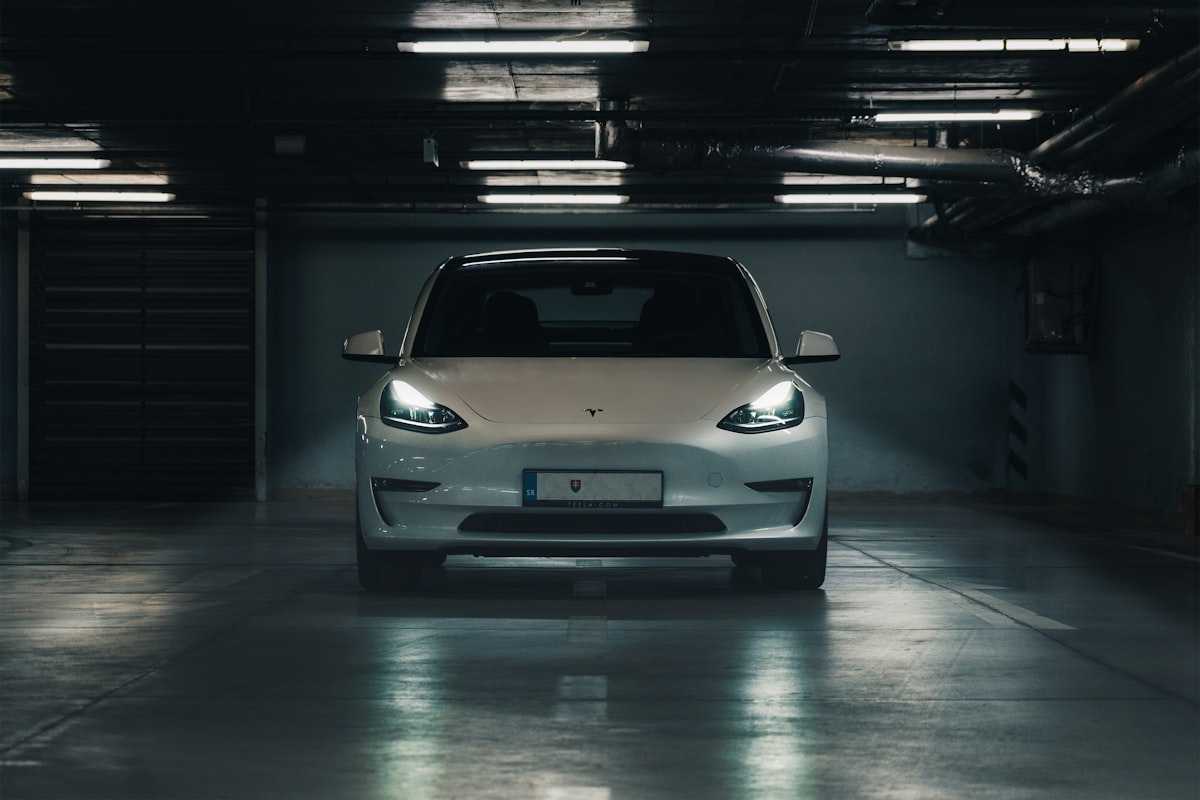
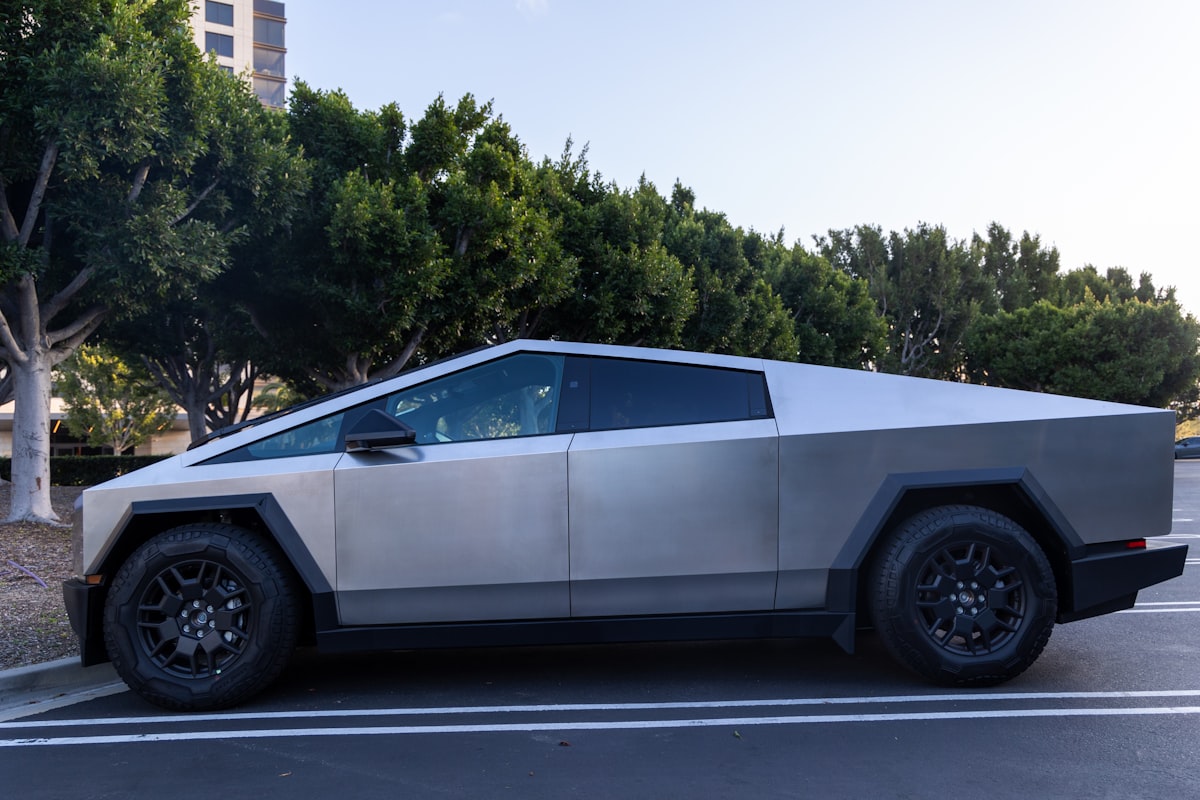
Netherlands FSD Drive raises questions. It's unclear if Tesla's full self-driving system is actually ready for Europe's roads, and the early evidence suggests the answer might not be the one American drivers hoped for. The approval in the Netherlands marked a historic first, making it the sole European nation where the feature can be legally activated, a distinction that feels both monumental and premature. But early impressions from behind the wheel suggest the gap between American expectations and European reality is wider than many anticipated. So far, it's not closing.
Dick Helders runs XpengCam and writes for CleanTechnica sometimes. He owns an Xpeng. And he was among the first in the country to test FSD, which gives his perspective unusual weight because he's driven VLA 2.0 in China and now FSD in Europe. Very few people can claim that combination. It's a rare double perspective, and it doesn't come along often. So when he talks, people listen.
A Two-Part Test Through Arnhem
The evaluation unfolded in two segments. But don't worry , that's not a violation, so there's no fix needed. The second video, the one featuring Helders speaking in English, is the more revealing of the two, and it captures a level of candor that the first segment simply doesn't offer, making it far more telling for anyone watching closely.
It failed right away. The system couldn't handle roads that are common in the Netherlands but rare in America, specifically narrow streets without a center line but with dotted lines on both sides. That forced the Tesla into uncomfortable choices. Instead of driving down the middle, the car tended to stay left of the dotted lines, and that pushed oncoming traffic nearly off the road. So the result was predictable. It's a design mismatch, plain and simple.
The bus was simply too wide to move over. One encounter with it further demonstrated the system's limits, and the Tesla did shift slightly to avoid a collision during what amounted to a game of chicken with the massive vehicle. It left the driver uneasy. But the maneuver likely irritated the other motorists, who had to pull over and wait for the awkward dance to end.
Speed Limits, Stoplights, and Missing Cues
Speed limit handling proved erratic throughout the drive. The Tesla frequently traveled at the wrong speed, a basic failure that could create hazards in dense European traffic.
Stoplights presented an even bigger challenge. The Netherlands has a density and complexity of traffic signals higher than most of the US, and the system struggled to identify which light to observe. FSD missed changing stoplights several times, a concerning lapse in a country where intersections demand precise attention.
It parked in illegal spots. It chose the wrong lane on occasion, and at the last second, it merged across multiple lanes to make a turn, a maneuver that might pass in smaller American towns but becomes genuinely dangerous in a large city with dense traffic. That's a risk we can't ignore. But in a big city, that behavior is a recipe for disaster.
The Software Crash
Near the end of the second video, FSD “crashed.” Not the vehicle, but the software itself. The system stopped working and locked Helders out without explanation. Weather and road conditions were unremarkable at the time. The car did provide adequate advance notice to take over, so the driver was never in jeopardy, but the sudden failure raises questions about reliability.
Observing the steering wheel movements told its own story. Unlike VLA 2.0’s smooth, continuous corrections, the Tesla frequently adjusted its trajectory in jerky, reactive motions. Some of the issues felt unsafe even when technically legal and not immediately dangerous. Right-of-way challenges also appeared, though those might not translate to other countries with different written and unwritten rules.
The fundamental difference between Tesla FSD and Xpeng’s VLA 2.0 comes down to architecture. Tesla sends data to a central location where people label it. VLA 2.0 actively learns from drivers with all decision making happening onboard with far more effective processing power.
A Centralized System Meets Europe’s Complexity
The Netherlands test exposes a structural weakness in Tesla's approach. It's a centralized system. FSD relies on data flowing to one central location for labeling, and that's a model that depends on uniformity to function properly, which is why it works fine in the US where driving rules are largely consistent and conditions are far less complicated. But that's not the world.
Europe is different. Written rules vary by country, and unwritten rules vary by region. The centralized architecture has a harder time adapting to local driving circumstances. Meanwhile, VLA 2.0 learns through many simulations in its World model and can pick up unwritten road rules much quicker. Data privacy concerns also complicate Tesla’s centralized collection, making it harder to meet UN and Chinese intelligent driving regulations.
The review was not entirely negative. Advanced ADAS systems do have potential to add convenience and reduce accidents in Europe, and FSD could eventually deliver those benefits. The issue is readiness, not concept.
What This Means for Europe’s FSD Future
Helders said FSD was not as advanced or capable as VLA 2.0. Having ridden in an Xpeng L03 prototype in Munich, he observed that VLA 2.0 already appears more advanced in Europe, even as a beta test in Germany months before official release. FSD is publicly available in the Netherlands today.
Given how fast VLA 2.0 learns, it will likely be far more advanced by the time it reaches European markets. Criticism of bias is predictable since Helders owns an Xpeng and belongs to an Xpeng user group. But those who know him describe him as direct and unsparing, even with Xpeng itself. He is one of the first people to drive FSD in the Netherlands and one of the very few with direct experience of both systems.
EU-Wide Approval Now Uncertain
Many assumed Dutch approval would open the floodgates for the rest of Europe. That assumption now looks shaky. FSD faces regulatory hurdles and a level of secrecy around performance in Europe that makes EU-wide approval increasingly uncertain in the near term.
Will Tesla crack the European market with FSD soon? That's the real question. But the recent Netherlands drive proves the company can't just rely on regulatory approvals anymore, it has to show genuine performance gains on real roads if it wants to win over both regulators and skeptical drivers across the continent. Others are watching closely. They're ready to pounce. So who takes the lead? That depends entirely on Tesla's next move, not its paperwork.
One thing is clear. The Netherlands FSD drive proves American-style autonomous driving can't simply be transplanted onto European roads, not without serious rethinking of what the system actually understands. It must learn narrow lanes, complex stoplights, and unwritten local rules before it can claim readiness for the continent. And that's a tall order.
Frequently Asked Questions
What were the main issues encountered during the Netherlands FSD drive, according to the article?
The main issues included failing on narrow streets with dotted lines, erratic speed limit handling, difficulty identifying which stoplights to observe, missing changing stoplights, parking in illegal spots, choosing wrong lanes, and a software crash near the end of the test.
Why does the article suggest Tesla's FSD system struggles in Europe, based on the Netherlands test?
The article suggests Tesla's FSD struggles because it relies on a centralized system that depends on uniformity, which works in the US but not in Europe's varied written and unwritten rules. The system's architecture, which sends data to a central location for labeling, has a harder time adapting to local driving circumstances like narrow lanes and complex stoplights.
How does the article compare Tesla's FSD with Xpeng's VLA 2.0 in terms of learning and processing?
The article states that Tesla's FSD sends data to a central location for labeling, while VLA 2.0 actively learns from drivers with all decision-making happening onboard with more effective processing power. VLA 2.0 learns through simulations in its World model and can pick up unwritten road rules quicker, making it appear more advanced in Europe.
Who is Dick Helders, and why does his perspective on the Netherlands FSD drive carry weight?
Dick Helders runs XpengCam, writes for CleanTechnica, and owns an Xpeng. He was among the first in the Netherlands to test FSD and has driven VLA 2.0 in China, giving him a rare double perspective that few can claim, so his opinion is listened to.
What does the article say about the likelihood of EU-wide approval for Tesla's FSD after the Netherlands test?
The article says that the assumption that Dutch approval would open the floodgates for the rest of Europe now looks shaky. FSD faces regulatory hurdles and secrecy around performance, making EU-wide approval increasingly uncertain in the near term, and Tesla must show genuine performance gains on real roads.
Sebastian Wolf reports on the car industry, from performance machines to the engineering that powers them. He is fascinated by how manufacturers balance tradition with the rapid move to electrification.
💬 Comments (0)
No comments yet. Be the first!