Cadillac Escalade IQ Review: 4-Ton Luxury EV
The Cadillac Escalade IQ pairs a 200 kWh battery with 460 miles of estimated range and a 55-inch dashboard screen.
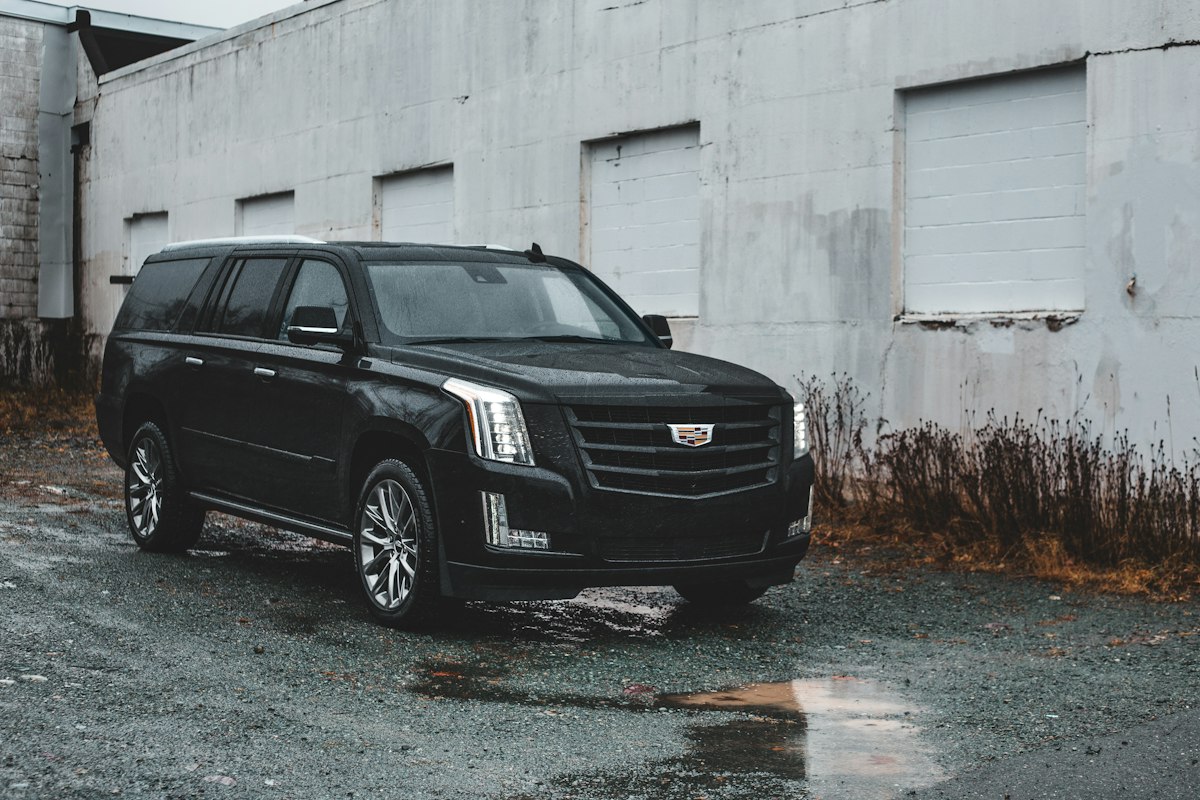
Cadillac Escalade IQ drivers who take delivery of the massive EV will quickly notice its immense scale and presence. Arriving with an indicated range of 440 miles, the luxury battery-electric vehicle packs a lithium-ion battery pack with more than 200 kWh between its axles. That massive energy reservoir means range anxiety is essentially non-existent, even over an entire week of heavy work. Originally conceived and debuted during a period of high electric vehicle optimism, this vehicle serves as a clear statement that swapping out a traditional V8 for twin electric motors involves no compromise in ambition, even as the brand prepares to offer a mix of electric and combustion models beyond 2030.
Underneath the bodywork, the luxury model shares its battery pack and architecture with several other full-size GM vehicles, including the Chevrolet Silverado EV, the GMC Sierra EV, and the Hummer EV lineup. Those shared components carry serious physical consequences. The vehicle is barely small enough to fit inside a standard parking space, while its curb weight pushes it directly into the Class 3 truck category. Because of this designation, it features flat side mirrors and has no formal EPA range rating, though Cadillac claims it achieves 460 miles on the EPA test cycle. Safety features remain plentiful, featuring numerous airbags despite a 9,046-pound curb weight that legally does not require them. That figure means the heavy-duty EV weighs a full four tons, making it a third heavier than the previous gas-powered version.
Driving Dynamics and Ride Quality
Massive weight on paper does not completely ruin the driving experience. Held up by a computer-controlled air suspension, the vehicle works surprisingly hard to conceal its structural mass. The system delivers a floaty ride, though larger road imperfections easily break the illusion. Hitting a recessed utility hole cover sends a sudden transient shock into the cabin, serving as a sobering reminder of the sheer tonnage underneath.
It is surprisingly nimble. Low-speed maneuvers are manageable thanks to a standard rear-wheel steering system. By turning the rear wheels, the vehicle effectively shortens its actual 136.2-inch wheelbase. Parking takes attention to space boundaries, yet maneuvering through tight spots is not hard work. Forward visibility is broad and clear, though the passenger-side mirror proves less effective. Drivers can rely on a blind-spot monitoring camera that activates alongside the turn signals, even if the video feed quality is somewhat grainy.
Power Delivery and Acceleration Modes
Highway driving reveals additional stability gains. At higher speeds, the rear wheels turn in the same direction as the front wheels, lengthening the effective wheelbase for clean straight-line tracking. Standard outputs are substantial:
- Nominal output: 680 horsepower (505 kW) and 615 lb-ft (834 Nm) of torque
- Velocity Max output: 750 horsepower (560 kW) and 785 lb-ft (1,064 Nm) of torque
- Acceleration performance: Zero to 60 mph in under 5 seconds
- Standard highway assistance: Super Cruise hands-free driving on pre-mapped roads
Engaging Velocity Max requires hitting the V button on the steering wheel. While it will not ripple the tarmac like an electric Porsche Cayenne, the four-ton SUV sprints to 60 mph in less than 5 seconds when needed. One-pedal driving calibration is exceptionally precise on its highest setting, making city stops effortless to judge. A steering-wheel paddle offers on-demand regenerative braking for added control without touching the friction brakes.
Real-World Efficiency and Charging Realities
Energy consumption reflects the vehicle's massive size, but long journeys remain practical. Over short suburban trips, efficiency figures temporarily match smaller crossover EVs. Once highway cruising and varied conditions average out, efficiency settles near 2.1 miles per kWh (29.6 kWh/100 km).
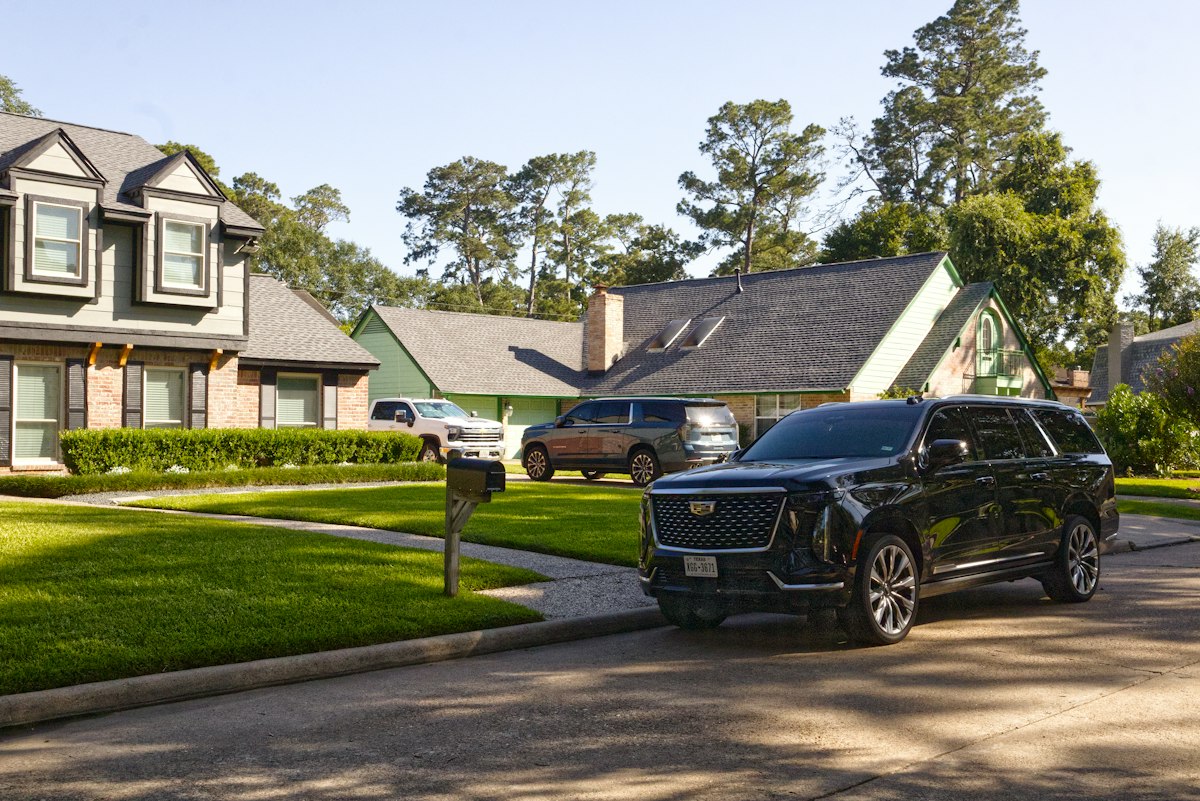
Charging infrastructure logistics require some planning.
Interior Technology and Cabin Layout
The Cadillac Escalade IQ brings an aggressive display setup to the luxury market, even if the hand-built $300,000 Celestiq sedan remains the brand's ultimate flagship EV. The front dashboard is dominated by a 55-inch pillar-to-pillar display layout incorporating touch-sensitive panels on both sides of the digital gauge cluster.
"Why can't Google's voice recognition understand the command 'set Sirius radio to channel 43?' But it can't."
The main infotainment system runs on Android Automotive OS. A physical dial controller on the center console allows menus to be navigated without touching the glass, though its scroll action feels slightly plain for a vehicle carrying a $153,490 sticker price in Premium Sport trim. Climate settings reside on a lower dedicated screen situated ahead of the center console. Front passengers get their own display fitted with a privacy filter that blocks the driver's view while the car is moving. Passengers can stream video content or connect smartphones as input controllers for interactive games.
Passenger Space and Utility
Interior volume is generous, though seating geometry varies by row:
- Second-row seating: Sliding captain chairs that move fore and aft
- Third-row space: Plenty of legroom when second row slides forward, though low seat bottoms force a high-knee seating posture
- Rear entertainment: Optional $1,995 dual-screen system for second-row passengers
- Cargo options: Rear cargo hold supported by a wide but shallow front trunk (frunk)
Since the loss of federal EV tax credits, the Cadillac Escalade IQ faces a harder sell in the ultra-luxury segment. Yet as a technological showcase, its silent electric powertrain, massive range, and effortless highway cruising make it a compelling alternative to combustion-powered full-size SUVs.
Frequently Asked Questions
What vehicles share the Cadillac Escalade IQ's underlying platform, and how does this affect its vehicle classification?
The Cadillac Escalade IQ shares its battery pack and architecture with several other GM vehicles, including the Chevrolet Silverado EV, GMC Sierra EV, and the Hummer EV lineup. Due to these shared components, the vehicle reaches a curb weight of 9,046 pounds, pushing it into the Class 3 truck category. Because of this heavy-duty designation, it features flat side mirrors and lacks a formal EPA range rating.
How does the rear-wheel steering system improve the driving dynamics of the Cadillac Escalade IQ?
At low speeds, the rear-wheel steering system turns the rear wheels to effectively shorten the vehicle's 136.2-inch wheelbase, making tight parking maneuvers manageable. At highway speeds, the rear wheels turn in the same direction as the front wheels to enhance overall vehicle stability. This combined functionality allows the massive SUV to remain clean and steady during straight-line tracking.
Why does the Cadillac Escalade IQ lack an official EPA range rating, and what is its expected range capability?
The vehicle legally lacks a formal EPA range rating because its 9,046-pound curb weight places it into the Class 3 heavy-duty truck category. However, Cadillac claims that the luxury EV achieves 460 miles on the EPA test cycle. Drivers arrive to an indicated range of 440 miles provided by its massive lithium-ion battery pack containing over 200 kWh of energy.
What technology features are integrated into the front display setup of the Cadillac Escalade IQ?
The dashboard features a 55-inch pillar-to-pillar display layout running on Android Automotive OS with touch-sensitive panels next to the digital gauge cluster. Front passengers have access to a dedicated screen fitted with a privacy filter that blocks the driver's view while driving. This passenger screen allows users to stream video content or pair smartphones to act as game controllers.
What should owners expect regarding the charging port placement and real-world efficiency of the Cadillac Escalade IQ?
Because the CCS1 charge port is situated at the rear corner, drivers must back into charging bays when using public infrastructure. Cadillac states that the system can add 100 miles of range in 10 minutes of DC fast-charging. In varied real-world driving conditions, average energy efficiency settles around 2.1 miles per kWh.

Sebastian Wolf reports on the car industry, from performance machines to the engineering that powers them. He is fascinated by how manufacturers balance tradition with the rapid move to electrification.
💬 Comments (0)
No comments yet. Be the first!