Shooting the Mustang GT3 at Le Mans
My first time experiencing Le Mans meant chasing the Mustang GT3 through massive spectator crowds and missed shuttles.
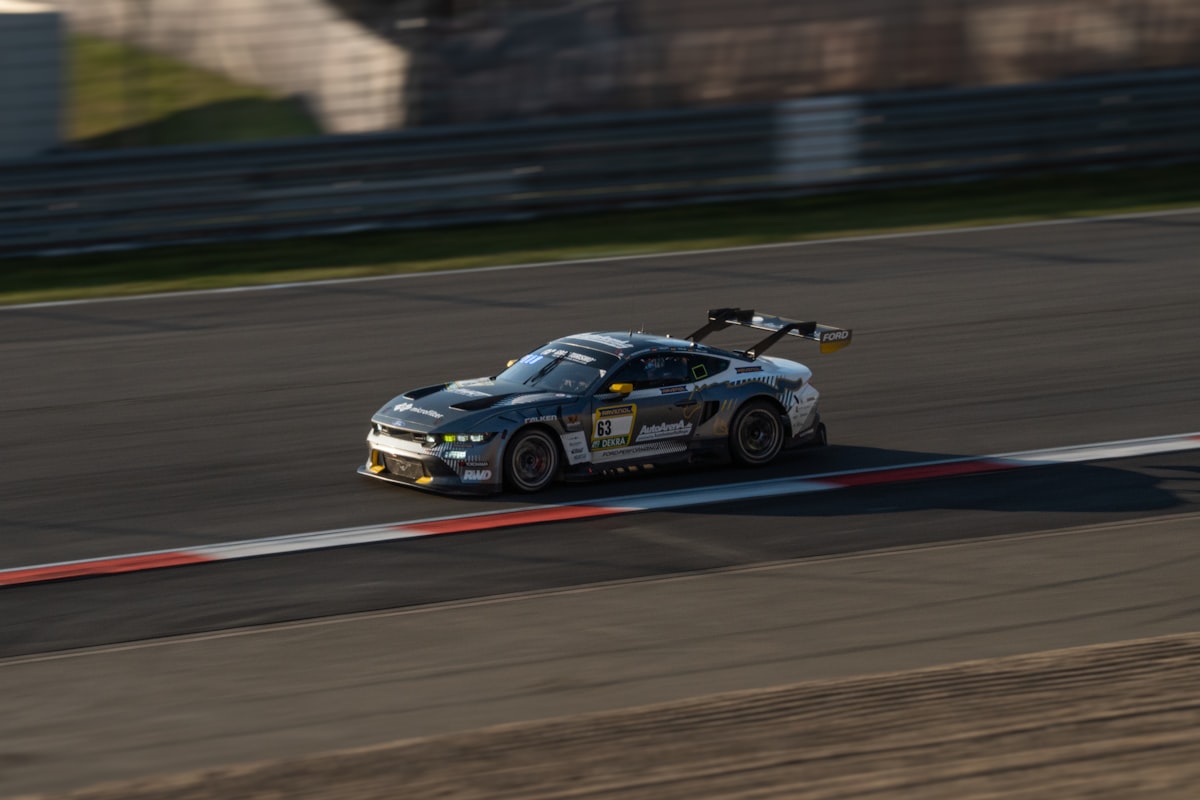
Mustang GT3 racing at Le Mans is a brutal test. It's a grueling challenge of endurance, machine, and human will for every driver and team involved. For a first-time attendee, the legendary French circuit presents an overwhelming spectacle of speed and scale that can't be fully grasped from any photograph or broadcast. The track's footprint is enormous. So navigating it without a dedicated vehicle or an experienced guide is nearly impossible, and even professional photographers who've covered this event for twenty years admit there are sections they've never seen. But that's the magic. It's this massive scale that makes iconic corners like Mulsanne, Indianapolis, and the Porsche Curves live up to decades of motorsport mythology.
It's a constant battle. Photographers fight through massive crowds and logistical hurdles just to find a clear line of sight, often pushing through spectator areas thirty people deep at the fence. Raise the camera. Aim blindly. Hope for the best. When the field packs together for the opening lap, capturing the perfect shot is a blind gamble. So the challenge shifts as the race develops and the grid begins to spread out, moving from managing crowds to chasing the changing light across the French countryside.
Chasing the light on the Mulsanne straight
The Mulsanne straight is one of motorsport's most sacred stretches of tarmac, a place where standing on the edge as cars sweep past at maximum velocity offers a sensory overload that television cameras simply cannot replicate. Photographing the field here requires hitching rides on team shuttles and trekking through wooded areas near the local golf course to find small gaps in the trees. But it's a place where a photographer can capture a Mustang GT3 driving through a brilliant shower of sparks kicked up by a passing hypercar. It's electric.
Chasing shots at the Mulsanne carries a distinct operational risk. But staying too long to capture the perfect sunset glow means risking a missed shuttle ride back to the main paddock. It's a massive walk without a scooter. A stranded photographer could miss critical shooting windows as dusk transitions into night, and during these twilight hours the straight between Indianapolis and Arnage becomes a prime location to watch the glowing brake rotors of the field as they heavy-brake into the corners.
A brief window of true darkness
Nighttime at La Sarthe is surprisingly short. The sky still holds light well past 10 pm, and the first bit of dawn creeps in around 5 am, so the true darkness lasts only a few hours. It's a test of pure survival. During these midnight hours, the machinery and the crew are pushed to their absolute limits, fighting fatigue and mechanical strain. But the visual spectacle is incredible. Cars jump the curbs at the Ford Chicane, their headlights cutting through the darkness while thousands of dedicated fans remain packed into the grandstands at 2:40 am.
- Early race damage forced the number 88 Proton Competition car to fight from behind.
- The number 77 car remained in firm contention as night fell over the circuit.
- By Sunday morning, the number 88 car was soldiering on in 17th place.
- The grueling race ended in retirement for the number 88 car just before the finish.
The weight of disappointment for Ford Racing
Corporate programs don't travel to France just for the spectacle. Victory is the only goal. For the Mustang GT3 program, a third straight year without a win is a tough pill to swallow, and that disappointment was highly visible on the faces of the team members in the paddock. But Ford Racing desperately wants to conquer La Sarthe with this platform, and that drive is only expected to intensify as the company prepares to launch its hypercar program next year.
Will Ford, general manager of Ford Racing, has described Le Mans as his personal most important race.
It's huge. The manufacturer's intense focus explains their massive footprint at the track, which includes dedicated hospitality centers where team guests and media can recharge their equipment. But the scale of support even extends to the skies with Goodyear blimp rides offering a rare aerial perspective of the track. So from the air, one can look down to see a helicopter and a Mustang GT3 at the Ford Chicane.
Looking ahead to a hypercar future
The lessons learned from this year will directly inform the future of the program. But they're not just lessons. They're fuel. Motorsport programs are built on iterative progress, where every mechanical failure and missed opportunity serves as data for the next campaign, and the team's determination suggests the pursuit of a Le Mans trophy won't slow down. So the pressure to deliver results will only grow, especially with a hypercar program on the horizon, pushing them to refine every detail without compromise. Perfection is the goal. The crown jewel of motorsports demands it, and the team will return to chase it once again.
Frequently Asked Questions
What makes photographing the Mustang GT3 at Le Mans a significant challenge according to the article?
Photographers face massive crowds and logistical hurdles, often pushing through spectator areas thirty people deep at the fence just to find a clear line of sight. During the opening lap, capturing the perfect shot is a blind gamble as the field packs together.
Why is the Mulsanne straight considered a prime location for capturing the Mustang GT3?
The Mulsanne straight is a sacred stretch where cars sweep past at maximum velocity, offering sensory overload unreplicable by television. Photographers can capture a Mustang GT3 driving through a brilliant shower of sparks kicked up by a passing hypercar in that area.
How does the race's progression affect the strategy for photographing the Mustang GT3?
Initially, the challenge is managing crowds when the field packs together on the opening lap. As the race develops and the grid spreads out, the focus shifts to chasing the changing light across the French countryside.
When is true darkness at Le Mans, and what is the visual spectacle during that time?
True darkness lasts only a few hours, from after 10 pm until around 5 am. During those midnight hours, cars jump the curbs at the Ford Chicane with headlights cutting through darkness while fans remain packed in grandstands.
Who is described as having Le Mans as their most important race, and what is the outlook for the Mustang GT3 program?
Will Ford, general manager of Ford Racing, describes Le Mans as his personal most important race. The Mustang GT3 program has gone three straight years without a win, but the team is determined to refine every detail and return to chase victory again.

Sebastian Wolf reports on the car industry, from performance machines to the engineering that powers them. He is fascinated by how manufacturers balance tradition with the rapid move to electrification.
💬 Comments (0)
No comments yet. Be the first!