Junkyard Find: 1986 BMW L7, the Cocainiest Car of the 1980s
A 1986 BMW L7, the priciest BMW in 1986, appears in a Denver junkyard and revives the debate over the ultimate cocaine-era luxury car.
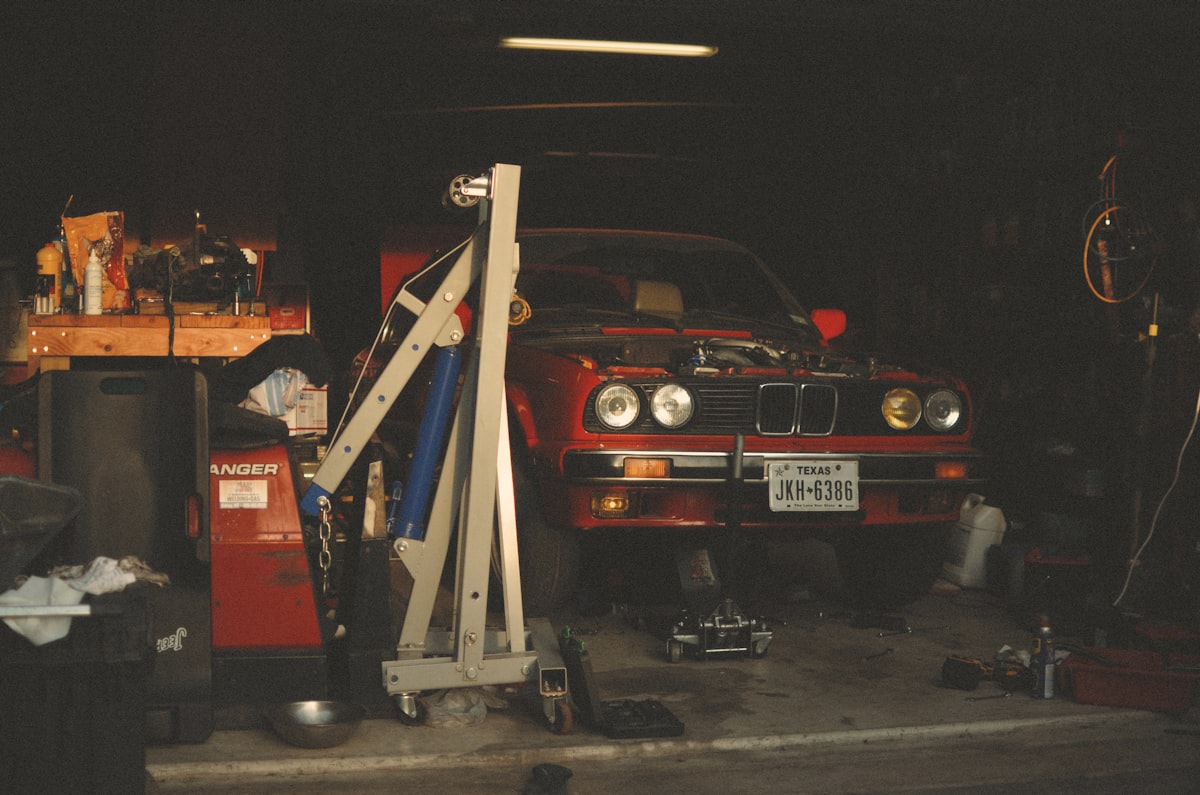
Murilee Martin found it. After nearly two decades of hunting through self-service yards across America, he finally spotted a rare 1986 BMW L7 sitting in a Denver car graveyard, sun-baked and worn but not completely trashed. But for a writer who's made a career chronicling abandoned automotive history, the discovery published on May 25th, 2026 is the first intact example of this rare machine he's found in a junkyard setting. It's a white whale moment.
The Cocaine Calculus of 1980s Luxury
Martin doesn't mince words. The 1986 BMW L7, in his assessment, is tied for the title of the cocainiest car of the middle 1980s, sharing that honor with its sibling the E24 L6. But the argument isn't just about the car. It's about the era it defined, when European luxury machinery became the preferred wealth-flaunting signifier for newly rich Americans and the L7 occupied a very specific niche within that ecosystem.
In my opinion, the honor of Cocainiest Car of the Middle 1980s is a two-way tie between two BMWs: the E24 L6 and the E23 L7.
Martin's got clear criteria for what qualifies. Japanese machinery was too sensible. American luxury cars belonged to an older generation. But the contenders had to be European. The C4 Corvette attracted track enthusiasts, not the white-powder crowd. Competitors included the Mercedes-Benz W126 coupe, which Martin acknowledges as strong competition, along with the Europe-only turbocharged 745i version of the E23. The Maserati Biturbo's on the list too, whose ownership demonstrated the buyer's cashflow for major repairs every few weeks, and Sterling, Jaguar XJ-S, and handful of others populating the parking lots of dubious savings and loans.
Inside the Leather-Wrapped World
The 1986 BMW L7 was a trim package for the 735i sold exclusively in the United States and Japan, and it held distinction of being most expensive BMW model sold in America for 1986. The MSRP was $42,920. So adjusted to 2026 dollars, that figure swells to roughly $130,413.
Water Buffalo and Power Buttons
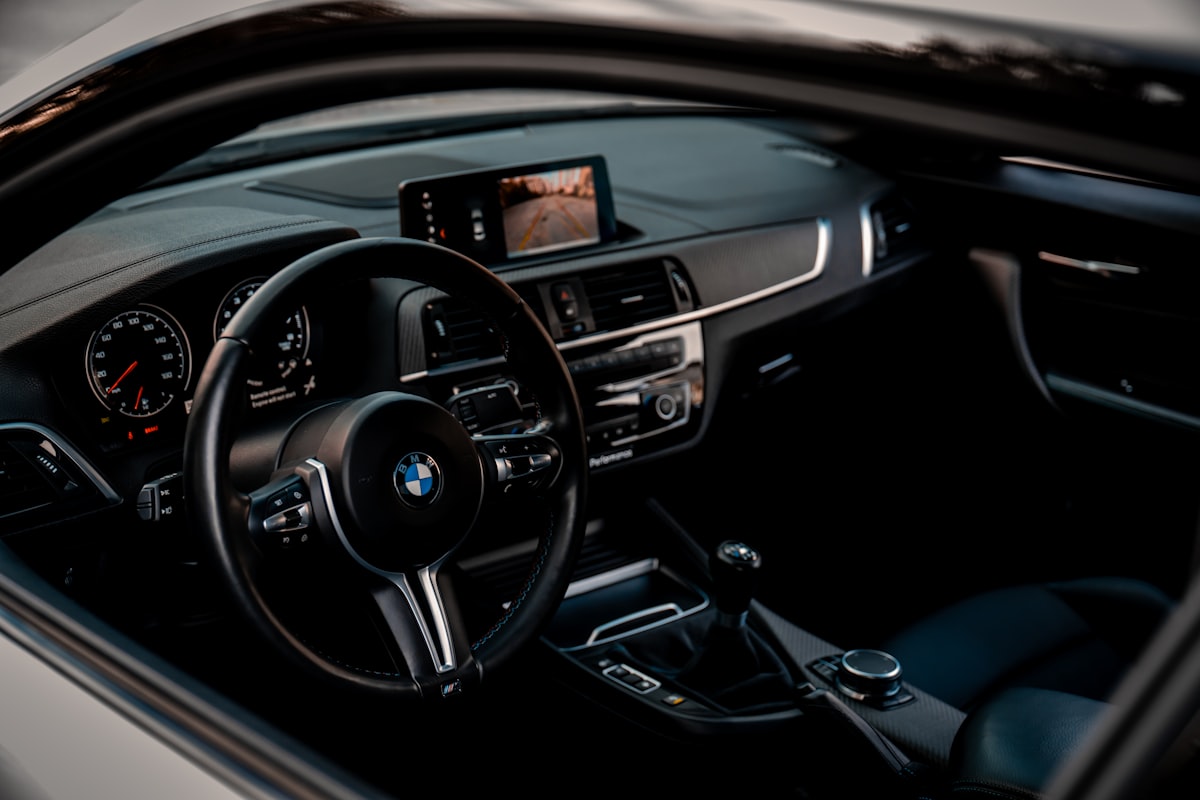
He's a silent witness. The brochure from 1986 described the upholstery as being made from natural hides, and Martin interprets this to mean water buffalo, but decades of Front Range Colorado sun haven't been kind, so the dash top material has grown crunchy and the power seat buttons raise a fair question about how many still worked by 1996. And the white-glove-wearing rear passenger depicted in the original brochure seems appropriately jaded, a silent witness to an era that rewarded certain kinds of ambition with very specific kinds of leather.
A Tape Deck Frozen in Time
The cassette deck held artifacts. Inside the discarded BMW, you'll find a Vienna State Opera Orchestra tape from 1983 and music from Maze Featuring Frankie Beverly, a band at its peak popularity soon after the car was sold. And it's got a cassette AUX adapter with Motor Trend branding. So these small details paint a portrait of a car that was loved, or at least used with a certain kind of enthusiasm, well past its prime.
The Powertrain That Outlasted the Glamour
Under the hood sits a 3.5-liter SOHC straight-six engine making 182 horsepower and 214 pound-feet torque, modest for its time, and 1986 buyers could choose a five-speed manual or four-speed automatic at no extra cost. But in his junkyard years, Martin struggles to imagine an L7 buyer willing to work a clutch pedal, though he allows that a few three-pedal versions may have been sold. He's documented exactly one manual E23.
This particular 1986 BMW L7 carries a respectable final odometer reading. It's not the highest. But the single BMW he's documented with better than 300,000 miles on the clock at the end is a 1982 E23, and that honor belongs to that car, not this one. The 7 Series has always been a rapid depreciator. Third and subsequent owners didn't always keep up with required maintenance and repairs, which explains why these cars often ended their lives in places like this Denver yard.
What the Boneyard Reveals
The final owner appears to have been a BMW enthusiast. In recent years, Martin observes, the crackle-tuned Evos and WRXs of the Colorado Front Range have given way to crackle-tuned BMW E46s and E90s trailing the same familiar haze of vape fumes and unburnt hydrocarbons. And this L7 carried a message from its last keeper aimed squarely at those drivers. It's left to imagination.
Look beyond the numbers. It's a rolling artifact from a specific window of American excess roughly 1985 through 1987 when the L7 was available new, and it represents something larger than a single discarded car. By 1986, a Mercedes-Benz 560 SEC cost $58,700, which comes to about $178,360 after inflation, but Martin argues the Benz was a lot stodgier and less willing to announce its owner's appetites to the world. The L7 wore its ambitions more openly. And it's that honesty, viewed from a Denver junkyard nearly four decades later, that feels almost refreshing.
- Available only for the 1985 through 1987 model years
- U.S. and Japan-only trim package built on the 735i platform
- Most expensive BMW sold in America for 1986 at $42,920 MSRP
- Engine: 3.5-liter SOHC straight-six with 182 hp and 214 lb-ft
- Transmission choice: five-speed manual or four-speed automatic, same price
- Interior upholstery described by BMW as "natural hides"
There is a broader context worth exploring here. The 1980s produced a generation of luxury cars that have aged in wildly different ways. Some became collectibles. Others became curiosities. The L7 falls somewhere in between. It is rare enough that Martin searched for two decades before finding this one. Yet it is not valuable enough to have been rescued from the crusher. The car that once cost more than any other BMW in the American showroom now sits among ordinary sedans and pickups, its buffalo hide cracked by the sun, waiting for the next stage of its journey. For anyone who remembers the era, or anyone curious about the machinery that defined it, the image of a 1986 BMW L7 in a Denver graveyard says more than any brochure ever could.
Frequently Asked Questions
What made the 1986 BMW L7 significant in the context of 1980s luxury cars?
The 1986 BMW L7 is tied for the title of the 'cocainiest car of the middle 1980s' in Murilee Martin's assessment, sharing this honor with the E24 L6. It was seen as a preferred wealth-flaunting signifier for newly rich Americans, reflecting a specific era when European luxury machinery defined a certain ecosystem of American excess.
What was the original MSRP for the 1986 BMW L7, and what is its approximate equivalent in 2026 dollars?
The 1986 BMW L7 had an original Manufacturer's Suggested Retail Price (MSRP) of $42,920, making it the most expensive BMW model sold in America for that year. Adjusted to 2026 dollars, that figure swells to roughly $130,413.
In which markets was the 1986 BMW L7 trim package exclusively sold, and for how many model years was it available?
The 1986 BMW L7 was a trim package for the 735i sold exclusively in the United States and Japan. It was available for a limited period, only being offered for the 1985 through 1987 model years.
What were the powertrain specifications and options for the 1986 BMW L7?
Under the hood, the 1986 BMW L7 was equipped with a 3.5-liter SOHC straight-six engine that produced 182 horsepower and 214 pound-feet of torque. Buyers had the choice of either a five-speed manual or a four-speed automatic transmission at no additional cost.
Why did cars like the 1986 BMW L7 often end up in junkyards, despite their initial luxury status?
The 7 Series, including the L7, was known as a rapid depreciator, meaning its value decreased quickly over time. Third and subsequent owners often did not keep up with the required maintenance and repairs, which led to these cars frequently ending their lives in places like the Denver junkyard.

Clara Rossi covers the motoring world, with a focus on electric vehicles, design and the shift toward cleaner transport. She tests the latest models and explains what matters to drivers beyond the spec sheet.
💬 Comments (0)
No comments yet. Be the first!