What Is the Dodge Copperhead SRT?
Dodge previewed the Copperhead SRT concept after Stellantis's shareholder meeting, signaling a new halo sports coupe inspired by the Viper with aggressive aero.
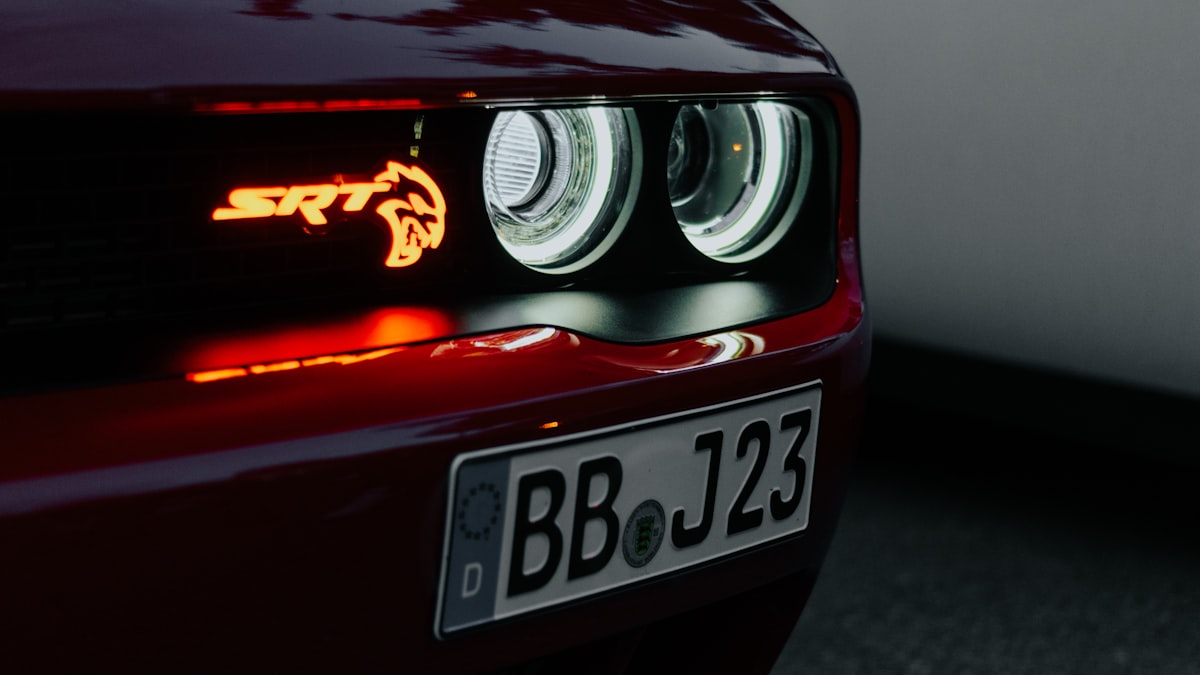
Dodge Copperhead SRT emerged from the shadows of a Stellantis shareholder meeting, arriving not with a roar but a carefully controlled whisper, and select outlets received an exclusive look at the concept, though sharing images was expressly forbidden. They've waited years. What leaked out, largely through Car and Driver's detailed account, was enough to confirm that the brand's working on a genuine sports coupe, a two door ground hugging machine draped in aggressive aero and bearing a snake themed badge. So the void left by the Viper may finally have an occupant, even if the company's insisting otherwise.
The Snake Pit Widens
The name itself carries baggage. Dodge first used the Copperhead badge on a 1997 concept vehicle, which was a scaled-down version of the Viper. That car was positioned as an affordable entry point to the snake family, a V10 alternative for buyers who could not stretch to the full flagship. It never reached production. Executive skepticism about market demand and the shifting ownership structure of Chrysler's legacy brands sealed its fate. Now the name returns, attached to something that looks poised to fill a similar role nearly three decades later. The strategic logic is hard to ignore. A range topping halo coupe with near hypercar performance potential, sharing architecture with the existing Charger lineup to contain costs. It is a playbook that acknowledges economic realities while still reaching for something theatrical.
What the Design Reveals
Photographs can't be seen. So the written record must suffice. Car and Driver described the Dodge Copperhead SRT in vivid terms after the private viewing, noting the long, low body with sleek two-door silhouette but a hood that stops short of Viper proportions. Slim LED headlights nestle into a front fascia dense with vents and grilles. A massive S-duct carves through the hood, channeling air over the cabin; a separate hood vent feeds cool air to the engine beneath a prominent central bulge. Brake cooling ducts sit behind the front wheels. At the rear, a wing described as a shrunken version of the Viper ACR's appendage dominates the landscape.
Car and Driver described it as: "The body is long and low, with a sleek and aggressive two-door shape. The hood isn't as lengthy as that of a Viper, however, and the hard points suggest that this range-topper is based on the Charger. Still, this is a far more extreme performance vehicle than the Charger.
Exhaust tips confirm internal combustion. A snake logo on the bodywork echoes the Viper badge. The tail lights slant inward, another nod to the departed flagship. It looks the part. But that framing misses something. CEO Tim Kuniskis has been careful to state that the Dodge Copperhead SRT is not a successor to the Viper. He is technically correct. The Viper was a bespoke machine, built on its own platform with a singular, uncompromising character. This coupe rides on the Charger's hard points, a different kind of animal entirely.
V8 or Hybrid?
Dodge offered no confirmation on powertrain specifics. Those who saw the concept walked away convinced a V8 lives beneath the vented hood. The source material also noted claims of possible hybridization, aligning with the direction many high performance vehicles have taken recently. No displacement figures, no horsepower targets, no battery capacity. None of that was shared. What is known is that the Dodge Charger SRT refresh, previewed alongside this concept, will see the Hemi V8 return to the lineup. The engine is not dead. That bodes well for the coupe.
A Platform Play, Not a Successor
1997 serves as a useful reference point. The original Copperhead concept failed because executives could not see a market for a dedicated sports car priced below the Viper. Today's landscape is more complicated. Disposable incomes have not kept pace with the rising cost of performance vehicles. Emissions regulations and increasing vehicle mass pushed sports cars upmarket. Manufacturers discovered they could expand margins by limiting production volumes on anything interesting, a complete inversion of the mass produced performance era that gave us cars like the Mitsubishi Eclipse. The Dodge Copperhead SRT, by sharing DNA with the Charger, attempts to sidestep some of that cost inflation. Parts availability improves. Development costs spread across a broader base. Theoretically, pricing stays within reach of more than just the collector circuit.
But this won't be cheap. The source material makes it clear this isn't a budget proposition like a Mazda MX-5 or Toyota GR86, what with the extreme aerodynamics, the V8 expectation, and the near hypercar performance hints all pointing toward a premium ask. And Dodge is already asking roughly $50,000 for the R/T and $56,000 for the Scat Pack, both powered by the twin turbo inline six. So one wonders how much headroom remains for a V8 halo coupe before the pricing alienates the Mopar faithful it's meant to win back.
GLH and the Hemi Return
Alongside the Dodge Copperhead SRT concept, Stellantis previewed a broader performance push, and GLH hatchback variants are on the table and they're reviving a nameplate that older enthusiasts remember with genuine fondness. The Charger SRT refresh promises the Hemi V8's return. Taken together, these moves signal a deliberate effort to reconnect with a buyer base that felt abandoned during the electrification pivot. But whether that reconnection succeeds depends on something the source article stresses repeatedly. Pricing must remain sane.
The Long Road to Production
Timelines introduce their own uncertainty. A public reveal might happen later in 2026, but even if the Dodge Copperhead SRT breaks cover on schedule, production would likely not begin for another three or four years. That places a potential debut three or four years after 2026. A lot can change in that window. Regulatory environments shift. Corporate priorities pivot. The car could be scrapped entirely, just like its 1997 predecessor. The source article captured this risk plainly, noting the concept could easily vanish between now and the end of the decade.
- Private concept preview occurred after a Stellantis shareholder meeting
- Vehicle shares architecture with the Dodge Charger to manage costs
- Public reveal possible in 2026, production three to four years after that
- Project could be cancelled before reaching production, similar to the 1997 Copperhead
For now, the Dodge Copperhead SRT exists as a promise and a provocation, acknowledging the Viper-shaped hole needs filling and signaling internal combustion still has a seat, even if hybridization lurks in the background. It offers enthusiasts something to watch for during an era when affordable performance grows scarcer by the model year. But it's got no guarantees. Just a snake badge, a massive wing, and the hope that this time the concept actually makes it to the road.
- Ford Mustang, Mazda MX-5, and Toyota GR86 remain among the few mass market performance cars still available
- GLH hatchback variants and Charger SRT with Hemi V8 also previewed
- R/T and Scat Pack inline six models currently start at approximately $50,000 and $56,000

Clara Rossi covers the motoring world, with a focus on electric vehicles, design and the shift toward cleaner transport. She tests the latest models and explains what matters to drivers beyond the spec sheet.
💬 Comments (0)
No comments yet. Be the first!