AMG GT 4-Door Coupe EV Unveiled: 1,153 HP
Mercedes has taken the wraps off its first electric AMG, the AMG GT 4-Door Coupe, packing 1,153 hp and a sub-2-second 0-60 time.
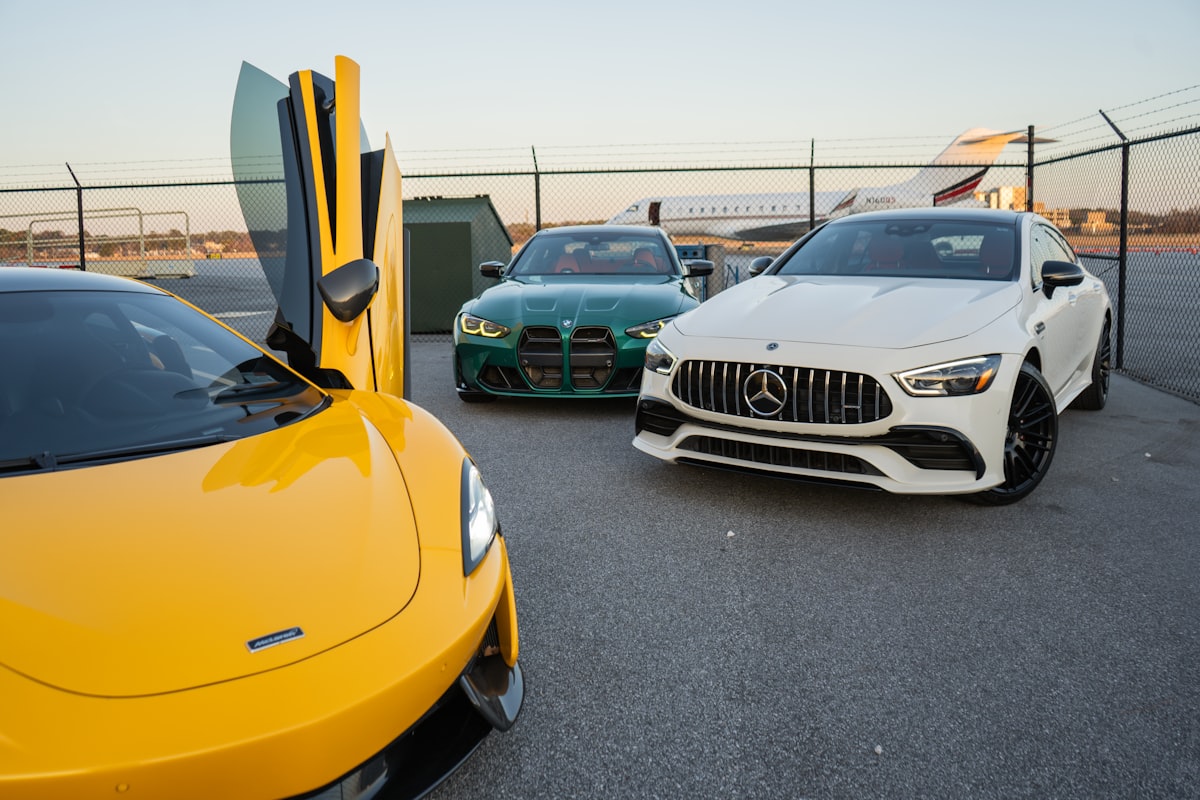
The AMG GT 4-Door Coupe has arrived in Los Angeles. The numbers are staggering. Mercedes chose the city for the world premiere of its first electric AMG, a machine that pushes out 1,153 horsepower and rockets from zero to 60 mph in two seconds flat. That makes it the most powerful production car the company's ever built, eclipsing even the limited-edition, $2.7 million AMG ONE hybrid and its comparatively modest 1,049 peak horsepower. But numbers only tell half the story with this car.
Axial Flux Motors Make Their Debut
Here is the part the press release could have buried but didn't. The AMG GT 4-Door Coupe is the first series-production EV to use axial flux motors from Mercedes' record-breaking GT XX concept, which circled a test track in Italy for eight days straight covering 24,901 miles. Now it's for customers.
Axial flux sounds complicated, but the idea is simple. Instead of a rotating cylinder, these motors use flat circular plates. Each unit measures under 3.5 inches thick. They are 67 percent smaller and lighter than traditional radial flux motors, yet deliver twice the torque density and three times the power density.
Mercedes acquired YASA, the British firm behind this technology, in 2021. The same company supplied motors for some of the most extreme hybrids on the planet:
- Koenigsegg Regera
- Ferrari SF90
- Lamborghini Revuelto
On the AMG GT 4-Door Coupe, three axial flux motors sit inboard on the axles. One drives the front wheels. Two drive the rear. In the top-spec AMG GT 63, the combined output reaches 1,153 horsepower with launch control engaged and the battery above 80 percent. The lower-spec GT 55 produces 805 horsepower.
And this is where it gets interesting. The electrical architecture can handle up to 1,300 horsepower. The car is not maxed out yet.
The Fake V8 Controversy
Now for the awkward part. The AMG GT 4-Door Coupe comes with a suite of simulated combustion engine theatrics. By default, Sport+ mode activates fake V8 noises, a fake nine-speed transmission, and fake vibrations through the seats. Paddle shifters let you row through imaginary gears. A fake tachometer on the display mimics the seven-thousand-RPM redline of the old AMG V8, even though the real motors spin to thirteen thousand RPM at the rear and fifteen thousand up front.
It's synthetic. Mercedes had an F1 development driver and its CEO take the car out for a demonstration, and at roughly three and a half minutes into the company's video you can hear it. The engineers copied the characteristics of a combustion engine down to the redline bog and torque curve limitations, and the car will even cut power if you stray outside the simulated powerband.
But that framing's missing something. Race mode strips all of it away, so there's no torque interruptions and no fake shifts, just relentless electric acceleration, and it's the driver who chooses.
"Carry the legacy of AMG into the electric era."
That is how Mercedes positions this experiment. The AMG customer is particular, the company argues. Heritage matters. The sound and feel of a V8 still pull at buyers who might otherwise resist an electric car.
What the Simulation Actually Does
The system is thorough, if nothing else. It limits speed to roughly 20 miles per hour unless you shift out of first gear. It sends pulses through motors embedded in the seats. The torque curve bends to mimic combustion lag. Mercedes calls it emotional. Skeptics will call it something else.
Turn it all off. But with over a thousand horsepower on tap in Race mode, you can turn it all completely off and still nobody will feel shortchanged by the silence.
Battery Speed and Clever Packaging
It's 106 kWh. The pack runs on 800 volts with a silicon anode and NMCA cathode, the same approach as the electric G-Class, and Mercedes won't confirm if it's from Sila Nano, a company they've invested in heavily. They confirmed a charge rate over 600 kW on an 800-volt charger, enough to fill from 10 to 80 percent in roughly 11 minutes.
It's different at lower speeds. So on a 200-kilowatt charger, Mercedes says it's a flat line, and the car will sustain its maximum intake longer than most competitors can hold their peak. In the United States, the AMG GT 4-Door Coupe ships with a NACS port.
Cell Design and Passenger Space
The battery contains 2,660 individual cells, each measuring 105 millimeters high and 26 millimeters in diameter. Smaller cells improve cooling by increasing surface area relative to volume. Mercedes custom-developed this form factor. No other vehicle uses it.
The pack's low. Not flat. So engineers carved out rear foot garages, cutouts that let back-seat passengers sink their feet lower, and the result is more knee room and headroom than the battery placement would normally allow. The entire vehicle sits an inch and a half lower than the outgoing AMG GT four-door, despite the battery floor beneath it.
Range estimates land between 371 and 435 miles on the WLTP cycle. EPA figures will be lower. Those are still preliminary numbers.
Inside the Cabin
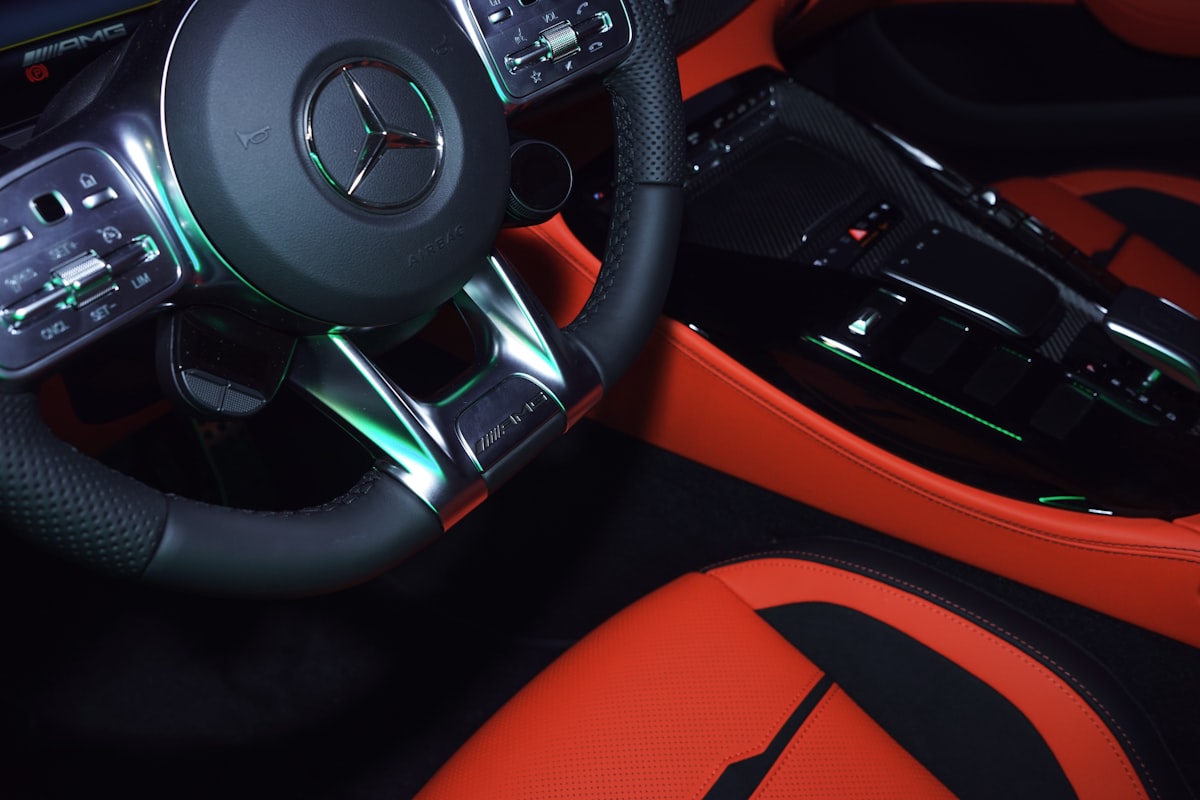
Three screens stretch across the dashboard. Two face the driver, one faces the passenger. Physical controls for climate and audio volume are absent from the dash itself, though the steering wheel retains a volume knob. The most tactile inputs are three physical knobs on the center console that adjust response, agility, and traction. Mercedes calls this the AMG Race Engineer system.
The four seats are heavily bolstered. An optional rear bench accommodates three passengers, though the middle occupant loses the foot garage and gains less legroom. The panoramic glass roof uses electrochromic glass, switching between opaque and transparent, surrounded by ambient lights that create what Mercedes describes as a sparkling canvas.
Practicality survives the performance brief. The rear trunk holds three pieces of luggage, two golf bags, or skis for four people through the center pass-through. The frunk adds more storage.
Arrival and Pricing
The 2027 Mercedes-AMG GT 4-Door Coupe reaches U.S. dealerships in stages. The GT 55 arrives later in 2026, followed by the GT 63 in early 2027. Mercedes has not released pricing, but states it will follow a similar strategy to the predecessor. Expect six figures as a starting point.
But car pulls and pulls without letting up on 6th Street Bridge in Los Angeles during event; the visceral takeaway is even with all theatrics available, it's raw acceleration that leaves strongest impression. The author test-rode briefly.
So what does this actually mean for buyers? Mercedes built a car with split personalities on purpose. One mode indulges nostalgia. Another unleashes the full electric potential. The driver decides which version of the AMG GT 4-Door Coupe they want at any given moment. That flexibility, not the horsepower alone, may be what carries the legacy forward.
Frequently Asked Questions
What are the key performance specifications of the top-spec AMG GT 4-Door Coupe EV?
The top-spec AMG GT 4-Door Coupe EV, the GT 63, delivers a combined output of 1,153 horsepower with launch control engaged and the battery above 80 percent. This powerful machine can rocket from zero to 60 mph in two seconds flat, making it the most powerful production car Mercedes has ever built.
What advanced motor technology is used in the AMG GT 4-Door Coupe EV?
The AMG GT 4-Door Coupe EV is the first series-production EV to incorporate axial flux motors. These motors are significantly smaller and lighter than traditional radial flux motors, being 67 percent smaller and lighter, while also providing twice the torque density and three times the power density.
How does the AMG GT 4-Door Coupe EV cater to drivers who appreciate traditional combustion engine characteristics, and how can drivers experience pure electric performance?
In Sport+ mode, the AMG GT 4-Door Coupe EV offers simulated combustion engine theatrics, including fake V8 noises, a fake nine-speed transmission, and simulated vibrations through the seats. However, drivers can choose Race mode, which strips all of these simulations away, providing relentless electric acceleration without torque interruptions or fake shifts.
What are the battery capacity and rapid charging capabilities of the AMG GT 4-Door Coupe EV?
The AMG GT 4-Door Coupe EV features a 106 kWh battery pack operating on 800 volts. It supports a charge rate over 600 kW on an 800-volt charger, allowing it to fill from 10 to 80 percent in approximately 11 minutes.
When is the AMG GT 4-Door Coupe EV expected to be available in the U.S., and what are some of its practical interior features?
The GT 55 variant of the AMG GT 4-Door Coupe EV is expected to arrive in U.S. dealerships later in 2026, followed by the GT 63 in early 2027. Practical features include rear foot garages that enhance knee and headroom for back-seat passengers, and a rear trunk capable of holding three pieces of luggage, two golf bags, or skis for four people through a pass-through.

Sebastian Wolf reports on the car industry, from performance machines to the engineering that powers them. He is fascinated by how manufacturers balance tradition with the rapid move to electrification.
💬 Comments (0)
No comments yet. Be the first!