I Tested Audi's Adaptive Beam Headlights. They're Finally Coming to America.
Adaptive beam headlights are finally coming to America. I tested them in an Audi Q3; here's what you need to know.
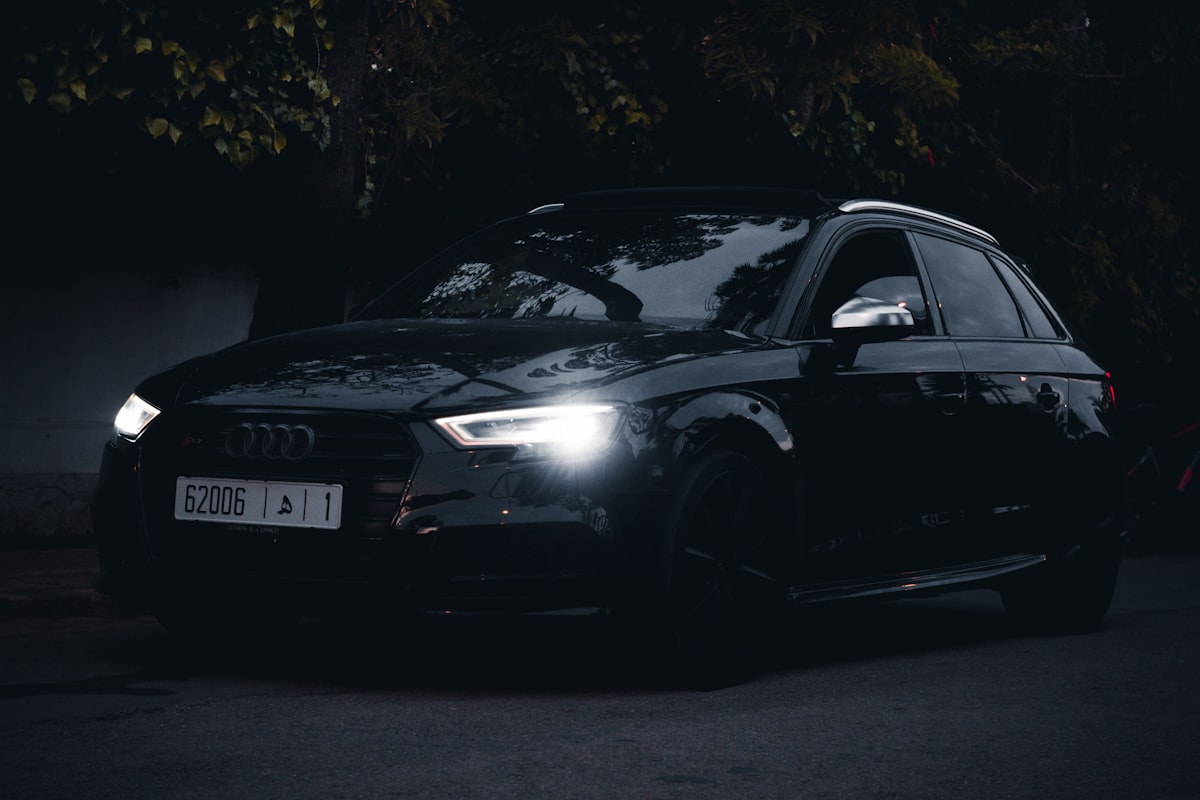
Adaptive beam headlights are finally making their way to American roads, and after testing them on a night drive through Munich, I can say with confidence that the wait has been far too long. When Audi's Q9 SUV goes on sale in the US later this year, it will carry the automaker's latest digital matrix LED technology, a system that has been commonplace in Europe and Japan for over a decade but remained stubbornly out of reach for American drivers.
A Night Drive That Changes Everything
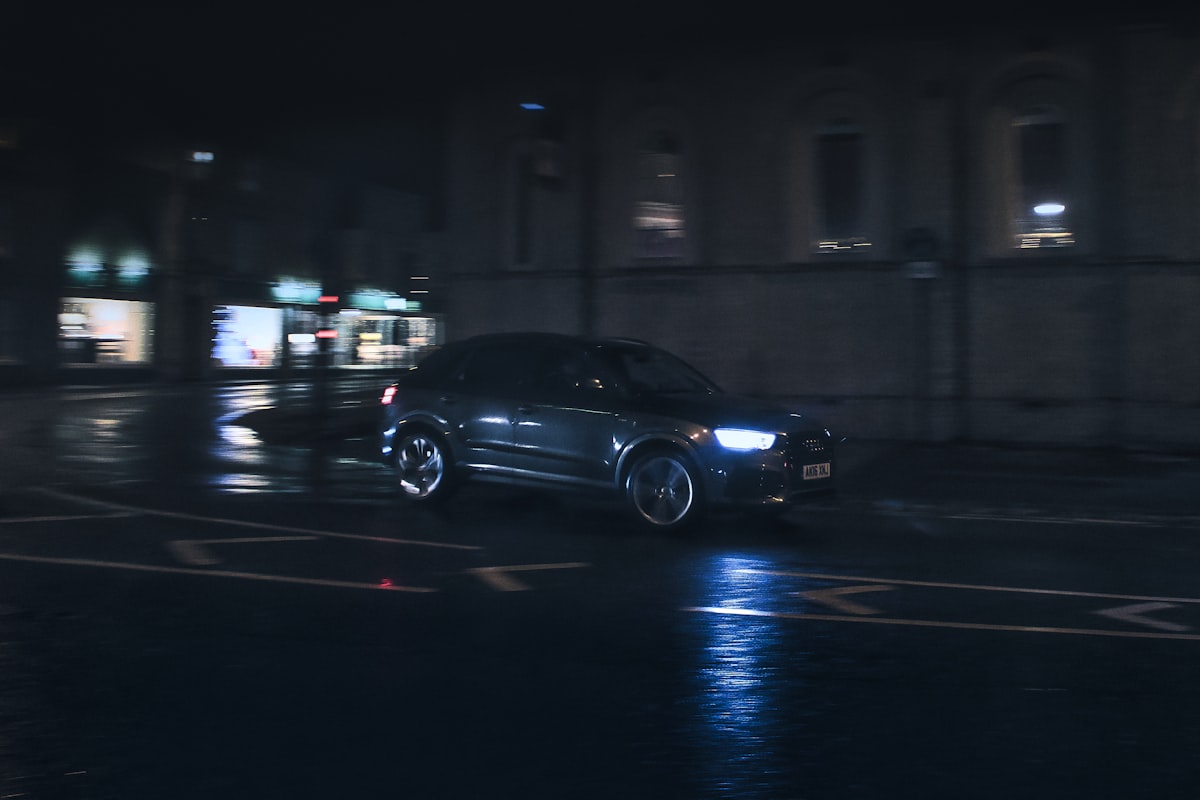
The irony of my test drive was not lost on me. Audi did not have any full-size Q9s ready during my visit, so the company handed me the keys to a diminutive Q3 instead. Same technology. Smaller package. The autobahn after dark became my proving ground.
I set the headlights to auto beam and immediately noticed the difference. The road ahead was flooded with bright, clean light, far more than you would get from standard low beams. But here is the trick. The system did not blind anyone. Oncoming cars passed without a single flash of protest. The beams shaped themselves around other vehicles in real time, carving out dark pockets precisely where other drivers sat. It felt like magic.
It is not magic, though. Each headlight contains 25,600 individually addressable elements. Tiny LEDs that can switch off in microseconds. When the system detects an oncoming vehicle, it does not dip the entire beam. It simply turns off the pixels that would otherwise hit that car. Everything else stays lit. The result is a high-beam experience without the high-beam guilt.
"It's about time," I thought, and I meant it.
Why Americans Waited So Long
The answer sits in a regulatory time capsule from the 1960s. For decades, federal rules recognized only two settings: low beam and high beam. Nothing in between. No gradation. No intelligence. While European and Japanese regulators approved adaptive driving beam technology years ago, often following road tests by vehicle regulators and independent testing authorities, the US system moved at a glacial pace.
Toyota was the first company to formally ask NHTSA for permission to import adaptive beam headlights. That was in 2013. The same year Audi introduced the technology in Europe on the A8. NHTSA did not agree until 2022. Nine years. The agency determined that testing protocols used in Europe and Japan were not stringent enough for American roads, where automakers self-certify their compliance rather than seeking government type approval.
The testing regime NHTSA ultimately required was exhaustive. Audi told me it took about a year to complete. Months of road tests. Months of lab work. Every scenario had to prove the lights would not dazzle oncoming traffic. The bar was high. Perhaps too high for too long.
The lobbying effort spanned years and involved some of the biggest names in the industry:
- Audi
- BMW
- Mercedes-Benz
- Toyota
- Volvo
These manufacturers represent the bulk of the premium and safety-focused market. They all had adaptive beam headlights ready for production. They all faced the same locked door.
What the Lights Actually Do
Beyond the core trick of masking oncoming traffic, the system surprised me with a subtler feature. The headlights also gate out road signs at a certain distance. Highly reflective signs can bounce light back at the driver, creating glare. The system dims the pixels aimed at those signs.
And no, this did not prevent me from reading them. The signs remained perfectly legible. The glare simply vanished. The precision is remarkable. With 25,600 elements per light, the beam can be sculpted with surgical accuracy. A dark rectangle around a car a quarter mile ahead. A dimmed patch over a reflective sign. All while the surrounding road stays brilliantly illuminated.
How the Sign Gating Works
The logic is straightforward. Reflective surfaces return light to the source. At close range, that returned light can be blinding. The system identifies signs, calculates the distance, and gates out the pixels that would cause glare. The sign stays readable. The driver stays comfortable. It is the kind of thoughtful engineering that makes you wonder why every car does not have it.
The Tricks America Still Cannot Have
Here is where the story takes an unexpected turn. The European version of these adaptive beam headlights can do more. Much more. NHTSA might have relented on active beam shaping, but it still has some way to go before approving light projections onto the road surface while the car is in motion.
But that framing misses something. The entire point of these projections is to keep the driver's eyes on the road. They are not entertainment. They are safety features delivered through light.
The Light Carpet
European models can project shapes and warnings directly onto the pavement. The list of capabilities is impressive:
- A light carpet that highlights the lane ahead as a visual departure warning once the car exceeds a certain speed
- Illumination of the adjacent lane when signaling to overtake or change lanes
- A distance indicator showing the gap to the car ahead
- An ice warning projected onto the road surface during low temperatures
None of these features will be active on US-spec cars at launch. NHTSA has not approved them. But the hardware is already there. Every projector. Every sensor. Every LED. Audi confirmed that if the agency relents, a software update is all it takes to unlock the full capability.
What Comes Next
The Q9 will be the first Audi in America with adaptive beam headlights. It will not be the last. Once one model clears the regulatory path, the fleet follows. Other automakers who spent years lobbying alongside Audi are no doubt watching closely.
The broader shift is undeniable. Headlights are no longer simple bulbs in reflectors. They are becoming active safety systems, on par with automatic emergency braking and lane keeping assistance. The ability to see better at night without endangering others is not a luxury feature. It is a fundamental safety improvement. NHTSA eventually recognized that. The question now is how long it will take for the agency to approve the rest of what these systems can do. After my night drive in Munich, one thing is clear. The technology works beautifully. American drivers have been missing out for far too long.
Frequently Asked Questions
What are adaptive beam headlights?
Adaptive beam headlights use sensors and cameras to automatically adjust the headlight beam pattern, dimming or redirecting light to avoid blinding other drivers while maximizing visibility.
Why are adaptive beam headlights only now coming to America?
U.S. regulations previously required separate low and high beams, but a 2022 NHTSA rule change now allows adaptive beam technology to be approved for use on American roads.
How do adaptive beam headlights improve safety?
They provide constant high-beam-like illumination without dazzling oncoming traffic, helping drivers spot pedestrians, animals, or obstacles sooner.
Which Audi models will get adaptive beam headlights in the U.S.?
Audi plans to introduce the technology on select 2024 models, starting with the Q8 e-tron and A8, with broader rollout expected.
Can I retrofit adaptive beam headlights on my older Audi?
Retrofitting is complex and costly due to required sensors, cameras, and software integration, and is generally not recommended by Audi.

Clara Rossi covers the motoring world, with a focus on electric vehicles, design and the shift toward cleaner transport. She tests the latest models and explains what matters to drivers beyond the spec sheet.
💬 Comments (0)
No comments yet. Be the first!