I Found a 1976 Chevrolet Chevy Van in a Junkyard
A 1976 Chevrolet Chevy Van with purple shag carpet and a 350 V8 was discovered sitting in a Denver junkyard.
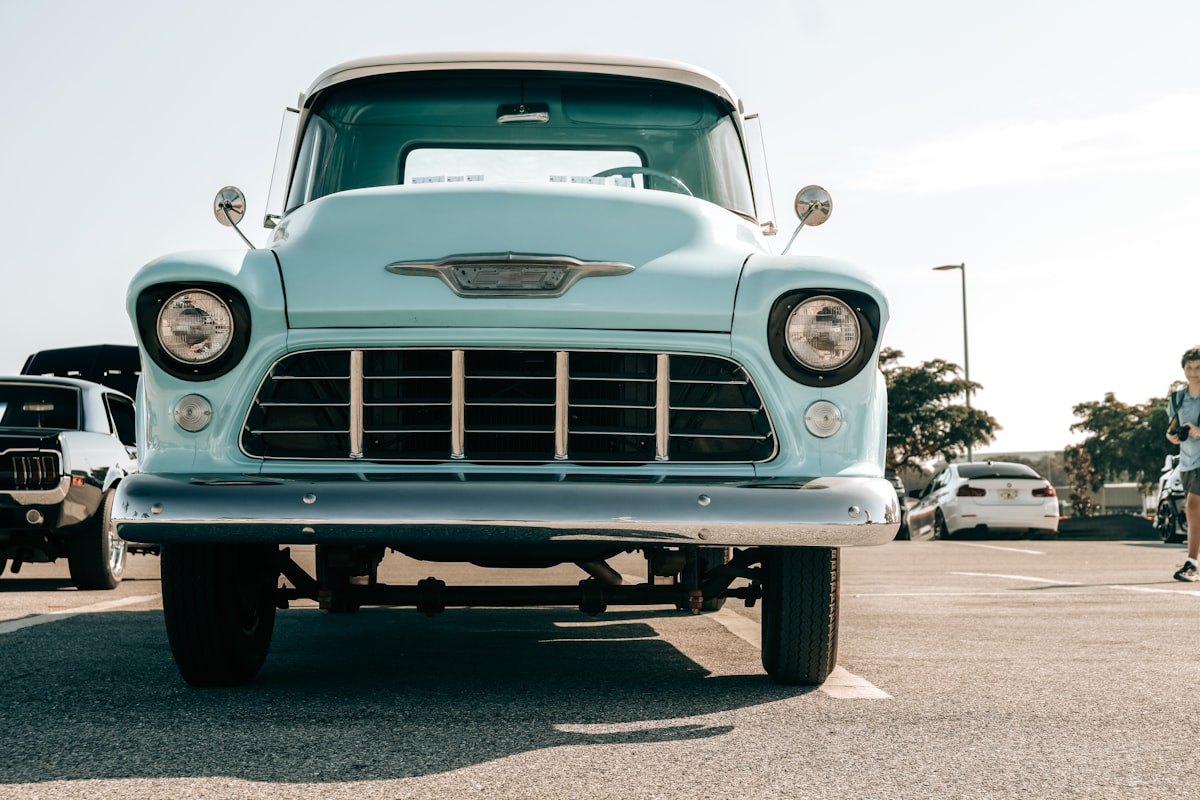
The 1976 Chevrolet Chevy Van is a blank canvas from America's custom van era. It's increasingly rare to find an intact survivor now, as most have rusted out or lost their period-correct modifications over the last fifty years, but a recent discovery in a Denver, Colorado salvage yard has brought one back into the light. This van offers a detailed look at the specific options and aftermarket trends that defined the mid-1970s utility vehicle market. And that's a big deal.
This particular vehicle, built at the Lordstown Assembly plant in November 1975, managed to preserve its era-specific features despite decades of neglect. It's a time capsule. Towed into the recycling ecosystem only recently, the vehicle showcases the exact blend of factory specifications and aftermarket personalizations that characterized the customized van phenomenon.
An intact time capsule in Colorado
This van survived. The salvaged 1976 Chevrolet Chevy Van kept its original interior treatment almost entirely intact, and inside you'll find authentic deep-pile purple shag carpeting complete with blue patches. It's dry. Because of the dry climate of High Plains Colorado, the textile has remained dry and smells mostly of dust rather than damp mold. But the customizer added an aftermarket sunroof, a feature General Motors didn't offer from the factory for the 1976 model year.
To maintain what could be described as a shred of mainstream respectability, the original builder chose standard aftermarket bubble windows instead of the more provocative shapes common in the mid-1970s, such as playing cards or brand logos. These windows were widely available to consumers during the era through catalogs like J.C. Whitney. The audio system was upgraded using a pair of no-brand-name Taiwanese 6-inch by 9-inch speakers, a staple of budget-conscious audio installations of the period.
Deciphering the factory build sheet
The GM Service Parts Identification label tells the story. It reveals the exact financial and mechanical footprint of this half-ton G-Series model, and the original buyer added high cost to the base retail price of $3,811, which equates to roughly $22,890 in 2026 valuation.
Key factory options and pricing
- Three-speed automatic transmission: $300 (roughly $1,802 after inflation)
- Air conditioning system: $571 (roughly $3,430 in 2026 dollars)
- Powerplant upgrade: 350-cubic-inch four-barrel small-block V8
- Base transmission replaced: Three-on-the-tree manual
The 1976 half-ton G-Series came with a standard 250-cubic-inch straight-six. But this one got the optional 350 V8 with a Quadrajet carburetor and High Energy Ignition, and it's rated at 160 horsepower and 255 pound-feet of torque, so the overall fuel economy sits at 13 mpg. General Motors offered 305- and 400-cubic-inch small-blocks, and the larger three-quarter and one-ton models could be ordered with a 292-cubic-inch straight-six for buyers seeking different power levels. No big-block V8 engines were offered.
Naming conventions and dealer history
General Motors used several naming structures for its light-duty utility line. The Chevy Van name dates back to 1964 and the early forward-control G-Series cargo models, which originally featured a hyphenated badge. So by the mid-1970s, the corporation established a standardized naming convention that lasted until production ended in 1996. It's a straightforward system. Chevrolet cargo models were designated as Chevy Vans, while passenger-carrying versions were sold as Sportvans, and the GMC division marketed its cargo variants as the Vandura and its passenger models as the Rally.

A dealer badge on the rear of this 1976 Chevrolet Chevy Van indicates it was originally sold by Van Chevrolet, a dealership operating in the Dallas area at the time. But the vehicle eventually migrated to Colorado, and its paperwork confirms a history of interstate travel that includes an insurance card from 1985 listing a Houston address and various old road maps found inside the cabin suggesting regular journeys between the Mississippi River and the Rocky Mountains. It was last registered in Jefferson County, Colorado. Those license plates expired in April 1989.
The decay of a salvaged legend
Vehicles stored outdoors in Colorado face specific environmental challenges. But the dry air preserves interior fabrics. Winter snow accumulation around the lower body panels leads to severe corrosion, and this vehicle suffered rust damage along its rocker panels, a common consequence of being parked in areas where snow piles up. Water leaks through the aftermarket sunroof and degraded door weatherstripping further accelerated the cosmetic deterioration of the body. It's a tough environment.
The odometer shows 83,205 miles. That's likely original, since the vehicle was only active for twelve or thirteen years before its owner parked it permanently in 1989, and the cargo area still holds miscellaneous parts like what appears to be the grille bezel from a 1977 Pontiac Grand Prix. So it now sits as a complete, if weathered, monument to a highly specific era of American automotive personalization.
"Value! That's what you get in a Chevy space van."
According to country music figure Tom T. Hall, "Value! That's what you get in a Chevy space van. However, the cultural legacy of the 1976 Chevrolet Chevy Van relies far more on the owner-built creations that filled the highways of the late twentieth century. This Denver find serves as a physical record of that cultural moment, preserving the actual materials and choices of a movement.
Frequently Asked Questions
What factory-installed engine upgrade was chosen for the 1976 Chevrolet Chevy Van found in the junkyard?
The van was equipped with the optional 350-cubic-inch four-barrel small-block V8, replacing the standard 250-cubic-inch straight-six. This engine is rated at 160 horsepower and 255 pound-feet of torque, with a fuel economy of 13 mpg.
Why did the interior of this 1976 Chevrolet Chevy Van remain in relatively good condition despite decades of neglect?
The van was stored in the dry climate of High Plains Colorado, which preserved the interior fabrics. The deep-pile purple shag carpeting remained dry and smelled mostly of dust rather than damp mold.
How did the aftermarket customization of this van differ from typical mid-1970s van modifications?
The original builder chose standard aftermarket bubble windows instead of more provocative shapes like playing cards or brand logos. This was done to maintain a shred of mainstream respectability.
When was this 1976 Chevrolet Chevy Van last registered, and what does the odometer reading suggest about its usage?
The van was last registered in Jefferson County, Colorado, with license plates that expired in April 1989. The odometer shows 83,205 miles, which is likely original since the vehicle was only active for twelve or thirteen years before being parked permanently.
Which dealership originally sold this 1976 Chevrolet Chevy Van, and what evidence shows its later interstate travel?
A dealer badge indicates it was originally sold by Van Chevrolet, a dealership in the Dallas area. Paperwork confirms interstate travel, including an insurance card from 1985 listing a Houston address and old road maps suggesting regular journeys between the Mississippi River and the Rocky Mountains.

Clara Rossi covers the motoring world, with a focus on electric vehicles, design and the shift toward cleaner transport. She tests the latest models and explains what matters to drivers beyond the spec sheet.
💬 Comments (0)
No comments yet. Be the first!