XPENG IRON Humanoid Robot Raises $900M
XPENG's physical AI unit secured over $900 million at a $6.3 billion valuation to scale its IRON humanoid robot platform.
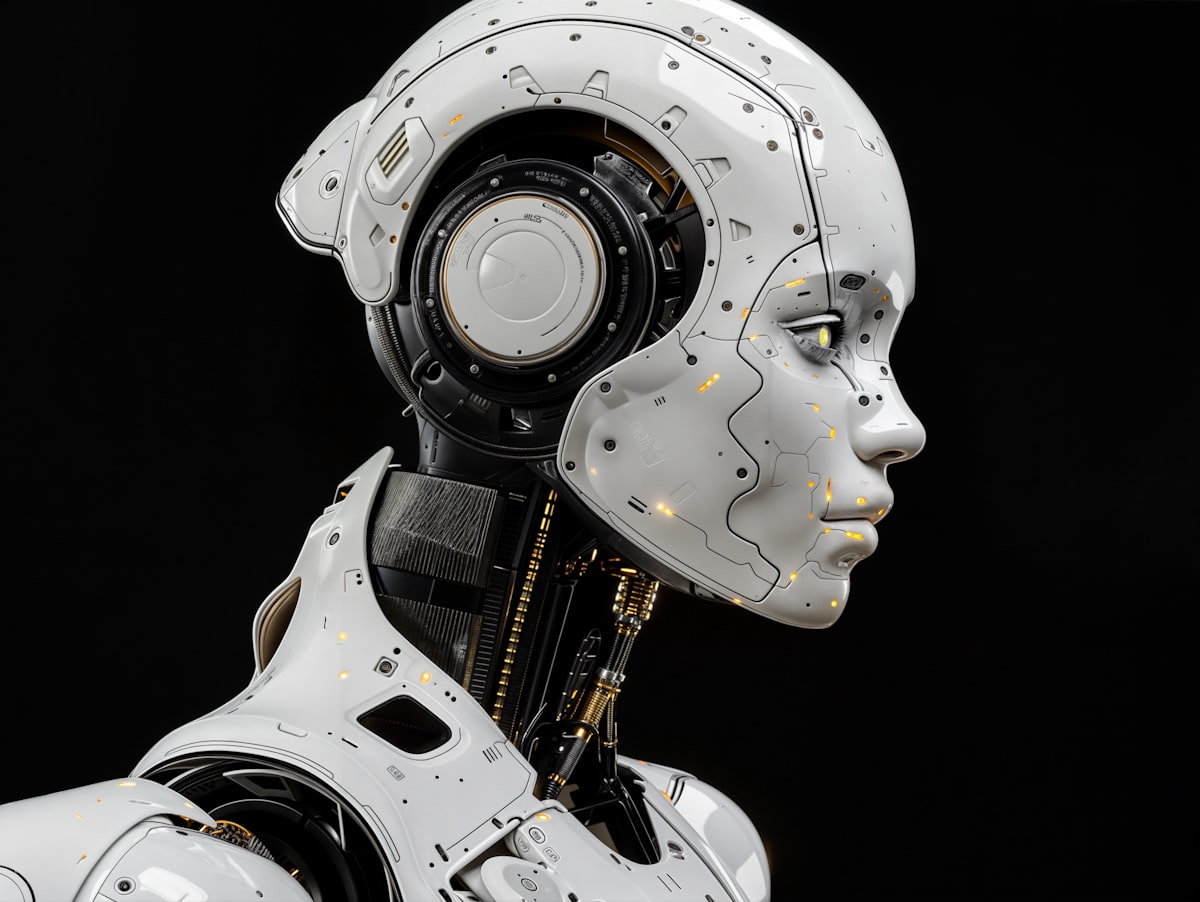
XPENG IRON humanoid robot funding has smashed records in China’s physical AI sector, with the robotics unit securing more than $900 million at a $6.3 billion valuation. The Chinese electric vehicle maker announced the capital injection through share purchase agreements with a group of investors, marking what the company calls the largest single-round private raise in the country’s physical AI industry to date.
The round arrives at a strange moment for XPENG. While investors are pouring money into the robotics division, the parent company’s stock is bleeding. Shares are down 7.22 percent at the time of writing, and the 12-month decline sits at a brutal 51.24 percent. The core vehicle business is caught in intensifying competition from domestic Chinese manufacturers and from Tesla in both overseas and home markets.
Who Put Money Into IRON?
IDG Capital led the financing round, with Gaorong Ventures also participating. Tencent and Alibaba joined as strategic investors. XPENG will maintain controlling ownership of the robotics business once the round closes, and the unit will stay consolidated into the group’s financial statements.
The capital will fund what XPENG terms full-stack physical AI development. That means software and hardware R&D, training and iteration of physical AI models, high-quality data generation, and building end-to-end mass production facilities. Some funds are also earmarked for commercial expansion outside China. The company plans to strengthen incentive arrangements for senior executives and other staff working on robotics.
Inside the IRON Robot
IRON sits at the centre of XPENG’s physical AI strategy. The humanoid uses a fully-enclosed flexible lattice structure designed in-house to balance appearance with safety. It has 76 degrees of freedom across its body and 21 in each hand, which XPENG presents as evidence of high dexterity and mobility.
XPENG built the robot’s hardware platform itself, including the chips and controllers that drive core movement systems, and that level of vertical integration is rare in this space. Separate motion modules and dexterous hand mechanisms handle finer manipulation tasks. So they're applying quality standards and production processes developed for their electric vehicles to robot manufacturing. That's the big bet. They're aiming for automotive-scale output and delivery volumes, which means they don't just want a lab curiosity, they want a factory line that spits out robots like cars.
The Computing Power Behind IRON
It's a staggering number. On the compute side, XPENG puts IRON's combined output at up to 2,250 TOPS of effective computing power, delivered across three in-house-designed Turing AI chips, and that on-board processing lets XPENG run its physical AI foundation model directly on the robot. So data stays local. IRON can then carry out complex tasks with low inference latency, while all processing happens on the device itself, which keeps everything fast and private. But don't underestimate the chip count. Three Turing AI chips handle it all.
XPENG claims IRON's human-like hardware gives it a real edge in gathering behavioural data from everyday human activity, and in adapting to environments and tools built for people. That's the pitch. But the real payoff comes later. As IRON reaches mass production, the company expects what it calls a data-model-application flywheel to take hold, accelerating the robot's ability to learn and take on new tasks, and that's a cycle they're betting will snowball fast. So don't underestimate the hardware. It's the foundation.
When Does IRON Ship?
IRON hits mass production by the end of 2026. That's the plan. Before any wider rollout, the company will deploy it inside its own stores and campuses first, which gives them a controlled environment to test the system, refine the experience, and fix any issues before customers ever see it. So deliveries to customers in China and overseas markets begin during 2027. It's a slow burn, and they're betting it pays off.

That timeline suggests a cautious approach despite the aggressive funding. It's a bet. The company is clearly banking on the idea that years of hard-won automotive-grade manufacturing experience will translate directly into the precision and reliability required for robotics production at scale, and that's a huge leap of faith. But the investors backing this round seem convinced. Whether that bet pays off remains to be seen.
What Investors Are Saying
IDG Capital says the physical AI industry is shifting "from technical breakthroughs to scalable manufacturing and commercial deployment." That's a big claim. They argue this shift plays directly to XPENG's strengths, and the firm highlights how the company combines edge AI processors, physical AI foundation models, and complete robotic systems. But it's the technology links between the robotics unit and XPENG's electric vehicle and autonomous driving businesses that really set them apart. So the pieces fit.
Gaorong Ventures sees a shift. Humanoid robots are “moving beyond demonstrations of mobility and dexterity toward reliable mass production and tangible value creation in real-world settings,” they said. The firm pointed to XPENG’s automotive-grade safety and quality standards as proof the robot is built for commercial deployment. That's a strong claim. But they also credited the company’s decade-plus of supply chain and manufacturing experience in the EV sector, which gives that standard real weight. So it's not just a prototype anymore. It's a product.
“I believe the strong capital backing from leading global and strategic investors provides the resources needed to accelerate the growth of our robotics business, while strengthening our ability to attract more world-class physical AI talent,” said He Xiaopeng, Chairman and CEO of XPENG.
He framed IRON’s broader ambition with striking clarity. IRON brings together a highly human-like design, advanced AI intelligence, and it's built to the highest standards of safety and quality. That's the core. So our ambition is for IRON to become a trusted partner for people, a meaningful part of everyday work and life, and a presence that feels both dependable and genuinely useful across the many moments that fill a typical day. It's a big goal. But it's one they're ready to chase.
The Odd Market Split
Here’s where the story gets strange. Investors are valuing the robotics division at $6.3 billion while the parent company’s shares keep falling. That divergence tells you something about how the market views XPENG’s two businesses right now.
The vehicle side faces brutal competition. The robotics side just raised a record amount of money. XPENG’s pitch is that 12 years of full-stack in-house R&D built a foundation for the physical AI era, across the physical world foundation model, Turing AI chips, and AI infrastructure. He Xiaopeng said that foundation “enabled us to pioneer a new phase of mass production and commercial deployment for advanced humanoid robots.”
But the market isn’t fully buying the crossover story yet. The share price decline suggests investors see the EV business as the dominant factor in the company’s value, regardless of what the robotics unit achieves. The XPENG IRON humanoid robot may be the future, but the present is still about cars, and that present is getting harder.
The funding round gives XPENG breathing room to pursue its robotics ambitions without immediate pressure from the vehicle business. Whether that separation holds once production ramps and delivery targets approach is another question entirely. For now, the XPENG IRON humanoid robot has the capital, the backing, and the timeline. The hard part, as always, is execution.
One thing is certain: the physical AI arms race is heating up. XPENG just made one of the biggest bets yet. With IDG Capital, Tencent, and Alibaba as investors, the company has the resources to move IRON from prototype to production, and that kind of backing is more than just useful; it's a major advantage in an industry where money runs out quickly and patience wears thin. But the real test comes down to execution. The next two years will show whether that bet was justified, and if they can't deliver, all that money won't save them.
Frequently Asked Questions
What is the total amount raised by the XPENG IRON humanoid robot unit, and at what valuation?
The XPENG IRON humanoid robot unit raised more than $900 million at a $6.3 billion valuation. This was described as the largest single-round private raise in China's physical AI industry to date.
Which investors led and participated in the funding round for the XPENG IRON humanoid robot?
IDG Capital led the financing round, with Gaorong Ventures also participating. Tencent and Alibaba joined as strategic investors, and XPENG will maintain controlling ownership after the round closes.
How does the XPENG IRON humanoid robot achieve its high dexterity and mobility?
The robot has 76 degrees of freedom across its body and 21 in each hand, which XPENG presents as evidence of high dexterity and mobility. It also uses a fully-enclosed flexible lattice structure and in-house designed chips and controllers for core movement systems.
What is the mass production timeline for the XPENG IRON humanoid robot?
The XPENG IRON humanoid robot is scheduled to hit mass production by the end of 2026. Before wider rollout, it will be deployed in XPENG's own stores and campuses first, with customer deliveries in China and overseas starting during 2027.
Why do investors like IDG Capital and Gaorong Ventures believe XPENG is well-positioned in physical AI?
IDG Capital says the industry is shifting from technical breakthroughs to scalable manufacturing and commercial deployment, and they highlight XPENG's combination of edge AI processors, physical AI foundation models, and complete robotic systems. Gaorong Ventures notes humanoid robots are moving toward reliable mass production and tangible value creation, and they credit XPENG's automotive-grade safety and quality standards and over a decade of supply chain experience.

Elena Vance reports on artificial intelligence, from frontier research labs to the products reshaping everyday work. She focuses on how machine learning is moving out of the lab and into the real world, and what that shift means for readers.
💬 Comments (0)
No comments yet. Be the first!