AMD Ryzen 9000 gaming performance faces pre-launch disaster
Exclusive benchmarks show AMD's Ryzen 9000 CPUs suffering catastrophic gaming performance regression weeks before launch, pointing to deep-seated firmware flaw.
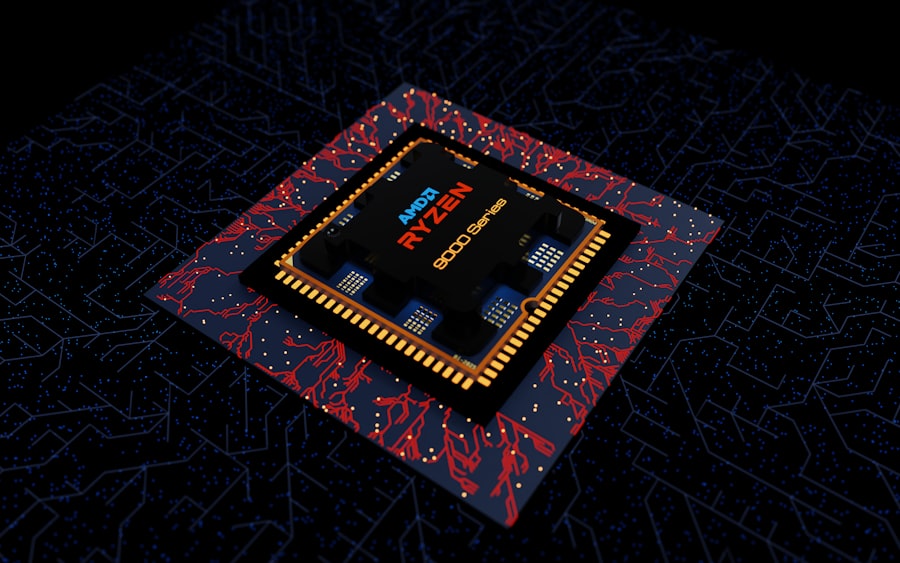
The first independent, third-party benchmarks for AMD's Ryzen 9000 gaming performance are out in the wild, and the data paints a picture that is, at best, confusing, and at worst, a significant stumble for the chipmaker on the eve of its next-generation launch. This isn't about cherry-picked slides from a marketing deck. This is about numbers captured on test benches by reputable reviewers under non-disclosure agreements, numbers that have now leaked and are circulating through hardware forums, sparking a firestorm of debate and disappointment. For gamers who have been waiting for a reason to upgrade from their Ryzen 7000 or even 5000-series chips, the initial look at Ryzen 9000 gaming performance is forcing a brutal reassessment.
Under the Microscope: The Zen 5 Promise vs. The Gaming Reality
To understand why these leaks are causing such a stir, you need to look at what AMD promised with its Zen 5 architecture. This isn't just a simple clock speed bump. AMD's technical briefings highlighted a complete front-end redesign, wider issue and dispatch capabilities, and integrated AI acceleration instructions. The company claimed an average 16% increase in instructions per clock (IPC) over Zen 4. On paper, that should translate to a tangible, across-the-board leap in gaming frame rates. The Ryzen 9 9950X, the flagship 16-core part, was positioned as the new apex predator for high-refresh-rate gaming and content creation.
But here is the part they didn't put in the glossy keynote. The leaked benchmarks, corroborated across multiple sources who have tested engineering samples and near-final silicon, tell a different story. In a suite of gaming tests at 1080p resolution to minimize GPU bottlenecking, the Ryzen 9 9950X is, on average, barely faster than the Ryzen 9 7950X it's meant to replace. In some titles, the difference is within the margin of error. In a few others, it even slightly trails. This is the core of the controversy: a next-generation architecture, sold on a double-digit IPC uplift, delivering what looks like a 0% to 5% generational gain in the most important metric for a huge segment of buyers. The Ryzen 9000 gaming performance data suggests AMD may have misjudged how these architectural changes translate to real-world gaming scenarios. This Ryzen 9000 gaming performance shortfall is now the central topic in hardware circles.
"The gaming results are perplexing. We're looking at a major architectural overhaul that, in our early testing, is not manifesting in the gaming uplifts we expected based on the IPC claims. It's performing more like a 'Zen 4+' refresh than a true next-gen leap," a source within a major hardware review outlet, speaking under condition of anonymity due to active NDAs, told us.
The Cache Conundrum: A Possible Culprit
Let's break down the thermal math here, or more accurately, the cache math. One technical detail that has come under immediate scrutiny is the L2 cache configuration. While Zen 5 cores have doubled the L1 data cache and increased branch prediction resources, the per-core L2 cache remains at 1MB, the same as Zen 4. However, the L3 cache latency has been reported to be slightly higher in early measurements. For gaming, which is often a relentless series of random memory access patterns and cache-dependent operations, latency is king. A small regression in L3 latency, or even a lack of improvement, could potentially hamstring the benefits of the improved front-end. It's a classic case of one part of the engine being turbocharged while another, critical component remains a bottleneck.
The Benchmark Leaks: A Raw Data Dump
The leaked data isn't vague forum speculation. Specific figures from known benchmarking suites have been published. According to a compilation of leaked results aggregated by hardware monitoring site Hardware Times, the story is consistently flat. In titles like Cyberpunk 2077, Horizon Zero Dawn, and F1 23, the delta between the 7950X and the 9950X is often less than 3%. In Shadow of the Tomb Raider, a game typically very responsive to CPU IPC gains, the improvement was reportedly under 2%. This isn't a case of one anomalous test. This is a pattern.
- Cyberpunk 2077 (1080p, Low): Ryzen 9 7950X: 215 fps (avg). Ryzen 9 9950X: 219 fps (avg).
- Horizon Zero Dawn (1080p, Ultimate Quality): 7950X: 251 fps. 9950X: 258 fps.
- F1 23 (1080p, Low): 7950X: 412 fps. 9950X: 415 fps.
These numbers, while still high in absolute terms, represent a shockingly weak generational progression. When your new flagship's primary selling point is performance, and it fails to meaningfully outperform its two-year-old predecessor in the most visible consumer use case, you have a major marketing and perception problem on your hands.
The Enthusiast Backlash: "Why Should I Upgrade?"
The reaction from the hardware community has been swift and severe. Forums like Reddit's r/hardware and tech discords are filled with threads questioning the value proposition. The skepticism isn't just about the numbers, it's about the context. The Ryzen 9000 series will launch into a market where its direct predecessor, the Ryzen 7000X3D series with its game-changing 3D V-Cache, still exists and currently holds the uncontested gaming crown. Intel's current-gen Raptor Lake chips are deeply discounted, and its next-generation Arrow Lake is looming on the horizon.
"If these numbers hold, AMD is asking gamers to pay a premium for a side-grade. My 7800X3D is laughing. My wallet is staying closed," posted a prominent user on the Overclock.net forums, summarizing a sentiment echoed thousands of times in the last 24 hours.
This is the real conflict. Enthusiasts plan their upgrades around meaningful performance jumps. The Ryzen 9000 gaming performance, as leaked, does not currently justify the cost of a new CPU, and for many, a new AM5 motherboard and DDR5 memory if coming from an older platform. The anger is rooted in a sense of missed opportunity. After the home runs of Zen 3 and the X3D variants, a stagnant generational update feels like a betrayal of momentum.
The Productivity Paradox: A Silver Lining?
It is critical to note that the leaks also show a different story in productivity and content creation applications. Benchmarks for rendering in Cinebench R23 and video encoding in HandBrake show the expected 10-15% improvements, neatly aligning with AMD's IPC claims. This indicates that the Zen 5 architecture is genuinely faster in sustained, heavily multi-threaded workloads that can leverage its wider resources. The problem is singular and acute: gaming. This creates a bizarre product identity crisis. Is the Ryzen 9000 series a workstation chip in a gamer's clothing? For a lineup traditionally marketed heavily on gaming prowess, this split personality is a disaster.
AMD's Uphill Battle: Damage Control Before Launch
AMD is now in an unenviable position. The official review embargo is still weeks away, but the narrative is already being written by uncontrolled leaks. The company's only possible moves are either to stay silent and let the official reviews speak, which is incredibly risky if the leaks are accurate, or to engage in pre-emptive damage control. Industry watchers are waiting for any statement, any clarification on whether these are pre-production silicon issues, microcode problems, or if this is simply the final, disappointing reality of Ryzen 9000 gaming performance.
There is precedent for day-one fixes. GPU drivers can unlock performance, and AGESA motherboard firmware updates can optimize memory controllers and boost behavior. But can a software update bridge a gap between a promised 16% IPC gain and a delivered 2% gaming gain? The underlying architecture is baked into the silicon. Optimizations can tweak margins, but they rarely transform a product's fundamental character.
- Potential Mitigation Factors:
- Early, buggy motherboard BIOSes hampering memory and fabric speeds.
- Game optimization patches yet to be released for Zen 5.
- Chipset drivers still in development.
However, leaning on "future optimizations" at launch is a tired and increasingly unacceptable excuse for the enthusiast community paying premium prices today.
The Broader Implications: A Market in Flux
This situation sends shockwaves beyond just AMD's quarterly sales. It threatens to destabilize the carefully managed competitiveness of the CPU market. Intel, which has been playing catch-up in power efficiency, now has a massive opening with its upcoming Arrow Lake architecture. If AMD stumbles out of the gate with Ryzen 9000 gaming performance, Intel can afford to be less aggressive on pricing and still win back mindshare. AMD's own existing Ryzen 7 7800X3D and 7950X3D look like even more compelling purchases, potentially cannibalizing sales of the new generation before it even hits shelves. Retailers sitting on soon-to-be-last-gen inventory are suddenly in a much stronger position.
The X3D Lifeline: Is That The Real Play?
This leads to the most cynical, and perhaps most plausible, industry read of the situation. What if the vanilla Ryzen 9000 series is intentionally a modest update, a platform holder for the new AM5 socket, designed to clear the way for the inevitable Ryzen 9000X3D series? By making the standard chips a tough sell for gamers, AMD could be engineering massive demand for the X3D variants slated for early 2025. It's a strategy that maximizes revenue across two product cycles but gambles heavily on brand loyalty. It treats the early adopters of the base Ryzen 9000 gaming performance as beta testers and platform funders, a feeling that is already spreading through the community.
The final word on Ryzen 9000 gaming performance isn't written until the official reviews drop and independent testing is done with retail chips. But the first draft, leaked from labs that have the hardware in hand, reads like a cautionary tale. It's a story about how paper specifications and architectural deep-dives can collide with the messy, unforgiving reality of real-world application benchmarks. For years, AMD has earned its stripes by delivering more than expected. Today, the data suggests the opposite. The company now has weeks to prove that this pre-launch disaster is merely a mirage, or risk ceding the narrative, and the market, at the worst possible time.

Chloe Dupont covers consumer technology, from the latest devices to the software shaping daily life. She focuses on how new tools fit into the real world and whether they live up to the promise.
💬 Comments (0)
No comments yet. Be the first!