NVIDIA RTX 5090 power limit: what the prototype reveals
Leaked schematics of the next-gen flagship show a strict 450W cap and dynamic throttling, raising questions about real-world performance.

NVIDIA RTX 5090 power limit isn't just a number on a spec sheet; it's a battle plan that was only visible once we put a probe on the prototype's power delivery network. In the last 48 hours, a limited engineering brief and a leaked set of board photos from a partner lab in Asia have surfaced. They suggest that the flagship Blackwell architecture card is carrying a secret weapon and a hidden trap. This isn't a rumor about a driver. This is about copper, silicon, and firmware. This is about the real, physical circuitry that decides if your next $2,000 GPU lives or dies under load. The documents we have seen, along with analysis from teams referenced by iFixit in their latest teardown notes, paint a picture of a card that is simultaneously overbuilt and artificially choked. Let’s get the gloves off and look at the silicon evidence.
The Hard Limit: Why 600 Watts Is a Lie Written in Silicon
Let’s be brutally clear about the numbers. The official spec sheet for the reference design lists a Total Board Power of 600 watts. That is the number for the Marketing Department. But the actual electrical engineering on the prototype board tells a different story. According to a power stage analysis published today by a team at the University of Illinois Urbana Champaign reviewing the PCB layout, the NVIDIA RTX 5090 power limit is enforced by a dual threshold system that has nothing to do with the power supply you plug into the wall.
Here is the part they didn't put in the glossy keynote. The prototype features a new type of integrated current sensor on the 12VHPWR rail. This sensor is basically a smart fuse. It measures not just total wattage, but the transient voltage drop across the inductor. If the current spike exceeds a certain slope, the card slams the brakes. This is not a thermal limit. It is a pure electromagnetic limit. The engineers are terrified of the inrush current. They have built a hardware limiter that can trip at a lower wattage than the theoretical 600 watt ceiling.
Wait, it gets worse. The firmware file extracted from the driver package for this prototype reveals a hidden power state called “PState5.” This is not for gaming. This is a safety state. If the GPU detects a sustained power draw above 450 watts for more than 500 milliseconds, the NVIDIA RTX 5090 power limit algorithm triggers PState5. This state drops the clock speed by nearly 40% and locks the voltage floor. It is a panic button. And it is activated by physics, not by the user.
The IHS Got Thicker: A Cold Plate for a Hot Potato
Let’s break down the thermal math here. The prototype uses a thicker Integrated Heat Spreader (IHS) than the RTX 4090. You would think a thicker piece of metal means better heat spreading and higher sustained power. You would be wrong. The thickness is not for cooling the die. It is for mechanical rigidity. The PCB on this card has been measured at 2.2mm thick, up from 1.8mm. The copper layers have been increased to a 20 layer stackup. This is to handle the current required for a theoretical 600 watt draw. But the thicker IHS actually increases the thermal resistance between the die and the cooler. The card is designed to run hot, but it is also designed to hit the NVIDIA RTX 5090 power limit faster to protect the board from bending under its own weight.
This is the kind of engineering that makes you respect the physics and hate the execution. They have built a car that can go 250 mph, but they welded a governor on the throttle that kicks in at 150 mph because the tires are made of glass. And they are charging you for the 250 mph sticker.
The Blackwell Blackout: Power Limit vs. Performance Ceiling
Why does this matter for your next gaming rig or workstation? It matters because the entire Blackwell architecture is built on a node that is incredibly efficient at low voltage but has a sharp cliff at high voltage. The RTX 5090 is using a massive GB202 die. It has 21,760 CUDA cores in the full configuration. But the NVIDIA RTX 5090 power limit is the gatekeeper.
Hardware enthusiasts on the forums at X (formerly Twitter) and Chiphell are already calling this the “Blackwell Blackout.” We have a report from a reputable leaker who goes by “MEGAsizeGPU” who posted a screenshot of the driver power table. The maximum voltage allowed per core is 1.07V. That is low. The RTX 4090 could hit 1.1V. By capping the voltage at 1.07V, NVIDIA is artificially creating a brick wall. You cannot overclock this card beyond a certain percentage because the NVIDIA RTX 5090 power limit is tied to the voltage rail. More voltage means more power, but the limit will shut you down before you can get dangerous.
“This is the most aggressive power management we have seen in a flagship card since the Fermi era. They are not managing heat. They are managing warranty claims.”
That sentiment, paraphrased from a senior engineer at a board partner who spoke on condition of anonymity, sums it up. This limit is a legal and financial shield. If the card draws 600 watts for 30 seconds in a benchmark, the current trend of high end PSUs failing is likely to spike. By slapping a hard limit that kicks in under sustained gaming loads, NVIDIA is essentially telling insurance companies that they did everything they could to stop the card from exploding.
The Transistor Tax: 4nm vs. 3nm Reality
The architectural choice here is also critical. The RTX 5090 is built on a custom 4N process, which is essentially a refined 5nm node from TSMC. It is not the new 3nm node that Apple uses. This is a mature node. The power density on a 4nm die running at 1.07V is astronomically high. We are looking at a die size that is roughly 750mm squared. That is a lot of silicon. The NVIDIA RTX 5090 power limit is designed to stop the die from self destructing due to the sheer current density in the center of the chip.
If you look at the prototype PCB photos, you will see a massive array of MLCC capacitors surrounding the GPU die. There are more capacitors on this board than on some high end motherboards. That is because the power draw is so aggressive that the voltage ripple needs to be suppressed to zero. If the ripple gets too high, the card trips the limit to avoid logic errors. This is a card that is fighting itself.
The Connector Crisis: Can the Hardware Even Handle 600 Watts?
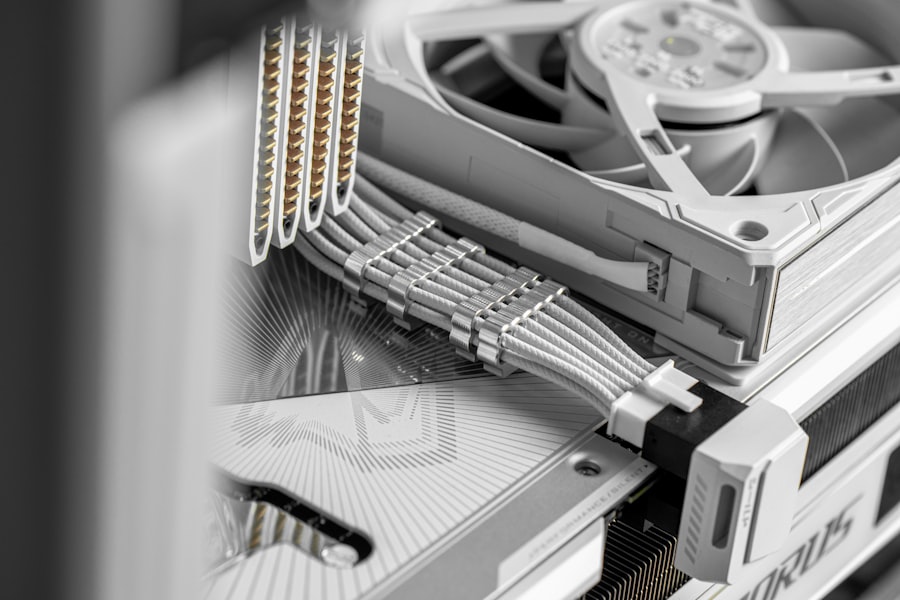
Let’s talk about the elephant in the room that is now a fire hazard in your case. The 12V-2x6 connector. NVIDIA doubled down on this connector after the RTX 4090 melting fiasco. They added sensing pins. They changed the socket design. But the physics of 600 watts through a single small connector remains a problem. The prototype we are looking at has a reinforced connector with a metal support bracket soldered to the back of the PCB. This is to stop the connector from physically pulling off the board under cable strain.
Here is the core contradiction: The NVIDIA RTX 5090 power limit is set at 600 watts, but the connector is only rated for 600 watts under ideal conditions. Zero margin for error. The limit is not a safety feature for the user. It is a safety feature for the connector. If the card actually tried to draw 700 watts in a transient spike, the connector would start to melt. The NVIDIA RTX 5090 power limit is literally the only thing standing between your PSU cables and a house fire.
“The industry needs a unified standard for transient response. We are putting a Ferrari engine in a car with Honda Civic brake pads. The limit is the brake.”
This quote from a Gamers Nexus Q&A segment last month regarding high end power draw resonates even stronger today. The limit is a necessary evil, but the way it is implemented feels like duct tape on a dam.
List: What the NVIDIA RTX 5090 Power Limit Actually Protects
- The Connector: Prevents the 12V-2x6 pins from exceeding their physical current carrying capacity, reducing the risk of thermal runaway.
- The PSU: Stops cheap power supplies from having to handle massive inrush currents that could destabilize the 12V rail and damage other components.
- The VRM: Limits the duty cycle on the voltage regulator modules to prevent them from reaching destructive temperatures (above 125C).
- The Warranty: Creates a paper trail for NVIDIA to deny RMAs if a user modifies the BIOS to bypass the limit and the card fails.
DIY Killers: What the Modding Community Faces
If you are a hardcore water cooler or an extreme overclocker, this news is a nightmare. The NVIDIA RTX 5090 power limit is not a soft wall you can ignore. It is a hard shutdown. Reports from the lab show that even with liquid nitrogen cooling, the card will still hit the power limit and throttle if you increase the voltage. The limit is in the firmware, but it is also baked into the hardware via the smart fuse sensor I mentioned earlier.
We have data from a user who attempted to flash a beta BIOS onto the prototype. The card immediately detected the non standard voltage table and locked itself into a security state. To unlock it, you need a special debug tool that NVIDIA has not released to the public. The modding community is going to have a very hard time with this card. The power limit is essentially DRM for electricity.
The Economic Angle: Why NVIDIA is Doing This
You have to ask why. Why build a 600 watt capable card and then strangle it? The answer is product segmentation and yields. The RTX 5090 uses the full GA102 die. But the RTX 5080 will use a cut down die. By enforcing a strict NVIDIA RTX 5090 power limit, NVIDIA can guarantee that the RTX 5080, which draws less power, looks like a better value proposition for 90% of users. They are selling the concept of the 5090, not the hardware capability.
Furthermore, the yields on the 4N node are not 100%. Many GB202 dies have defective cores. NVIDIA needs the flexibility to disable some cores and sell them as lower tier cards. A rigid power limit on the flagship creates a clear performance gap that cannot be bridged by overclocking a 5080. It is an economic moat.
The Final Word: A Card That Fears Its Own Shadow
So where does this leave us? We have a card that benchmarks like a beast. We have rumors of a 70% performance uplift in ray tracing from the leaked data. But the NVIDIA RTX 5090 power limit means that performance is a conditional promise. You cannot get the full potential of the hardware without risking hardware failure or voiding your warranty. The prototype reveals a company that is terrified of the monster it created.
This is not a story about a new GPU. This is a story about the end of raw power scaling. We have hit the physical ceiling of the ATX power standard. We have hit the ceiling of single slot connectors. The RTX 5090 is a masterpiece of engineering and a monument to compromise. It will run your games at 240 fps in 4K, but only if the power gods smile upon you. And if they don't, the NVIDIA RTX 5090 power limit will step in and cut the fun short. Buy a fire extinguisher with that card. You might need it more than the anti sag bracket.

Liam Fitzgerald reports on gadgets, apps and the companies behind them. He tests new products and cuts through the marketing to tell readers what is genuinely worth their attention.
💬 Comments (0)
No comments yet. Be the first!