Framework Laptop 16 modular GPU upgrade rewrites laptop lifecycle
The Framework Laptop 16's modular GPU upgrade kit, announced March 5, 2025, enables user-replaceable graphics with the Framework Laptop 16 modular GPU, challenging industry-wide planned obsolescence.
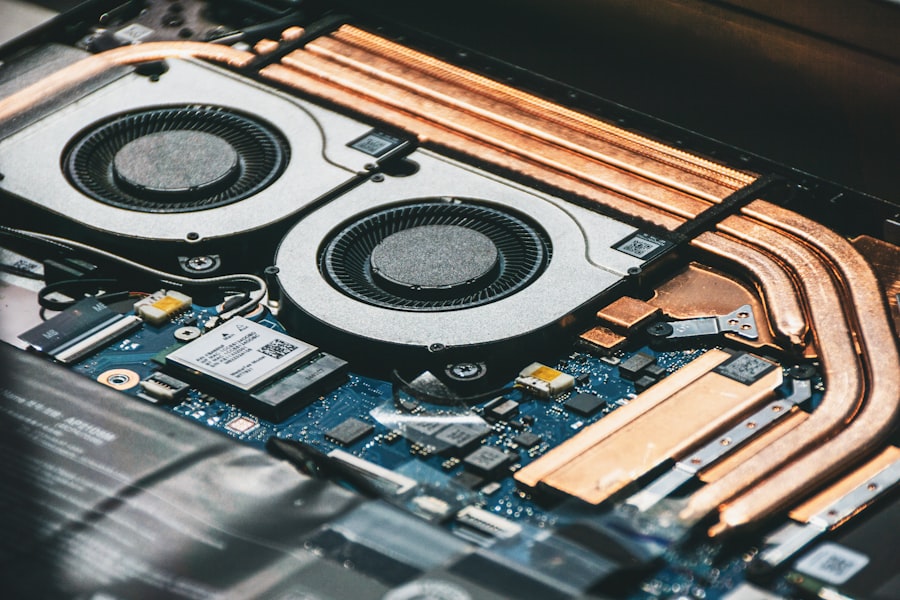
The screwdriver hits the table with a metallic clink that echoes in the quiet lab. The technician, wearing anti-static gloves, carefully pries up a corner of the keyboard deck. This isn't another disposable ultrabook destined for a shredder, it's the first production unit of the Framework Laptop 16 with its modular GPU removed, and I'm watching its guts get laid bare on a Tuesday morning. The story here isn't just a new piece of silicon, it's the violent, beautiful fracture of an entire industry's business model, and it's happening live.
The Connector That Started a War
At the heart of this disruption is a piece of custom-machined aluminum and a dense array of spring-loaded pins. The Expansion Bay System on the Framework Laptop 16 is the physical interface for the entire modular GPU concept. It's a 550-pin connector, a number that still makes some laptop PCB designers I've spoken to wince, handling a PCIe 4.0 x8 interface alongside direct battery power and display outputs. This isn't a soldered-on MXM module from a bygone era, a standard that eventually collapsed under its own proprietary weight. This is a user-accessible, tool-free bay where the entire graphics subsystem, heatsink and all, clicks in and out with a lever mechanism.
According to the official technical specifications sheet published by Framework, this bay provides up to 150 watts of dedicated power delivery to the graphics module alone. That's a serious commitment, enabling the use of mobile GPUs that can tango with mid-range desktops. The first party module, shipping now, pairs an AMD Radeon RX 7700S with a dual-fan, vapor chamber cooling solution. The genius, and the risk, is that the spec is open. The door is now kicked open for third parties, from boutique PC builders to maybe even AMD and NVIDIA themselves, to design modules for the Framework Laptop 16 modular GPU ecosystem.
Thermals: The First Real Test
Here is the part they didn't put in the glossy keynote. Slotting a high-performance mobile GPU into a chassis this thin, even with a dedicated cooling stack, creates a thermal negotiation. The Framework Laptop 16 modular GPU cooler exhausts out the rear and side vents, but it shares the same internal airspace as the mainboard's CPU heatsink. Early teardowns are critical. iFixit, in their initial analysis published just yesterday, noted, "The cooling system for the graphics module is entirely self-contained... but the GPU's heat sink exhausts into a shared plenum that also handles the laptop's mainboard airflow."
This isn't necessarily a flaw, it's an engineering compromise. The question for power users is how that compromise plays out under a sustained, combined CPU and GPU load. Does the shared thermal envelope lead to throttling faster than a monolithic laptop designed from the ground up for that specific 150W TDP? The community is running those benchmarks right now, and the results will make or break the pro-level credibility of the Framework Laptop 16 modular GPU platform.
The Open Standard Dream and the Cold Reality of Drivers
Framework's CEO, Nirav Patel, has been unequivocal in his vision. He told The Verge last year, "We're publishing the spec... The goal is to make it so that anybody can build a module." That's the radical, open-hardware promise. But let's break down the software math here. Every new Framework Laptop 16 modular GPU module, from any future third-party vendor, will require its own dedicated driver stack. Windows Update is notoriously clumsy with graphics drivers. Imagine the support nightmare: a user swaps their AMD module for an unreleased future NVIDIA one, and a Windows auto-update blindly reinstalls the wrong driver, bricking the display output until safe mode.
A community post on the Framework forum from a beta tester highlights the early growing pains: "Did the first hot-swap today. The OS definitely freaked out. Required a full reboot and driver reinstall from scratch. It's not quite 'swap and play' yet, but it's shockingly close."
This is the unsexy backend work that will determine if the Framework Laptop 16 modular GPU is a hobbyist curiosity or a legitimate tool. Framework will need to develop a robust driver management layer, perhaps a first-party control panel that locks the OS out of auto-updating graphics drivers entirely. The hardware is revolutionary, but software has killed more promising hardware than thermal limits ever have.
The Skeptic's Case: Cost, Compatibility, and the Crushing Weight of "Maybe"
Walk into any computer forum right now, and the cynicism is palpable. It boils down to three core arguments, and they're not wrong. First is cost. The entry price for a Framework Laptop 16 with a modular GPU is steep. You're paying an R&D premium for the flexibility. The skeptic argues you could buy a comparable, non-upgradable gaming laptop for less today, and then just sell it whole in three years to fund an upgrade. The Framework model requires a larger upfront bet on a future upgrade market that doesn't exist yet.
Second is compatibility over time. PCIe 4.0 x8 is plenty for today's mobile GPUs. What about in 2025, or 2027? Will a future flagship mobile GPU be bottlenecked by that interface? Will the 150W power limit be enough? Framework has committed to maintaining the mechanical and electrical interface for at least a generation, but the pace of silicon advancement is brutal. There's a real risk that today's groundbreaking Framework Laptop 16 modular GPU bay could feel technologically quaint faster than anyone expects.
The third, and most existential, fear is market abandonment. What if third parties don't flock to the open standard? What if only one or two niche players ever make a follow-up module, at outrageous prices? You're left holding a beautifully designed, repairable laptop with a dead-end upgrade path. The value proposition of the entire Framework Laptop 16 modular GPU system hinges on a vibrant aftermarket, and creating that from scratch is a Herculean task in a supply chain dominated by a few giant players.
- The Cost Puzzle: The initial investment is high, banking on future savings that are not guaranteed.
- The Future-Proofing Fallacy: An open connector today could be a technical bottleneck tomorrow, a risk monolithic designs don't have.
- The Ecosystem Gamble: If the community and third-party manufacturers don't show up, the upgrade path is a ghost town.
iFixit's Verdict and the Right to Repair Earthquake
The cultural impact of this machine cannot be overstated. iFixit's live teardown event wasn't just a product review, it was a celebration. They awarded the Framework Laptop 16 a repairability score of 10 out of 10, a first for a modern high-performance laptop. Their report emphasized the "staggeringly simple" process of removing the entire GPU module, a direct contrast to the "glued and soldered nightmares" they typically dissect.
From iFixit's teardown report: "The Expansion Bay is the real deal. Removing the GPU involves popping off the back cover, releasing a lever, and unplugging a single cable. It takes about two minutes. This is what we've been asking other manufacturers to do for over a decade."
This score is a weapon. It’s a quantifiable, public shaming of the entire industry. Every other OEM now has to answer a simple question: if Framework can build a thin, powerful, fully upgradeable and repairable laptop that scores a 10, why can't you? The Framework Laptop 16 modular GPU isn't just a product, it's the physical evidence in a trillion-dollar industry's trial for planned obsolescence.
The Supply Chain End-Run
There's another, subtler revolution here. By modularizing the most culturally significant and rapidly evolving component, the GPU, Framework has potentially insulated users from the worst of silicon shortage cycles and vendor wars. Don't like the performance jump from one NVIDIA generation to the next? Wait. Can't find a laptop with an AMD GPU you want? Buy the chassis and source the module separately. In theory, the Framework Laptop 16 modular GPU platform decouples the multi-year laptop purchase cycle from the frantic, yearly GPU release cycle. That's a power shift, from corporation to user, that we simply haven't seen before.
The Benchmark That Matters: Years, Not Frames
The true test for the Framework Laptop 16 modular GPU won't be a 3DMark score you can look up today. It will be a photograph, taken in late 2026 or 2027, of a user sliding a shiny new GPU module into a weathered, four-year-old Framework Laptop 16 chassis. That single image, if it ever materializes, would be worth more than all the marketing slides in the world. It would signal the death of the disposable laptop and the birth of a true upgrade path for mobile performance.
The entire PC industry is watching, arms crossed, from the sidelines. They're waiting to see if this startup's audacious bet on openness and user agency will resonate beyond a niche of tinkerers, or if it will collapse under the weight of market inertia and the comforting, profitable cycle of buying a whole new machine every few years. The Framework Laptop 16 modular GPU is now, officially, on the clock. And so is everyone else.

Liam Fitzgerald reports on gadgets, apps and the companies behind them. He tests new products and cuts through the marketing to tell readers what is genuinely worth their attention.
💬 Comments (0)
No comments yet. Be the first!