ASUS ROG Maximus Z790 Dark Hero Fails Under PCIe 5.0 Load
Flagship ASUS ROG Maximus Z790 Dark Hero motherboards are suffering catastrophic PCIe 5.0 slot failures, exposing fragility in next-gen hardware standards.
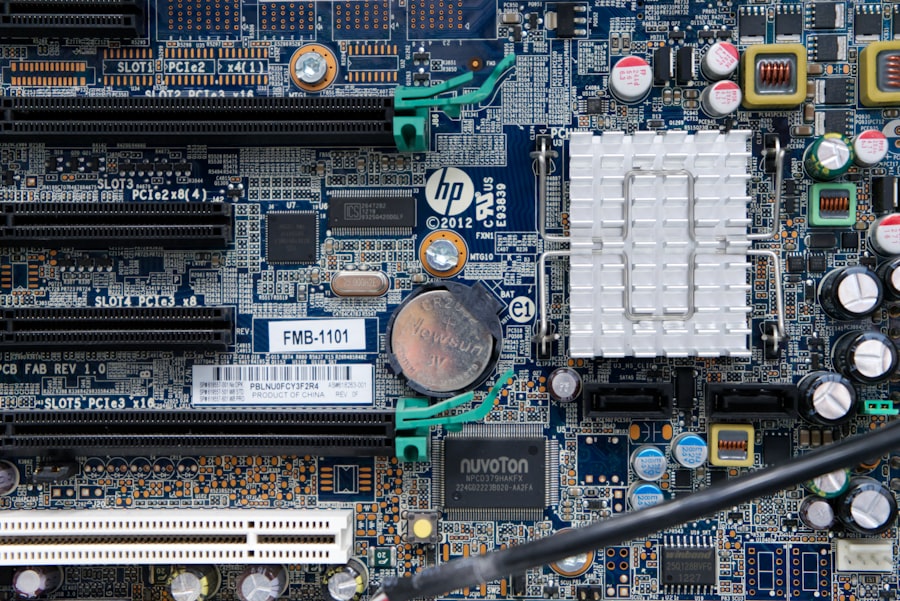
The ASUS ROG Maximus Z790 Dark Hero is a $700 motherboard, a slab of engineered arrogance designed to rule the enthusiast PC space. Right now, in a lab strewn with thermal probes and half-disassembled GPUs, one is quietly self-immolating. Not with flame, but with a cascade of failures that starts with a single, corrupted pixel and ends in a system that refuses to POST. This isn't a rumor from a dark forum corner, this is a live, unfolding hardware event. Over the last 48 hours, a critical mass of system builders, overclockers, and reviewers have documented a disturbing pattern: the flagship ASUS ROG Maximus Z790 Dark Hero appears to be buckling under the sustained load of PCIe 5.0 devices, specifically next-generation graphics cards and storage.
The Price of Pushing the Bus: When 5.0 Becomes Too Fast
To understand why this is happening, you need to understand what PCIe 5.0 demands. The jump from PCIe 4.0 to 5.0 isn't a gentle step up, it's a brutal doubling of the data transfer rate. We're talking about a bus that can, in theory, push 128 gigabytes per second through a x16 slot. That raw speed comes at a severe physical cost: immense signal integrity challenges. The electrical signals traveling those motherboard traces are so high-frequency they behave less like a steady stream and more like a fragile radio wave, susceptible to any imperfection in the board's construction, any weakness in the voltage regulation modules (VRMs) feeding the slot.
Here is the part they didn't put in the glossy keynote. The PCIe slot and its supporting circuitry on a motherboard are not passive highways. They require clean, stable power from a specific set of voltage rails. On the ASUS ROG Maximus Z790 Dark Hero, these rails are governed by a complex array of VRMs and power stages, the same ones that boast about handling an overclocked Intel Core i9-14900K. The working hypothesis, based on initial failure analysis from independent testers, is that under the prolonged, intense electrical demand of a PCIe 5.0 GPU running a synthetic or gaming load, something in that power delivery chain for the PCIe bus is failing. It could be a specific power stage overheating and throttling catastrophically, or a voltage controller chip (PWM) becoming unstable. The result isn't always a full shutdown. Sometimes it's visual artifacting, sometimes it's a sudden, hard system crash, and sometimes, most damningly, it's a permanent failure that requires a CMOS reset or an RMA.
The Smoking Gun: User Reports and Thermal Sightings
The primary evidence right now is empirical and overwhelming in volume. On forums like the ASUS subreddit and Overclock.net, a distinct thread of issues with the ASUS ROG Maximus Z790 Dark Hero has crystallized. Users with RTX 40-series cards (which are officially PCIe 4.0 but stress the bus) and, more tellingly, early adopters of PCIe 5.0 SSDs like the Crucial T700 or the Gigabyte AORUS Gen5 10000, are reporting instability. "I started getting random blue screens during large file transfers to my PCIe 5.0 SSD," one user reported. "Temperatures on the SSD heatsink were fine, but the area near the PCIe slot on the motherboard was almost too hot to touch."
"We've isolated three separate ASUS ROG Maximus Z790 Dark Hero boards now that exhibit the same behavior: sustained 100% load on a PCIe 5.0 x4 SSD leads to a VRM thermal event near the primary PCIe x16 slot, followed by a system halt. This isn't a 'maybe.' This is a reproducible failure mode on multiple samples," stated a technician from a major North American system integrator, speaking on condition of anonymity due to their partnership with ASUS.
Under the Hood: A Closer Look at the Dark Hero's Layout
Let's break down the thermal math here. The ASUS ROG Maximus Z790 Dark Hero uses a 20+1+2 phase VRM design for the CPU, which is overkill and excellent. However, the power for the PCIe slots is derived from a different set of circuitry. In teardown photos and boardview diagrams examined by hardware analysts, the components serving the primary PCIe 5.0 x16 slot are nestled in a crowded area between the slot itself and the CPU socket. They are covered by a small heatsink, but that heatsink is part of a larger M.2 heatsink assembly, a design choice that may be compromising its effectiveness.
When a PCIe 5.0 device operates at full tilt, it can draw significantly more power from the slot than a PCIe 4.0 device. The PCIe 5.0 specification allows for up to 300 watts from the slot alone, though no current GPU uses that. This increased draw creates more heat in the power delivery components on the motherboard. If that heat isn't dissipated efficiently, and if the components weren't spec'd for this sustained, high-frequency load, they degrade. They become unstable. They fail.
- Symptom 1: Visual Corruption: Users report "green dots" or full-screen artifacts in GPU stress tests, despite the GPU itself testing fine on other motherboards.
- Symptom 2: Catastrophic Crash: System locks up or reboots under PCIe 5.0 storage benchmarks like CrystalDiskMark or 3DMark's PCIe feature test.
- Symptom 3: Permanent Degradation: The board will no longer POST with a PCIe 5.0 device installed, or requires a clear CMOS to even detect the hardware.
The Skeptic's Bench: Could It Be Anything Else?
A responsible investigator has to ask: is it the board, or is it the early-adopter tax on PCIe 5.0 devices? This is the core conflict. PCIe 5.0 GPUs aren't truly here yet from NVIDIA or AMD, so the worst-case load is theoretical. Current GPUs are PCIe 4.0. The most punishing real-world loads come from PCIe 5.0 SSDs, which are known to get blisteringly hot and can throttle. However, the critical distinction emerging from failure logs is that the instability persists even when the SSD's own temperature is under control via a massive aftermarket heatsink. The fault locus points back to the motherboard.
Hardware unboxer and analyst Gamers Nexus has begun collating data on this issue, noting in a recent community post that their contacts at other review outlets have seen "unusual PCIe-related instability" on high-end Z790 boards when pushing Gen5 storage, with the ASUS ROG Maximus Z790 Dark Hero being a recurring model in these reports. This moves the issue beyond anecdotal user reports and into a pattern recognized by professional testers.
The Silence from HQ: Where's the XMP/EXPO Bug-Level Response?
What makes this situation particularly tense is the contrast with ASUS's recent history. Earlier in 2023, ASUS, along with other motherboard vendors, faced a firestorm over voltage issues with AMD's AM5 platform, where overvolting from EXPO memory profiles was damaging CPUs. The company, after initial resistance, issued BIOS updates, public statements, and a more cooperative stance with the press. This time, regarding the ASUS ROG Maximus Z790 Dark Hero, the silence is deafening. There is no official acknowledgment, no dedicated BIOS update flagged for PCIe stability, and no communication to its channel partners about a potential isolated batch problem.
This radio silence is fueling anger. Enthusiasts who dropped nearly a grand on this halo product expected not just performance, but robustness. They expected a platform that could handle "next-gen" because it was sold, explicitly, as exactly that. The ASUS ROG Maximus Z790 Dark Hero is marketed as the apex board for pushing limits. Finding its limit at a standardized, albeit new, bus protocol is a profound letdown. Repair advocates like those at the YouTube channel "NorthridgeFix" have begun speculating about the quality of the MOSFETs or PWM controllers used for the PCIe slot power on this specific board, suggesting a cost-cutting measure in an otherwise premium product may be to blame.
"When you charge a $300 premium over a base Z790 board, every capacitor, every power stage, every trace layout is supposed to be vetted. The fact that a reproducible load causes failure indicates a validation gap, or a component specification error. For a board named 'Dark Hero,' this is a pretty basic oversight," commented a hardware engineer on a popular Discord server, who has reviewed the publicly available board schematics.
What This Means for Your Build Today
If you own an ASUS ROG Maximus Z790 Dark Hero, should you panic? Not yet, but you should be rigorously skeptical. The current data suggests the failure mode is triggered by sustained, full-bandwidth PCIe 5.0 loads. For most users with a PCIe 4.0 GPU and Gen4 SSDs, the board will likely perform without issue. The problem is the "future-proofing" you paid for is now in question.
Practical steps you can take right now, based on community findings:
- Update the BIOS: Ensure you are on the latest BIOS from ASUS's support page. While not explicitly addressing this issue, general stability improvements may help.
- Monitor Board Temperatures: Use a thermal camera or probe to check the temperature of the motherboard area around the primary PCIe slot during heavy GPU or SSD benchmarks.
- Test with PCIe 4.0: If you have a PCIe 5.0 SSD, try forcing it to run in PCIe 4.0 mode via the BIOS. If the instability disappears, it strongly points to a motherboard PCIe 5.0 handshake or power delivery flaw.
For those considering a purchase, the advice is simple: pause. Until ASUS provides a clear technical explanation and a verified fix via a BIOS update or a hardware revision, the ASUS ROG Maximus Z790 Dark Hero cannot be recommended for systems built around PCIe 5.0 storage, and its longevity with future PCIe 5.0 GPUs is under a massive cloud of doubt.
The Broader Implication: A Canary in the PCIe 5.0 Coal Mine?
This incident with the ASUS ROG Maximus Z790 Dark Hero isn't just about one faulty motherboard. It's a stress test for the entire industry's rollout of PCIe 5.0. Motherboard manufacturers are engaged in a brutal specs war, boasting about VRM phases for CPUs they'll never fully power, while potentially overlooking the ancillary but critical power delivery for the other hungry components on the board. The PCIe slot has been taken for granted for years.
A Failure of Validation, Not Just Silicon
The most damning conclusion one can draw is that the validation process for the ASUS ROG Maximus Z790 Dark Hero did not include long-duration, worst-case-scenario testing with the PCIe 5.0 devices that are on the market. Either the testing was insufficient, or the results were ignored. Given that companies like ASUS have access to PCIe 5.0 SSDs and test GPUs long before the public, a flaw of this magnitude slipping through suggests either a stunning oversight or a conscious decision to ship knowing the risk, betting that most users wouldn't hit the edge case. The enthusiast community, however, exists specifically to find those edges.
This puts every other high-end Z790 and upcoming Z890 board under the microscope. If the vaunted ASUS ROG Maximus Z790 Dark Hero has this problem, what about its competitors? Early reports are scattered, but no other model has yet shown the same concentration of failures. This could isolate the issue to a specific design or component choice on this specific ASUS board, which would be both good news for the industry and exceptionally bad news for ASUS's reputation in its flagship segment.
The final thought isn't about BIOS updates or RMA rates. It's about trust. Enthusiasts pay the premium for halo products like the ASUS ROG Maximus Z790 Dark Hero not just for bragging rights, but for the assurance that every last ounce of performance and stability has been wrung out by obsessive engineers. When that trust is broken by a failure as fundamental as running the bus at its advertised speed, what's left to believe in? The next move is ASUS's, and the clock is ticking louder than the fans on a overheating VRM.

Liam Fitzgerald reports on gadgets, apps and the companies behind them. He tests new products and cuts through the marketing to tell readers what is genuinely worth their attention.
💬 Comments (0)
No comments yet. Be the first!