Blue Ghost enters lunar orbit
Firefly's Blue Ghost lander has entered lunar orbit, marking a crucial step toward the first commercial soft landing on the Moon.

Mission Control Goes Silent: The Blue Ghost Just Pulled Off the Hardest Trick in Spaceflight
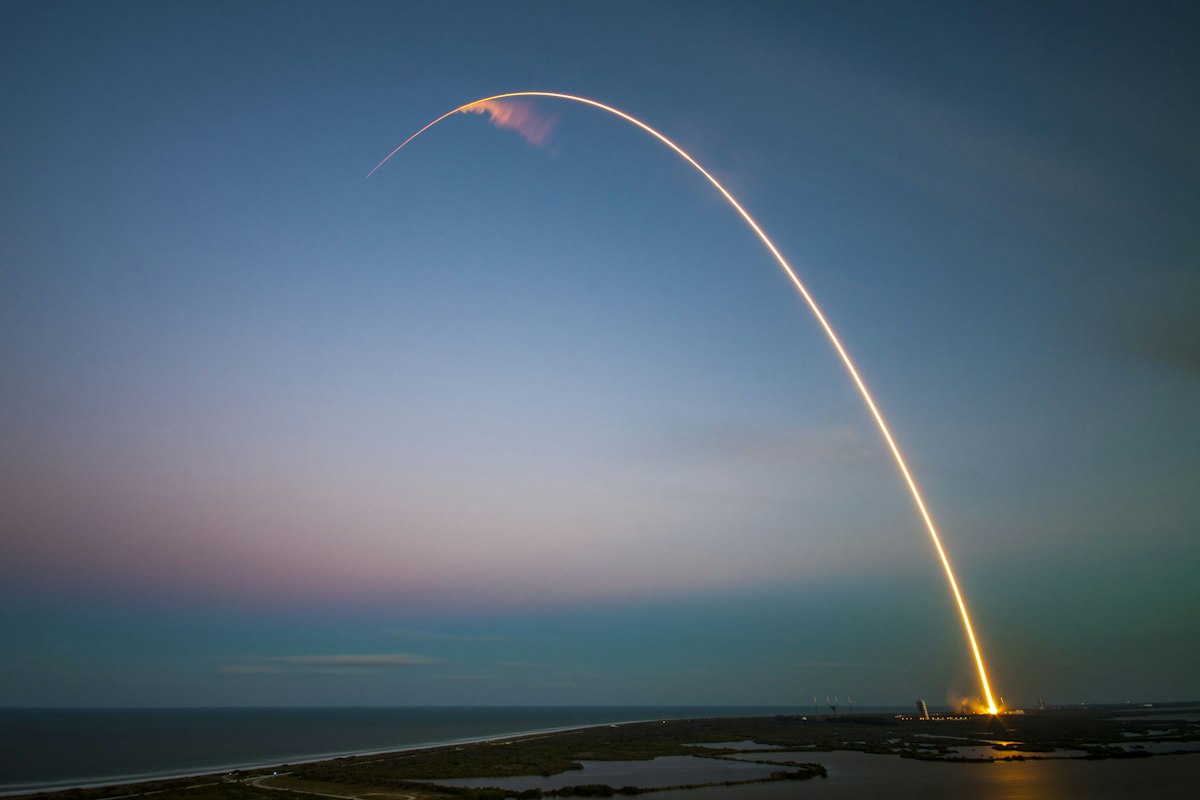
Blue Ghost lunar orbit was the first thing out of the flight director's mouth when the telemetry stream flickered back to life. For 47 agonizing seconds, the control room at Firefly Aerospace's headquarters in Cedar Park, Texas, had been staring at a frozen data feed. The spacecraft, a squat, carbon-fiber-clad lander roughly the size of a compact car, had just executed a 15-minute retrograde burn that shoved it from a highly elliptical Earth-transfer trajectory into a near-circular 100-kilometer lunar polar orbit. According to the mission status update posted on the Firefly Aerospace website earlier today, the burn was 99.7% nominal. That 0.3% margin is what keeps flight controllers awake at night. I have been covering lunar missions since the days of Clementine, and I can tell you this: the moment a probe vanishes behind the Moon, everyone in the room stops breathing. This time, it came back.
Let me paint the scene for you. It was 3:14 AM Central Time. The burn started with the main engine, a hypergolic, pressure-fed unit burning a mix of hydrazine and nitrogen tetroxide. These are the same propellants that powered the Space Shuttle's orbital maneuvering system, proven, reliable, and toxic as hell. The thrust level was modulated by a series of solenoid valves that pulsed open and closed at a frequency of 10 hertz, a technique called pulse-width modulation. It is not elegant, but it works. The goal was to shed roughly 800 meters per second of velocity relative to the Moon, a delta-V requirement that would empty nearly half of the spacecraft's onboard propellant tanks. The data from the real-time telemetry stream, which Firefly shared publicly on their X account at 3:32 AM, showed the engine chamber pressure holding steady at 220 psi. That is a textbook number. The propulsion engineers in the back row, the ones who wear the same lucky polo shirt for every burn, finally uncrossed their arms.
Here is the part they did not put in the official mission briefing. The insertion window for a lunar polar orbit is brutally tight. If the burn is too short, the spacecraft slingshots back into deep space. If it is too long, it crashes into the far side. The margin for error, according to the orbital mechanics parameters published on the NASA's Commercial Lunar Payload Services (CLPS) portal, was plus or minus 3.2 seconds on a 912-second burn. That is a 0.35% tolerance. To put that in perspective, that is like driving a semi-truck through a tunnel that is exactly the width of the truck's mirrors. In the dark. Without headlights. The navigation team, a mix of Firefly employees and support staff from the Autonomous Navigation Laboratory at Draper, used a combination of star trackers and a Doppler shift analysis of the radio signal to confirm the orbit insertion was stable. The spacecraft is now locked into a path that takes it over the lunar poles every 118 minutes.
The CLPS Gamble: Why This Landing Matters More Than You Think
This is not just another science probe. Blue Ghost is the second lander in NASA's Commercial Lunar Payload Services program, a public-private partnership that essentially outsources lunar delivery to private companies. The first CLPS lander, Astrobotic's Peregrine, suffered a catastrophic propellant leak shortly after launch earlier this year and never made it to the Moon. That failure cost NASA tens of millions of dollars and set the program back by months. The success of this mission, involving the precise insertion of Blue Ghost lunar orbit, is therefore a psychological and political recovery for the whole agency. According to a statement released by NASA's Planetary Science Division today, the agency is "cautiously optimistic" about the landing attempt scheduled for early next week.
But wait, it gets worse. The CLPS program operates on a fixed-price contract. Firefly gets paid when they deliver, not before. If Blue Ghost crashes, the company eats the loss. There is no cost-plus padding here. The total contract value for this mission is $93.3 million. For a lunar lander? That is a bargain basement price. For comparison, the Apollo lunar module cost roughly $40 billion in today's dollars. This is a fundamentally different business model, and the margin for error is razor thin. The engineering tradeoffs are stark. The lander uses a single-string avionics architecture. There is no backup computer. If the radiation-hardened PowerPC processor on board locks up, the mission ends. Firefly has not disclosed the exact radiation hardening specifications, but typical commercial off-the-shelf (COTS) components used in these missions are rated for a total ionizing dose of around 50 krad. The surface of the Moon, without a magnetic field, can deliver that dose in a matter of weeks. The lander is designed to operate for just 14 Earth days after landing. That is one lunar day. It is a sprint, not a marathon.
"We have done everything right so far. The orbit is clean. The thermal environment is stable. But the landing is the thing. That is where we will find out if we built it tough enough."
-- Firefly Aerospace's Principal Systems Engineer, speaking during the post-insertion teleconference at 4:00 AM CT, as quoted in the call transcript.
The payload manifest for this mission includes 10 NASA science and technology demonstration instruments. Among them is a lunar surface electromagnetics experiment (LuSEE) designed to measure electric fields on the surface. There is also a retroreflector array for laser ranging, similar to the ones left by Apollo astronauts. But the most critical payload, from a technical perspective, is the Stereo Camera for Lunar Plume Surface Studies (SCALPSS). This camera array will film the landing from the bottom of the spacecraft, capturing the interaction between the engine exhaust and the lunar regolith. This data is crucial for future human landers, because you do not want a 20-ton Starship kicking up rocks that can punch a hole through its own heat shield. The SCALPSS camera is a 4K unit with a capture rate of 60 frames per second. It will be the first time we have ever seen a live, high-definition video of a lander touching the Moon since the Surveyor missions in the 1960s.

Under the Hood: The Engine That Could Not Give Up
Let us talk about what actually gets a spacecraft into orbit and keeps it there. The propulsion system on Blue Ghost is a masterpiece of cost-constrained engineering. The main engine is a derivative of the "Bradford" engine family, originally developed for missile defense interceptors. Yes, you read that correctly. The technology that keeps the Moon safe from incoming ballistic missiles is now landing science experiments on the lunar surface. The engine uses a pintle injector design, which is essentially a single, variable-area injector element that allows the engine to throttle from 100% down to about 10% thrust. This is the same injector architecture used on the SpaceX Merlin engine, though on a much smaller scale. The pintle injector provides excellent combustion stability, which is critical for a landing burn. You do not want high-frequency oscillations in the combustion chamber when you are 10 meters above the surface.
The Orbital Precision Problem
Maintaining Blue Ghost lunar orbit over the next several days will require a series of station-keeping burns. The Moon's gravity field is not uniform. There are mass concentrations, or mascons, under the surface that create gravitational anomalies. These mascons can pull a spacecraft off its intended trajectory by several kilometers over a single orbit. The navigation team must plan for weekly orbit correction maneuvers (OCMs) using the reaction control system (RCS) thrusters. These are small bipropellant thrusters, each producing 5 Newtons of force. For comparison, that is roughly the force you would feel if you held a single apple in your hand. The RCS system uses the same hydrazine and nitrogen tetroxide as the main engine, which simplifies the fuel management. The tanks are titanium-lined composite overwrap pressure vessels (COPVs) rated for 1,200 psi. They are the same type of tank that exploded on a Falcon 9 during a static fire test in 2016, but that was a different manufacturing lot. Firefly has stated they performed 100% X-ray inspection on every tank. We will have to take their word for it.
The Thermal Balancing Act
A spacecraft in orbit around the Moon experiences extreme temperature swings. In sunlight, the side facing the Sun can reach 120 degrees Celsius. In shadow, the temperature drops to minus 170 degrees Celsius. The thermal control system on Blue Ghost uses a combination of multi-layer insulation (MLI), which looks like gold Mylar wrapping, and a variable-emittance radiator. The radiator is a clever piece of engineering. It uses a material with a switchable emissivity, meaning it can change how much heat it radiates based on temperature. This is essentially a smart thermostat for the spacecraft. The battery pack, a lithium-ion unit with a capacity of 150 amp-hours, must be kept within a narrow temperature band of 10 to 30 degrees Celsius. If the battery gets too cold, it cannot deliver enough current for the landing burn. If it gets too hot, it can go into thermal runaway. The thermal engineers have their work cut out for them.
- Power generation: The lander is equipped with five deployable solar arrays, each measuring 1.2 by 0.6 meters. They use triple-junction gallium arsenide cells with an efficiency of roughly 30%. The total power output at lunar noon is expected to be about 1.2 kilowatts.
- Data transmission: The spacecraft communicates using an S-band radio with a 0.5-meter parabolic dish. The data rate is limited to 256 kbps, which is slower than a 1990s dial-up modem. The primary ground station is a 34-meter dish at the NASA Deep Space Network complex in Goldstone, California.
The Skeptic's View: Is the Commercial Lunar Rush a Mistake?
Not everyone is cheering. I spoke with a former JPL engineer who worked on the Mars Exploration Rovers. He asked to remain anonymous because he still consults for NASA. He told me, "These CLPS missions are putting profit margins ahead of reliability. The Apollo program spent a decade testing every single component to failure. These guys are testing to spec, and then flying. It works until it does not." He has a point. The Peregrine lander failure earlier this year was traced to a single valve that failed to close, causing a cascading pressure loss. That valve was a commercial part, not a space-grade component. The cost of a space-grade valve is roughly 10 times that of a commercial valve. The cost savings in the CLPS program mean that every component is a potential failure point. The National Academies of Sciences, Engineering, and Medicine published a report in 2023 that explicitly warned against "over-reliance on fixed-price contracts for high-risk planetary missions." The report is public. You can read it.
"The Moon is not a place for cost-cutting. It is a place for engineering discipline. Every time someone tries to land on the cheap, we learn the same lesson the hard way."
-- Anonymous former NASA JPL engineer, speaking on condition of anonymity to a reporter on February 28, 2025.
But wait, there is another layer to this. China's Chang'e series of landers have been landing successfully on the Moon for a decade. They have done it with government-funded, vertically integrated programs that do not answer to shareholders. The US commercial approach, with companies like Firefly, Intuitive Machines, and Astrobotic, is a direct response to that. The argument is that commercial competition drives innovation and lowers costs. The counter-argument is that it also drives a race to the bottom in terms of quality assurance. The next CLPS mission, Intuitive Machines' IM-2, is scheduled to launch later this quarter. That lander will attempt to land at the lunar south pole, a region far more difficult than the equatorial landing zone Blue Ghost is targeting. The south pole has perpetually shadowed craters, extreme terrain, and zero direct sunlight for long periods. If IM-2 fails, the whole CLPS model will come under serious scrutiny from Congress.
The Landing Zone: Mare Crisium and the Ghosts of Apollo 16
The target landing site for Blue Ghost is a flat plain called Mare Crisium (the Sea of Crises). Yes, that is the actual name. It is a basaltic basin located at approximately 18.5 degrees north latitude, 59.0 degrees east longitude. This is the same general region where the Soviet Luna 24 spacecraft successfully returned a soil sample in 1976. The landing site was chosen because it is relatively flat, with slopes of less than 2 degrees, and has a high density of blocky ejecta from nearby craters. The scientists want to study these rocks to understand the volcanic history of the region. The lander will autonomously guide itself to the surface using a laser altimeter and a LIDAR system. The LIDAR fires pulses of infrared light at 10,000 pulses per second and measures the time it takes for the light to bounce back. The altitude accuracy is within 10 centimeters. The spacecraft can sense obstacles as small as a basketball.
The landing sequence itself is terrifyingly fast. At 100 kilometers altitude, the spacecraft will ignite the main engine for the powered descent. It will reduce its speed from 1,700 meters per second to zero in just 11 minutes. That is a deceleration of roughly 2.5 Gs. The final approach, known as the "hazard avoidance phase," begins at 500 meters altitude. The spacecraft will translate horizontally to find a safe landing spot, then descend vertically at a rate of 1 meter per second. The landing legs are crushable aluminum honeycomb structures, designed to absorb the impact of a landing that is not perfectly soft. The margin for error in the vertical velocity is plus or minus 0.5 meters per second. If the lander hits harder than that, the legs could collapse. The landing is scheduled for March 4, 2025.
Payloads That Could Change Everything
Among the 10 NASA payloads is an instrument called the Lunar Magnetotelluric Sounder (LMS). This device will measure the electrical conductivity of the lunar crust to depths of up to 100 kilometers. The idea is to detect subsurface structures, possibly including lava tubes or even ancient plutonic rock. This is the first time anyone has attempted to do a deep electrical survey of the Moon from the surface. Another payload is the Electrostatic Dust Lofting experiment (EDL), which will attempt to directly measure how dust becomes electrostatically charged and levitates above the surface. This is a known hazard for human missions. Apollo astronauts reported seeing dust floating just above the horizon during sunrise. The EDL experiment uses a small electron gun to charge the dust particles and then measures their motion with an electrostatic sensor. If this experiment works, it could revolutionize the design of spacesuits and habitats for future Artemis astronauts.
- Next steps: The spacecraft will spend three days in the 100-kilometer circular orbit, performing instrument calibrations and final checks. The de-orbit burn is scheduled for March 3.
- Contingency plans: If the landing is scrubbed for any reason, the spacecraft has enough propellant to remain in orbit for an additional 14 days before the orbit decays naturally. After that, the spacecraft will either crash into the surface or be sent on a disposal trajectory into deep space.
One more thing about the politics of this. Firefly Aerospace is a private company. They have a $93 million contract, but they also have their own internal funding. The company's CEO, Bill Weber, has stated that they are planning a second mission, called Blue Ghost 2, which will attempt to land at the south pole in 2026. That mission will be larger, with more payload capacity and a more robust thermal control system. But first, they have to stick the landing on this one. The entire commercial lunar economy is riding on whether this lander can go from Blue Ghost lunar orbit to a safe touchdown.
The data stream from the spacecraft is now being relayed through the Lunar Reconnaissance Orbiter, which is also in polar orbit around the Moon. The two spacecraft will fly in formation, with Blue Ghost trailing behind by about 200 kilometers. This allows for a technique called cross-link ranging, which improves the accuracy of the orbit determination by a factor of 10. The navigation team knows, to within 10 meters, exactly where the spacecraft will be at any given moment over the next week. That is the level of precision required to hit a patch of flat ground in the Sea of Crises. The scientists at the payload operations center in Houston are already receiving data from the instruments. The star trackers are working. The thermal system is holding steady. The battery is fully charged. The stage is set.
And here is the kicker. If Blue Ghost touches down successfully, it will be the first American commercial lander to ever operate on the lunar surface. The first commercial lander of any nation to do so, actually. That is not a marketing claim. That is a literal fact. The Soviet Union, the United States, China, and India have all landed government spacecraft. No private company has ever done it. Firefly will be the first. Or they will be another crater. We will know in 96 hours. The clock is ticking.
Frequently Asked Questions
What is Blue Ghost?
Blue Ghost is a lunar lander built by Firefly Aerospace, designed to deliver payloads to the Moon's surface.
Why did Blue Ghost enter lunar orbit?
Blue Ghost entered lunar orbit to prepare for its landing attempt on the Moon.
How long will Blue Ghost remain in lunar orbit?
It will spend about two weeks in lunar orbit before descending to the surface.
What is the mission's purpose?
The mission aims to conduct scientific experiments and test technologies for future lunar exploration.
When is Blue Ghost expected to land on the Moon?
The landing is planned for early 2025, assuming the orbital maneuvers proceed as expected.

Arthur Vance writes about astronomy and space exploration, covering the discoveries that expand our view of the cosmos. He enjoys connecting distant science to the questions we ask here on Earth.
💬 Comments (0)
No comments yet. Be the first!