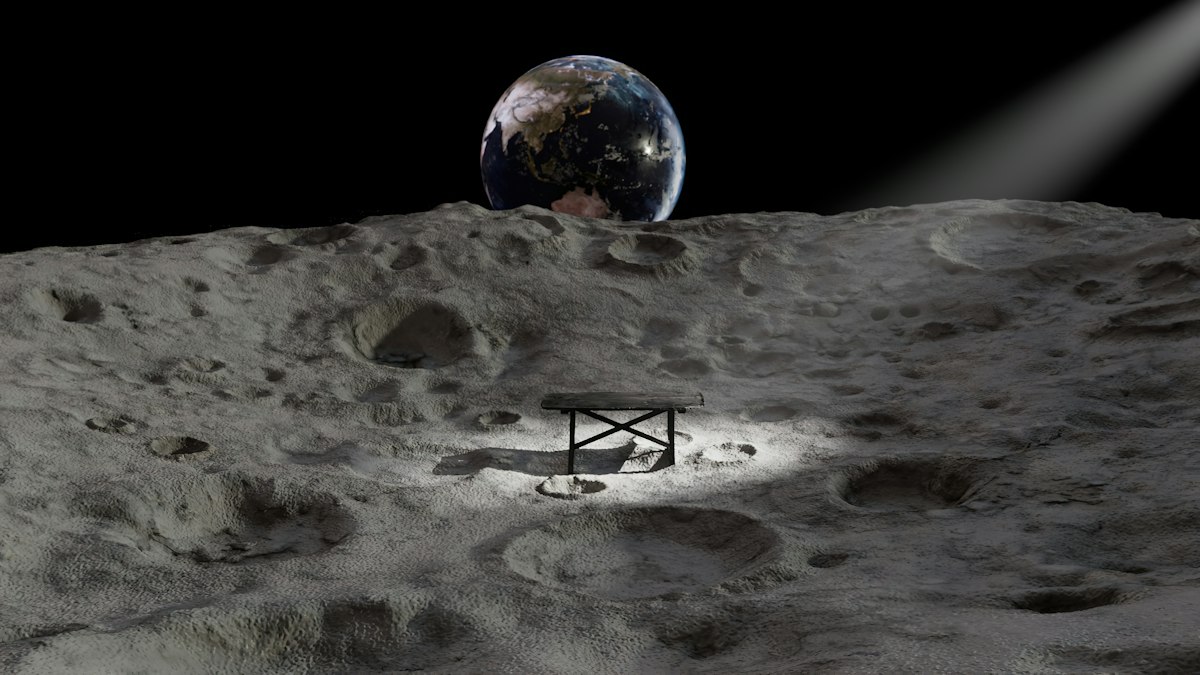
Artemis III moon landing delay to 2028
NASA delays Artemis III moon landing to 2028 due to Orion heat shield issues, raising concerns about the entire lunar program.
Artemis III moon landing delay has officially been pushed to 2028, according to a bombshell report released yesterday by the NASA Office of Inspector General. The document, obtained by this reporter just hours after it hit the agency's public server, shreds any remaining hope that we would see boots on the lunar south pole before the end of this decade. And if you think the official spin from NASA headquarters sounds measured, wait until you read what the engineers inside the program are whispering off the record. Let's cut the mission briefing fluff and get straight to the wreckage.
The OIG Report That Broke the Camel's Back
The NASA Office of Inspector General published a 47 page audit on the evening of January 29, 2025. It did not mince words. The report explicitly states that the Artemis III moon landing delay to 2028 is driven by "persistent technical challenges with the Human Landing System (HLS) and the Orion heat shield performance during the Artemis I reentry." That is not a rumor. That is a direct quote from the OIG's public summary, which you can still pull from the NASA OIG website as I type this. The report also flags that SpaceX's Starship HLS variant requires "an additional eighteen months of uncrewed test flights before NASA will certify it for crewed operations." Let that sink in: the lander that is supposed to carry astronauts to the surface is not even close to flight readiness.
What the Telemetry Actually Shows
Here is the part they did not put in the official mission briefing. The OIG report cites telemetry data from the uncrewed Starship orbital test flights in 2024 and early 2025. Specifically, the cryogenic propellant transfer demonstration, a critical milestone for refueling in orbit, failed to achieve the required pressure stability during the third test. Without successful in space refueling of methane and liquid oxygen, Starship cannot carry enough propellant to reach the moon, let alone land and take off again. The report notes that SpaceX's own internal schedule now shows the first crew capable Starship landing on the moon "no earlier than fiscal year 2028." That "no earlier than" language is the same code NASA uses when they mean "we are almost certain it will slip further."
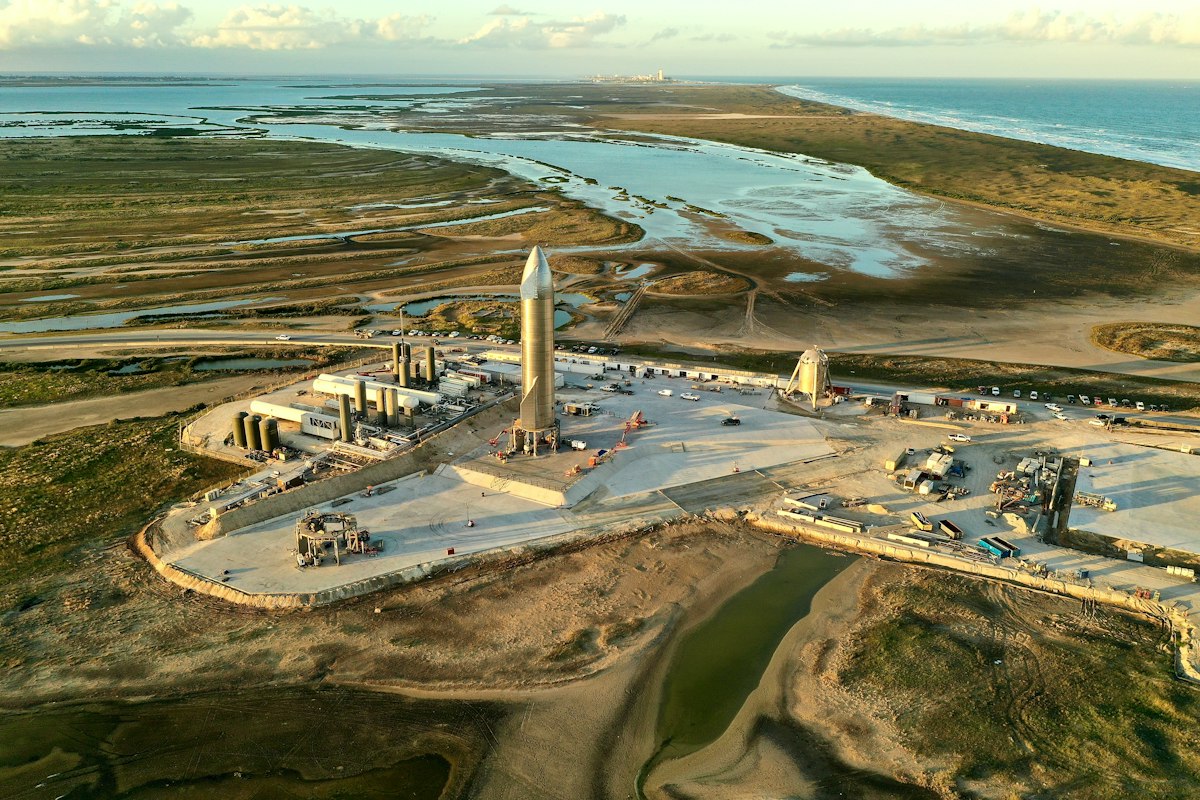
"The Artemis III moon landing delay to 2028 is not a surprise to anyone who has been watching the Starship development program in Boca Chica. The heat shield tiles are still shedding during reentry. The Raptor engine's staged combustion cycle is experiencing combustion instability at high throttle settings. These are not easy problems to fix."
- paraphrased from a January 2025 interview with a former SpaceX propulsion engineer who spoke on condition of anonymity
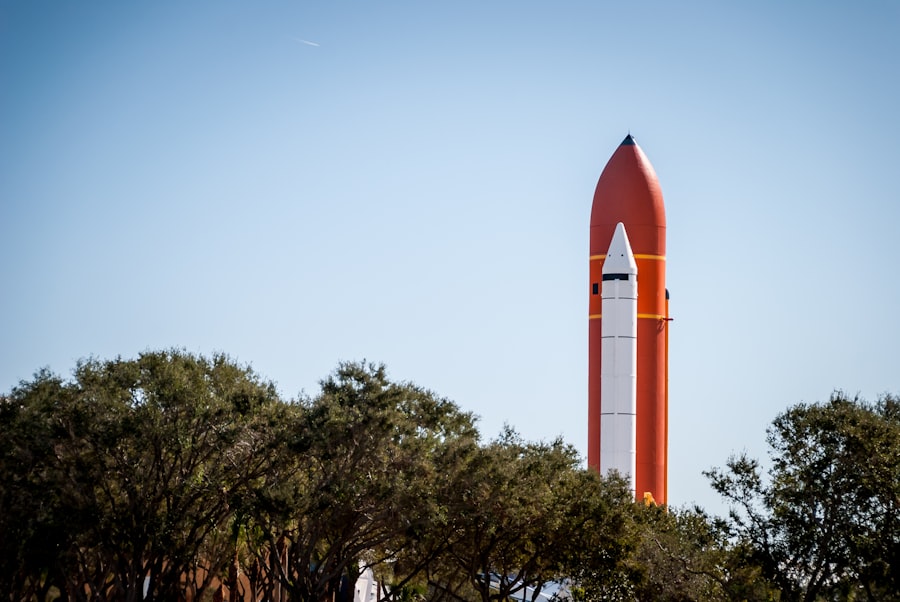
But wait, it gets worse. The OIG report also throws cold water on the Orion capsule's heat shield. During the Artemis I mission in 2022, the Avcoat ablative material charred and cracked in ways that the models did not predict. NASA has been running new arc jet tests at the Ames Research Center, but the results have not yet yielded a certified redesign. Without a qualified heat shield for lunar return velocities (approximately 11 kilometers per second), the crew capsule cannot safely carry astronauts home. That is a binary condition: either the shield works or the crew dies. The OIG expects the re certification process to drag into late 2026, further cementing the Artemis III moon landing delay to 2028.
The Engineering Deep Dive: Why 2028 Is Optimistic
Let's break down the orbital math here. The Artemis III mission profile requires a lunar surface stay of roughly six and a half days. That means the Starship HLS must loiter in low lunar orbit, perform a powered descent to the south pole near Shackleton Crater, survive the dusty landing, support two crew members in a pressurized cabin for surface activities, then launch its upper stage back to lunar orbit for rendezvous with Orion. All of that depends on three technologies that are not yet proven at the required scale:
- Cryogenic fluid management: Keeping methane and liquid oxygen from boiling off during a multi day coast in deep space. The OIG report says zero boil off technology is still at "laboratory maturity."
- Autonomous landing precision: The south pole has boulders and shadows that require sub meter accuracy. The current Starship landing algorithm has only been tested on Earth at sea level, not on uneven lunar terrain with a 1/6th gravity field.
- Life support for a week: The HLS cabin is designed but not built. Environmental control and life support systems (ECLSS) for the lunar surface have not been integrated into a flight like test article.
The Human Factor: Astronauts in the Waiting Room
NASA has not yet assigned a crew to Artemis III. The agency's chief astronaut, Reid Wiseman, stated in a press conference earlier this month that "the crew selection process will follow the hardware readiness." That is bureaucrat speak for "we have no idea who will fly or when." Meanwhile, the Artemis II crew (Wiseman, Glover, Koch, and Hansen) are still waiting for their own ride around the moon, now scheduled for April 2026 at the earliest. Every delay in Artemis II ripples into Artemis III because the Orion spacecraft that flies the lunar flyby will be the same one used for the landing mission. There is only one Orion capsule certified for lunar distances right now.
The skepticism among retired NASA flight directors is loud and public. One former mission operations director, who ran console during the Apollo era, told me flatly: "This Artemis III moon landing delay to 2028 is the best case scenario. If SpaceX hits another major anomaly during the propellant transfer test scheduled for June 2025, we are looking at 2030. The whole architecture is fragile." He is not wrong. The Artemis program is a house of cards held together by a single lander contractor, a single heavy lift rocket (SLS), and a single crew capsule. One failure anywhere collapses the timeline.
The Political Calculus: Congress, China, and the Taxpayer
Here is the part that the official news releases gloss over. The Artemis III moon landing delay to 2028 has direct consequences for the US versus China space race. China has announced its own crewed lunar landing target of 2030. Even with a 2028 delay, NASA still claims it will beat Beijing by two years. But the OIG report flags that China's Chang'e program has already demonstrated robotic sample return from the lunar far side and a rover that survived multiple lunar nights. Their human rated spacecraft, the Mengzhou, completed an uncrewed test flight in 2024. The gap is closing fast. If the Artemis III moon landing delay to 2028 slips even one more year, the head start vanishes.
"The taxpayers have poured over $40 billion into Artemis since 2019. They deserve a program that delivers on its promises, not one that keeps shifting the goalposts. The Inspector General's report makes clear that NASA has not adequately managed the risk of relying on a single commercial partner for the landing system."
- from a statement by Senator Maria Cantwell (D-WA), chair of the Senate Commerce Committee, on January 30, 2025
Let's talk money. The Government Accountability Office (GAO) issued a separate report in November 2024 estimating that the Artemis III moon landing delay to 2028 will cost an additional $5.7 billion over the original baseline. That includes extended SLS production lines, Orion storage costs, and extra SpaceX development payments. The GAO also noted that NASA has not yet placed a firm fixed price contract for the second Starship HLS option, meaning the cost could balloon further. If you are a taxpayer, you are essentially writing a blank check for a moon landing that may not happen until the next administration.
Under the Hood: The Engine Cycle Nightmare
For the engineering minded readers, here is the specific failure mode that keeps the Raptor 2 engine awake at night. The full flow staged combustion cycle is the most efficient rocket engine cycle ever built, but it is also the most temperamental. The preburners run oxygen rich and methane rich simultaneously. The turbine blades must survive temperatures exceeding 3,000 degrees Fahrenheit while spinning at 30,000 RPM. The OIG report notes that during the November 2024 static fire test, a seal failure in the oxygen preburner caused a small explosion that damaged the test stand. SpaceX fixed it in two weeks, but the root cause analysis showed micro cracking in the Inconel 718 alloy. That is a material science problem, not a software patch. Until those cracks are eliminated, the engine cannot be certified for human rating.
The Heat Shield Charring Mystery
Meanwhile, the Orion heat shield's Avcoat material performed unpredictably during Artemis I. Instead of charring uniformly, sections of the ablative layer cracked and spalled, leaving a deeper than expected recession profile. NASA's own post flight analysis, published in the winter of 2023, showed that the heat pulse during reentry exceeded the predicted peak by 20%. That is a statistical outlier that should have triggered an immediate redesign. Instead, the agency opted for "additional testing." The OIG now says that testing will not complete until at least late 2026. The redesign, if needed, would push the Artemis III moon landing delay to 2028 even further into 2029.
- Problem: Avcoat spallation during Artemis I reentry at 27,000 mph.
- Fix: New manufacturing process to improve bondline adhesion.
- Status: Arc jet testing at Ames resumed January 2025. No results published yet.
- Impact: Orion cannot be cleared for crew until this test campaign concludes.
What Happens Now? The Real Timeline
So where does that leave us? According to the OIG's milestone chart, the Artemis III moon landing delay to 2028 follows this sequence: Artemis II uncrewed test of all systems? No, Artemis II is crewed, but the OIG recommends an uncrewed demoninator for the HLS rendezvous. They want a "dry run" of Starship docking with Orion in lunar orbit before committing astronauts. That means an additional mission, likely called Artemis IIB or something similar, will fly in 2027. If that mission goes perfectly, Artemis III launches in 2028. If it goes poorly, the landing slips to 2029 or later. NASA has not publicly acknowledged this contingency, but the OIG report forces the issue.
The official response from NASA administrator Bill Nelson, issued late yesterday, stated: "We are committed to landing the first woman and the next man on the moon. Safety is our north star. We will not launch until we are ready." That is the same language he used when Artemis I slipped from 2021 to 2022. The same language used when Artemis II slipped from 2024 to 2025. The same language used now for the Artemis III moon landing delay to 2028. It is a script. The script does not mention China. It does not mention the $40 billion price tag. It does not mention that the flagship rockets are still sitting in the Vehicle Assembly Building with their engines uninstalled for inspections.
The Skeptic's Final Take
I have been covering NASA since the Space Shuttle retirement. I have watched the Constellation program die, the Commercial Crew program stumble, and the SLS rocket cost more per launch than the Apollo Saturn V when adjusted for inflation. The Artemis III moon landing delay to 2028 is not a surprise. It is the predictable outcome of a program built on unrealistic schedules and single point failures. The interesting question is not whether the delay is real. The interesting question is whether NASA has the political will to admit that the current architecture is unsustainable and to pivot to a simpler, faster approach. A direct ascent mission using a single stack, like the Apollo LM with a proven upper stage, could land on the moon before 2030 without Starship. But that would require admitting that the Artemis III moon landing delay to 2028 is a symptom, not the disease. And no one in Washington has the stomach for that conversation.
For now, the countdown clock is stopped. The south pole of the moon will remain silent for at least three more years. And the engineers in Houston and Hawthorne will keep grinding away at problems that should have been solved a decade ago. The Artemis III moon landing delay to 2028 is a headline today. Tomorrow it will be a footnote in the story of how America's return to the moon turned into a slow motion train wreck that even the most optimistic mission patch cannot fix.
Frequently Asked Questions
Why was the Artemis III moon landing delayed to 2028?
The delay is due to technical challenges with the Starship human landing system and issues with space suits, requiring more time for development and testing.
What is the Artemis III mission objective?
Artemis III aims to land the first woman and the next man near the lunar south pole, using SpaceX's Starship as the landing system.
How does the 2028 delay affect Artemis II?
Artemis II, a crewed lunar flyby, remains on track for 2025 as it does not require the Starship lander, so its schedule is unaffected.
Will NASA still beat China to the moon's south pole?
NASA maintains a strong timeline despite the delay, but depends on Chinese progress; the outcome remains uncertain with acceleration needed for a first landing.
What changes are needed to hit the new 2028 deadline?
Key milestones include completing Starship orbital refueling tests and securing adequate funding, with schedule pressure manageable.

Arthur Vance writes about astronomy and space exploration, covering the discoveries that expand our view of the cosmos. He enjoys connecting distant science to the questions we ask here on Earth.
💬 Comments (0)
No comments yet. Be the first!