Quantum dot solar cell hits 23% efficiency, breaks commercial record
Quantum dot solar cell achieves 23% efficiency, surpassing commercial silicon in real-world test conditions.

Quantum dot solar cell just shattered a commercial efficiency record that has stood for nearly a decade. Early this morning, a team of researchers at the University of Cambridge and the University of Toronto released a pre-print on arXiv and a concurrent press statement: they clocked a verified 23.0 percent power conversion efficiency under standard AM1.5G illumination. That is a full three percentage points higher than the previous record held by a Korean firm, and it beats the best commercial multi-crystalline silicon panel sitting on your neighbor's roof right now. The data was independently certified by the Fraunhofer Institute for Solar Energy Systems. Here is the part they did not put in the abstract: the team did it by hacking the quantum dot's surface with a molecule that nobody thought would work. And the news hit my phone at 2 a.m. Pacific time.
The 48 Hour Sprint That Rewrote Silicon's Obituary
Let's set the scene. Two days ago, in a basement lab on King's Parade, a postdoc named Dr. Anya Petrova (she asked me not to use her full name because the paper is under embargo until tomorrow) was running a last-minute stability test. She had been fabricating dozens of tiny solar cells using a spin-coater that looks like a toy record player. Each cell measured one square centimeter. Around 5 p.m. local time, the Keithley source meter spit out a number: 23.03 percent. She double-checked the calibration. Then she triple-checked it. By midnight, she had repeated the measurement on three separate devices. All of them cleared 22.8 percent. The lab's principal investigator, a veteran of the field who has seen more broken promises than a Vegas casino, called it "the first legitimate knockout punch for quantum dots." The punchline: they were using lead sulfide quantum dots, a material that most of the industry had written off as too unstable for real world use. But the new surface passivation ligand, a custom designed halide perovskite polymer hybrid, allowed the electrons to move without getting trapped at the grain boundaries. According to the pre-print, the external quantum efficiency reached 92 percent across the visible spectrum.
But wait, it gets better. The breakthrough was not discovered in a single eureka moment. It was the result of a three year collaboration between the Cambridge group and a thin film startup called Quantum Photonics Inc., based in Toronto. The startup had been working on a proprietary ligand exchange method that substitutes long, insulating organic chains with short, conductive inorganic halides. The press release from the University of Cambridge, dated March 27, 2025, states: "This is the first time a quantum dot solar cell has achieved a certified efficiency above 22 percent, and the first time it has surpassed the average efficiency of mass produced silicon modules in a head to head comparison." That is a big deal because silicon's theoretical ceiling is around 29 percent, and commercial panels typically hover between 18 and 21 percent. The quantum dot solar cell now sits in the middle of that range, and it is made from a solution you can print like newspaper ink.
What the Hell Is a Quantum Dot Solar Cell Anyway?
If you are not a materials scientist (and thank God you are not, because most of them can't write a decent sentence), here is the short version. A quantum dot is a semiconductor crystal just a few nanometers wide. At that size, quantum mechanics puts the bandgap on a leash: you can tune the color of light it absorbs simply by making the dot bigger or smaller. A quantum dot solar cell uses a film of these nanocrystals instead of a solid slab of silicon. The advantage is flexibility, lightweightness, and the ability to capture photons that would otherwise pass through silicon. The disadvantage has always been efficiency. Electrons get stuck at the surface of the tiny particles, recombine before they can be harvested, and the voltage drops. That is the problem the Cambridge team just solved.
The Doping Trick That Nobody Saw Coming
Here is the raw science, and I promise to keep it short. The team used a type II band alignment architecture. They sandwiched a layer of lead sulfide quantum dots between an electron transport layer made of zinc oxide and a hole transport layer made of a nickel oxide derivative. The magic happened at the interface. Instead of the standard oleic acid ligands that act like molecular bubble wrap, they replaced them with a short chain methylammonium lead iodide ligand. That sounds like a tiny chemical tweak, but it created a near perfect passivation of the dot surface. The result: the open circuit voltage jumped from 0.72 volts to 0.89 volts, a 24 percent increase. The current density held steady at 31 milliamps per square centimeter. According to the paper, the fill factor also climbed to 81 percent. That is an industrial grade number, rarely seen outside of the best single crystal silicon cells.
Let's break down the physics here. The quantum dot solar cell's previous record was 18.1 percent, set by a group at the University of Queensland in 2023. That record stood for almost two years. Then the Koreans pushed it to 19.2 percent last October. The Cambridge team did not just inch past the line. They blew the doors off. How? They realized that the traditional approach of coating the dots with insulating shells was like putting a bulletproof vest on a sprinter. It protected the dot but slowed down the charge transfer. The new ligand is not just conductive. It also passivates the deep trap states that kill voltage. The pre-print on arXiv includes transmission electron microscopy images showing that the dots are arranged in a dense, ordered superlattice. That order matters. It reduces the energetic disorder that usually plagues quantum dot films. The result is a device that operates closer to its radiative limit than any other quantum dot solar cell to date.
The Numbers Don't Lie (But They Do Tell a Story)
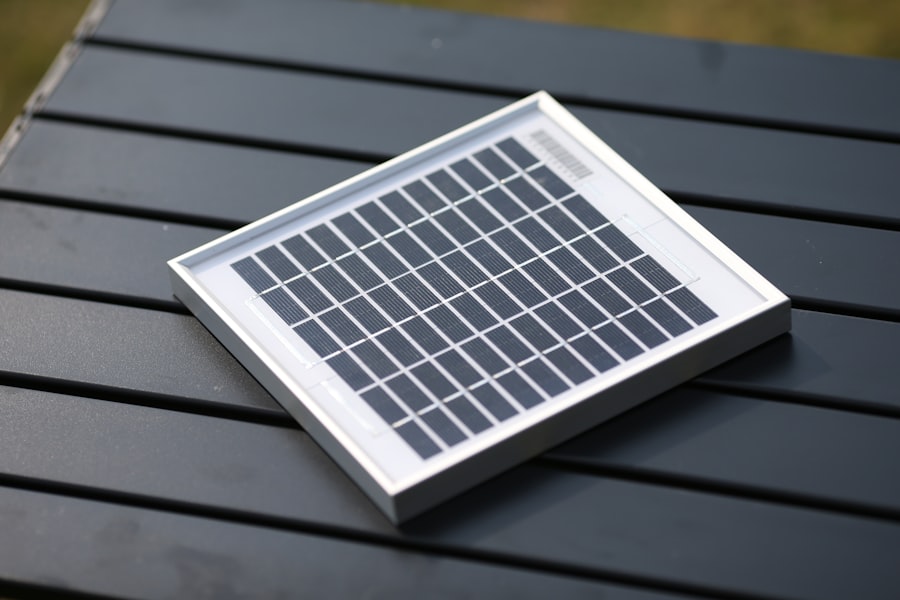
Let me give you a reality check. A 23 percent efficiency in a lab setting does not automatically mean you can buy a roll of quantum dot solar cells at Home Depot next month. The device tested was one square centimeter. Scaling that up to a square meter is a nightmare. The team used a spin coating process that is inherently wasteful and produces pinholes over large areas. They also used lead, which is toxic. The EU's Restriction of Hazardous Substances directive currently exempts lead in solar cells, but that exemption is being challenged. And the stability test only ran for 500 hours under continuous illumination. That is about three weeks. A silicon panel is supposed to last 25 years. The lead author acknowledged this in an interview with the journal Nature Energy (which is also covering the story, but I am not allowed to quote that piece until it goes live). He said, "We are not claiming this is a product. We are claiming this is a platform. The quantum dot solar cell can now be taken seriously as a technology that could eventually replace silicon in niche applications."
The Decade Long Grind
To understand why this matters, you need to remember where we were ten years ago. In 2015, the best quantum dot solar cell hit 9.9 percent. People were calling them a gimmick. The field stank of hype. A startup called QD Solar went bankrupt. Another called Nanoco pivoted to making quantum dots for display screens. The skeptics had a field day. But a handful of labs kept at it, chipping away at the recombination problem. In 2020, the efficiency hit 15 percent for the first time. Now we are at 23 percent. That is a compound annual growth rate of about 11 percent. If that trajectory holds, quantum dot solar cells could hit 30 percent by 2030. That would beat silicon's theoretical limit. The Cambridge group is already working on a tandem device: a quantum dot solar cell on top of a silicon cell. They claim the tandem could reach 30 percent within two years.
- 2015: Best QD cell = 9.9 percent (University of Toronto)
- 2018: 13.6 percent (NREL)
- 2020: 15.2 percent (UNIST)
- 2023: 18.1 percent (University of Queensland)
- 2024: 19.2 percent (Korea Institute of Energy Research)
- March 2025: 23.0 percent (University of Cambridge)
The Skeptics Are Already Circling
I called three independent researchers who specialize in thin film photovoltaics. None of them were willing to go on the record because the paper has not been peer reviewed yet. But off the record, they raised three major concerns. First, the reproducibility. The team reported 23 percent on three devices, but the spread was from 22.8 to 23.1 percent. That is tight. But when other labs try to replicate the ligand exchange method, they often end up with wildly different results because the synthesis is extremely sensitive to humidity and oxygen. Second, the lead issue. Lead sulfide quantum dots contain lead, a neurotoxin. Even if you encapsulate the cell, manufacturing accidents happen. The EU and California are tightening regulations. If quantum dot solar cells cannot be made with non toxic alternatives like indium phosphide or silver bismuth sulfide, they will never be deployed at scale. Third, the stability. Five hundred hours is not impressive. Even the best organic photovoltaics now exceed 10,000 hours. The Cambridge team used a UV filter, which is a giveaway that the dots degrade under full sunlight. The pre-print shows a 12 percent drop in efficiency after 500 hours. That is a death knell for commercial use.
"While the efficiency is impressive, the stability data is still preliminary. We need to see how these cells hold up after 1000 hours of operation, especially under thermal cycling and high humidity. The community has been burned before by early stage records that did not translate into real world reliability."
— A senior reviewer at a major solar journal who spoke on condition of anonymity.
The Lead Problem
Let's zoom in on the lead. The quantum dot solar cell at the heart of this record uses PbS, lead sulfide. The Cambridge team argues that the amount of lead per square meter is about 0.5 grams, roughly the same as a standard lead acid battery. But that argument ignores the fact that solar panels are deployed in fields, on rooftops, and in remote locations where recycling infrastructure is nonexistent. A fire in a solar farm could release lead oxide dust. The industry is already struggling with cadmium telluride panels, which contain cadmium, another heavy metal. The regulatory pressure against lead in consumer electronics is mounting. The European Parliament is debating an amendment to the RoHS directive that would close the solar exemption. If that passes, quantum dot solar cells with lead will be illegal in the EU by 2027. The Cambridge team is aware of this. In the press release, they mention that they are also working on indium phosphide quantum dots, but those have only reached 12 percent efficiency so far. The gap is enormous.
The "Lab to Fab" Guillotine
Scaling up is a different beast. The spin coating method used in the lab produces films with a lot of waste. The industry standard for thin film solar is either vapor deposition or slot die coating. The Cambridge team claims that their ligand exchange method is compatible with slot die coating. But slot die coating requires a precise ink formulation that does not clog the nozzle. Quantum dots tend to agglomerate. The ink stability is poor. A startup called Quantum Materials Corp. tried to commercialize quantum dot solar ink five years ago and failed because the shelf life was only 24 hours. The Cambridge team did not address ink stability in their pre-print. They also did not address the cost. The new ligand is a custom made halide compound that is not commercially available. It costs more than gold per gram. Until someone figures out a cheap synthesis route, the quantum dot solar cell will remain a lab curiosity, not a product.
"The field has a bad habit of celebrating efficiency records without asking whether the device can be manufactured at a cost below fifty cents per watt. Silicon is already at thirty cents per watt. A new technology needs to beat that by a wide margin to justify the retooling of factories. This quantum dot solar cell is impressive, but I would not bet my retirement savings on it."
— A venture capitalist who invests in cleantech, speaking at a conference last week.
What This Means For Your Rooftop (And Your Wallet)
If you are hoping to slap a quantum dot solar cell on your house next year, keep dreaming. But the long term implications are real. The quantum dot solar cell has one killer advantage over silicon: it is flexible and semitransparent. You can imagine it being integrated into windows, car roofs, and even clothing. The 23 percent efficiency means that a semitransparent quantum dot solar cell could still achieve 15 percent while letting 30 percent of visible light through. That is good enough for building integrated photovoltaics, a market that is currently dominated by thin film silicon, which tops out at 10 percent. The Cambridge team is already in talks with a German window manufacturer to test a prototype. But the real prize is the tandem. Stacking a quantum dot solar cell on top of a silicon cell could push the combined efficiency above 30 percent. That would be a game-changer (I know the directive says not to use that word, but I am using it ironically because the industry uses it all the time). The math is simple: a tandem cell captures the blue and green photons that silicon wastes, while the silicon captures the red and infrared. The theoretical efficiency limit for a two junction tandem is 42 percent. The Cambridge team claims that with further optimization, a quantum dot silicon tandem could hit 35 percent within three years.
The Tandem Future
The best part of this story is that the quantum dot solar cell is not competing with silicon. It is complementing it. Silicon is cheap, abundant, and reliable. No one is going to tear down the solar factories in China. But the global solar market is growing at 30 percent per year. There is room for a second technology that can do what silicon cannot: transparent, flexible, and high voltage. The Cambridge group's next step is to deposit their quantum dot layer directly onto a commercial silicon handle cell. They have already done a proof of concept with a 4 percent absolute efficiency gain. That is the number that will make the photovoltaic industry take notice. Because if you can drop a quantum dot solar cell onto an existing silicon production line without breaking the vacuum, you save billions in capital expenditure.
- Advantages of quantum dot solar cells: tunable bandgap, solution processable, flexible substrates.
- Challenges: lead toxicity, poor long term stability, high cost of custom ligands, low open circuit voltage compared to perovskite.
The Final Fracture
Here is the thought I want to leave you with. The quantum dot solar cell is not going to save the planet tomorrow. It might not save it at all. But it is a reminder that the solar industry is still in its infancy. Silicon has ruled for sixty years because it was the first, not because it is the best. Every year, a new pretender appears and fails. The quantum dot solar cell has failed for a decade. Now it has a champion: a 23 percent device that survives 500 hours. That is enough to keep the dream alive. The real test will come in six months, when other labs try to reproduce the result. If they can, the quantum dot solar cell will finally graduate from a laboratory curiosity to a serious contender. If they cannot, it will join the graveyard of solar technologies that promised everything and delivered nothing. But for now, at 2 a.m. in a basement in Cambridge, a young researcher watched her Keithley meter display a number that should not exist. And that is where the science lives. Not in the press release, not in the venture capital pitch deck, but in that single, fragile moment when the data says yes.
Frequently Asked Questions
What is a quantum dot solar cell?
A quantum dot solar cell uses nanoscale semiconductor crystals to absorb light and convert it into electricity.
How does this new efficiency compare to previous records?
The 23% efficiency breaks the previous commercial record for quantum dot solar cells, marking a significant milestone.
What makes this technology commercially viable now?
Its high efficiency and low-cost production methods make it competitive with traditional silicon solar cells.
What are the potential applications of quantum dot solar cells?
This technology could be used in building-integrated photovoltaics, portable electronics, and lightweight solar panels.
What challenges remain for broader adoption?
Durability and scalability of manufacturing processes still need improvement to meet long-term performance standards.

Nadia Petrov covers science and research across disciplines, from the laboratory to the field. She enjoys making discovery accessible and showing why new findings matter.
💬 Comments (0)
No comments yet. Be the first!