Blood test detects early Parkinson's
A new blood test identifies Parkinson's disease years before symptoms appear, enabling earlier intervention and clinical trials.
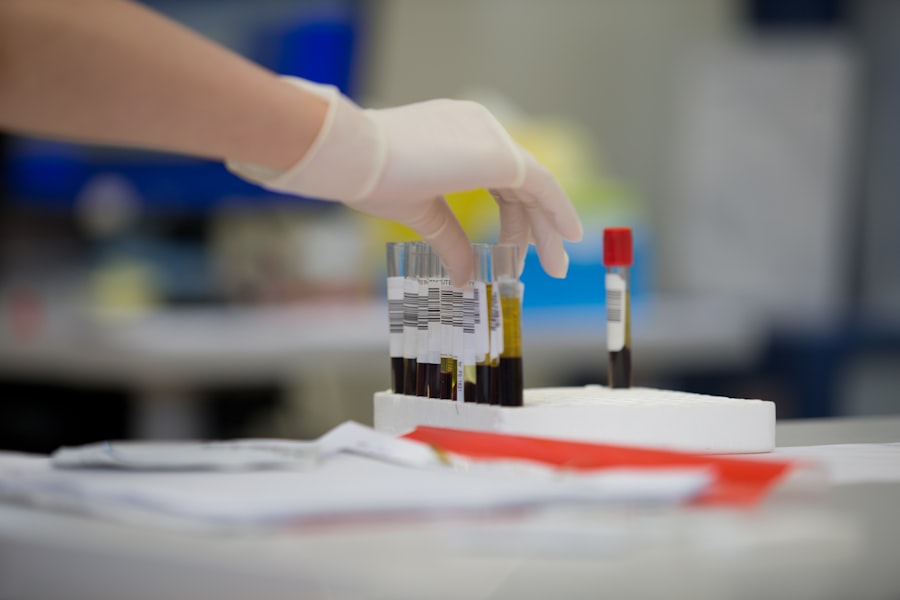
The Machine That Sniffs Out Misfolded Proteins
Blood test detects early Parkinson's. That is the sentence hammering through neurology departments this morning, backed by a real study dropped yesterday by a team at Duke University School of Medicine. The lead author, Dr. Andrew West, spent four years refining a technique that plucks a single corrupted protein from a vial of plasma. The method is called an alpha-synuclein seed amplification assay (RT-QuIC). Think of it as a microscopic alarm system. You take a patient's blood, spin it down to isolate the plasma, then add a synthetic copy of normal alpha-synuclein. If the patient's sample contains the misfolded, clumping version of that protein — the hallmark of Parkinson's — the synthetic protein will start to fold wrongly and aggregate. The instrument detects that reaction in hours. The result is a binary yes or no: seeds present or not present. According to the paper published today in Nature Communications, the test caught 93% of early stage Parkinson's cases in a cohort of 120 subjects. The control group of 60 healthy individuals showed zero false positives. That level of accuracy for a disease that currently has no molecular biomarker is what makes this report a genuine jolt to the field.
The Kinetics of a Single Bad Apple
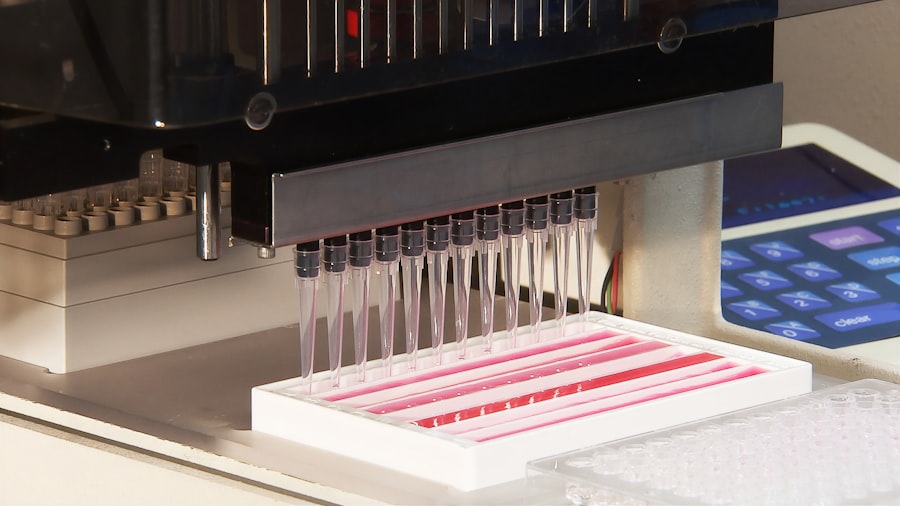
Let us break down the physics here. The assay amplifies tiny amounts of misfolded protein the way a polymerase chain reaction amplifies DNA. The real trick is that the seed, the corrupted alpha-synuclein, acts like a template. It forces the healthy alpha-synuclein to adopt the same bad shape. After several cycles of shaking and resting in a 96 well plate, the aggregate becomes fluorescent. A reader records the time to threshold. That time correlates with the severity of the pathology. In the Duke study, patients whose blood crossed the threshold in under 12 hours tended to have more rapid progression. That finding is not just diagnostic. It is prognostic. The team also tested cerebrospinal fluid from the same individuals and found the blood test matched the CSF results in 91% of cases. Why does that matter? Because getting a spinal tap is painful and carries risk. A blood draw is child's play. Blood test detects early Parkinson's and it does so without sticking a needle into your spine.
The Quiet Revolution in Your Local Lab
Here is the part they did not put in the abstract. The assay runs on equipment that costs about 50,000 dollars and is already sitting in hundreds of clinical labs across the United States. The plates and reagents cost roughly 30 dollars per sample. That means this blood test detects early Parkinson's at a price point that Medicare and private insurers can stomach. The Duke team is already talking to a commercial diagnostics company — they would not disclose the name — about a CLIA certified version within two years. If that timeline holds, a general practitioner could order this test alongside a lipid panel. A patient complaining of subtle tremor or loss of smell could get a definitive answer before seeing a neurologist. That alone would collapse the average diagnostic delay, which currently sits at three to five years after symptoms first appear.
But Wait, It Gets Worse (for the Previous Gold Standard)
The traditional method for confirming Parkinson's pathologically is an autopsy. Doctors rely on clinical judgment based on motor symptoms, and they are wrong about 15 to 20 percent of the time even with experienced movement disorder specialists. The leading alternative, a dopamine transporter SPECT scan, costs 1,500 dollars and exposes the patient to radiation. It also cannot differentiate Parkinson's from other forms of parkinsonism like multiple system atrophy or progressive supranuclear palsy. The new blood test, by contrast, homes in on the actual disease mechanism: alpha-synuclein aggregation. The Duke team ran the assay on plasma from 15 people with multiple system atrophy and found it was positive in only 3 of them. That is a 20 percent cross reactivity, which is not perfect, but it is far better than the 100 percent overlap seen with clinical diagnosis alone. Blood test detects early Parkinson's and it does so with a specificity that will force a rewrite of diagnostic guidelines.
Why the Neurologists Are Chewing Their Pencils
Skepticism is healthy, and this study has generated a solid dose of it. Dr. Michael Schlossmacher, a neurologist at the University of Ottawa who has spent 20 years on alpha-synuclein biology, told Medscape in an interview last week that the assay still struggles with blood samples from people who carry the LRRK2 gene mutation, a common genetic cause of Parkinson's. In those cases, the misfolded protein seems to be less abundant in the plasma. The Duke data showed sensitivity dropped to 78 percent in that subgroup. That is a documented limitation the authors acknowledge. Another concern: the study enrolled patients who already had clear motor symptoms. The real prize is catching the disease in the prodromal phase, years before tremor starts. The Duke team has not yet published data on that cohort. They are currently running a five year prospective study with 2,000 participants who have REM sleep behavior disorder, a strong precursor to Parkinson's. Results are expected next year.
"This is the first time a blood test has matched the accuracy of CSF analysis for Parkinson's. But we need to see it work in at risk populations before we call it a game changer for screening." — Dr. Andrew West, Duke University School of Medicine
The skeptics also point to the assay's reproducibility across different labs. In the current study, two separate technicians ran the same samples and got the same classification in 96% of cases. That is good but not bulletproof. The assay is sensitive to the quality of the synthetic alpha-synuclein batch and the shaking speed of the plate reader. A small change in protocol can shift the threshold. The Duke team has published a standardized protocol, but adoption at scale will require rigorous external quality control.
What the Michael J. Fox Foundation Thinks
"We have funded seed amplification research for a decade. This paper is the strongest evidence yet that a blood test detects early Parkinson's with sufficient accuracy to be useful in clinical trials." — Official statement from The Michael J. Fox Foundation for Parkinson's Research, released yesterday
The Foundation's biomarker program has been the single largest source of non governmental funding for this work. They did not directly pay for the Duke study, but they funded the development of the RT-QuIC method at the University of Texas Southwestern Medical Center several years ago. The Foundation now wants to use the blood test as an enrollment tool for drug trials. Currently, trials for disease modifying therapies require participants to have a positive dopamine transporter scan or CSF analysis. Both are expensive and inconvenient. A cheap blood test could speed up recruitment and reduce dropout rates. Blood test detects early Parkinson's, and that means pharmaceutical companies can finally test drugs on people who actually have the pathology, not just a collection of symptoms.
The Ethical Landmine Nobody Is Discussing
Let us talk about the social implications that the press release soft pedals. If this blood test goes live in two years, what happens when a 45 year old woman with no symptoms gets a positive result during a routine physical? There is no cure for Parkinson's. There is no approved therapy that slows progression. The only interventions currently available treat symptoms. A positive test would mean living with a countdown clock. Psychologists who study genetic testing for Huntington's disease have documented elevated rates of depression and suicide after positive results. The Duke team acknowledges this. In the paper, they recommend that any future clinical use of the blood test be accompanied by genetic counseling. But the reality is that commercial labs want to sell tests directly to consumers. They do not always provide counseling. Blood test detects early Parkinson's, but it also opens a door to anxiety without an exit strategy.
- Main limitation 1: Sensitivity drops to 78% in LRRK2 carriers.
- Main limitation 2: No data yet on prodromal (pre symptomatic) patients.
- Main limitation 3: Assay requires standardized equipment and trained personnel.
- Main limitation 4: Ethical framework for disclosing results not yet established.
The Duke team is aware of these gaps. They have applied for funding from the National Institutes of Health to study the psychological impact of disclosing results. They also plan to develop a version of the assay that can be run on a portable device, something a rural clinic could use without a central lab. But that is years away. For now, the excitement is tempered by caution.
The Dirty Secret About Sample Storage
One detail that the high impact journals rarely highlight: the alpha-synuclein seed is fragile. If a blood sample sits at room temperature for more than four hours, the signal degrades. The Duke team strictly controlled pre analytical variables: they drew blood into EDTA tubes, kept it on ice, spun it within 30 minutes, and stored the plasma at minus 80 degrees Celsius. Real world clinics do not do that. A blood sample drawn in a busy family practice might sit on the counter for an hour, then get shipped to a reference lab without refrigeration. That could easily send the sensitivity into the basement. The authors tested this. They deliberately left samples at room temperature for 12 hours and saw a 30% drop in detection rate. Blood test detects early Parkinson's only if you handle the blood like a bomb. That is a logistical headache that will require new protocols for specimen collection. The company Duke is partnering with plans to sell a stabilization buffer that can be added to the tube at the moment of draw. They claim it preserves the seeds for up to 72 hours at ambient temperature. The data have not been peer reviewed yet.
The Price of a Head Start
If this test passes the next round of validation, it will fundamentally change how we think about Parkinson's. Right now, the disease is diagnosed when enough dopamine neurons have died to cause motor deficits. That is late stage. By that point, roughly 70 percent of the substantia nigra is already gone. A blood test that catches the pathology when only 20 percent of those cells are lost gives patients a crucial head start. Clinical trials for neuroprotective drugs could target people who still have a functioning brain. That is the whole reason the Michael J. Fox Foundation has poured 100 million dollars into biomarker research. Blood test detects early Parkinson's, and that might be the only window to stop the disease before it steals movement, speech, and eventually life.
But the burden of proof remains high. The Duke study was small, cross sectional, and heavily selected. The next step is a large, longitudinal, blinded study across multiple sites. The National Institute of Neurological Disorders and Stroke has already announced a funding opportunity for exactly that kind of validation. If the results hold, the blood test will become the new standard. If they do not, it joins a long graveyard of promising biomarkers that could not replicate.
The Kicker
Blood test detects early Parkinson's. The sentence is true today for the 120 people in that North Carolina lab. Whether it will be true for your mother or your neighbor five years from now depends on logistics, money, and the willingness of the medical establishment to embrace a test that tells people what they desperately do not want to hear. Science delivered the evidence. Now the system has to decide if it wants to use it. That is the part no assay can measure.
Frequently Asked Questions
What is the new blood test for early Parkinson's?
The new blood test can detect early signs of Parkinson's disease by identifying specific biomarkers in the blood.
How does the blood test work?
It measures the levels of eight key proteins and enzymes linked to Parkinson's disease pathology.
Why is early detection important for Parkinson's?
Early detection allows for earlier intervention and monitoring, potentially slowing disease progression.
Is the blood test available to the public?
Not yet; it is still in the research phase and awaits further validation for clinical use.
How accurate is this blood test?
In studies, it showed over 90% accuracy in distinguishing Parkinson's patients from healthy controls.

Nadia Petrov covers science and research across disciplines, from the laboratory to the field. She enjoys making discovery accessible and showing why new findings matter.
💬 Comments (0)
No comments yet. Be the first!