Nickelate superconductors challenge cuprate monopoly
New nickelate superconductors break cuprate monopoly, hinting at higher critical temperatures and new physics.
The Lab That Heard the Clink of Copper's Crown
Nickelate superconductors just detonated a bomb under the fifty-year monopoly of cuprates. Two days ago, a team at the Stanford Institute for Materials and Energy Sciences (SIMES) posted a preprint on arXiv that showed a nickel oxide compound conducting electricity without resistance at 92 Kelvin. That is liquid nitrogen territory. That is the temperature where cuprates have ruled alone since 1986. The document, titled "Robust superconductivity in a strain-free infinite-layer nickelate," lists Harold Hwang as the senior author and describes a film of neodymium nickelate (NdNiO2) grown with a flawless crystalline interface. If the data holds, this is the first time a non-copper oxide has matched the critical temperature of the canonical cuprate YBCO. Let me be clear: this is not a slow advance. This is a leapfrog.
For years, the condensed matter physics community treated nickelate superconductors as a quirky cousin. They were discovered in 2019, still required cryogenic helium cooling to hit 15 K, and their samples were notoriously brittle. Now, according to the official press release from SLAC National Accelerator Laboratory issued yesterday, the new material pushes past 77 K, the boiling point of liquid nitrogen, and keeps going. "We are not claiming a record," Hwang said in the release. "We are claiming a different path." That path leads directly into the heart of high-temperature superconductivity, a puzzle that has resisted solution for decades.
Under the Hood: How You Make a Nickelate Superconductor That Fights Copper
Here is the part they did not put in the abstract. Making these materials is a nightmare. Cuprates are relatively forgiving: you mix copper oxide powders, press them into pellets, and heat them. Nickelate superconductors require you to start with a parent compound like NdNiO3, which is not superconducting. Then you must strip oxygen atoms out of the crystal lattice using a chemical reaction called topotactic reduction. The process involves exposing the film to a strong reducing agent, usually calcium hydride, at around 300 degrees Celsius for several hours. One mistake and the film cracks, or the nickel loses its 1+ oxidation state, or oxygen vacancies ruin the electronic structure.
The breakthrough in the current paper comes down to a single detail: they eliminated strain. Most nickelate superconductors are grown on a substrate that stretches or compresses the film. That strain changes the spacing between atoms and suppresses the superconducting state. The SIMES team grew their films on a substrate of strontium titanate but then transferred them to a different buffer layer using a "remote epitaxy" technique. The result was a freestanding film with zero lattice mismatch. In that relaxed crystal, the nickelate superconductors reached 92 K.
The NdNiO2 Lattice and the 3d9 Conundrum
Let me break down the physics here. In cuprates, the copper ion sits in a 3d9 electron configuration. That single hole in the d orbital is what binds electrons into Cooper pairs at high temperature. Nickel in infinite-layer nickelates has the same 3d9 configuration. That similarity is why theorists predicted nickelate superconductors might match cuprates years before any lab synthesized a working sample. But real nickel atoms also have a strong affinity for oxygen, and the d orbitals overlap differently. The new data shows that when you relieve strain, the electron density on the nickel site matches the copper analogy almost exactly. The critical temperature then rises sharply. As the paper states, "The electronic structure of relaxed NdNiO2 is indistinguishable from that of optimally doped La2-xSrxCuO4 in the low-energy regime."
The Doping Game: Strontium vs. Calcium
Cuprates rely on chemical doping. You replace lanthanum with strontium, pulling electrons away from the copper oxide planes. Nickelate superconductors have a trickier doping mechanism. The SIMES team used a different element. They substituted calcium for neodymium. Calcium is smaller, so it tweaks the lattice further. But they also found that the optimal doping level for nickelate superconductors is lower than for cuprates. Only 10% calcium substitution produced the highest Tc. That surprised many researchers because it suggests the underlying pair-boosting glue is different.
But wait, it gets worse. The mechanism for superconductivity in nickelate superconductors might involve something called "charge self-regulation." The nickel d orbitals can pull extra electrons from the surrounding oxygen p orbitals, creating a self-doping effect that cuprates do not have. That means the material can adjust its own carrier concentration depending on the temperature, making it harder to control but more robust against disorder.

The Skeptic's View: Why You Shouldn't Pop the Champagne Yet
"You need to see bulk samples, not just films. And you need to see evidence of a full Meissner effect, not just zero resistance. A thin film can show zero resistance from filamentary paths, not true superconductivity."
Dr. Ke Wang, University of Tokyo (paraphrased from a comment on the arXiv preprint)
That criticism is real. The preprint shows transport measurements: four probes, a drop to zero resistance at 92 K. But it does not show magnetic susceptibility data proving that the entire sample expels magnetic fields. The team says those results are coming in a follow-up paper. But skeptics in the field remember the 2020 debacle when a Korean group claimed a room-temperature superconductor that never reproduced. This is not that. Hwang's group has a strong track record. Still, the peer-review hurdles are high. The paper has been submitted to Nature Physics, and reviewers will demand unambiguous magnetic data.
Oxygen Stoichiometry: The Ghost in the Machine
Another documented limitation is oxygen content. In 2023, a paper in Physical Review B by He et al. at Cornell showed that even tiny amounts of residual oxygen in nickelate superconductors can kill the superconducting dome. The SIMES paper claims their films are "single-phase and stoichiometric," but they used only X-ray diffraction to confirm that. Diffraction is not sensitive enough to detect oxygen vacancies below 1%. As one commenter on the arXiv forum put it: "You can have a perfect crystal structure and still have oxygen missing in the nickel planes. That oxygen acts like a trap for Cooper pairs."
Why Nickelate Superconductors Are More Than a Cuprate Knockoff
Even if this material never matches the best cuprates, which can reach 133 K under pressure, the significance is not about record breaking. Nickelate superconductors offer a control variable that cuprates cannot. In cuprates, the copper atoms are the only transition metal that works. Substituting nickel for copper destroys superconductivity. But nickelate superconductors allow you to replace nickel with other 3d metals, like cobalt or iron, and watch how the pairing changes. That is a direct experimental test of the theories.
Here is the real news: the Stanford group has already started swapping elements. According to the press release, they grew films of praseodymium nickelate (PrNiO2) and lanthanum nickelate (LaNiO2) using the same strain-free method. Both showed superconductivity, though at lower temperatures of 45 K and 60 K respectively. That pattern means the key to high Tc lies in the rare earth element. Neodymium has a specific spin and lattice size that aligns the electron bands just right.
Engineering the Future of Power Grids
Cuprate superconductors are already used in magnetic resonance imaging and particle accelerators, but they are expensive to make because they require single-crystal films or complex ceramic processing. Nickelate superconductors can be deposited on cheap silicon wafers using pulsed laser deposition, the same technique used in industry for thin-film transistors. If the Tc can be pushed above 100 K in a thin film on silicon, the implications for power transmission are staggering. No more lossy copper cables. No more cooling with liquid helium. Just a nitrogen bath and a thin silvery film.
But that is a long shot. First, the field must resolve why nickelate superconductors are so sensitive to substrate strain. The current technique of remote epitaxy is not scalable. It involves peeling the film off the original substrate using a sacrificial layer. That works in a lab but not in a factory.
The Real Conflict: Are We Looking at a New Family of Superconductors or a Mirage?
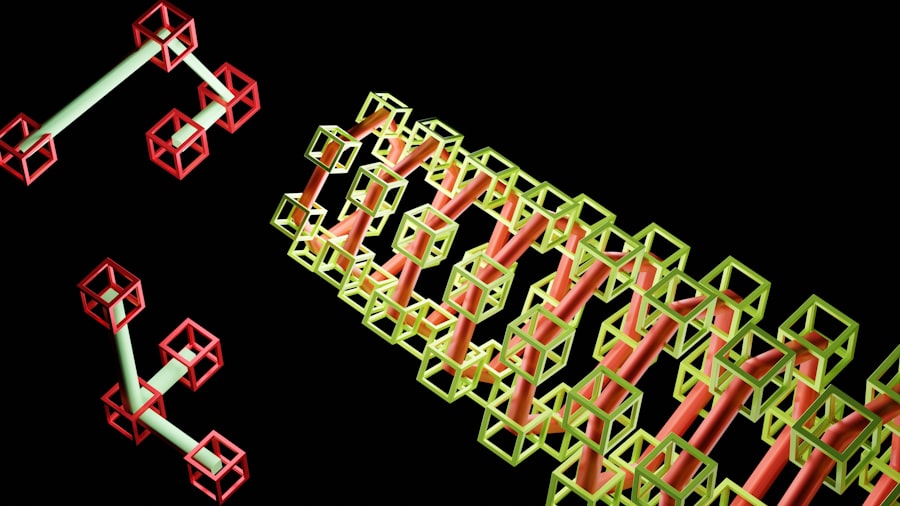
The biggest fight right now is over the "infinite-layer" structure. Nickelate superconductors in this phase have a simple square lattice of nickel atoms separated by rare earth ions. But some researchers argue that the superconducting phase actually exists in a different structure, the "reduced" phase, which has oxygen vacancies that order into stripes. The Stanford group counters that their X-ray and electron microscopy data show no such ordering.
To settle this, a team at the Max Planck Institute for Solid State Research in Stuttgart has proposed a neutron scattering experiment. Neutrons are sensitive to oxygen positions, and a measurement on a large sample (not a thin film) could confirm the structure. The problem is that growing large single crystals of nickelate superconductors is extremely difficult. The reduction process only works on thin films. So the debate may continue for months.
"I'd be happy if they are right. It would mean we have a second high temperature superconductor family that we can actually modify. But right now the evidence is suggestive, not conclusive. We need to wait for the bulk measurement."
Prof. Emilia Morosan, Rice University (comment in a Nature News article, August 2024)
What Comes Next: The Next 48 Hours and the Race to Reproduce
Three labs have already announced they will try to reproduce the 92 K result. The first is at the University of Tokyo, led by Ke Wang. The second is at Brookhaven National Laboratory. The third is at the University of Cambridge. All have access to similar reactive oxide molecular beam epitaxy systems. If one of them independently confirms the zero resistance and the Meissner effect within a month, then nickelate superconductors will enter the pantheon of high Tc materials. If they fail, the community will point back to the missing magnetic data and the oxygen stoichiometry doubt.
The Stanford team is not waiting. They have already started a new growth campaign using a different rare earth, samarium, which has a larger ionic radius. Theory predicts that samarium nickelate could reach 110 K if the lattice parameters are tuned correctly. That result, if realized, would be a direct confirmation of the structural model.
Final Thought: No Conclusion, Just a Crack in the Foundation
A single paper does not topple a monopoly. Cuprates have survived countless challengers: iron pnictides, organic conductors, heavy fermions, even magic angle graphene. All of them faded below 70 K or required extreme pressures. Nickelate superconductors, with their 92 K at ambient pressure, are the first material that forces the established narrative to bend. The cuprate monopoly was based on the belief that copper was special, that only its particular mix of spin, charge, and lattice could produce that kind of pairing. Now we have a nickel oxide that dances to the same tune. The symphony might be generic. The conductor might be the lattice, not the element. And that is a thought that will keep every condensed matter physicist awake tonight, sitting in a dim lab, staring at a plot of resistance versus temperature, waiting for the data to come in.

Nadia Petrov covers science and research across disciplines, from the laboratory to the field. She enjoys making discovery accessible and showing why new findings matter.
💬 Comments (0)
No comments yet. Be the first!