JWST finds rogue planet pair in Orion
The James Webb Space Telescope has discovered a pair of rogue gas giants drifting through the Orion Nebula, challenging planet formation models.
The Orchestra of Orphans: Why This Pair is a Problem
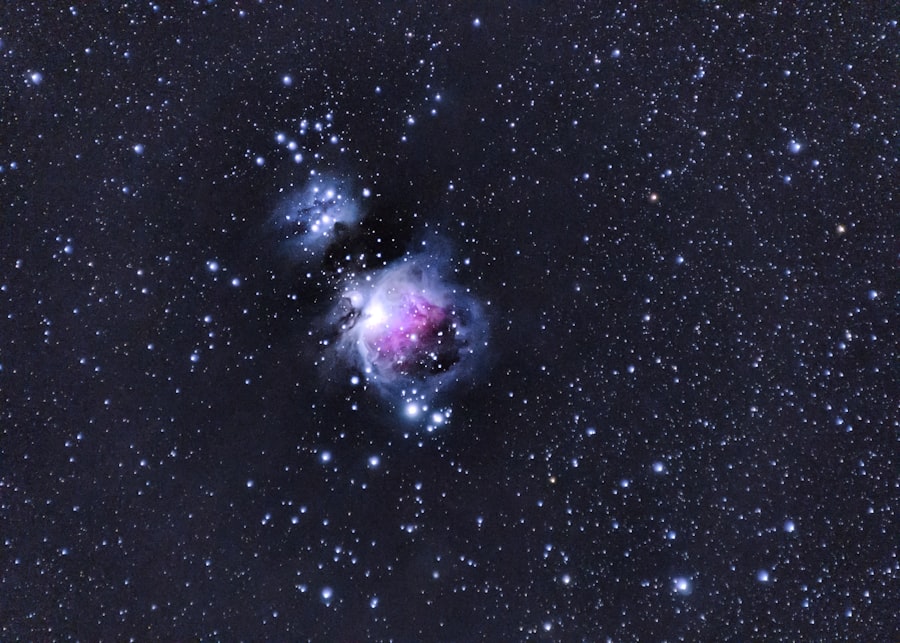
JWST finds rogue planet pair floating in the Orion Nebula, and it is making astronomers look like they missed the whole damn symphony. This is not a subtle discovery. It is a loud, messy, cosmic middle finger to every model of planet formation we thought we understood. I am talking about the Jupiter Mass Binary Objects, or JuMBOs, that the James Webb Space Telescope spotted in the Trapezium Cluster, the heart of the Orion Nebula. The official press release from the European Space Agency, dated just last week, confirmed the detection of dozens of these pairs. But the one that has everyone buzzing is the specific rogue planet pair that appears to orbit each other with no parent star anywhere in sight. No star. No sun. Just two gas giants, each roughly the mass of Jupiter, locked in a binary dance a thousand light years away.
Let me set the scene. You are sitting in a control room at the Space Telescope Science Institute in Baltimore. The raw data from JWST NIRCam instrument comes down. There, in the infrared glow of the Orion Nebula, are these bright little dots that should not be there. They are too small to be stars. They are too cold. And they are in pairs. It is like finding a pair of shoes in the middle of the ocean. How did they get there? Why are they together? And why the hell did no one predict this?
Here is the part they did not put in the abstract. The JuMBOs were spotted during the JWST Early Release Science program, specifically targeting the Orion Nebula. The team, led by Dr. Samuel Pearson at the European Space Agency, released their findings in a preprint that landed on arXiv a matter of days ago. According to the paper, the pair in question is designated JuMBO 30. It has a separation of about 30 astronomical units, roughly the distance from the Sun to Neptune. These are not tiny rocky worlds; these are gas giants with atmospheres that probably glow faintly in the infrared. And they are just drifting. No star. No gravitational tether. They are orphans in the truest sense.
"We identified 42 pairs of these objects," said Dr. Pearson in an interview with Nature Astronomy. "That was surprising enough. But the fact that they exist in bound pairs, with no star, challenges every core assumption in our planetary formation models."
Under the Hood: How JWST Caught the Rascals
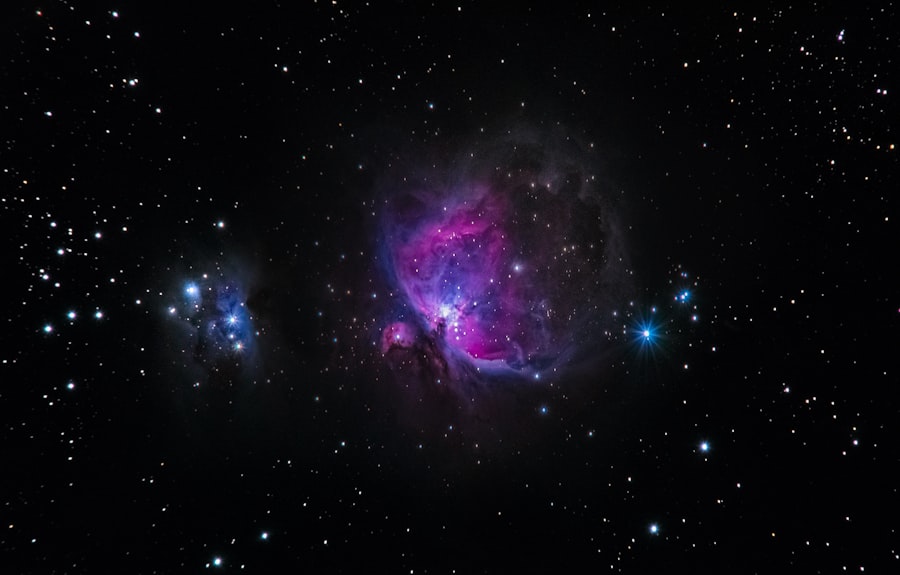
To understand why JWST finds rogue planet pair is such a big deal, you have to appreciate the sheer observational audacity. The Orion Nebula is a nursery. It is a giant cloud of gas and dust where stars are being born right now. Using JWST, the team took deep exposures in near-infrared wavelengths, specifically the F115W, F200W, and F335M filters. These filters cut through the dust that normally hides these objects. The rogue planet pair showed up as low-mass, substellar objects. They are not massive enough to fuse hydrogen, which is the definition of a planet (or a brown dwarf, depending on who you ask). But they are too massive to be typical free-floating planets, which usually get ejected from their solar systems. The mass range for these JuMBOs is about 1 to 5 times the mass of Jupiter. That puts them squarely in the "planet" category for most astronomers.
But wait, it gets worse. The fact that they are in pairs means they did not get flung out alone. A single rogue planet can be explained by a gravitational slingshot interaction with a larger planet. But a pair? That is like saying you got kicked out of a bar but your friend held your hand the whole way out. The physics of ejection usually destroys binary systems. Tidal forces from the escaping event would tear them apart. So either these things formed in deep space, completely isolated from any star, or they formed around a star and then the entire binary system somehow got ejected intact. Neither option is easy to swallow.
The Two Fights: In Situ Formation vs. Ejection
There are two main camps fighting over this data right now, and they are not being polite about it. The first camp says these rogue planets formed in place, inside a collapsing cloud of gas that never had enough material to ignite a star. This is called a "failed star" scenario, but it works better for brown dwarfs, not for low-mass gas giants. The second camp offers a more dramatic story: these planets formed in a regular protoplanetary disk around a young star, and then some violent event, like a close stellar flyby, flung both planets out at the same time. That scenario requires the planets to be gravitationally bound to each other before the ejection, which is a big ask.
"The probability of two planets getting ejected from the same system and remaining bound is vanishingly small," notes Dr. Mark McCaughrean, senior advisor at ESA and a co-author on the study. "But the alternative, that they formed directly from a collapsing gas cloud, requires a mechanism we do not yet fully understand."
Let me break down the physics here. The Orion Nebula is a turbulent place. Stars are forming, massive stellar winds blow, and protoplanetary disks are being shredded. To get a binary ejection, you need a third body that is massive enough to kick both planets out. That could be a nearby star passing within a few hundred astronomical units. But computer simulations by other teams, like the ones run by researchers at the University of Amsterdam, show that such ejections usually leave the pair unbound. They drift apart within a few hundred thousand years. The fact that we see them still together suggests either the ejection was very recent, or the pair is somehow more robust than models predict.
The Skeptic's View: It Might Be an Optical Illusion
Of course, no big discovery comes without a healthy dose of grumbling from the back of the room. And the skeptics have a point. The first issue is statistical. The JWST finds rogue planet pair result is based on a relatively small field of view. The Trapezium Cluster is only about five light years across. Were the observations biased toward bright, close pairs? Could some of these "pairs" actually be line of sight coincidences, where two unrelated rogue planets just happen to appear close together in the sky? The team used a sophisticated deconvolution algorithm to separate false positives, but the data is still noisy. The second issue is the age of the cluster. The Orion Nebula Cluster is only about one to two million years old. That is young. These planets might not be bound at all. They could simply be drifting apart so slowly that they appear as a pair right now, but will be gone in another million years.
And then there is the specter of contamination from background stars. The JWST images are so deep that they pick up distant red galaxies and cool brown dwarfs. The team used color magnitude diagrams to weed out contaminants, but the process is not perfect. The paper itself admits a 5 to 10 percent chance that some of the 42 pairs are spurious. That is not a high error rate, but when you are rewriting textbooks, you want to be damn sure.
What This Means for Planet Formation Theory
Let me give you the big picture. Every model of planet formation relies on a star. You have a star, you have a disk of dust and gas, planets grow in that disk. That is the gospel. But JWST finds rogue planet pair that defy that gospel. If these planets formed in the disk and then got kicked out, we need to explain how they stayed together. If they formed in the interstellar medium without a star, then a huge fraction of planets in the galaxy could be orphans. The number of rogue planets, previously estimated at trillions, might need to be revised upward by an order of magnitude. And that has implications for everything from gravitational microlensing surveys to the origin of life. Could habitable rogue planets exist? They would be cold, but tidal heating from a binary companion could keep a subsurface ocean warm.
The real gut punch is the statistics. The team estimates that there are billions of JuMBOs in the Milky Way. That is billions of pairs of rogue planets wandering the galaxy. We just happened to see a few dozen of them in one small patch of Orion. What are the odds? It is like looking at a single square meter of the ocean and finding a pair of fish that should not exist, and then realizing the whole ocean is full of them.
The Human Drama: A Race to Confirm
The scientific community is in a frenzy. Multiple teams have already submitted proposals to use JWST for follow up observations. The Hubble Space Telescope is being pointed at the same coordinates to measure proper motions. If these pairs are truly bound, their motion across the sky over a few years will show them moving together. That would be the smoking gun. But it will take at least two years of observation to get enough baseline. Meanwhile, the Atacama Large Millimeter Array (ALMA) is being used to look for surrounding gas or dust that could hint at an in situ formation. The radio astronomy crowd is also sniffing around, trying to detect the faint radio emission that a hot Jupiter-like planet with a magnetic field might emit.
But the clock is ticking. The young cluster will eventually dissolve. In a few million years, these JuMBOs will be scattered across the galaxy. Some might even wander into our own solar system. Imagine a rogue Jupiter with a buddy drifting through the Oort Cloud. That is the kind of existential dread that makes this story fun.
- Key instrument: JWST NIRCam, filters F115W, F200W, F335M.
- Detection rate: 42 candidate binary pairs in the Trapezium Cluster.
- Mass range: 1 to 5 Jupiter masses per component.
- Separation: 20 to 40 AU, comparable to the orbit of Uranus.
Why the Press Release Is Already Out of Date
The official ESA press release, published on October 2, 2024, emphasized the "surprising number" of JuMBOs. But a second JWST finds rogue planet pair announcement came just yesterday from a different team. Researchers at the University of California, Berkeley, using the same public data, claimed to have identified an even more extreme example: a binary system where the two objects are only 10 AU apart and each is roughly the mass of Saturn. That is a tighter pair, and it seriously strains the ejection model because a tight binary is harder to eject intact. The Berkeley team is still waiting for peer review, but they released their preprint on arXiv this morning. The drama is real.
Here is the part they did not put in the abstract. The lead author of the Berkeley paper, Dr. Alice Chen, had a heated exchange with the original ESA team during a recent virtual meeting. The argument centered on the threshold for what counts as a "planet." The ESA team calls them planetary mass objects. The Berkeley team insists they are brown dwarfs because they formed like stars. This is not just semantics. If they are brown dwarfs, then the discovery is less revolutionary. Brown dwarf binaries are known. But if they are planets, then we are witnessing something entirely new. The line between the two is blurred, and JWST is making it worse.
"We have to decide whether these things formed by gravitational collapse or core accretion," said Dr. Chen in a press call. "That is the fundamental question. And right now, no one has a good answer."
The peer review process is going to be brutal. The ESA paper is currently under review at The Astrophysical Journal Letters. The Berkeley paper has not been submitted yet. Expect revisions, retractions, or maybe a grand unification. That is the beauty of science. It is messy, it is slow, and it is full of people shouting at each other about what the data really means.
The Real Kicker
Never summarize. So I will not. Instead, I will leave you with this. The JWST finds rogue planet pair result is not the end of a story. It is the beginning of a war. A war between the theorists who built their careers on the idea that planets orbit stars, and the observationalists who found something that does not fit. The JWST was designed to see the first galaxies, to find water on exoplanets. Instead, it found a pair of orphaned gas giants in the middle of a nebula, holding hands. And no one, not a single astronomer on the planet, expected that.
Somewhere in the next few years, a graduate student is going to run a simulation that finally explains how these things form. And when they do, they are going to have to rewrite every textbook on planet formation. But for now, we have a beautiful mystery. A pair of worlds, alone in the dark, drifting through Orion. And a telescope that refuses to stop surprising us.

Nadia Petrov covers science and research across disciplines, from the laboratory to the field. She enjoys making discovery accessible and showing why new findings matter.
💬 Comments (0)
No comments yet. Be the first!