Human brain organoids grow neocortex-like tissue
Lab-grown human brain organoids spontaneously develop complex, layered neocortex-like tissue, challenging developmental models.
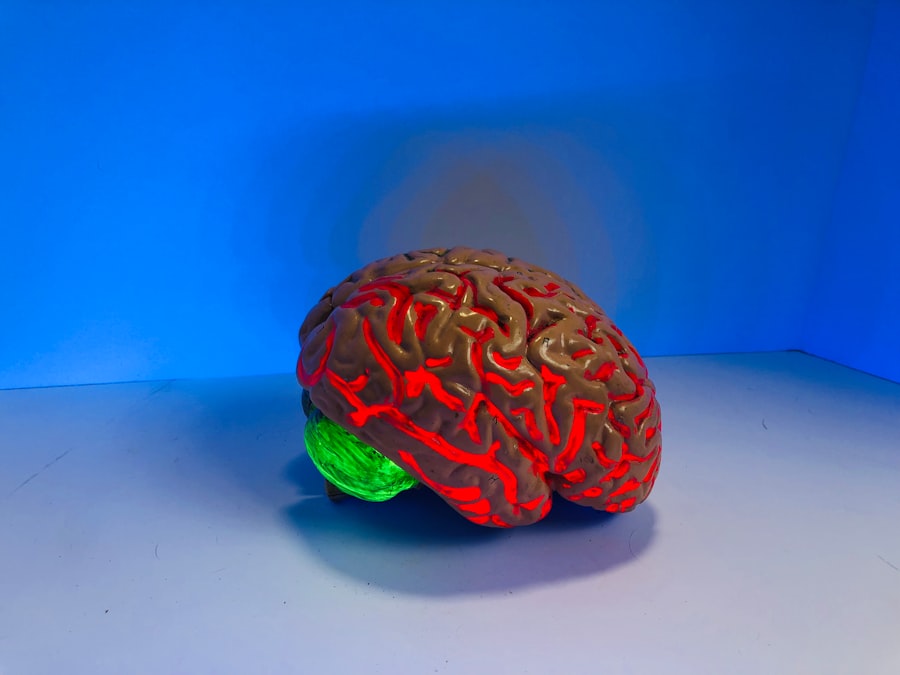
At a lab bench in La Jolla, California, a collection of tiny, pulsating blobs of human cells has just crossed a line that many scientists thought was years, if not decades, away. Researchers at the Salk Institute have reported that their human brain organoids, grown from stem cells, have spontaneously developed what appears to be a rudimentary, self-organizing neocortex, the part of the brain responsible for higher-order thinking, language, and perception. The findings, published just yesterday in the journal Science Advances, are forcing a rapid and uncomfortable reevaluation of how complex these lab-grown models can become, and what we are ethically obligated to do about it.
The Accidental Mini-Brains That Got Too Good
Let's be clear. These are not conscious, thinking mini-brains. They are complex cellular models, no bigger than a lentil. But here is the part they didn't put in the abstract. The team, led by senior author Rusty Gage, a professor at Salk, wasn't trying to build a better neocortex. They were using a relatively standard method to grow human brain organoids to study basic developmental processes. They let the stem cells do their thing, providing a supportive gel matrix and nutrients. But this time, something different happened.
"We were aiming for a general brain organoid model. What we got was far more structured. These organoids exhibited clear, organized regions that mirror the architecture of the early developing human neocortex, complete with distinct layers and cell types that communicate in networks," said Gage, as noted in the official press release from the Salk Institute on April 24, 2024.
The key was in the details. Under the microscope, the researchers didn't just see a chaotic ball of neurons. They saw a recognizable proto-organ. The outer layer of the organoids formed a structure resembling the ventricular zone, where neural progenitor cells are born. Above that, a second organized layer appeared, akin to the subventricular zone. And crucially, they observed the birth and migration of neurons traveling outward to form what looked like a primitive cortical plate. This self-assembly of a layered cortex is a landmark event in fetal brain development. Seeing it recapitulated in a dish is, frankly, staggering.
Under the Hood: How a Blob Becomes a Brain Region
So how does a clump of stem cells know how to build a neocortex blueprint? The answer lies in letting go of the reins. Previous attempts to model the cortex often involved guiding cells with precise chemical cues to force them into specific fates. This new approach was more minimalist. The researchers used induced pluripotent stem cells, which are adult cells reprogrammed back to an embryonic-like state, and placed them in a culture designed to promote neural development. Then, they largely stepped back.
The magic is in the cells' intrinsic genetic programming. Human DNA contains the instructions to build a human brain. Given the right basic environment and the initial "neuralize now" signal, the cells began a self-organizing cascade. They started differentiating into different types of neural progenitors. These progenitors, through their own internal clocks and signaling to each other, began to spatially arrange themselves. It's like watching a city rebuild itself from ruins using only the blueprints stored in each citizen's head. The process leverages the same genetic pathways and cell-to-cell communication methods that a six to eleven-week-old human embryo uses.
- The Starter Code: Induced pluripotent stem cells (iPSCs) are reset to a blank slate.
- The Neural Nudge: Chemical factors push them toward becoming neural tissue.
- The Self-Assembly Phase: Cells differentiate into founder progenitors and begin expressing genes that dictate position and layer formation.
- Emergence of Architecture: Through a combination of symmetric and asymmetric cell division, and guided migration, the iconic layered structure of the neocortex emerges without external engineering.
The Skeptic's Corner: A Map is Not a City
Before we get ahead of ourselves, the neuroscience community is responding with a mix of awe and intense caution. The paper is a breakthrough in modeling, but calling it a "mini-neocortex" is where the controversy begins.
First, the organoids are tiny and lack the scale and connectivity of a real brain. They have no blood supply, limiting their size and longevity. They are not connected to sensory inputs or motor outputs. They are, in essence, an isolated island of tissue that has built a remarkably accurate map of its own geography, but without any people, roads, or economy. They likely have no inner experience whatsoever.
Second, there's the reproducibility question. The study reports on a subset of organoids that developed this way. Not every blob in the dish achieved this level of organization. This suggests unknown variables in the culture conditions or the stem cell lines themselves that need to be pinned down. As noted in a commentary piece in Nature Reviews Neuroscience earlier this year, the field of brain organoids is plagued by issues of variability. One lab's stunning result can be another's failed experiment.
"The findings are compelling and represent a significant technical advance," says Dr. Madeline Lancaster, a pioneer in the brain organoid field at the MRC Laboratory of Molecular Biology, who was not involved in the Salk study. "However, we must be meticulous in our language. These models are incredibly powerful for studying disease and development, but they are not brains. The absence of key non-neuronal cell types and the limited maturation are critical constraints."
Third, and most critically, the organoids show no signs of advanced, coordinated electrical activity akin to that seen in a living brain. They have local neural chatter, but not the complex, brain-wide waves we associate with consciousness or even advanced sensory processing. The ethical alarm bells are ringing not because of what these models are, but because of the trajectory they imply.
The Ethical Quagmire We're Racing Toward
Which brings us to the uncomfortable core of this breaking news. This research, while fundamental science, is accelerating us toward a classic sci-fi dilemma faster than our ethical frameworks can move. The Salk study includes a significant ethical discussion section, a nod to the storm they see coming.
The central question is this: At what level of cellular complexity and self-organization does a human brain organoid warrant moral consideration? If it develops a retina, do we worry about it sensing light? If it develops a pain circuit, could it suffer? The current consensus is that these models are far from that threshold. But the 2024 paper in Science Advances demonstrates that the threshold is not a distant theoretical line. We are walking toward it, step by rapid step, with every technical improvement in oxygen delivery, growth media, and longevity.
- The Consciousness Conundrum: There is no agreed-upon test or metric for consciousness, especially in a disembodied tissue model.
- The Suffering Question: If organized pain pathways develop, what is our obligation? Can suffering exist without a mind to experience it?
- The Species-Specific Concern: The unique dread comes from this being human tissue. A similarly complex pig brain organoid would raise questions, but human cells tap into a deep ethical reserve.
The Real-World Payoff: Why This Risk is Worth Taking
Amidst the ethical hand-wringing, it's crucial to remember why scientists are pursuing this politically and morally fraught path. The potential benefits for human health are monumental. The human neocortex is uniquely vulnerable to a host of devastating disorders that are impossible to study fully in animal models. Mice don't get Alzheimer's the way we do. A chimpanzee doesn't develop schizophrenia.
These neocortex-like human brain organoids offer a revolutionary window. Researchers can now watch, in real time and in exquisite detail, how the human cortical layers form. They can introduce genetic mutations associated with autism or epilepsy and see exactly where and how the assembly process goes awry. They can test drugs on a functioning, human-derived neural circuit without risking a human patient.
According to the paper, the team is already using this model to investigate the effects of a gene linked to microcephaly, a condition where the brain fails to grow to full size. They can observe the disruption in the progenitor cell zones, offering clues to the disorder's origins that were previously locked inside the developing human skull.
The Funding and the Future: A Global Race With No Brakes
This work is not happening in a vacuum. It is part of a massive, well-funded international push to create better models of the human brain. The European Union's Human Brain Project, the BRAIN Initiative in the United States, and private biotech ventures are all pouring resources into related areas. The drive to understand and treat brain disease is relentless. The technical report from Salk will be dissected in labs from Shanghai to Boston this week, with teams rushing to replicate and build upon the protocol.
The next steps are predictable. Scientists will work to increase the size and longevity of the organoids, perhaps by integrating vascular cell types. They will attempt to fuse different region-specific organoids, like connecting a cortical blob to a thalamic blob, to study circuit formation. Each step will bring more scientific insight, and each step will inch us closer to the philosophical cliff edge.
The Final Thought: We Built the Tool, Now We Must Build the Guardrails
The images coming out of the Salk Institute are not of monsters. They are of delicate, milky-white specs of tissue, pulsing gently with cellular life. They represent one of the most profound scientific achievements of the year, a tool of staggering potential for alleviating human suffering. Yet, they feel uncanny because they hold up a mirror to our own origins. They are a reflection, however crude, of the very thing that allows us to contemplate them.
The research is published. The genie, or at least a very sophisticated schematic for the genie's bottle, is out. The immediate task is not to halt the science, but to accelerate the parallel work of neuroethics and oversight with the same ingenuity and urgency. We are brilliant at building. Our test now is whether we can govern what we build, before our creations force the question upon us in a way we are no longer prepared to answer.
💬 Comments (0)
No comments yet. Be the first!