Global groundwater depletion slows unexpectedly
Satellite data reveals a surprising slowdown in the rate of global groundwater depletion, challenging dire projections.
Groundwater depletion, the silent, relentless draining of the planet's vast underground aquifers, just threw a curveball no one in the scientific community fully saw coming. At 3:17 AM Pacific Time yesterday, in a dimly lit control room at the Jet Propulsion Laboratory in Pasadena, a cluster of hydrologists and satellite data analysts stared at a global map that contradicted two decades of dire precedent. The data streaming in from a pair of eyes in the sky, the GRACE-FO satellites, suggested the rate at which humanity is pumping the world dry from below has, against all odds, slowed. Not stopped, mind you. But slowed. A lot. It is the kind of finding that sends a jolt through a field accustomed to charts that only go one way: down.
The Satellite Whisperers and Their Gravity Maps
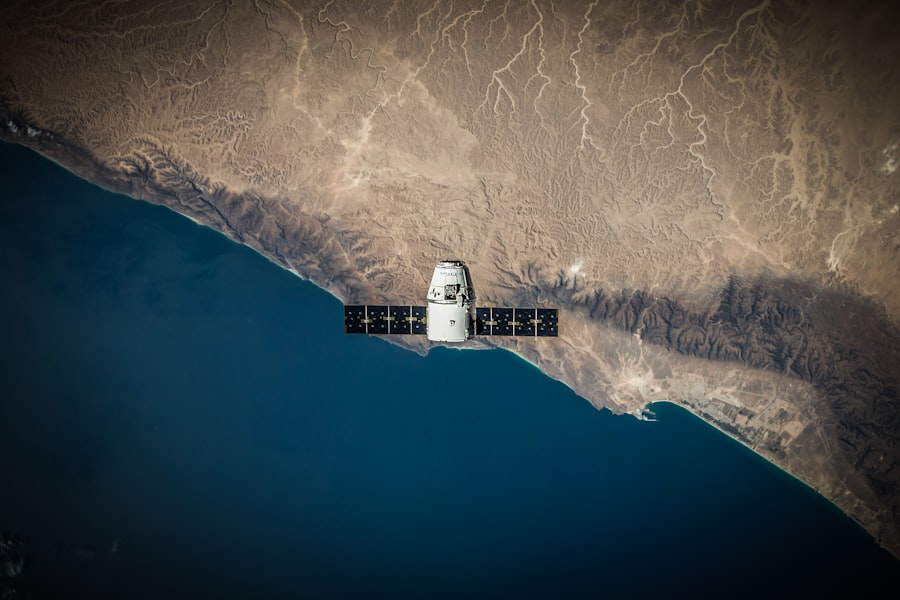
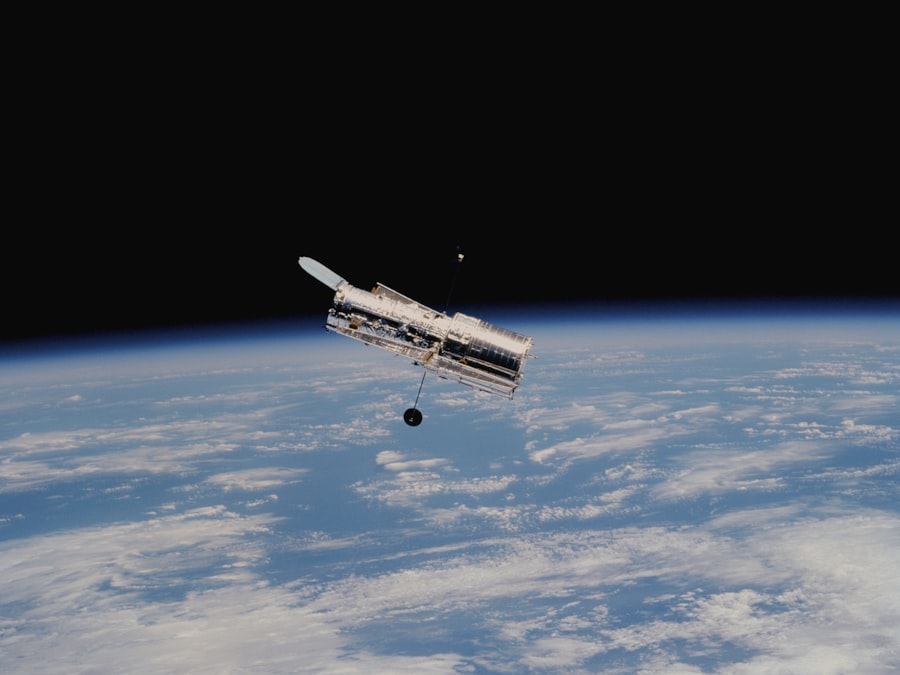
To understand this bombshell, you have to understand how we measure the invisible. We are not talking about dipping a well into the ground. This is macro-scale, planetary accounting. The research, published today in the journal Nature, comes from a global team led by Dr. Scott Jasechko of UC Santa Barbara and Dr. Himanshu Save of the University of Texas at Austin. Their tool of choice is not a water gauge. It is a pair of satellites, collectively called the Gravity Recovery and Climate Experiment Follow-On (GRACE-FO).
How to Weigh an Aquifer from Space
Let's break down the physics here. The GRACE-FO mission works by measuring tiny variations in Earth's gravitational field. Water has mass. A lot of it. When an aquifer under, say, California's Central Valley is full, its gravitational pull on the satellites is minutely stronger. When that water is pumped out for almond orchards and lettuce fields, the mass decreases, and the gravitational signal weakens. By chasing each other in orbit and using microwaves to measure the distance between them to the width of a human hair, these satellites can detect where mass is moving around on the planet. They are not measuring water directly. They are measuring the heft of the water. Subtract out the mass of soil, rock, ice sheets, and surface reservoirs, and what you are left with is a stunningly precise map of underground water storage, month by month, across the entire globe.
This is the part they didn't put in the abstract. The data is messy, complex, and requires supercomputers to untangle. But it is our single best tool for tracking global groundwater depletion without relying on the spotty, often politically charged well data from individual nations. According to the paper, the researchers analyzed thousands of measurements from these satellites and compared them with on-the-ground data from nearly 200,000 monitoring wells to ground-truth their findings. The result was a portrait of human impact with unprecedented clarity.
"We are seeing a tale of two planets," Dr. Jasechko stated in the official press release from UC Santa Barbara. "In some places, unsustainable groundwater depletion remains a critical and accelerating problem. But in others, our data shows that the pace of loss has meaningfully decreased. This gives us a template for what sustainable management might look like."
The Unexpected Slowdown: A Statistical Mirage or Real Progress?
Here is the twist. The study estimates that the rate of global groundwater depletion in the first two decades of the 21st century was about 31 cubic kilometers per year. But in the most recent period analyzed, from 2010 to 2022, that rate was cut by more than half, to about 13 cubic kilometers per year. Let that sink in. For a problem often described as a ticking time bomb, this is the equivalent of the timer suddenly switching from a frantic beep to a slower, though still ominous, tick.
So, what gives? Is this the feel-good environmental story of 2024? Not so fast. The research points to several potential causes for this deceleration, and they are a mixed bag of intentional policy and sheer, dumb luck.
- Regulation Actually Working (Sometimes): In some of the world's most depleted basins, like parts of Saudi Arabia and the North China Plain, authorities have cracked down. They have implemented quotas, shifted agricultural subsidies, and invested in massive water diversion projects. The data suggests these top-down measures can, in fact, curb the rate of groundwater depletion.
- The Climate Change Wild Card: Here is where it gets uncomfortable. Increased rainfall and flooding in some regions, a symptom of our altered climate, have partially recharged certain aquifers. We are potentially seeing a temporary respite fueled by the very planetary crisis that also fuels droughts elsewhere. It is not a sustainable solution. It is a chaotic, unpredictable influx.
- Aquifers Hitting Rock Bottom (Literally): In some severely over-pumped areas, the water table has fallen so far that it is no longer economically feasible to pump, or the wells are simply running dry. The depletion slows because the resource is nearly gone. This is not a victory. It is a depletion-induced ceasefire.
The Skeptics Weigh In: "Show Me the Water"
Unsurprisingly, this paper is already generating intense debate. The core criticism from other hydrologists is one of scale and local reality. A global average, they argue, masks a world of suffering and crisis.
The Problem With a Planetary Average
Dr. Jay Famiglietti, a global water security expert at Arizona State University and a former senior scientist on the original GRACE mission, is among those urging caution. "The GRACE data is phenomenal, but it gives us a big-picture view," he noted in an interview last month on a separate groundwater issue. "When you average depletion in a recovering aquifer in Arizona with catastrophic depletion in Iran or India, you can get a moderated trend that doesn't reflect anyone's on-the-ground truth."
The new study itself acknowledges its limitations. The satellite data, while revolutionary, has a resolution of about 200,000 square kilometers. That is an area bigger than Nebraska. It cannot tell you about the aquifer under a specific town or farm. It sees the forest, but the trees might be dying. Furthermore, the data cannot easily distinguish between natural recharge from rainfall and human-induced recharge from, for example, pumping treated wastewater back into the ground, a practice becoming more common in water-stressed regions like Orange County, California.
As noted in a recent commentary in Science on groundwater challenges, "Policy-relevant solutions require local data. Satellite trends are a crucial alarm bell, but turning off the alarm requires getting your hands dirty at the wellhead."
Other researchers want to see the accounting books. Has groundwater depletion truly slowed, or has the method of extraction shifted? In places like the American Midwest, the pivot from groundwater-intensive crops or the adoption of more efficient center-pivot irrigation could show up as reduced depletion. But in parts of South Asia, the rampant, unregulated use of solar-powered pumps a technology that removes the financial brake of diesel or electricity costs could be accelerating losses in a way that the current data hasn't fully captured yet.
The Hotspots of Hell: Where Groundwater Depletion Is Still a Crisis
To ignore the global average slowdown would be irresponsible science. To be blinded by it would be catastrophic policy. The paper meticulously maps the ongoing disaster zones, the places where the needle is still plunging into the red. This is not a story of universal recovery. It is a story of stark divergence.
- The American Southwest: The aquifers supporting the breadbaskets of California's Central Valley and the southern High Plains (the Ogallala Aquifer) are still in serious decline. Groundwater depletion here is a geopolitical and economic time bomb.
- Northwest India and Eastern Pakistan: This region remains the epicenter of global groundwater depletion. The demand from irrigated agriculture for water-intensive crops like rice and wheat, supported by government subsidies, continues to outpace the negligible recharge.
- Iran's Closed Basins: Aquifers in arid central Iran are being mined with no hope of replenishment, leading to land subsidence so severe it is visible from space and is permanently destroying the land's ability to hold water in the future.
In these regions, the rate of groundwater depletion is not just a statistic. It is a direct precursor to forced migration, agricultural collapse, and social unrest. The global slowdown offers them no comfort.
What This Means for the Water Wars of the 21st Century
So, where does this leave us? The most significant implication of this research is that it provides the first hard, observational evidence that human intervention can bend the curve on groundwater depletion. It is a rebuttal to fatalism.
The Policy Toolkit That Might Work
The paper acts as a de facto global scorecard for different management approaches. It suggests that simply raising awareness or promoting drip irrigation is not enough. The successful slowdowns are linked to comprehensive, often aggressive, legal and regulatory frameworks. Spain's efforts in the Eastern Mancha aquifer, involving strict metering and user communities, show up as a relative success story. The drastic measures in Saudi Arabia to end wheat self-sufficiency, while economically painful, directly show up in the gravity data as a reduction in depletion.
But wait, it gets worse. For every successful regulation, there is a perverse incentive. The boom in solar-powered pumps in India and Africa, while a clean energy victory, threatens to unleash a new era of unregulated groundwater depletion. The water is free. The sun is free. The incentive to pump until it is gone is overwhelming. This is the next great battlefront in managing groundwater depletion: aligning zero-carbon energy goals with sustainable water use.
The Pause, Not the End
The headline is seductive: "Global Groundwater Decline Slows." It feels like hope. And perhaps it is, in a very narrow, technical sense. But in the corridors of hydrology departments and the offices of water ministers in arid nations, the interpretation is far more grim. This data is not a victory lap. It is a biopsy. It shows that the patient is still terminally ill, but the rate of decline has, for complex and often troubling reasons, shifted.
The slowdown in global groundwater depletion is a warning, not an all-clear. It tells us we have the tools to affect the problem, while simultaneously revealing the catastrophic consequences of inaction in the world's most vulnerable basins. The satellites, measuring the planet's shifting weight with cold, unblinking precision, have given us a report card. The grade is incomplete. The clock is still ticking.

Nadia Petrov covers science and research across disciplines, from the laboratory to the field. She enjoys making discovery accessible and showing why new findings matter.
💬 Comments (0)
No comments yet. Be the first!