What Is Manchesterism and Can It Work for the UK?
An analysis of Manchesterism, Andy Burnham's political-economic philosophy, as he prepares to lead the nation.
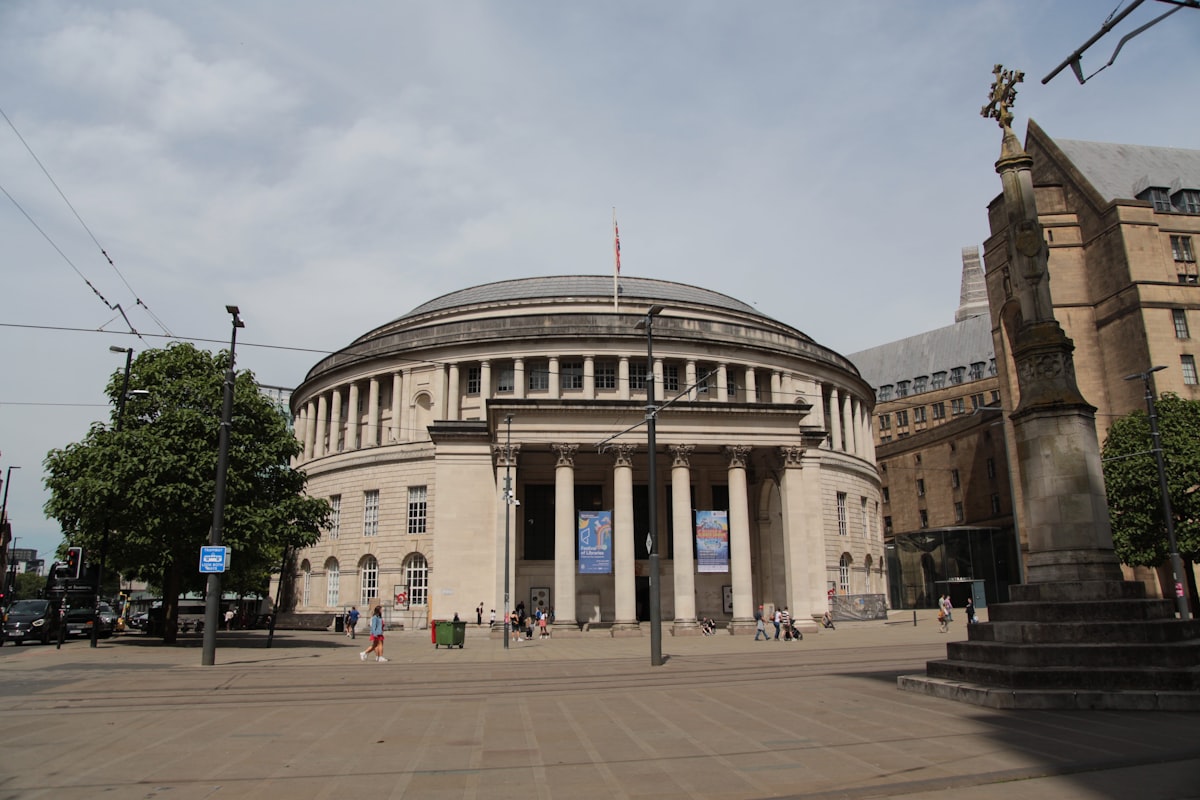
Manchesterism is emerging as a political and economic blueprint for national reform. It promises to reshape how the British state operates. As Andy Burnham prepares to step into Downing Street as prime minister, this philosophy is shifting from a local success story into a potential national program, and that's a big leap from where it started. The core of this approach lies in a direct challenge to an over-centralised system that many argue has long ignored the regions outside of London. But taking a model built on the rapid growth of a single city and applying it to an entire nation is a vastly different challenge. It's not the same game.
The concept itself isn't entirely new. It draws on a long heritage of blending unregulated free markets with a cooperative social spirit, and that tension has always been the engine of its appeal. During the industrial era, the cotton traders of the city championed free trade, while the same streets gave birth to the suffragettes, trade unions, and the co-operative movement. So modern advocates look to this history to justify a strategy that embraces private capital while using public power to de-risk investments and drive social change. That's the whole pitch.
The rebuilding of a modern city
To understand how this approach works in practice, you have to look back to the summer of 1996, when the IRA detonated the largest bomb in the UK since World War Two, devastating the city centre with a force that left few buildings standing. That was the year everything changed. Instead of simply repairing what was damaged, local political and business leaders made a bold decision, one that would ripple through the coming decades. They chose to demolish the ruined structures. And then they completely reshaped the local geography and economy, not just patching the wounds but reimagining the whole body of the city. It's a gamble that paid off.
This massive rebuilding project set the template for the city's modern ascent. It wasn't accidental. Council leader Sir Richard Leese and chief civil servant Sir Howard Bernstein established a highly strategic, centrally driven plan, one that would bend the market to their will. The council used public money to de-risk brownfield industrial sites that private investors would otherwise avoid, stepping in to support projects during financial downturns. So the risk dropped. Private capital poured in, transforming the skyline with cranes and new developments, and the city hasn't looked back since.
It worked. This aggressive development strategy turned the city into the fastest-growing urban economy in the country.
Attracting and retaining young talent
This economic engine thrives on one thing: keeping its graduates home. It's a hard-won victory. In previous decades, young people from the north-west of England routinely moved south to find career opportunities, a familiar and often painful exodus that stripped the region of its brightest talent. So today, the local economy has built a critical mass of housing, jobs, and service sector activity that reverses this trend. And it's working.

"No-one here has to leave to get on in life," Andy Burnham said, pointing to a net inflow of young people from London.
The numbers tell a clear story. More people moved from London to Manchester (13,000) than the other way around (11,800), which flips the old assumption that everyone heads south for opportunity. That's a shift. The city now retains over half of its graduates, a rate higher than any other UK city except London, and that retention feeds on itself. So Tom Beahon, the chief executive of sports brand Castore, noted that the mayor helped make the city a place where students actually want to stay after graduation, which in turn encourages more businesses to launch there. It's a cycle that works.
The core pillars of regional retention
- De-risking brownfield sites with public funds to attract private builders.
- Waiving or easing affordable housing requirements to speed up residential construction.
- Creating a dense service economy that offers high-quality jobs for local university graduates.
- Reversing historical transport deregulation to improve regional connectivity.
The plan to rewire the British state
Now the ambition is to scale this regional model to the national level. Burnham and Merseyside Mayor Steve Rotherham outlined their vision in their 2024 book, which serves as the political manifesto for this movement, and it's a bold statement of intent for how they think the country should be run. But the plan calls for a complete overhaul of the rules governing how the British state allocates resources and handles infrastructure spending. That's a big ask. So don't expect it to happen overnight.
At the top of the target list sits the Treasury's Green Book. It's a formula that decides infrastructure spending by prioritising areas already boasting high growth and high land values. In practice, this system directs the vast majority of transport investment to the south of England. But the bottleneck is clear. Consider Platforms 13 and 14 of Manchester Piccadilly station, the only east-west rail link for the city centre and the northern airport, which struggles to handle 40,000 daily passengers crossing the Pennines. That's a lot of people. And they can't get through.
Proposed constitutional and financial reforms
- Tearing up the Treasury's Green Book to allow more infrastructure funding for northern projects.
- Devolving powers over major public services directly to regional authorities.
Can the model scale nationally?
But there is a catch. Running a city region is fundamentally different from running an entire country. While a mayor can focus on attracting outside capital to build towers, a prime minister must raise tax revenues or borrow massive sums of money to fund public services. Currently, the national fiscal picture is severely constrained.
While the model has succeeded in attracting gleaming new towers, it has relied heavily on the very trickle-down economics that its proponents criticise.
Devolution demands strength. The local leadership, institutions, and commercial capabilities must be strong enough to handle the devolved powers, and that's a heavy burden to place on any municipal structure when the stakes are so high. But can this municipal approach survive the complex realities of national government? That's the critical question.
Frequently Asked Questions
What is Manchesterism?
Manchesterism is an emerging political and economic blueprint for national reform that promises to reshape how the British state operates. It originated as a local success story in Manchester, based on blending unregulated free markets with a cooperative social spirit, and is now being considered as a potential national program.
How did Manchester's rebuilding after the 1996 IRA bomb demonstrate the principles of Manchesterism?
After the IRA bomb devastated the city centre in 1996, local leaders demolished ruined structures and reshaped the local geography and economy rather than just patching the damage. The council used public money to de-risk brownfield sites, attracting private capital that transformed the skyline and made the city the fastest-growing urban economy in the country.
Why is retaining graduates considered crucial to the success of the Manchester model?
The local economy has built a critical mass of housing, jobs, and service sector activity to reverse the historical exodus of young people moving south for opportunities. Andy Burnham noted that no one has to leave to get on in life, and the city now retains over half of its graduates, a rate higher than any other UK city except London, which in turn encourages more businesses to launch there.
What are the core pillars of regional retention mentioned in the article?
The core pillars include de-risking brownfield sites with public funds to attract private builders, waiving or easing affordable housing requirements to speed up residential construction, creating a dense service economy with high-quality jobs for graduates, and reversing historical transport deregulation to improve regional connectivity.
What reforms does the plan to rewire the British state propose?
The plan calls for tearing up the Treasury's Green Book to allow more infrastructure funding for northern projects and devolving powers over major public services directly to regional authorities. This is outlined in Burnham and Rotherham's 2024 book, which serves as the political manifesto for the movement.

Henrik Sorensen writes about government, regulation and the public interest. He is interested in where policy meets innovation, and how the two can be made to work together.
💬 Comments (0)
No comments yet. Be the first!