1995 Ford GT90 concept: A 720-HP Quad-Turbo V12
Ford created the 1995 Ford GT90 concept as a 720-hp mid-engine supercar with a claimed 253-mph top speed.
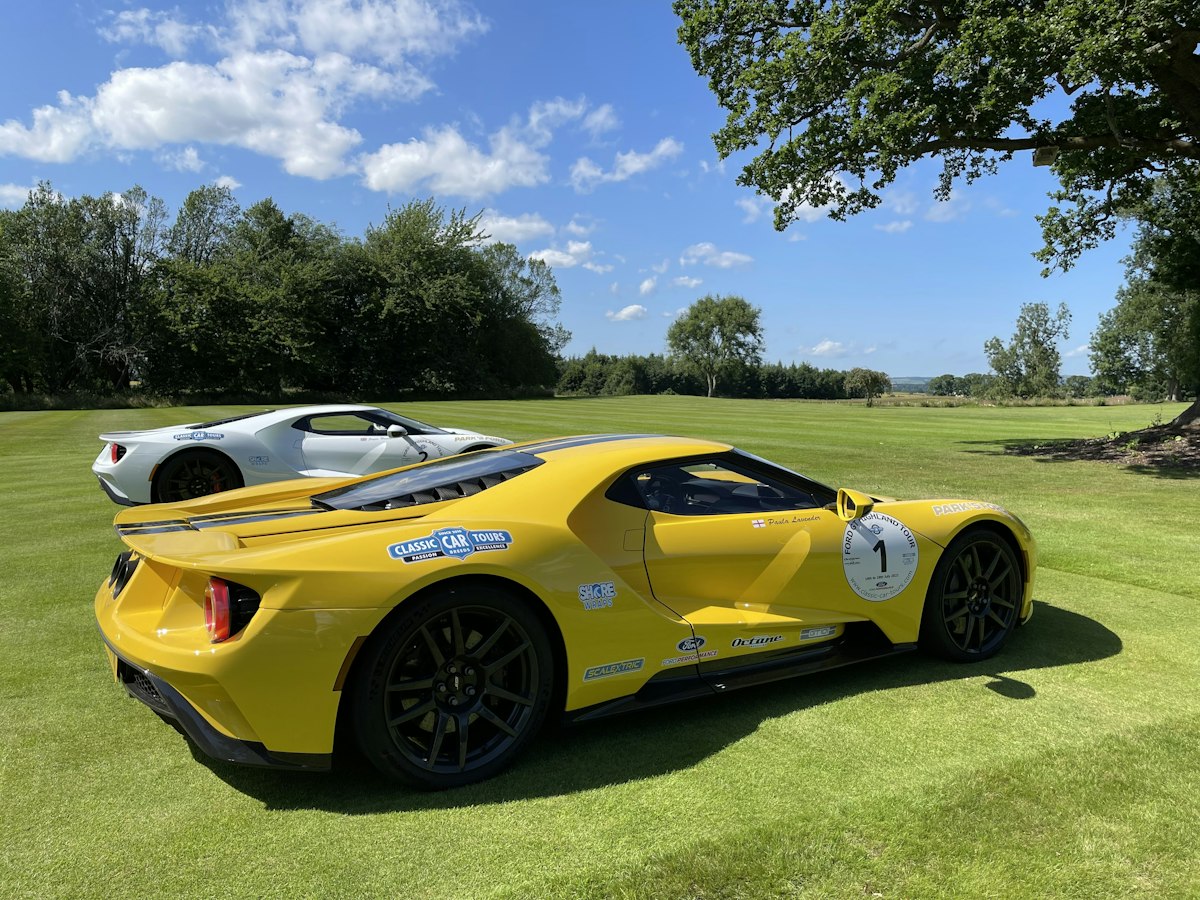
The 1995 Ford GT90 concept shocked the world at the Detroit Auto Show. It was pure chaos. Ford was known for sensible vehicles like the Taurus, Escort, and F-Series trucks, so dropping an ultra-exotic mid-engine supercar into the mix was completely unexpected for a company that typically focused on practical transportation for the average buyer. But it didn't arrive with soft lines or retro nostalgia. Instead, it surfaced like Special Vehicle Operations had pushed aside every accounting rule to build an uncompromising performer before anyone could stop them.
Timing made it intense. McLaren already had the F1 out on public roads, setting standards for clever engineering, while Ferrari was preparing to introduce the F50 with pure Formula One drama. Into this environment, Ford brought a stark white wedge featuring blue glass, distinctive triangular exhausts, and performance numbers that sounded like an outright threat to the established elite. It's a legend.
Extremely Ambitious Performance Claims
They're staggering numbers. So, by mid-1990s standards, Ford immediately captured global attention when it claimed a massive 720 horsepower and a top speed of 253 mph for the concept.
These performance estimates stretched far beyond conventional road cars of the era. To put those claims into perspective, the performance targets included:
- 720 horsepower output
- 660 lb-ft of torque
- A redline situated around 6,300 rpm
- A claimed zero to 60 mph sprint of 3.1 seconds
- A claimed zero to 100 mph time of 6.2 seconds
- An estimated top speed reaching 253 mph
Those statistics require some context today. Because the vehicle was a concept rather than a fully realized production model, these performance figures are best viewed with a degree of caution.
Secret Engineering and Jaguar Hardware
Secrecy was absolute. Ford Special Vehicle Operations engineered the project in roughly six months, completing the work under a rushed timeline that gave the car a few rough edges. But it's that speed that injected a wild, unrefined personality into the finished machine.
Because Ford owned Jaguar during this era, engineers pulled directly from British hardware beneath the skin, building a chassis and suspension architecture that relied on components linked to the Jaguar XJ220 supercar. And the five-speed manual transmission was drawn from that same engineering realm. It's an unusual hybrid. Domestic ambition was wrapped around verified British hardware.
A Quad-Turbo V12 Heart
It is a monster. Tucked directly behind the cabin sits a 6.0-liter-style 90-degree V12 engine, which the mechanics built by combining various components sourced from Ford's modular engine family. Four Garrett turbochargers force air into the massive assembly. And Roush, the performance brand, actively participated in the development and testing phases of the engine package to ensure they have met every single goal we've discussed.
The extreme power plant created incredible heat. Exhaust gases exited through a unique rear setup that burned so hot that ceramic heat shielding had to be applied around the rear outlets to protect the surrounding structure.
Unveiling Radical New Edge Styling
It debuted here first. Before the New Edge design language migrated to familiar family vehicles like the Focus and Cougar, it appeared in its most aggressive form on this mid-engine concept, showcasing sharp creases, harsh triangular shapes, aggressive angles, and deep cooling vents that defined every body panel to show us what it's truly capable of when designers don't hold back. It's bold.
Brilliant white paint gleamed. The exterior featured striking blue-tinted glass, and it is accessible through roof-hinged, gullwing-style doors that swing upward to reveal a cabin designed for the future. Four exhausts cluster tightly. While the overall shape took inspiration from the iconic GT40, it doesn't make any attempt to copy the original design line for line. So, instead of leaning into simple nostalgia, it envisioned what that legacy could look like if we moved into a hyper-futuristic era.
Inside the Digital Cabin
The cabin adopts the angular theme established on the outside. It’s blue. Vibrant shades dominate the surfaces, surrounded by sharply cut controls, geometric air ducts, and a highly sculptural gear selector that defines the space. But it rejects traditional luxury and grand-touring comfort entirely. They’re gone.
The interior appeared almost digital. Instead, because it mirrored early 3D computer graphics and video game aesthetics from the mid-1990s, that virtual look helped turn the vehicle into a digital icon that's a natural fit for video game appearances. It already looked right at home.
The Dynamic Between Concept and Production
The project was a masterclass in conceptual design. It is impossible. But it is another story entirely when you are turning that vision into a real consumer car that can actually hit the road. Building a functional showcase is simple. Delivering a dependable vehicle to customer driveways presents vastly different engineering hurdles that we have yet to solve as the team struggles to balance style and utility.
To move from a show floor turn-key concept to a showroom model, Ford would have needed to solve a mountain of practical challenges, including:
- Complex heat management and thermal isolation
- Strict tailpipe emissions compliance
- Long-term mechanical reliability
- Standard factory warranty requirements
- Overall cabin refinement and noise isolation
- Cost-effective production engineering
- Comprehensive dealer service support
Similar obstacles famously plagued supercars. So during that same decade, making such an extreme machine like the Jaguar XJ220 commercially viable proved to be an overwhelming task that can't be understated.
Real Hardware Beneath the Futuristic Shell
It is easy to dismiss show cars as hollow fiberglass shells with no real mechanical depth. Key aspects of this project.
It’s true engineering. Beneath the striking bodywork, the construction utilizes a full carbon-fiber body resting over an aluminum honeycomb chassis structure to provide a rigid, lightweight foundation for speed. And it’s fast. Combining the Jaguar-derived suspension, bespoke quad-turbo V12 engine, and high-tech ceramic heat shielding, the vehicle is packed with real performance engineering that doesn't compromise on its mechanical complexity.
A Lasting Futuristic Legacy
It redefined everything. The 1995 Ford GT90 concept proved that a massive, mainstream automaker could dream on the exact same scale as elite exotic brands like McLaren and Ferrari. It pushed limits. And it didn't just challenge expectations, as the vehicle shattered every conventional corporate boundary by showcasing a level of ambition that we've rarely seen from such a large manufacturer.
Ford chose the past. When the company finally revived its iconic supercar line for production with the 2005 Ford GT, it selected a retro-inspired path that paid direct homage to the classic race cars of the 1960s. But it's not the only story. The 1995 prototype represents the alternate road not taken, as it offers an aggressive, angular vision of power that completely abandoned the past to sprint straight into the future.
Frequently Asked Questions
What performance claims were made for the 1995 Ford GT90 concept when it debuted?
Ford claimed the concept produced 720 horsepower and 660 lb-ft of torque. It was also estimated to reach a top speed of 253 mph, with a zero to 60 mph time of 3.1 seconds.
Why was the 1995 Ford GT90 concept considered such a surprise for the company at the time?
Ford was widely known for producing sensible vehicles like the Taurus, Escort, and F-Series trucks. Consequently, the introduction of an ultra-exotic mid-engine supercar was completely unexpected from a company typically focused on practical transportation.
How did Ford engineering utilize its relationship with Jaguar for the 1995 Ford GT90 concept?
Since Ford owned Jaguar during that era, engineers utilized British hardware for the car's foundation. This included incorporating chassis and suspension architecture linked to the Jaguar XJ220, as well as using a five-speed manual transmission from the same source.
What specific engineering challenges prevented the 1995 Ford GT90 concept from entering mass production?
Transitioning from a show floor concept to a consumer vehicle would have required solving massive hurdles like complex heat management and tailpipe emissions compliance. Additionally, Ford would have needed to address long-term mechanical reliability, warranty requirements, and cost-effective production engineering.
How was the engine of the 1995 Ford GT90 concept developed and managed?
The 6.0-liter 90-degree V12 engine was built by combining components from Ford's modular engine family and utilized four Garrett turbochargers. The development and testing phases were conducted with the assistance of the performance brand Roush.

Sebastian Wolf reports on the car industry, from performance machines to the engineering that powers them. He is fascinated by how manufacturers balance tradition with the rapid move to electrification.
💬 Comments (0)
No comments yet. Be the first!