Why leveraged ETFs Pose a Risk to Markets
South Korea's market meltdown highlights how leveraged ETFs amplify volatility and trigger heavy losses for retail investors.
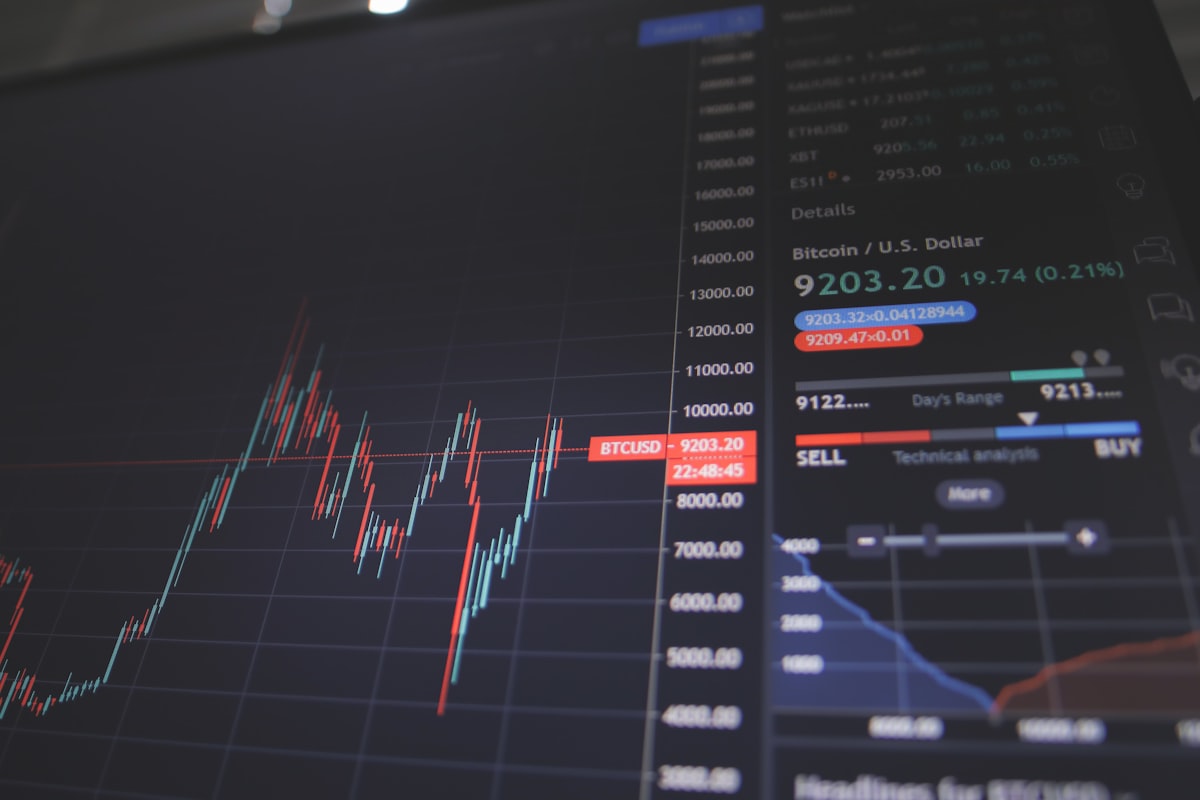
Leveraged ETFs pose a risk to markets that institutional investors and global regulators can no longer afford to ignore. This strategic vulnerability became clear during a recent market dislocation in South Korea, where newly approved investment vehicles tied to national technology champions experienced severe structural decay, and the damage wasn't subtle. By offering double the daily performance of individual equities, these instruments were designed to capture retail capital and redirect it toward domestic listings. But the timing couldn't have been worse. Instead, the introduction of these products coincided with a broader market correction, amplifying downside pressure on foundational technology listings and exposing systemic vulnerabilities in index stability , yet we can't blame the products alone, because the real issue is the fragility they've built into the system. So there it is.
The mechanics of volatility loops
The core structural hazard of these financial instruments lies in their daily rebalancing mandates. To deliver double the daily return of an underlying security, the fund issuers must adjust their exposure at the end of every trading session, a rigid requirement that leaves no room for discretion. So this design forces issuers to purchase additional shares as a stock rises and liquidate shares when it falls. Strip away the marketing and the calculation is straightforward. It's mechanical. But this mechanical trading behavior creates a feedback loop that artificially exaggerates price movements in both directions, and that intensifies intraday volatility for the underlying equities, making the tape jumpier than fundamentals alone would justify.
The KOSPI index, being heavily concentrated, got dragged down hard during the recent technology selloff in South Korea, and trading stops were triggered repeatedly as the selling pressure intensified. That dynamic was unmistakable. It's the scale of capital flows that compounded the systemic impact, though, and that's what made this episode so unsettling for market watchers. Retail buyers poured substantial assets into these products within a short window, creating concentrated exposure just as global market sentiment shifted, and the timing couldn't have been worse. So the resulting price swings demonstrated how daily rebalancing requirements can turn standard market corrections into destabilizing events for major listings. They can't ignore that reality.
- South Korean retail buyers allocated 9.4 billion dollars, or 14 trillion Korean won, into these domestic funds in less than two months.
- During a market downturn, Samsung shares fell 15.2% while its tracking fund dropped 40.2%.
- SK Hynix shares declined 18.4% over the same period, while its corresponding double exposure fund plunged 49.4%.
- On the single worst day of the correction, SK Hynix fell 14.7% and Samsung dropped 13.4%.
The erosion of value through decay
For long term market participants, the most damaging characteristic of these instruments is volatility decay. Because these funds reset daily to provide double the return of a stock on that specific day, they do not track the buy and hold performance of the underlying asset over time. In highly volatile or sideways markets, this daily compounding mathematical effect systematically erodes the fund value. The longer an investor holds the position, the more severe this divergence becomes.

To quantify this risk, an analysis by Hanyang Securities simulated the long term impact of persistent volatility. The simulation revealed that if the underlying equities experienced a year of elevated volatility but ultimately recovered to their exact starting prices by the end of that year, the corresponding double exposure funds would still be down between 63% and 75%. Investors expecting a parallel recovery would find themselves holding deeply impaired assets due to the mathematical reality of daily rebalancing.
A structural pattern in global markets
This move sits within a broader pattern. The financial instruments deployed in South Korea were modeled directly after popular products already trading in the United States. These American funds, which target mega cap technology firms, have attracted massive inflows. By June, these products had accumulated 65 billion dollars in assets, with retail investors accounting for 90% of the total trading volume.
Consider the divergence in major technology listings this year. A fund designed to deliver twice the performance of Tesla declined 51% over a six month period, even though the underlying Tesla stock only fell 20% during that same timeframe. Similarly, an instrument offering double exposure to Microsoft declined nearly 12% so far this year, despite the actual Microsoft stock recovering to post a 2% gain. The numbers tell a different story than simple linear borrowing.
Regulatory warnings on retail comprehension
The math is counterintuitive. Market authorities have formally flagged the gap between how these products actually function and how the public perceives them, a disconnect that persists even when jurisdictions try to mitigate risks through mandatory investor education, because the numbers simply don't add up for most people, and that's a hard truth to swallow. But they're trying anyway.
Many buy and hold retail investors do not understand the potential effects of compounding and daily rebalancing, such that the performance significantly diverges from the underlying stock when held over a longer period of time.
This finding exposes the limits of disclosure-based rules for structurally complex instruments. But the real problem is practical, not theoretical. In the United States, retail platforms offer frictionless access to these products, and there are currently no mandatory educational hurdles required before purchase, so a buyer can click through a warning they don't read and still own a product they can't understand. That's a gap. It's also a choice.
The case for decisive intervention
The Securities and Exchange Commission is currently conducting a review of its rules governing exchange traded funds, with a public comment window extending through early September. This review specifically addresses novel strategies and increased borrowing. For financial regulators, the South Korean market disruption serves as an active case study of the systemic risks associated with single stock compounding instruments.
Strategically, these products create structural instability. They don't allocate capital productively. Rather than waiting for a domestic market disruption to force emergency action, market observers suggest that a preventive restriction is the most direct path to protecting retail market participants, and it's a move that could spare investors from a chaotic, reactive scramble. So eliminating these single stock leveraged instruments would remove an artificial source of intraday volatility. That preserves the trading ecosystem's integrity.
Frequently Asked Questions
What specific feedback loop is created by the daily rebalancing of leveraged ETFs according to the article?
The article states that the daily rebalancing mandate forces issuers to purchase additional shares as a stock rises and liquidate shares when it falls. This mechanical trading behavior creates a feedback loop that artificially exaggerates price movements in both directions, intensifying intraday volatility for the underlying equities.
How much did South Korean retail investors allocate to domestic leveraged funds in less than two months, and what was the impact on SK Hynix shares?
South Korean retail buyers allocated 9.4 billion dollars, or 14 trillion Korean won, into these domestic funds in less than two months. During a market downturn, SK Hynix shares declined 18.4%, while its corresponding double exposure fund plunged 49.4%.
According to the Hanyang Securities simulation, what happens to double exposure funds if underlying equities experience a year of high volatility but recover to their starting prices?
The simulation revealed that if the underlying equities experienced a year of elevated volatility but ultimately recovered to their exact starting prices by the end of that year, the corresponding double exposure funds would still be down between 63% and 75%. This demonstrates the erosion of value through volatility decay.
Why does the article say that the math of leveraged ETFs is counterintuitive, and what did market authorities formally flag?
The article notes that market authorities have formally flagged the gap between how these products actually function and how the public perceives them. Specifically, many buy and hold retail investors do not understand the potential effects of compounding and daily rebalancing, leading to performance that significantly diverges from the underlying stock over longer periods.
What is the Securities and Exchange Commission currently reviewing, and what does the article suggest as a preventive measure?
The Securities and Exchange Commission is conducting a review of its rules governing exchange traded funds, with a public comment window extending through early September. The article suggests that eliminating these single stock leveraged instruments would remove an artificial source of intraday volatility and is the most direct path to protecting retail market participants.

Beatrice Novak covers the business of technology, from enterprise software and cloud platforms to the strategy behind the biggest deals. She follows how companies adopt new tools and what it means for the wider economy.
💬 Comments (0)
No comments yet. Be the first!