Voyager Technologies' Space Bet
Voyager Technologies targets orbital data centers and a moon base in the 2030s to scale up human work in space.

Voyager Technologies has planted itself at the center of a fundamental shift in how the tech sector sees the future of human labor, even as much of the enterprise software world stays glued to terrestrial cloud infrastructure and local automation. But a distinct group of heavily capitalized leaders is looking upward. The premise is simple. The next major economic frontier won't be virtual; it'll be orbital, and by framing space not merely as a scientific playground but as an active workplace, the strategy signals a clear move from exploration to industrialization. That's a big leap.
This strategic direction aligns with predictions from some of the most prominent figures in the technology industry. It's a bold claim. But leaders of major technology and aerospace organizations have increasingly pointed toward orbital and lunar environments as viable sites for future operations, and they're not just speculating anymore, so the timelines they cite are real. The idea of an off-world economy is shifting from theoretical physics into corporate planning, with concrete timelines now set for human habitation and work beyond Earth. Strip away the marketing and the calculation is straightforward. We've seen this before. The physical limits of terrestrial resources and data processing may eventually require physical expansion into space, so the math is simple, and the clock is ticking.
Voyager Technologies targets lunar operations by 2030
The timeline is moving faster than the market thinks. Voyager Technologies founder and CEO Dylan Taylor has indicated that human labor and habitation on the moon will become a reality within the next decade, specifically pointing to the early 2030s, a projection that places the establishment of a functional moon base squarely inside the strategic planning window of current enterprise cycles. So the transition from highly trained government astronauts to a broader workforce is already being actively developed within the aerospace sector. That shift is underway now. It's not a distant fantasy.
This move is part of a bigger push in commercial space infrastructure. It’s a steady climb. Right now, a tiny group of people has kept a continuous presence in orbit for 26 years aboard the International Space Station, living and working in that cramped, high-flying outpost without ever coming home together, and that’s a remarkable feat. But the commercial sector is actively scaling these operations to house far larger populations, building new stations and planning for thousands of residents. So a permanent lunar base is the next logical step in this industrial progression, and we can’t pretend otherwise. That means moving past temporary research trips to permanent, operational installations that just don’t shut down.
The limits of robotic automation in space
Human labor remains irreplaceable in complex, unpredictable environments,that's the core recognition driving this entire strategy. Robotic automation is advancing rapidly, sure, but the physical challenges of lunar and orbital construction demand something machines still can't replicate: human cognitive flexibility, the ability to adapt on the fly when conditions shift without warning. So strategic plans for space operations don't lean solely on autonomous systems. They're built around a hybrid model instead, one where humans manage and execute the intricate physical tasks that require judgment and hands-on problem solving. The division of labor in space will likely mirror the early industrial era on Earth, when human oversight was needed for physical problem solving, much like the early days of factories humming with new machinery. It's a familiar pattern. But the stakes are higher now.
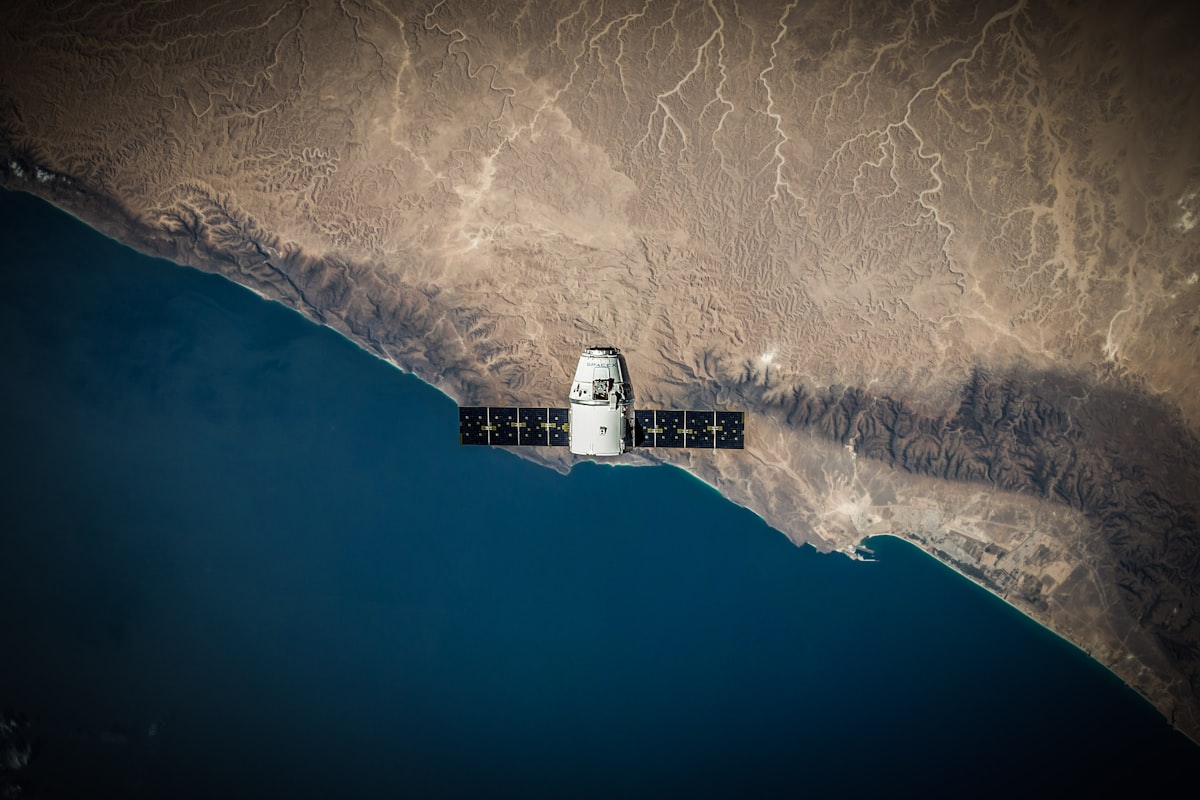
To understand the specific types of labor that will define this upcoming era, consider the primary industries currently slated for off-world development:
- Resource mining on the lunar surface to support local infrastructure and transport.
- Orbital data centers designed to process information outside the thermal and physical constraints of Earth.
- Power grid construction to supply energy to expanding lunar bases and orbital facilities.
From a competitive angle, companies that build early expertise in these three areas will have a clear edge. It's that simple. But the infrastructure required to support these industries is highly specialized, creating high barriers to entry for late arrivals, and those barriers don't just slow competitors down, they often stop them cold. Early investment in human-led space operations is a method to secure critical operational positions before the market crowds, and that's a move you can't easily reverse.
Strategic divergence between Moon and Mars operations
The moon is an immediate operational workplace. Mars is something else entirely, a separate strategic category defined by its own brutal physics and unforgiving conditions. The physical distance and environmental hazards of Mars, particularly radiation, present challenges that simply don't exist for lunar operations, and those challenges reshape the entire investment calculus. So the path to Mars is viewed more as a long-term diversification strategy for humanity rather than an immediate economic opportunity. That distinction is critical. Institutional investors evaluating the space economy can't afford to blur these two destinations, because they're betting on very different timelines, risks, and returns. But that's the trap.
The moon really is not sufficient diversification. The moon and the Earth are really the same planetary system.
This perspective highlights a clear operational hierarchy. The moon is the practical proving ground and industrial hub, while Mars remains a distant destination for long-term survival and exploration,wait, no dashes,so Mars stays a far-off goal for survival and deep exploration. Money flows where the work is. But the real signal is in the capital: immediate revenue-generating infrastructure is being built for low Earth orbit and the moon, and that's where the dollars are landing right now. Martian initiatives, by contrast, remain largely exploratory,they're not yet a business. It's a stark difference. So we can't mistake hope for investment.
The role of private capital and public contracts
Voyager Technologies runs on a dual-track model. It blends private commercial ventures with hefty public sector contracts, and that mix has proven highly resilient for a company now building the replacement for the International Space Station. They hit a 3.8 billion dollar valuation on the New York Stock Exchange. That's no small feat. Multiple NASA contracts keep the capital flowing steadily, funding the long, expensive years of development, while commercial enterprise services add another layer of income, so the whole thing doesn't topple over when one sector hiccups. But this isn't just their strategy. It's the emerging standard for any space venture that wants to survive, mixing government defense and exploration dollars with private market demands.
Industry alignment on the future workforce
Other prominent technology executives share this vision of an off-world workforce. But their timelines and methods vary. Take Jeff Bezos, the founder of Amazon and Blue Origin, who has predicted that by 2045, millions of people will live in space, with robots performing the physical labor on the lunar surface. Meanwhile, OpenAI leader Sam Altman has suggested that the next generation of college graduates will find highly paid, entirely new career paths in space. It's a big move. Yet all these predictions point to a fundamental shift in where human labor will be directed in the coming decades, even if the specifics differ, and that shift is hard to ignore.
Look at the wider sector. The immediate focus remains on securing the contracts and building the physical hardware required to make lunar commuting possible by the early 2030s, and that's no small task. The transition from theoretical planning to physical construction is already underway, with Voyager Technologies leading the development of post-ISS orbital habitats. So the corporate landscape will need to adjust as these physical structures take shape. It's a reality check. We've reached the point where the economy no longer ends at the upper atmosphere, and companies can't afford to ignore that shift. But first, they have to build.
Frequently Asked Questions
What is the core premise behind Voyager Technologies' strategy for space operations?
The core premise is that the next major economic frontier will be orbital, not virtual, with space framed as an active workplace rather than a scientific playground. This marks a strategic move from exploration to industrialization, aligning with predictions from prominent tech and aerospace leaders.
According to Voyager Technologies' founder, when does a functional moon base become a reality?
Dylan Taylor, founder and CEO of Voyager Technologies, targets lunar operations by 2030, with human labor and habitation on the moon becoming a reality in the early 2030s. This projection places the establishment of a functional moon base within the strategic planning window of current enterprise cycles.
Why does human labor remain irreplaceable in space despite advances in robotic automation?
Robotic automation advances rapidly, but the physical challenges of lunar and orbital construction demand human cognitive flexibility and the ability to adapt on the fly when conditions shift without warning. Strategic plans for space operations are built around a hybrid model where humans manage and execute intricate physical tasks requiring judgment and hands-on problem solving.
How does Voyager Technologies' business model combine private and public funding?
Voyager Technologies runs on a dual-track model, blending private commercial ventures with hefty public sector contracts. They hit a 3.8 billion dollar valuation on the New York Stock Exchange, with multiple NASA contracts funding development and commercial enterprise services adding another layer of income, ensuring resilience.
What is the strategic difference between lunar and Martian operations according to the article?
The moon is viewed as an immediate operational workplace and industrial hub, while Mars is a separate strategic category with brutal physics and hazards like radiation, making it a long-term diversification strategy rather than an immediate economic opportunity. The article notes that institutional investors must distinguish between them due to different timelines, risks, and returns.

Julian Sterling reports on enterprise IT, data infrastructure and the vendors that keep modern business running. He has a long-standing interest in how organisations modernise their systems without breaking what already works.
💬 Comments (0)
No comments yet. Be the first!