Darkbloom Low Payouts: What Mac GPU Renters Need to Know
Darkbloom low payouts are a new reality for Mac users renting out their GPUs. Declining token prices mean your potential earnings for AI inference jobs have significantly dropped.

Darkbloom payouts are low. Mac GPU renters are hit. And if you've been thinking about monetizing your Apple silicon, it's going to sting. Darkbloom, the distributed inference network that allows macOS users to rent out their GPUs for AI inference jobs, has issued a stark warning, confirming earnings are down, and a recovery isn't expected anytime soon.
Here is the deal. This isn't just a minor dip. This is a major market shift.
The Mac GPU Rental Dream: Reality Check
Eigen Labs, the Seattle-based tech biz behind Darkbloom, developed software letting Mac users with capable devices rent out their GPUs. In exchange, they get paid for handling AI model prompts. Imagine earning passive income from your powerful Mac. Sounded good, right?
Around 800 participants have joined this network. They've been collecting anywhere from a few cents to a few dollars daily by processing AI model requests from OpenRouter, an AI model gateway.
The company once estimated that a Mac mini with an M5 Pro chip and 64 GB of RAM, running 24/7 on a sought-after model like Qwen3.6 35B A3B, could pull in as much as $192 per month. That's a decent side hustle.
But the numbers tell a different story for many. The median earnings among the top 50 network participants sit around $5.26 per day, translating to about $159.86 monthly, or $1,918.50 annually. So, the best-case estimates were plausible, but sustainability is now the question.
Why Are Payouts Plummeting?
Darkbloom payouts are low. Why? Token prices plunged. It's a serious problem. The main concern is the dramatic fall in the price of "tokens," which serve as the basic unit of AI work, declining by a reported 54 percent since May.
The broader market confirms this trend. The AI Token Price Index shows similar declines for major players like Anthropic and OpenAI. For Anthropic, prices for a million tokens plummeted from $2.65 on May 1, 2026, to just $0.62 by October 22, 2026. That's a staggering 77 percent decline.
Kydo, one of the Eigen Labs researchers, didn't mince words in a message to Darkbloom participants. While celebrating the network's processing of its trillionth token, he tempered expectations:
"Earnings have been low. For most providers, I don't expect that it is going to recover soon."
Structural changes in the AI inference market are reshaping everything, he explained. Data centers are cheaper. The computational output per NVIDIA cluster has gone up approximately 20x this year alone. So, NVIDIA's wide margins mean the company could slash prices by 90 percent and it's still possible they'd pocket a 50 percent profit.
This flood of cheaper tokens has effectively wiped out the price advantage Darkbloom once held, making it impossible for the company to maintain its competitive edge solely on cost. It's gone. "The market caught up to our price," Kydo stated. But he warned, "We could go lower, but then most of you would earn even less nothing.
Market Shifts and Hardware Demands
The inference routing market is evolving. Not just token prices. OpenRouter, for example, isn't simply shifting away from purely price-based routing anymore; they're now prioritizing factors such as decode speed, quantization, and prefill speed. So, what's in it for you?
Kydo: inference isn't worth it. He cautioned that if you're running older or less powerful Mac hardware, meaning anything without top-of-the-line Max or Ultra Apple Silicon, you simply won't find it worthwhile to run inference. And this is a stark warning for many small businesses and individuals; they're invested in mid-range Macs, counting on a consistent revenue stream.
What Does This Mean for Your Business?
Real talk: if you're an IT manager or small business owner who has dipped a toe into the Mac GPU rental market with Darkbloom, or if you were considering it, you need to reassess.
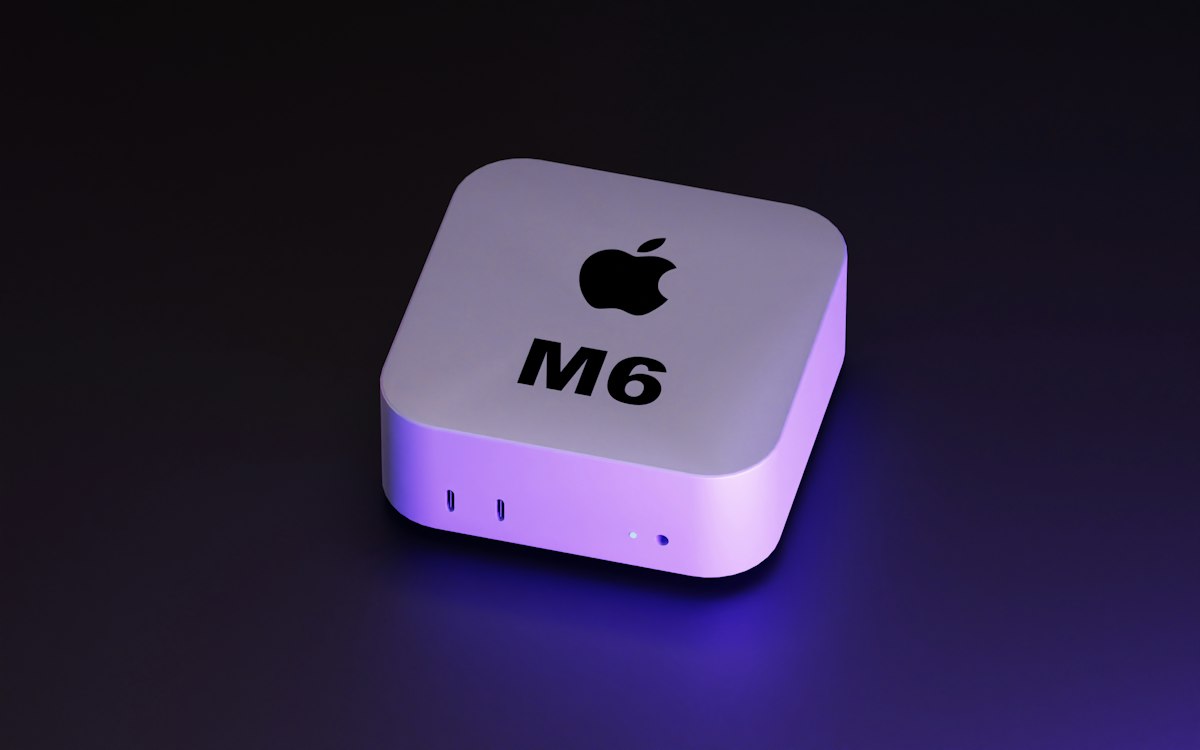
Easy passive income is stalled. That promise, from your Mac's idle GPU power, is currently on hold. Those dream payouts of nearly $200 a month for full utilization now represent a best-case scenario, and it's increasingly difficult to achieve them, given market dynamics.
It's over for older Macs. Your hardware simply can't compete effectively, because the current market now distinctly values speed and efficiency, rather than settling for raw, aggregated compute delivered by less powerful devices.
- **Declining Revenue:** Expect current earnings to remain low.
- **Hardware Obsolescence:** Older Macs are quickly losing viability for profitable inference tasks.
- **Market Volatility:** The token market is highly dynamic and subject to rapid price changes.
Darkbloom's Adaptation Strategy
Darkbloom is not giving up, but they are clearly pivoting. They aim to adapt to this commoditized token market by:
Analyzing model demand: They want to guide participants toward more sought-after AI models. This means less guessing and more directed work.
Exploring other compute work: Beyond AI inference, Darkbloom is looking into offering other types of distributed compute jobs, such as distributed CI/CD (Continuous Integration/Continuous Delivery) tasks. The observation? AI agents are now making pull requests faster than traditional CI/CD pipelines can handle them. This new work will require sandboxing, which they expect to test soon.
Focusing on high-end hardware: For Mac hardware, the emphasis is now squarely on clusters of high-end Mac Studios, especially those with up to 512 GB of RAM, leveraging Apple's Remote Direct Memory Access (RDMA) over Thunderbolt. This is a major shift away from a broad-based approach to a more specialized, high-performance focus.
Improving network performance: They are also working to improve network performance, specifically the time to first token, and actively seeking other token buyers beyond OpenRouter.
The Verdict: A Fight Ahead
Kydo concluded his message with a sobering but determined outlook: "The next stretch will be a fight, and I expect many machines will leave and Slack will get quieter. But those who stay will be first in line when new earning opportunities come along. We are a driven team and well capitalized. We will not give up."
Mac GPU earnings are over. This was spurred by the initial promise of Darkbloom low payouts. And for IT decision-makers and small business owners, it's a recalibration of expectations. If you're in it for the long haul, be prepared for a competitive landscape that demands higher-end hardware and a willingness to adapt to evolving compute needs.
Frequently Asked Questions
What is Darkbloom and who is affected by its low payouts?
Darkbloom is a distributed inference network that allows macOS users to rent out their GPUs for AI inference jobs. Mac GPU renters are significantly affected by the current low payouts, and this impacts anyone considering monetizing their Apple silicon.
Why are Darkbloom's payouts currently so low?
The primary reason for Darkbloom's low payouts is the dramatic fall in the price of 'tokens,' which are the basic unit of AI work. These token prices have reportedly declined by 54 percent since May, and the broader market confirms this trend with significant price drops for major AI players.
What was the potential monthly earning for a high-end Mac with Darkbloom, and how does it compare to current realities?
Eigen Labs once estimated that a Mac mini with an M5 Pro chip and 64 GB of RAM, running 24/7, could earn as much as $192 per month. However, the median earnings among the top 50 network participants are now around $5.26 per day, indicating a significant decrease from initial optimistic projections.
Beyond token prices, what other market shifts are contributing to the difficulty of earning with Darkbloom?
Structural changes in the AI inference market, such as data centers becoming cheaper and the computational output per NVIDIA cluster increasing significantly, have flooded the market with cheaper tokens. Additionally, inference routing is no longer purely price-based, with OpenRouter now prioritizing factors like decode speed and quantization.
What is Darkbloom's adaptation strategy to address the current market challenges?
Darkbloom is adapting by analyzing model demand to guide participants toward more sought-after AI models, exploring other distributed compute jobs beyond AI inference, and focusing on high-end hardware like clusters of Mac Studios. They are also working to improve network performance and seeking additional token buyers.
Julian Sterling reports on enterprise IT, data infrastructure and the vendors that keep modern business running. He has a long-standing interest in how organisations modernise their systems without breaking what already works.
💬 Comments (0)
No comments yet. Be the first!