ProPublica Reporters Became Private School Owners in 24 Hours
ProPublica reporters became private school owners in 24 hours, testing how easily anyone can open a school in Arkansas and West Virginia.
ProPublica reporters became private school owners in three states in a matter of days, and the paperwork was easier than the ethics review that preceded it. The experiment started with a question tossed out during a meeting of journalists covering publicly funded private schools. One editor asked: what if ProPublica tried to open a private school? The room was intrigued.
The reporters are longtime education journalists, not educators. That distinction, it turned out, barely mattered. In many states, anyone can open a private school wherever they want. No experience, no training, no curriculum required. The team wanted to know where, if anywhere, states draw the line on who is fit to run a school and, in some cases, collect public money to fund the venture.
The timing was not arbitrary. Private schools are growing rapidly across the country, in barns, farms, co-working spaces, people's homes and parks. Taxpayer-funded vouchers and similar programs are fueling much of that growth, and oversight has been thin. So the reporters set ground rules before filing a single form. They would not enroll students. They would not operate the schools. They would use newsroom phone numbers and email addresses on applications. In one state, they disclosed in writing that they were "journalists exploring opening a microschool." If the experiment ever required breaking the law or straining public resources, they would stop.
A Church, a Tavern, and Three Newsrooms
There was precedent to lean on. The team knew it. In 2015, comedian John Oliver founded a tax-exempt church to show how easily televangelists could avoid taxes while soliciting millions. Closer to home, some of the reporters live in Chicago and knew the lore of the Mirage Tavern, a real bar that undercover reporters operated in the 1970s to expose city corruption. That investigation led to a new oversight agency, but it also drew criticism for deceptive practices. The lesson was clear. Transparency would be the difference between a stunt and reporting.
So ProPublica partnered with local newsrooms in three states. The Arkansas Times, Mountain State Spotlight in West Virginia and The Assembly in North Carolina came aboard. Local reporters know their states better than anyone, and because the applications required local addresses, and because newsroom addresses, which state officials could easily look up, added another layer of honesty, the whole arrangement carried a weight that outsiders simply couldn't fake. It's that simple.
Then came the names. The plan was to call them Curiosity Academies, a nod to the journalistic instinct behind the whole exercise. The ProPublica-Arkansas Times Curiosity Academy and the ProPublica-Mountain State Spotlight Curiosity Academy made the cut. North Carolina had a word-count limit, so curiosity got dropped. That school became the ProPublica-Assembly Academy.
Ten Minutes in Arkansas
Filing the paperwork? Easy. Designing the experiment with editors, the legal team and the standards editor, which meant coordinating schedules, negotiating terms and aligning every standard we've got, was harder by a wide margin. And they're the ones who made it tough.
Arkansas offered the clearest illustration. The state Education Department does not regulate private schools, so no permission was needed there. All it took to be recognized as a private school business was a form on the secretary of state's website, $45 and an American flag. Arkansas requires all schools to have one; only public schools must also fly the Arkansas flag. The secretary of state's office emailed back a certificate.
Public money was a different process. Not much harder, though. Private schools in Arkansas's voucher-style program must be accredited or working toward it, which often means creating curriculum and handbooks, and that felt like a step too far for a school nobody intended to open. Then the reporters found a workaround. Arkansas lets a subset of schools called microschools tap public money with fewer requirements. Applying took about 10 minutes. No credentials. No background check. No proof of fiscal stability. No assurance that the newsroom was safe for students. And they're clear it's not a real school.
Kaelin Clay, a spokesperson for the Arkansas Department of Education, said the agency reviews applications to the voucher-like program to determine whether schools meet state requirements. Microschool families, she said, have the "freedom to choose" where and how their children learn.
A state employee who reviewed the application, submitted in early September, said it missed the deadline for the current school year but could be resubmitted for the next one. He also suggested another route to public money. The reporters did not take it.
Notebook Paper in West Virginia
West Virginia asked for even less. The required information fit on a sheet of notebook paper, handwritten and sent to the state Education Department. A state employee explained that microschools, unlike private schools, need no inspection. Proof of a high school diploma was required, so the team sent a real college transcript from the late 1990s to the local school district, which then notified the state. The high school transcript could not be found. Does anyone keep those?
The state's position is explicit. A spokesperson for the West Virginia Department of Education said in an official statement that it "does not approve or deny the operation of microschools for any reason, including the qualifications of the owner/operator." State law contains no oversight mechanism at all.
Where North Carolina Ended It
North Carolina is where the experiment died. State rules were not the obstacle. The project's own ethics were.
The Assembly's newsroom sits in a co-working space with a fire inspection but no sanitation requirement. So the editors let the team use the address of a brewery instead. That brewery, which partners with the newsroom and produced a light and lemony ale called Tell the Truth, had both inspection reports, and the owners let the reporters use them. Then a state official clarified that school-specific fire and sanitation inspections were required. That crossed the line. Inspectors are paid with tax dollars, and the team did not want them spending time on a school that would never teach anyone. The application was abandoned.
Owners, Administrators, and a Certificate
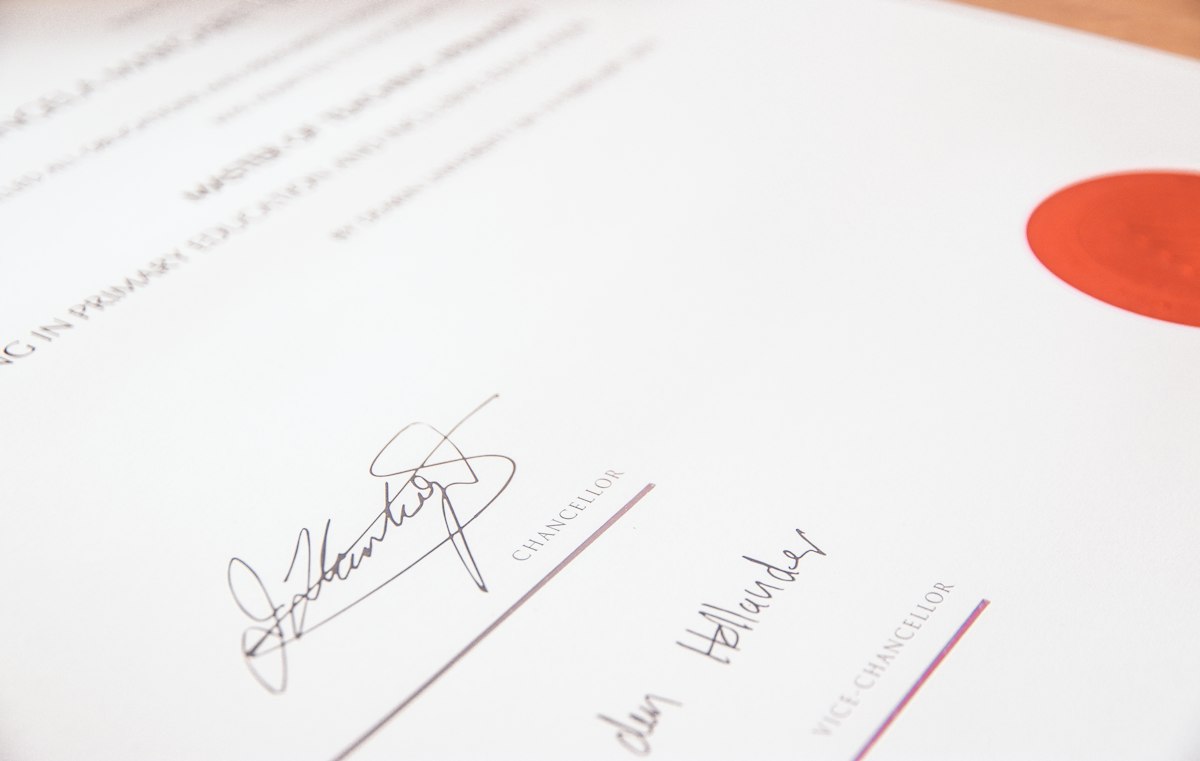
A handful of journalists are now, on paper, school owners, administrators and heads of schools. The academies will be shut down. So no potential student mistakes them for real institutions. The mementos remain, and they're ProPublicaAcademy.com and a set of pencils designed to show school spirit, which is the kind of thing that stays behind after the paperwork says a school was never really a school at all, and we've got the domain and the pencils to prove it. But they don't make it real.
The point was never the certificates or the pencils. The point is what the certificates reveal about how loosely some states define who may run a school and, in some cases, receive public money to do it. Voucher programs are expanding, and the barriers to entry in at least two of these states amount to a form, a fee and a flag.
The reporters turned the experience into a quiz for readers. They're inviting them to find out whether they, too, have what it takes to open a private school. Given what the experiment showed, and considering how many people assume that opening a private school demands extraordinary resources, credentials, and years of preparation that most ordinary individuals simply don't possess, the bar may be lower than most people assume. So it's lower.
- Arkansas: no state Education Department approval needed, $45 and an American flag, roughly 10 minutes to apply for public funds as a microschool.
- West Virginia: handwritten notebook paper, proof of a high school diploma, no inspection required for microschools.
- North Carolina: school-specific fire and sanitation inspections required, which the team declined to pursue.
ProPublica reporters became private school owners fast enough that the state paperwork outpaced the internal debate. That speed is the story. It suggests the gatekeeping many families assume exists in private education, especially where public dollars flow, is in some places closer to a formality than a safeguard.
Frequently Asked Questions
What did ProPublica reporters set out to test by trying to open private schools in three states?
The team wanted to know where, if anywhere, states draw the line on who is fit to run a school and, in some cases, collect public money to fund the venture. The experiment started with a question tossed out during a meeting of journalists covering publicly funded private schools, asking what if ProPublica tried to open a private school.
How did the ProPublica team ensure their experiment was transparent rather than a stunt?
The reporters set ground rules before filing a single form, deciding they would not enroll students, would not operate the schools, and would use newsroom phone numbers and email addresses on applications. In one state, they disclosed in writing that they were "journalists exploring opening a microschool." The article states that transparency would be the difference between a stunt and reporting.
Which newsrooms partnered with ProPublica, and what did they name the schools?
ProPublica partnered with local newsrooms in three states: The Arkansas Times, Mountain State Spotlight in West Virginia, and The Assembly in North Carolina. The plan was to call them Curiosity Academies, resulting in the ProPublica-Arkansas Times Curiosity Academy and the ProPublica-Mountain State Spotlight Curiosity Academy, while North Carolina's word-count limit meant that school became the ProPublica-Assembly Academy.
What was required in Arkansas to be recognized as a private school business and to apply for public money as a microschool?
In Arkansas, being recognized as a private school business required a form on the secretary of state's website, $45, and an American flag. Applying as a microschool to tap public money took about 10 minutes, with no credentials, no background check, no proof of fiscal stability, and no assurance that the newsroom was safe for students. Kaelin Clay, a spokesperson for the Arkansas Department of Education, said the agency reviews applications to the voucher-like program to determine whether schools meet state requirements, and that microschool families have the "freedom to choose" where and how their children learn.
Why did the ProPublica team abandon their school application in North Carolina?
The obstacle in North Carolina was the project's own ethics, not state rules. After a state official clarified that school-specific fire and sanitation inspections were required, the team abandoned the application because inspectors are paid with tax dollars and the team did not want them spending time on a school that would never teach anyone.
Valerie Dubois covers public policy and regulation, with a focus on how decisions made by governments affect technology and society. She follows the debates that shape the rules we all live by.
💬 Comments (0)
No comments yet. Be the first!