EU Digital Identity ruling explained
EU court upholds digital identity wallet rules, raising privacy and surveillance concerns for all users.
The EU Digital Identity ruling hit the pavement in Brussels this morning like a freight train derailing a carefully staged bicycle race. Inside the European Parliament's Paul-Henri Spaak building, the plenary erupted not in polite applause but in a cacophony of procedural objections and last-minute amendments as the final text of the revised electronic Identification, Authentication and Trust Services (eIDAS) regulation was officially adopted. The vote count was decisive. The aftermath is anything but clean.
This is not a bureaucratic footnote. This is the single biggest rewiring of how 450 million Europeans will prove who they are online. And depending on who you ask inside the Berlaymont today, it is either the long overdue death of the Big Tech password monopoly or a surveillance state in waiting that your grandmother will be forced to carry in her pocket. Let's cut through the press release fog and look at what actually just happened.
The Hammer Falls on Silicon Valley's Identity Business
For the last twenty years, the de facto identity system for the internet has been a simple transaction: you give Google, Apple, or Facebook your personal data, and they let you log in. "Sign in with Google" is a convenience. It is also a multibillion dollar data extraction pipeline. The EU Digital Identity ruling is designed to snap that pipeline shut.
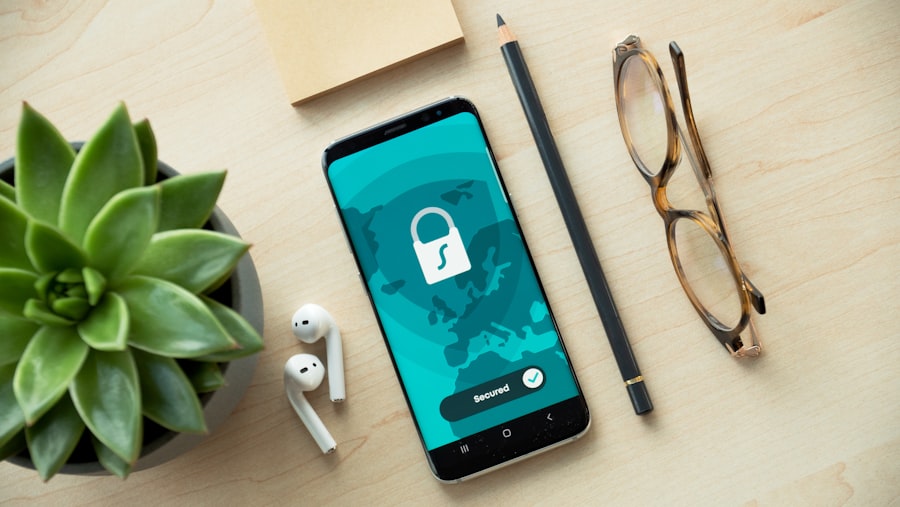
The core mechanism is the European Digital Identity Wallet. Every member state must now offer a free, government-backed digital wallet app to any citizen or resident who wants one by 2026. This wallet will hold official identity documents, driving licenses, professional certificates, medical prescriptions, and even digital payments. The critical part is the architecture. It is built on a "zero-knowledge proof" principle. That is the technical term for a system where you can prove a fact without revealing the data behind it.
"The paradigm shift here is profound," noted a senior EU Commission official during a closed-door briefing yesterday evening. "Currently, if you want to prove you are over 18 to buy a bottle of wine online, you hand over a scan of your passport. The merchant gets your full name, your birth date, your address, and your height. They store that data in a database that gets hacked eventually. Under the new system, the wallet will only send a cryptographic token that says 'Yes, this person is over 18.' The merchant never sees your real data."
This is the technical deep dive that the tech giants are terrified of. For the first time, a government-backed infrastructure will exist that disintermediates the advertising-driven data brokers from the authentication process. The merchant gets the transaction. The citizen keeps the data. The EU Digital Identity ruling mandates that this wallet must be interoperable across all 27 member states and must be accepted by any large private platform that requires identification, including social media platforms, banks, and cloud storage providers.
The Mandate That Makes Big Tech Sweat
Here is the part they did not put in the press release. The ruling contains a "mandatory acceptance" clause for very large platforms. If you are a gatekeeper platform designated under the Digital Markets Act, you are legally required to accept the EU Digital Identity Wallet for user authentication. You cannot block it. You cannot refuse it. You cannot degrade the user experience for people who use it instead of your proprietary login system.
This is the legislative equivalent of a nuclear weapon aimed at the walled gardens. Apple's Face ID, Google's single sign-on, and Facebook's login system have all been built to lock users into an ecosystem. The EU Digital Identity ruling forces those gates open. A user can now authenticate to Instagram using a state-issued French or German wallet, bypassing Meta's data collection entirely.
Let's break down the legal math here. According to the official text published by the European Council this morning, Article 5a specifically mandates that the wallet "shall be recognized by relying parties in both the public and private sectors." The language is not aspirational. It is prescriptive. Non-compliance triggers fines that mirror the General Data Protection Regulation scale, up to 4 percent of global annual turnover.
The Privacy Paradox: Did They Just Create the Ultimate ID Card?
But wait. It gets worse. Or better. Depending entirely on whether you trust your government more than you trust Google. The civil libertarian crowd is having a full-blown panic attack today, and their arguments are not stupid.
The concern is structural. A single, state-issued digital wallet that every citizen uses creates a single point of failure for surveillance. If the French government decides it wants to track who is attending a protest, or if the Hungarian government wants to audit which journalists are accessing which news sites, the wallet becomes the perfect instrument for that. The EU Digital Identity ruling attempts to solve this with a separation of powers within the software itself. The wallet is required to have "attribute-based" access and "local storage" by default. Your credentials sit on your phone, not in a central government database.
"This is technically better than what we have now, but the politics of it are terrifying," said a lead researcher at the European Digital Rights network during a live press conference this morning. "A wallet that is issued by the state, certified by the state, and required for access to essential services is not a tool of liberation. It is a tool of conditional citizenship. The safeguards are written in code that can be changed by a majority vote in a parliament that is currently under pressure from security hawks."
The skepticism is not theoretical. Look at the history of national ID systems in Europe. The Italian "Carta d'Identita Elettronica" has been criticized for its slow rollout and privacy concerns. The German "Personalausweis" with its electronic function has seen extremely low adoption because citizens do not trust the infrastructure. The EU Digital Identity ruling attempts to override this national hesitancy by forcing a common standard, but it cannot force a culture of trust.
The Encryption Fight Nobody Is Talking About
Under the hood of this ruling is a fight that has not made the front pages yet. The wallet specification requires Qualified Electronic Signatures. This is the highest level of legal digital signature, equivalent to a wet-ink signature in court. To get that level, the system needs to support hardware-backed key generation. This means the private keys must be stored in a secure element on the phone, similar to what is used for payment chips.
Apple has been fighting this for years. Apple's approach to digital identity has been to keep the secure element locked inside its own Secure Enclave, accessible only through Apple's own APIs. The EU Digital Identity ruling requires that the wallet application can access the secure element directly. This is a technical battle over who controls the cryptographic root of trust. If Apple controls it, Apple can charge fees and impose conditions. If the state controls it, the state gets the same power. The ruling does not fully resolve this. It punts the technical implementation to a series of Implementing Acts that will be written over the next 12 months. The lobbying war on those acts is happening right now in offices across Rue de la Loi.

The Corporate Lobbying Bonanza You Are Paying For
Let's follow the money. The adoption of the EU Digital Identity ruling has triggered a feeding frenzy among identity verification companies, biometric vendors, and consulting firms. McKinsey's latest report on digital identity estimates a market opportunity of 3 to 5 percent of GDP in mature economies. That is hundreds of billions of euros in transaction fees, verification services, and hardware sales.
Who wins? The incumbents in the identity verification space: companies like Veriff, Onfido, and Jumio. These companies already verify government documents for fintech and crypto platforms. They are now positioning themselves as the "certification bodies" that will onboard users to the wallet. The EU Digital Identity ruling creates a new class of regulated entities called "Qualified Electronic Attestation of Attributes" providers. These are private companies that can issue verified attributes into your wallet. Want to prove you are a qualified lawyer? A private bar association can issue an attestation that goes into your wallet. Want to prove you have a clean driving record? An insurance company can attest to that.
- Risk 1: The surveillance economy gets a new channel. These attestation providers will have a data trail of every attribute they have ever issued. If they are compromised, the attacker knows exactly which citizens have which credentials.
- Risk 2: The cost of verification gets socialized. The wallet is free for citizens, but the infrastructure is not free for businesses. Small businesses that currently accept cash and eyeball ID will now be forced to invest in NFC readers and software development kits to accept the digital wallet. This is a compliance cost that will disproportionately hit small and medium enterprises.
- Risk 3: The exclusion problem. The ruling mandates accessibility, but a digital wallet requires a smartphone. Approximately 8 percent of Europeans do not have a smartphone. The elderly, the poor, and the homeless will be issued physical cards, but those cards will have lower functionality. A two-tier identity system is being baked into the architecture from day one.
The Timeline: 2026 Is a Fantasy
Let's be realistic about the calendar. The EU Digital Identity ruling sets a deadline of 2026 for member states to issue the wallets. Anyone who has ever watched an EU IT project knows this is a fantasy. The German "Online Access Act" was supposed to digitize all government services by 2022. It is still not finished. The French "FranceConnect" system works, but it is a federated mess of different standards.
The European Commission is aware of this. They have set up a "European Digital Identity Cooperation Group" that will meet monthly to bully member states into compliance. The first real test will come in early 2025 when the Large Scale Pilot projects are supposed to go live. These pilots involve real citizens in real transactions across borders. One pilot is testing the wallet for mobile driving licenses in Spain and the Netherlands. Another is testing it for cross-border electronic prescriptions between Finland and Estonia. If these pilots fail technically, the entire EU Digital Identity ruling could be delayed by years.
The Browser Wars Return
Here is a detail the tech press is missing. The ruling includes language about "relying party" software. That means web browsers. If a browser does not support the cryptographic protocols required for the wallet, the wallet does not work. Google Chrome has already signaled that it will support the WebAuthn level 3 standard that the wallet uses. Apple's Safari has been silent. Mozilla has been supportive but underfunded. The EU Digital Identity ruling creates a scenario where the European Commission could mandate that browsers must implement certain APIs. This would be the first time the EU has directly regulated the software stack of web browsers. The web standards bodies are not happy about this. The W3C has issued a statement asking for "technical neutrality." The Commission has responded by saying that "technical neutrality is a privilege of the incumbent."
That line, buried in a Commission memo released this morning, tells you everything you need to know about the political mood. The EU is tired of asking nicely. The EU Digital Identity ruling is a flex. It is the Union saying that it will use its regulatory power to reshape the internet's identity layer, whether Silicon Valley likes it or not.
The Skeptic's Final Objection
There is one objection that keeps coming up in the legal briefs filed against this ruling. It is not about privacy. It is about revocation. When you have a physical passport, you control it. If the government decides you are a persona non grata, they have to physically take the passport from you. With a digital wallet, the government can push a revocation command. The EU Digital Identity ruling includes provisions for "suspension and revocation" of credentials. The official language says this is for "security reasons" and "loss of device." The skeptic says this is a kill switch for your identity.
- Scenario: A journalist publishes a story that a government does not like. The government uses a vaguely worded anti-disinformation law to claim the journalist is a "security risk." The government revokes the journalist's digital identity. The journalist cannot access their bank account, cannot sign into their email, cannot authenticate to their social media, cannot travel across borders, and cannot prove who they are to a police officer. The digital identity becomes a tool of social control.
The Commission's response to this is that the revocation process is subject to judicial oversight and that the citizen has the right to appeal to a court. The skeptic's response is that courts are slow and digital revocation is instant. By the time the court orders reinstatement, the damage is done.
This is the tension at the heart of the EU Digital Identity ruling. It is a technically elegant solution to a real problem, the problem of Big Tech owning our identities. But it replaces one gatekeeper with another. The difference is that the new gatekeeper has a monopoly on legitimate force. The old gatekeeper could only ban you from its platform. The new gatekeeper can ban you from society.
The code is being written now. The standards are being negotiated in rooms you cannot see. The EU Digital Identity ruling is the law today. The fight over what it actually means is just beginning. And the most dangerous thing you can do is assume that the people writing the rules know what they are doing. They do not. They are guessing. They are building the plane while flying it. And they are asking you to trust them because the alternative is worse. History suggests that is exactly when you should be most afraid.

Henrik Sorensen writes about government, regulation and the public interest. He is interested in where policy meets innovation, and how the two can be made to work together.
💬 Comments (0)
No comments yet. Be the first!