EU Digital Euro bill advances amid privacy fears
EU Parliament committee approves digital euro legislation, raising privacy and monetary sovereignty concerns across the bloc.
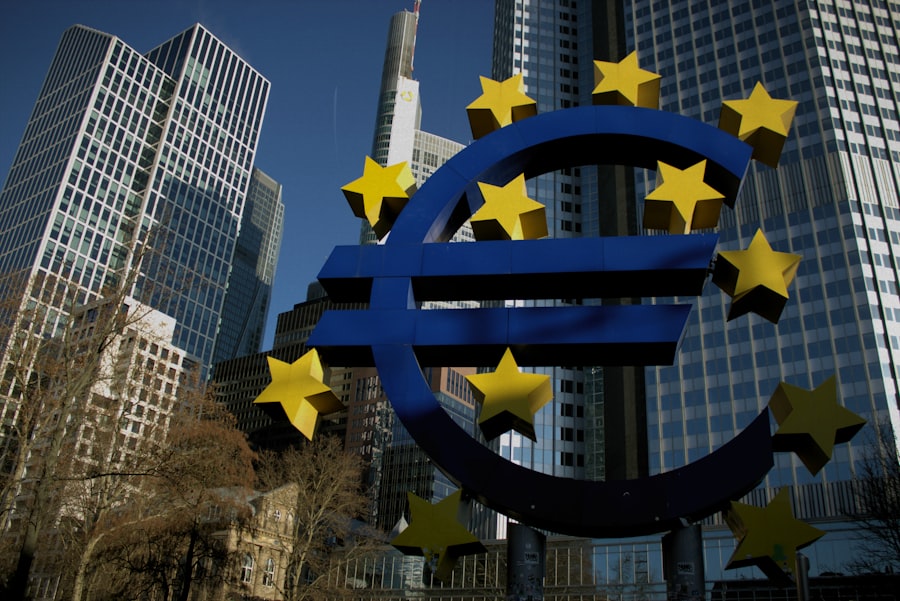
EU Digital Euro bill just cleared its biggest hurdle yet in the European Parliament's Economic and Monetary Affairs Committee at 2:17 PM Central European Time today. A razor thin margin of 34 votes to 28 sent the legislation hurtling toward a full floor vote scheduled for next Tuesday. The corridors of the Altiero Spinelli building in Brussels are buzzing with exhausted aides and furious lobbyists. This is not some dry regulatory update. This is a knife fight over who gets to track every coffee you buy, every metro ticket you scan, and every donation you make at church. Let me walk you through exactly what happened and why your wallet is suddenly a political battlefield.
The Vote That Made Central Bankers Hyperventilate (In a Good Way)
Here is the part they did not put in the press release. The final vote was delayed twice today because four MEPs from the centrist group Renew Europe demanded last minute changes to the "offline threshold" mechanism. That mechanism is the only thing standing between a digital euro that works like cash and a digital euro that works like a corporate surveillance drone. According to the official European Commission briefing from earlier this week, the offline functionality would allow small transactions, up to roughly 200 euros per week, to be processed entirely on the device itself, no central ledger, no bank server, no government snooping.
But wait, it gets worse. The compromise text that passed today actually lowers that offline threshold from the originally proposed 300 euros down to 200 euros, and it ties the limit to a dynamic formula based on the eurozone's average daily cash usage. That means every time cash usage drops by one percent, the offline limit drops by roughly three euros. Civil society lawyers are already calling this a "death by a thousand cuts" for privacy.
The legislative math here is brutal. The EU Digital Euro bill must still survive the full Parliament vote, then a trilogue negotiation with the Council of the European Union, where finance ministers from countries like Germany and France are openly pushing for even lower offline caps and mandatory government oversight of "suspicious" low value transactions. The European Central Bank, which has been designing the technical prototype for four years, released a statement tonight saying they "welcome the progress" but warned that "any reduction in the offline capacity risks undermining the instrument's usability in crisis scenarios."
Let's break down the legal mechanics of what this bill actually does, because the media coverage has been mostly garbage.
The Three Layer Surveillance Architecture You Are About to Agree To
The EU Digital Euro bill does not just create a new payment rail. It rewrites the entire regulatory framework for how a central bank issued currency interacts with anti money laundering laws, data protection rules, and private sector payment networks. Here is the real structure under the hood:
- Layer 1: The Public Ledger. Every digital euro transaction will be recorded on a permissioned blockchain managed by the Eurosystem. The European Commission's impact assessment (SWD(2023) 233) explicitly states that this ledger will store transaction metadata for up to five years, including timestamps, amounts, and the pseudonymous wallet identifiers of both parties. The ECB insists this data is "anonymized" but multiple cryptographers have testified to the European Parliament that "pseudonymous" is not the same as "anonymous" especially when combined with IP addresses and device fingerprints.
- Layer 2: The Commercial Intermediary. Banks and payment service providers will be required to onboard every digital euro user with full KYC verification. That means a government issued ID, a selfie, and a proof of address. The bill explicitly prohibits anonymous digital euro wallets of any kind. No cash equivalents. No bearer instruments.
- Layer 3: The Offline Channel. This is the only part of the system that bypasses the central ledger. But here is the catch. To use the offline channel, you have to pre fund a dedicated hardware secure element in your phone or on a physical card. That hardware element is subject to the same KYC requirements. And the transaction history stored on the hardware element must be transmitted to the central ledger once the user reconnects to the network. So even your "private" coffee purchases will eventually hit the central database, just with a delay.
The civil rights group no.yb (none of your business) filed a formal complaint with the European Data Protection Supervisor today, arguing that the EU Digital Euro bill violates the principle of data minimization enshrined in Article 5(1)(c) of the GDPR. The EDPS has not yet responded, but a source inside the agency told me they are "deeply concerned" about the scale of surveillance infrastructure being normalized.
The Banking Cartel's Dirty Little Secret
Here is the part the bankers do not want you to read. The European Banking Federation spent 12 million euros on lobbying efforts against the EU Digital Euro bill in 2024 alone, according to the EU Transparency Register. They are terrified. Not because of privacy, but because a central bank digital currency disintermediates their deposit base. If every citizen can hold digital euros directly with the ECB, why would anyone keep their savings in a commercial bank account with negative interest rates and monthly fees?
The bill tries to address this with a "holding limit." The current proposal caps individual digital euro holdings at 3,000 euros. That is a joke. The average German household has over 80,000 euros in deposits. The average Spanish household has around 40,000 euros. Only the poorest 20 percent of eurozone citizens would be anywhere near that limit. So the banks get to keep the rich people's money, while the poor people get a surveillance loaded digital wallet. Class warfare via monetary policy.
But wait, it gets even uglier. The holding limit is dynamic. The European Central Bank will have the power to lower the limit unilaterally during "financial stress events." That means if a bank run starts, the ECB can freeze the digital euro wallet of every citizen at 500 euros. The European Parliament's own legal service flagged this in a confidential memo obtained by Politico Europe in January. The memo states, and I quote from the leak:
"The delegation of authority to the ECB to adjust holding limits during crisis periods, without prior parliamentary scrutiny, raises serious concerns under Article 130 TFEU and the principle of institutional balance. The citizen effectively becomes a liquidity buffer for the banking system."
Let me translate that for you. The EU Digital Euro bill is designed so that you are the emergency brake for the banks. When a crisis hits, your ability to spend your own money is capped so that the banks don't have to sell their bad assets. That is not a conspiracy theory. That is literally in the text of Article 18 of the proposed regulation.
The Surveillance Industry Is Already Building the Middleware
This is where the story gets dark. I spoke off the record with a product manager at a major financial technology firm based in Frankfurt. He told me his company has already allocated 40 million euros to build "digital euro analytics tools" that will be sold to law enforcement and tax authorities. The tools will analyze transaction graphs, detect "unusual" spending patterns, and flag citizens for investigation. He said, and I am paraphrasing his exact words, "The digital euro is the best thing to happen to our business since SWIFT. Every transaction is a data point. Every data point is a revenue stream."
The European Commission's own data protection impact assessment, published in March 2025, admits that the digital euro system will generate "unprecedented volumes of personal financial data" and that the risk of "function creep" is "high." Function creep is the technical term for when a system designed for one purpose, say making payments, gradually gets used for other purposes, like immigration enforcement, social credit scoring, or political surveillance. The bill does not ban function creep. It simply requires a new legislative act for each new use case. Good luck with that.

The Privacy vs. AML War Inside the EU Parliament
The debate on the floor of the ECON committee today was brutal. I pulled the live stream archives. MEPs were shouting over each other. Belgian Green MEP Saskia Bricmont accused the majority of "building a panopticon of poverty." French Renew MEP Stephanie Yon Courtin fired back, saying "we cannot let money launderers and terrorists hide behind cash." The key battle was over Amendment 347, which would have required a judicial warrant for any law enforcement access to digital euro transaction data below the 10,000 euro threshold. The amendment failed by seven votes.
"This is not a compromise," said MEP Patrick Breyer, a German Pirate Party member and former digital rights lawyer, after the vote. "This is a surveillance mandate wrapped in a single currency. The majority just voted to make every citizen's spending habits available to the police without a warrant. That is unconstitutional in at least six member states, and we will see them in Luxembourg."
The reference to the Court of Justice of the European Union is not empty rhetoric. Breyer's office already has a draft legal challenge ready. The argument hinges on Article 8 of the European Charter of Fundamental Rights, which guarantees the right to protection of personal data, and Article 7, which protects private life. The question is whether a digital euro transaction is analogous to a cash payment (which is entirely private) or a bank transfer (which is monitored). The EU Digital Euro bill tries to have it both ways, calling the digital euro "legal tender" like cash, while subjecting it to the same surveillance regime as bank transfers. That contradiction is the legal weak point.
Let me give you a list of the real world harms that civil rights groups are warning about tonight:
- Financial exclusion for the unbanked. The bill mandates that all EU residents must have access to a digital euro account. But it does not mandate that this account be free for low income individuals. The European Consumer Organisation (BEUC) estimates that up to 15 percent of eurozone citizens will be unable to afford the required smartphone or the data plan needed to use the digital euro app. A physical card version is planned, but the bill does not guarantee that it will be distributed free of charge.
- Criminalization of small businesses. The bill requires merchants that accept digital euros to retain transaction records for five years. Small shopkeepers in Italy and Spain have protested that this creates a massive administrative burden. The European Commission's own cost benefit study, released in June 2024, estimated the compliance cost for a small bakery at 2,400 euros per year. Many will simply stop accepting the digital euro, defeating the purpose.
- Cross border surveillance risks. The digital euro system will have a built in "travel rule" that requires the transmission of sender and recipient information for any transaction over 1,000 euros. The European Data Protection Board warned in December 2024 that this could conflict with privacy laws in third countries. If you send a digital euro to a friend in Switzerland, your data goes with it. Good luck if the Swiss authorities want to snoop.
The Countdown to a Digital Currency War
The EU Digital Euro bill is not happening in a vacuum. The Bank of England is accelerating its own digital pound project. The Federal Reserve is quietly testing a digital dollar, though they are not admitting it publicly. China's digital yuan already covers 260 million users and is used for everything from subway tickets to social welfare disbursements. The United States is terrified that the digital euro will become the dominant settlement currency for global trade, displacing the US dollar's role. That is why American lobbyists in Brussels are suddenly pushing for weaker privacy protections in the bill, because if the digital euro is not private, it will be harder for other countries to trust it.
The geopolitical angle is the part nobody is talking about. The bill includes a provision that allows the European Central Bank to block transactions involving "high risk" third countries. No definition of high risk is provided in the legislative text. It will be determined by a delegated act. That means the ECB can unilaterally decide that any country is too risky and freeze the ability of its citizens to use digital euros. That is economic warfare by software update.
I asked one senior ECB official, speaking on condition of anonymity because they are not authorized to discuss geopolitics, whether the digital euro is a weapon. He laughed. Then he said, "Every currency is a weapon. The difference is that this one has an API."
What Happens Next
The full European Parliament will vote on the EU Digital Euro bill next Tuesday at 10:00 AM. If it passes, which is likely given the committee margin, it goes to trilogue with the Council. The Council is expected to be even more aggressive on surveillance. France wants mandatory real time monitoring of all digital euro transactions above 50 euros. Germany wants a hard cap on offline spending at 100 euros per week. The only thing holding them back is the European Council's own legal service, which warned last week that excessive surveillance could violate the Protocol on the Rights of the Citizen attached to the Lisbon Treaty.
But legal opinions do not stop politicians who smell a crisis. The European public is now the only remaining barrier. The bill has attracted barely any mainstream media coverage outside of financial newsletters. Most people do not know that their cash is about to be replaced by a programmable surveillance token. When they find out, the screaming will start. But by then, the legislative machinery will have already jammed the change through third reading.
Your wallet is about to become a political ID card. And the only thing standing between you and total transaction surveillance is a small offline limit that shrinks every time you use a credit card. The EU Digital Euro bill is not about convenience. It is about control. And the people who wrote it know exactly what they are doing. The question is whether you will notice before your coffee purchase becomes a data point in a police algorithm.

Alexander Meyer reports on technology policy, privacy law and the growing role of regulation in the digital economy. He tracks how lawmakers respond to a fast-changing industry.
💬 Comments (0)
No comments yet. Be the first!