Why 4Divinity Gamescom Presence Is a Multi-Million Dollar Bet
4Divinity, a publisher you may not know, is making a massive splash at Gamescom with a multi-million-dollar investment and six new titles. This 4Divinity Gamescom presence is a bold strategy to introduce itself to the west.
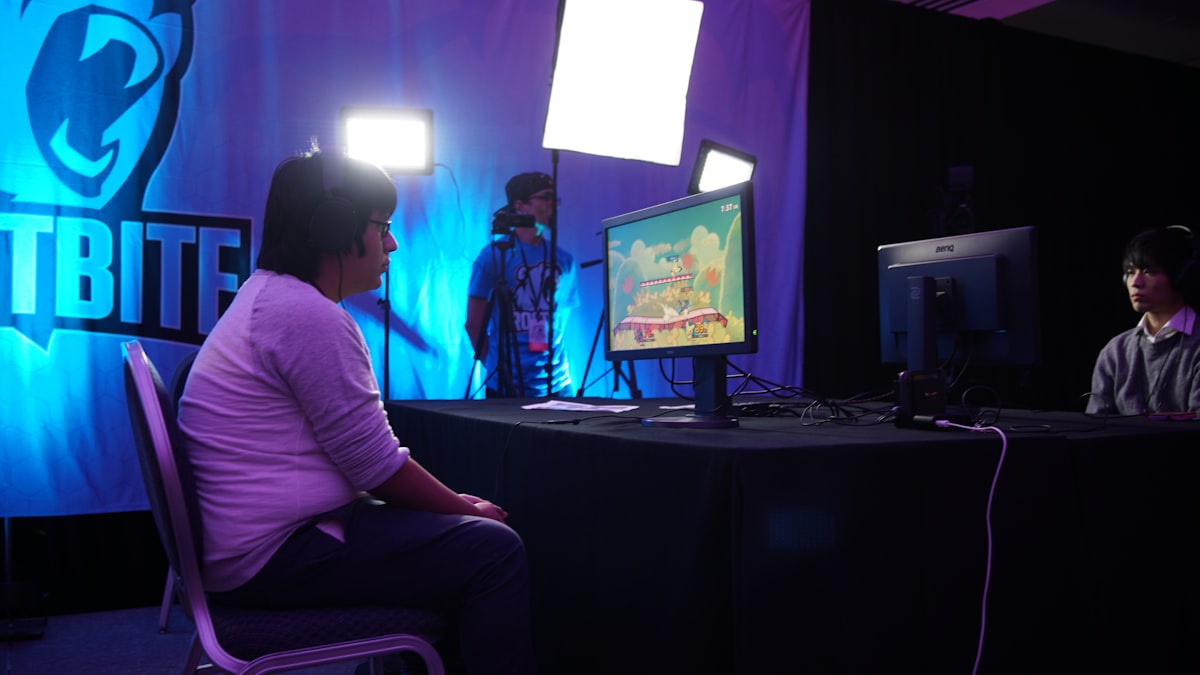
4Divinity Gamescom presence is about to make a very loud first impression.
Walking the halls of Gamescom, the biggest, most elaborate booths usually carry a familiar name. Capcom, Xbox, Sega, EA, Ubisoft. But this year, a massive slice of Halls 6 and 7 belongs to a publisher you have likely never heard of. 4Divinity is spending millions to change that.
The company is bringing six titles to the behind-closed-doors B2B area, five to the associated trailer showcases, and four to the B2C showfloor across two separate stands. The larger of those spans 800 square metres. That is a footprint to rival the industry giants, and the spectacle inside is just as deliberate.
Philip Doust, director of 4Divinity's UK entity, confirms the strategy. "We're using one of the best booth builders in Gamescom," he says, and there's been no expense spared on that front. It's a bold claim. But the investment shows they're serious about making an impact.
For Showa American Story, the '80s pop-culture RPG, the team has rebuilt the Hollywood Hills, rebranded in the game's alternative timeline as the Neo Yokohama Hills. A seven-metre-high Golden Gate Bridge stands with Japanese lanterns. There is a full diner recreation you walk into to play the game. "It's all very experiential," Doust adds.
The Mystery Behind the Millions
So who exactly is footing this bill?
Doust won't give exact figures. "That would be crass," he says. "But it's millions of dollars of investment. Just from that footprint we have, it should be clear we're investing to that kind of level."
The money comes from a surprising place. 4Divinity is just one of several gaming companies under the umbrella of Singapore-based GCL Global Holdings, a Nasdaq-listed group that also owns an imitation-diamond jewellery maker. GCL was "primarily built on a physical distribution business, through a company called Epicsoft, that has been going for nearly 20 years now," Doust explains.
That is a tricky business to be in right now. Physical media is in decline, and Sony's recent announcements have only accelerated the shift. It's still a key part of our business as a group, and we'll keep doing it as long as Sony permits and as long as there are discs to produce," Doust says. "But we recognise that it's a declining business."
4Divinity launched in 2022 as a co-publisher for western companies eyeing Southeast Asia. That model hit a wall. "Finding a [western] game that excels in Asia, China specifically, is very tough," Doust says, and he's not exaggerating, because the cultural fit and local tastes rarely align with what sells back home. We pulled it off with Atomic Heart, and then we replicated that with Stalker 2. But Doust admits these wins were rare. "We recognised that these games were kind of outliers." So the old approach couldn't last.
A Pivot to Global Publishing
GCL needed growth. The answer was to flip the model: sign Chinese-made games and publish them around the world.
The process began before Doust joined in late 2024. "They'd already signed two or three games; a couple of smaller indies, but also Showa American Story, which is a big play for us." Since then, the portfolio has ballooned. "We're now up to eight games in the portfolio, all coming out within the next two years," he says. "So it's been a huge growth period."
The line-up shares deliberate DNA. "All our games are predominantly single player. They're 15 to 20 hour experiences. They're mid-tier priced."
That wasn't the plan in advance, Doust admits. But it's since crystallised into a strategy targeting the squeezed middle of games. "This, for me, is exactly the crux of what people want from games right now," he says. They don't have 200 hours to pour into a live service, and the $80 game is probably reserved for one or two titles a year, yet people are willing to invest $40 to $50 into a single-player experience, he adds. So that's the sweet spot.
Most businesses won't make that bet. Doust puts the price tag plainly: these games cost between $5 million and $20 million to make, roughly. So you need that game to sell a million units just to break even. That's not very attractive. Because a million units these days? That's tough.
New IP Is the Whole Pitch
4Divinity's betting on originality. Doust says, "Everything you're going to see at Gamescom is new IP." But bigger companies aren't taking those chances, and he points out that they won't gamble on one fresh franchise, let alone six, which is exactly why this studio's approach stands apart. It's a bold move. So they're going all in.
He points to the risk aversion that has gripped AAA development. "Unless you [already] have a franchise, you're not in that game, generally." The exception? Emerging Chinese companies.
The catalyst for this entire pivot was Black Myth: Wukong. GCL handled that game's physical PS5 distribution globally and acted as publisher in Taiwan. Its success opened eyes. "Since the console ban was lifted in 2016, a lot of Chinese developers who've been working in the west went home," Doust explains. "They formed these console/PC studios. Black Myth: Wukong was one of the first out of the gate, but there are increasingly more and more of them."
Development costs in China are a fraction of western budgets. A Chinese tax filing suggests Wukong cost around $44.6 million to make. And it has sold 30 million copies. That kind of math is hard to ignore, especially when you consider how those numbers stack up against the typical blockbuster's budget, marketing spend, and eventual return on investment across a global market. So it's a figure that speaks for itself.
"My whole thesis, when I started working with Jacky [Choo, GCL chairman], was 'what if we can find common themes between east and west?'"
Doust sees a “massive drought of supply” in the mid-tier space. That’s his gap. His mission is to connect western demand for affordable, self-contained experiences with the supply Chinese developers are well positioned to deliver, and he’s convinced the right emotional hooks can bridge that distance. So loyalty, trust, defiance, revenge, you find those kernels of connection, and you market the game at the same time, with the same asset, but just with a different lens. It’s a simple shift. But it works.
The 80/20 Problem
Most cross-border games fail to cross borders at all. Doust calls this the "do-nothing business." Market a game only in China, and you get an 80/20 split. That's the brutal math. Wukong sold 20 million units in China, and three or four million outside,wait, no dashes,so it's roughly 80/20, a stark divide that shows how domestic success rarely translates to global reach. But the numbers don't lie. It's a lopsided reality.
The same applies in reverse. "Any western company, their do-nothing business is 80/20," Doust notes. "I'd argue that 20 is probably Asia more broadly, but half of that is going to be China."
The target is a 60/40 split. And Doust insists that's the ceiling for 4Divinity's cross-border marketing push. "Not anything more ambitious than that," he says, though he's quick to add that the shift still matters because it translates directly into the number of units you can sell, which is what ultimately counts. It's meaningful.
The publisher is attempting this in both directions. It's a bold gamble. Guns Of Eschaton, one of their games, was developed by Cypriot studio Eschatology Entertainment, founded by a former World of Tanks employee, and was made outside China. But the marketing push began in China, at Bilibili World, and that's a move that surprises many in the industry. "No western company is doing that, definitely not that early in the campaign," Doust says. So the results are telling. China is now the number-two wishlist country for the game, behind the US, and that's a shift they can't ignore.
That momentum is exactly why 4Divinity Gamescom presence matters. The games hit Cologne hot on the heels of ChinaJoy in Shanghai. "Rather than getting to a point where the games have already got massive traction in China and then trying to play catch-up, we're getting out there [in both markets] at the same time."
Gamescom is the publisher's western coming-out party, though. We could do game-by-game campaigns, and to some extent we are. But this event lets us consolidate all of that into one big hit, a single concentrated blast that we haven't really had the chance to deliver before, given how little we've actually done in the west so far. It's a chance to make a bit of noise. That's the whole pitch.
Hence the scale. "If this is a 4Divinity portfolio play, where we want to introduce the games, and ourselves, to the west," Doust says, "why not go big?"
Frequently Asked Questions
What is the scale of 4Divinity's Gamescom presence in terms of booth space?
The larger of 4Divinity's two B2C showfloor stands spans 800 square metres, which is a footprint to rival the industry giants. They are also bringing six titles to the behind-closed-doors B2B area and five to the associated trailer showcases.
Why is 4Divinity investing millions in Gamescom despite being a relatively unknown publisher?
4Divinity is investing millions to change the fact that it is not well-known, aiming to introduce its games and itself to the western market. The director, Philip Doust, explains that they are using one of the best booth builders at Gamescom and that the scale is a deliberate strategy to make a big impact and consolidate their portfolio into 'one big hit'.
What is the business model behind 4Divinity's pivot from co-publishing western games in Asia to global publishing of Chinese games?
The old model of finding western games that excel in Asia, especially China, proved tough, with only rare successes like Atomic Heart and Stalker 2. So, they flipped the model to sign Chinese-made games and publish them worldwide, aiming for a 'sweet spot' of 15-20 hour, mid-tier priced single-player experiences, which they see as filling a gap in the market.
How does 4Divinity aim to achieve a better sales split between domestic and international markets for its games?
4Divinity targets a 60/40 split between domestic and international sales, as opposed to the typical 80/20 split that occurs when a game is only marketed in one region. They attempt this in both directions, for example, by starting the marketing push for a western-developed game in China, which has led to China becoming the number-two wishlist country for that game.
What role did Black Myth: Wukong play in the formation of 4Divinity's current strategy?
Black Myth: Wukong served as a catalyst for 4Divinity's pivot because it was one of the first successful games from Chinese developers who returned home after the 2016 console ban lift. Its success, with a production cost of about $44.6 million and 30 million copies sold, demonstrated the potential of Chinese-developed games for global markets, leading 4Divinity to focus on publishing such games.
💬 Comments (0)
No comments yet. Be the first!