Silent Hill Townfall hands-on: stealthy horror and British charm
Silent Hill Townfall's demo reveals a stealthy, British-flavored horror. We explore St. Amelia and find comfort in its lived-in homes.
Silent Hill: Townfall is shaping up to be something properly different, even by this series' standards for being properly different.
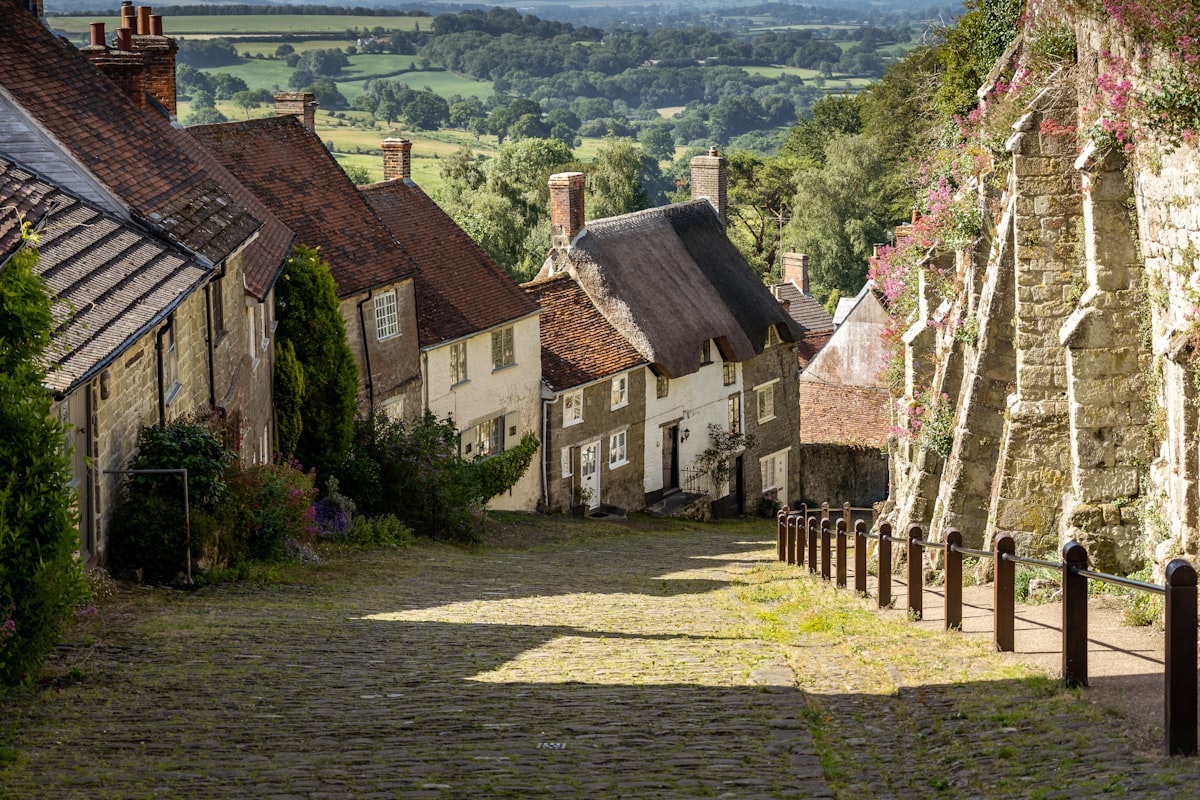
Konami's latest horror revival ditches the fog-choked American town entirely. It's a shift that lands you in St. Amelia, a windswept Scottish village circa the 1990s, and that geographic move comes with a complete tonal reset that strips away everything you thought you knew. You play as Simon. He's taller, broader, and more padded than Silent Hill f's Hinako, yet far less capable in a scrap, which is saying something given how fragile she often felt. His swings with a splintering plank of wood are desperate, panicked affairs, and even a basic enemy can outpace his block, so every encounter feels like a losing battle from the first frame. But he is, in the most affectionate sense possible, a total loser. And that's the point.
That fragility is the point. This is a survival horror game that wants you to hide, not fight.
Hiding and the Horror of the CRT TV
I cowered behind a garden fence in the Gamescom 2026 demo, inches from a cleaver-faced creature that would have made short work of Simon's rotten weapon. Stealth isn't optional. It's the only language this game speaks, and it's a brutal, unforgiving dialect. Simon can slip into cupboards in the style of Alien Isolation, and the environment is littered with cover that begs to be used, so every shadow and doorway feels like a lifeline. But scuttling between house and shop, watching for turned backs and escape windows, is evidently the preferred way to play. That's the whole game.
What makes this stealth so compelling is the gadget at its heart. Simon carries a portable CRT television, a period-appropriate tool that displays puzzle clues and tracks enemies via manually tuned frequencies. In an early section, trapped in near-total blackness, I tuned into a detected frequency and followed red arrows on the small screen to a lurking humanoid. He was right there, just outside my vision. Then another frequency appeared, revealing another silhouette. He had a friend. Then another. Then another.
The music swelled. I was surrounded, and I still couldn't see five feet in front of my face.
In that single minute, the device went from a magic monster detector to a herald of likely death. That's masterful horror design.
Why the 1990s Setting Matters
Director and writer Jon McKellen sees the era as crucial to the device's effectiveness. That's where the Nineties help. "I think that's where the Nineties [setting] helps," he explained, "because you're at the cusp of technology. It's pre-Internet, pre-smartphone, so you're not leaning into tech that does empower you." The tech is unreliable, slow, and limited. You can only see one enemy at a time on the screen, so if three are in the area, you're frantically cycling through frequencies mid-crisis. It feels tactile and clunky, deliberately so. It doesn't feel like a perfect tool to save you, and spending too long staring at the screen instead of the creatures themselves is a fast route to a slashing. So don't linger.
But that's the source of its brilliance. It's a far cry from the wallhack abilities modern games often hand you, where you can see everything through solid geometry and never have to worry about what lurks just off-screen. So the fiddliness forces you to choose between watching the monsters or watching the world. Both choices carry risk. And that's the real tension , you can't have it all at once, and every glance away from the action might be the one that costs you.
The Soothing Britishness of St. Amelia
Beyond the horror, the demo's other standout strength is the lived-in quality of its abandoned homes. The village is packed with details only a homegrown studio like Glasgow's Screen Burn Interactive could get right.
The interiors are where this really shines. Unique family photos on countertops. Drawers full of clattering cutlery. Still-ticking wall clocks. An elderly resident's bathroom cabinet stuffed with pill bottles. Different wallpapers in each room of a family home, peeling monuments to the value of placating children over interior design consistency.
"Whether that's fridge magnets or calendars or whatever they grew up with, they could kind of infuse [interiors] with that," said McKellen. "And even some of the drawings that are in the game, like on fridges, are by our kids."
Screen Burn's designers took one house each and decorated them as they pleased, even enlisting their own families for extra flourishes. That's the personal touch. The result is a world that feels genuinely inhabited, and it makes rifling through drawers for puzzle pieces a joy rather than a chore, so you're smiling even when you're hunting for a rusty key. But the calm of these spaces, before the bloodstains inevitably appear, offers a sense of solace that's rare in horror games. It's a quiet gift.
McKellen summed it up well. We've always said that the game should feel nostalgic to us if we grew up in the UK, and for everyone else it should feel moving, which is a tricky balance to strike but one they clearly managed to pull off. And he thinks they made that happen. It's a bold claim. But the proof is in the playing.
Weapons Are a Trap
If you're the type to hoard ammo in Resident Evil, you might be tempted to test Simon's combat. Don't. Weapons, assuming the word applies to glorified sticks, are even more brittle than the hoardable armaments in Silent Hill f. The most basic enemy attacks faster than Simon can raise a block. Fighting is actively discouraged, beyond even the usual survival horror tenet of saving resources.
That's fine. The slow pace and stronger sense of weakness feels more naturally conducive to unscripted horror. I spent a good chunk of the demo hiding behind that fence, sinking deeper into my seat whenever the jittery red silhouette began filling the tellybox. That tension, that sense of vulnerability, is what the best Silent Hill games are built on.
Silent Hill: Townfall is out on September 24th.
Frequently Asked Questions
What is the setting of Silent Hill: Townfall and how does it differ from previous games in the series?
The game is set in St. Amelia, a windswept Scottish village in the 1990s, which is a shift from the fog-choked American town typical of the series. This geographic move brings a complete tonal reset, stripping away expectations.
Why does the 1990s setting matter for the game's technology and gameplay?
The 1990s setting places the game pre-Internet and pre-smartphone, so technology does not empower the player. The portable CRT TV is clunky and limited, showing only one enemy at a time, which forces players to choose between watching monsters or the world, creating tension.
How does the game encourage stealth over combat?
Combat is discouraged because weapons are brittle and even basic enemies attack faster than the player can block. The game's design emphasizes hiding, such as slipping into cupboards and using cover, making stealth the only viable language.
Who are the developers and how did they incorporate authentic British details?
The game is developed by Glasgow's Screen Burn Interactive, a homegrown studio. They decorated each house with personal touches like unique family photos, fridge magnets, and even drawings by their own kids, ensuring the interiors feel genuinely inhabited and nostalgic for UK players.
When is Silent Hill: Townfall scheduled to be released?
Silent Hill: Townfall is out on September 24th. The article mentions this release date at the end, confirming the game's launch timeline.
💬 Comments (0)
No comments yet. Be the first!