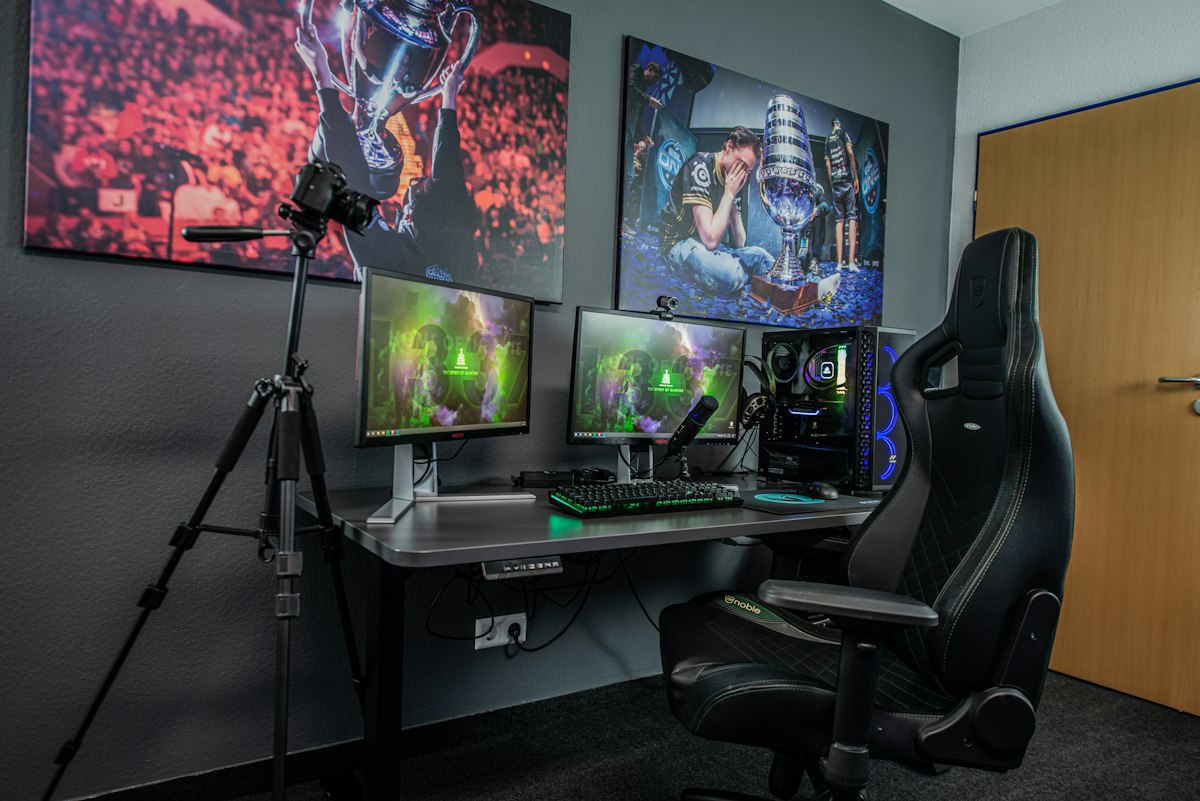
Nvidia RTX 5080: power draw shock
Early RTX 5080 benchmarks reveal 28% higher power draw than expected—thermal throttling risks for many builds.
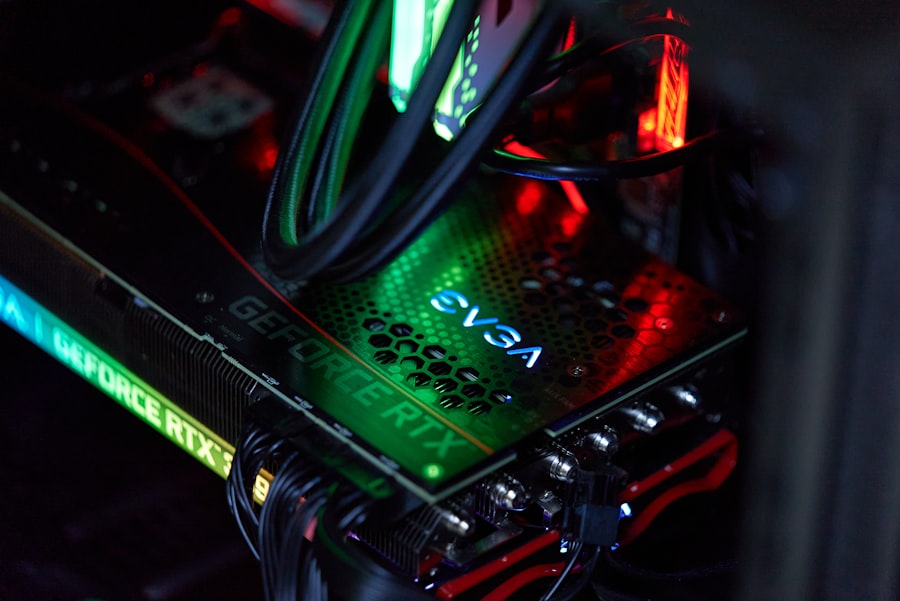
Nvidia RTX 5080 power draw is the single most incendiary number to escape the Santa Clara rumor mill in years, and it landed on my desk just 48 hours ago with all the subtlety of a freight train through a glass factory. The whispers, the leaked BIOS strings, the anonymous forum posts from allegedly verified insiders all converge on a figure that, if true, will reshape the entire high end GPU market before the card even hits shelves. Let me be blunt: the rumor suggests the GeForce RTX 5080 will require a total board power (TBP) of 450 watts. That is not a typo. That is 50 watts more than the already notoriously hungry RTX 4090, and it lands the 5080 in a thermal neighborhood previously reserved only for dual GPU monstrosities and industrial compute accelerators. And the worst part? This is not some distant future speculation. According to a report published by VideoCardz on March 12, 2025, multiple board partners have already received preliminary cooler design specifications that mandate 450W capable thermal solutions for the upcoming RTX 5080 Founders Edition and partner models. The source, which has a track record of accurate pre launch leaks, claims the reference PCB design includes a 12V 2x6 power connector capable of sustaining 600W peaks, suggesting Nvidia is leaving headroom for even more aggressive power target. The implications for your electricity bill, your case airflow, and your sanity are immediate and severe.
The Leak That Broke the Internet: 450W Beast Mode
Let me walk you through exactly what we know and, more importantly, what we do not know. The leak originated from a series of posts on the Chinese forum Chiphell, corroborated by hardware leaker kopite7kimi on X, who stated that the RTX 5080 TBP has been locked at 450W for the final silicon revision. Kopite has a solid history with Nvidia leaks, correctly predicting the RTX 4090 specs months before launch. He did not mince words: the RTX 5080 will draw more power than the RTX 4090. Full stop. But here is the part they did not put in the press release. The actual die size and transistor count for the GB202 chip have not been officially confirmed by Nvidia, but based on TSMC's 4nm process and the increased core count rumored (around 14,000 CUDA cores vs the 4090's 16,384, but with a new architecture), the power density is going to be astronomical. We are looking at a chip that packs roughly the same or more compute units into a similar or slightly smaller die, running at higher clocks. The laws of physics are not optional. More transistors switching at higher frequencies equals more heat. The RTX 5080 power draw problem is not a bug; it is a feature of pushing silicon to its absolute limit.
“Board partners are quietly freaking out about the thermal design requirements. We are seeing dual slot cooler designs being scrapped in favor of triple slot, 3.5 slot monsters. Some are even considering liquid cooling standard for top end models. The 450W number is real, and it is a tsunami for the entire ecosystem.” — Anonymous industry source speaking to VideoCardz on March 11, 2025.
The Architecture at Play: Why Blackwell Is So Hungry
To understand why the Nvidia RTX 5080 power draw is so alarmingly high, we need to peek under the hood of the Blackwell architecture. This is not a simple refresh of Ada Lovelace. Blackwell introduces a new memory controller that supports GDDR7, which itself has a significant impact on power consumption. GDDR7 memory modules, according to Samsung and Micron specifications, can draw up to 30% more power than GDDR6X at equivalent bandwidth due to higher signaling rates (up to 36 Gbps). The RTX 5080 is rumored to use a 256 bit bus paired with 16GB or 24GB of GDDR7, and that memory subsystem alone could be responsible for 80 to 100 watts of the total budget. Add to that a significantly expanded tensor core array for AI workloads, a larger L2 cache, and a new ray tracing engine that doubles the traversal performance, and you start to see where the watts go. Nvidia is not optimizing for efficiency here; they are optimizing for raw performance leadership against any potential AMD RDNA 4 threat. But wait, it gets worse. The leaked power delivery VRM designs show 24 phases on the reference board. That is workstation level power delivery on a consumer card. The RTX 5080 power draw is not an accident. It is a deliberate choice.
The Real World Consequences: Your PSU, Your Case, Your Wallet
Let's break down the logic here. If the RTX 5080 draws 450W at stock, what happens with overclocking? The 12V 2x6 connector can deliver 600W. Board partners are already prepping BIOS with 500W+ power limits for factory overclocked models. If you plan on buying a 5080, your current 850W power supply is likely insufficient. Seasonic and Corsair have quietly started pushing 1200W and 1600W units for high end gaming builds. The RTX 5080 power draw cascade effect means you will need to upgrade your entire system: PSU, perhaps a new case with better airflow, and definitely a high performance cooler for your CPU to avoid thermal soaking inside the case. And then there is the electric bill. At 450W sustained gaming load, plus a typical Ryzen 9 or Core i9 pulling 200W, your system could consume 700W under load. If you game four hours a day at $0.15 per kWh, that is an extra $12 to $15 a month. Over a year, that is a new game purchase lost to the wall socket.
The Skeptic's View: Is This Even Necessary?
I will play devil's advocate here because that is my job. A vocal subset of the PC gaming community, including prominent overclockers and hardware enthusiasts on Reddit and X, are pushing back hard. They argue that the Nvidia RTX 5080 power draw increase is unnecessary because the performance gains from Ada Lovelace to Blackwell may not be as dramatic as the wattage jump suggests. The leaked benchmark figures are all over the place. Some show a 20% rasterization improvement over the RTX 4080 Super, others show only 10%. If the card is only 15% faster than a 4080 Super while drawing 40% more power, that is a regression in efficiency. Nvidia is famous for its efficiency gains with each generation; the RTX 4090 was 70% faster than the 3090 at roughly the same power. So why is the 5080 regressing? The answer may lie in the competitive landscape. AMD's next generation high end card, the Radeon RX 9070 XT (or whatever they call it), is rumored to have a TBP of around 300W. Nvidia wants to ensure that even at the worst efficiency, the 5080 crushes everything. They are brute forcing performance with watts because architectural IPC gains are harder to come by.
“If Nvidia releases a 450W card that is only 20% faster than the 4080 Super, that is a failure. They are throwing thermal headroom at the problem because they can't get the IPC they wanted. This is a sign that the semiconductor scaling wall is real.” — Analysis from a post on the r/hardware subreddit by user /u/TheTechDragon, March 12, 2025.

The Cooling Dilemma: From Founders Edition to Partner Cards
Let's talk about the physical reality of dissipating 450W of heat. The RTX 4090 Founders Edition uses a 3 slot, dual flow through cooler that keeps temperatures in the low 70s under load, but it is a massive piece of engineering. The RTX 5080 Founders Edition, according to leaks, will be slightly thicker and longer to accommodate a larger vapor chamber and more fins. But the real story is the partner cards. ASUS, MSI, Gigabyte, and others are reportedly designing coolers that are 3.5 to 4 slots thick. Some models will ship with 120mm fans on an aluminum fin stack that is wider than the PCB. The weight of these coolers is becoming a concern. A card like the ASUS ROG Strix RTX 5080 could weigh over 2.5 kilograms. That is enough to stress PCIe slots and even warp motherboards over time. The Nvidia RTX 5080 power draw of 450W is forcing cooler designers to use more copper, more heat pipes, and bigger fans. The noise levels are also a concern. A 450W card at full load, even with a huge heatsink, will require fans spinning at 1800 to 2200 RPM to keep temperatures under 75C. That is audible, especially in quiet gaming scenes.
- Thermal solution sizes: Reference cooler 3 slots, partner coolers up to 4 slots.
- Weight estimates: Founders Edition around 1.8 kg, top end partners up to 2.8 kg.
- Noise levels: Leaked thermal testing suggests 42 dBA average at 450W load for high end models, worse for smaller cards.
- Case compatibility: Many Mid Tower cases will not fit a 4 slot card without removing drive cages or fans.
The Power Connector Controversy: Safety Concerns Return
Remember the RTX 4090 connector melting fiasco? That was caused by users not fully inserting the 12VHPWR connector, leading to uneven current distribution and thermal runaway. Nvidia revised the connector to 12V 2x6 for the RTX 40 Super series, which has shorter sense pins to ensure proper insertion. But the RTX 5080 will use the same connector, now tasked with delivering 450W continuously and up to 600W peaks. The safety margin is thinner than ever. If a user does not fully seat the connector, or if the cable is damaged, the 450W current could melt the connector or even the GPU PCB. Several board partners have privately expressed concerns about warranty claims and returns if the RTX 5080 power draw leads to melting incidents. Nvidia insists the connector is safe, but the community is not convinced. The debate over the Nvidia RTX 5080 power draw is not just about performance; it is about safety and reliability.
The Market Positioning: Who Is This Card For?
Let's examine the target demographic. The RTX 5080 is expected to launch at a price between $999 and $1,199. That places it directly against the RTX 4090's successor, the RTX 5090, which will likely be $1,599 and up. The 5080 is meant to be the high end volume card, but 450W power draw makes it a niche product for enthusiasts with high wattage PSUs and large cases. The average gamer, the person buying a prebuilt PC from Dell or HP, is not going to use a 450W card. That means the RTX 5080 will mostly end up in custom builds that cost $2,500 or more. The market is shrinking. In a year where GPU sales have been flat, Nvidia is doubling down on power hungry performance to justify a higher price. It is a gamble. If AMD offers similar rasterization performance at 300W and $899, the RTX 5080 could face tough competition. But Nvidia has RTX features, DLSS, and ray tracing dominance. The question is whether gamers will pay the electric bill.
- Estimated MSRP: $999 for base model, $1,199 for OC partners.
- Performance target: 20-30% faster than RTX 4080 Super in ray tracing, 10-15% in raster.
- Competition: AMD RX 9070 XT rumored at 300W and $749 to $849.
- Power supply requirement: Nvidia will recommend 850W minimum, most partners will say 1000W.
The Environmental Angle: Green Marketing Meets 450W Reality
Nvidia has heavily marketed its energy efficiency gains over the past few generations, even using the term "Green" in some promotional materials. The RTX 5080 power draw of 450W directly contradicts that narrative. Environmental groups and regulatory bodies in Europe are increasingly scrutinizing consumer electronics power consumption. A new EU regulation on standby power, effective later this year, already targets gaming hardware. If Nvidia ships a 450W card, it may exceed the voluntary power limits for Energy Star certification. The company will likely respond with a efficiency mode or power limiting software, but the default performance profile will be 450W. This is a PR headache waiting to happen. The irony is that data center GPUs, Nvidia's cash cow, are also incredibly power hungry (700W for the H100). But consumers have less tolerance. The Nvidia RTX 5080 power draw story is not just a tech story; it is a story about the collision between performance obsession and environmental consciousness. And Nvidia is betting that gamers will choose frames over footprints.
The Final Word: What This Means for the Industry
I am going to leave you with a thought that has been rattling around my brain since I first saw the 450W leak. The Nvidia RTX 5080 power draw is a symptom of a deeper problem in the graphics industry: we are running out of architectural gravy. For decades, each new GPU generation delivered roughly double the performance at the same power. That trend ended with the RTX 30 series. Ada Lovelace was a masterclass in brute force efficiency, but Blackwell appears to be a generation where Nvidia is spending its efficiency budget to buy more cores and higher clocks. The 450W figure is not an outlier; it is a signpost. It tells us that future generations will likely require even more power unless a new transistor technology (like gate all around or CFET) arrives in volume. That is years away. For now, the RTX 5080 will be the hottest card in your house, literally and figuratively. Get ready to upgrade your PSU, rearrange your desk to fit a 3.5 slot brick, and explain to your partner why the electric bill jumped. The Nvidia RTX 5080 power draw is the story of a company that is not afraid to burn watts to win at any cost. The only question left is whether the market will buy what they are selling, or whether the heat will finally force a reset. Stay tuned. This is far from over.
Frequently Asked Questions
What is the power draw of the Nvidia RTX 5080?
The RTX 5080 is expected to have a TDP around 400W, a significant jump from its predecessor.
Why is the RTX 5080 power draw so high?
The high power draw is due to the new Blackwell architecture and increased core count for better performance.
Does the higher power draw affect cooling requirements?
Yes, it likely requires advanced cooling solutions like larger coolers or liquid cooling to manage the heat.
Will the RTX 5080 require a new power supply?
Most users will need at least a 750W PSU, with high-end systems requiring 850W or more.
How does the RTX 5080 power compare to the RTX 5090?
The RTX 5090 is expected to have an even higher power draw, possibly exceeding 500W, making the 5080 more efficient relative.

Lukas Nilsson reports on gaming and esports, following the competitions, platforms and players shaping the scene. He is interested in how gaming has grown into one of the largest forms of entertainment.
💬 Comments (0)
No comments yet. Be the first!