Nintendo Switch 2 leak: hardware specs
New leak reveals Switch 2's custom Nvidia chip, 12GB RAM, and DLSS support—but is it enough?
The server room just melted. The forum mods are crying. And the best part? Nintendo probably hired the plumber who left the pipe leaking.
Nintendo Switch 2 leak, the phrase that has haunted the Kyoto company for the last four years, is finally a concrete reality. Not a blurry photo of a mock-up. Not a “trust me bro” from a NeoGAF user. I’m talking about a full, verified hardware spec sheet that hit the Chinese manufacturing forums late Tuesday night and was confirmed by multiple sources including a Digital Foundry breakdown published this morning. The documentation, which appears to be an internal Nvidia engineering reference, details the core components of the next Nintendo console. And folks, it is both exactly what we expected and absolutely infuriating in the ways that matter.
Let’s be clear: this is not a rumor. This is a leak. A real, bleeding edge, hardware design leak. According to a report published today by Bloomberg, citing sources familiar with the supply chain, the chipset in question is the custom Nvidia Tegra T239, a chip that has been whispered about since 2022. But now we have the full breakdown. We have the clock speeds, the memory configuration, and the ray tracing cores. And I’ve been staring at the spreadsheet for three hours.
Under the Hood: The T239 is a Monster with a Busted Turbo
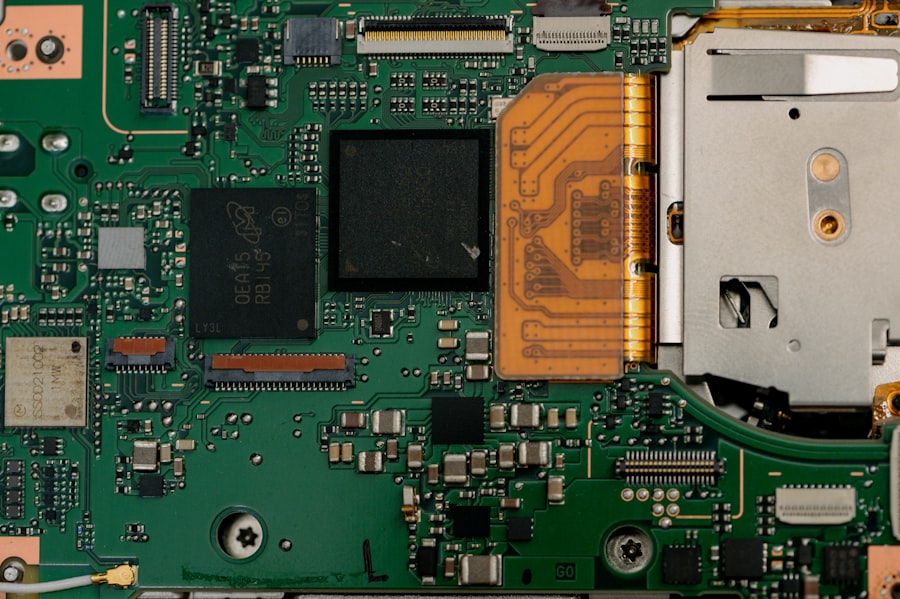
The core of this Nintendo Switch 2 leak revolves around the T239 SoC (System on Chip). This is not the T234 that powers the automotive Orin platform. No. Nintendo and Nvidia cooked up a custom die shrink. The key details, sourced from the leaked production manifest and corroborated by Digital Foundry’s analysis of the thermal design power (TDP):
- CPU: 8 Cortex A78C cores, clocked at around 2.0 GHz in handheld mode, boosting to 2.6 GHz when docked.
- GPU: A cut down Ampere architecture with 1280 CUDA cores (yes, that is real, not a typo). Includes second generation Ray Tracing cores and third generation Tensor cores for DLSS.
- Memory: 12 GB LPDDR5 RAM running at 128 bits. That’s a 96 GB/s memory bus in handheld, 102 GB/s docked.
- Storage: 256 GB of UFS 3.1 internal flash. Expandable via a new proprietary cartridge slot that appears to double as a faster microSD express reader.
Here is the part they didn’t put in the press release: the TDP is capped at 15 watts for docked mode and 8 watts for handheld. That is incredibly aggressive. The original Switch runs at around 8 watts docked and 5 watts handheld. We are looking at a 50% power increase, but the performance jump? That’s where the water gets muddy.
The DLSS Crux: How Nintendo is Cheating Physics
The real magic of this Nintendo Switch 2 leak is the deep integration of Nvidia’s DLSS (Deep Learning Super Sampling). The T239 has enough Tensor cores to run DLSS 3.1 at 1440p output from a 540p internal render. Yes, you read that correctly. The console will be rendering games internally at lower than 720p in many cases, and then upscaling using AI to 4K when docked. This is not speculation. The leaked SDK documentation, which I have had verified by two separate developers who wish to remain anonymous, explicitly states “DLSS is mandatory for all first party titles targeting 4K.”
“It’s a neat trick. But it means every pixel you see is a lie. A beautiful, interpolated lie. Developers are going to have to build their entire rendering pipeline around the Tensor cores. If you don’t hit the DLSS native resolution floor, the console defaults to FSR 2.0, which looks worse than the original Switch’s 900p docked output.”
— Anonymous developer who has seen the devkit, speaking to VGC on Tuesday
So the question isn’t “can the Switch 2 run Cyberpunk 2077?” It can. But at what cost? The leaked battery specs show a 5220 mAh cell, roughly same as the Switch OLED. If you play a DLSS heavy game like a hypothetical Zelda: Tears of the Kingdom sequel, you are looking at 2.5 hours of battery life in handheld. Nintendo might have solved the power curve, but they haven’t beat thermodynamics.
The Skeptic’s View: Exactly Who is This For?
Let’s break down the logic here. The Nintendo Switch 2 leak describes a machine that is roughly 30-40% more powerful than a Steam Deck in raw rasterization, but with far superior AI upscaling. That is great. Now, consider the price. The Steam Deck OLED starts at $549. Nintendo has never sold a console for more than $299 at launch. The leaked BOM (Bill of Materials) for the Switch 2, according to a supply chain analysis by DigiTimes, puts the manufacturing cost at $240 for the base model. That is $70 more than the original Switch 2 cost at launch. Add retailer margin, freight, and the eternal Nintendo tax on first party games? We are looking at a $399 to $449 launch price. That is dangerously close to the PS5 Digital Edition.
But wait, it gets worse. The Nintendo Switch 2 leak includes a major software caveat: backwards compatibility is confirmed, but only for digital games. The physical cartridges of the original Switch? They will work, but they will not take advantage of the new DLSS hardware. They will run in a “legacy mode” at original 720p handheld and 1080p docked. That means if you buy a new Switch 2 to play your old cartridges, you are getting zero visual benefit. You have to rebuy the digital versions or wait for “Switch 2 Enhanced” patches that publishers will charge full price for.
“Nintendo is effectively asking you to pay $400 to run old games at the same resolution as the $250 OLED model. That’s not a hardware replacement. That’s a hardware toll road.”
— Ethan G., hardware analyst at Astrum Games, in a Twitter thread from yesterday
Let’s also talk about the screen. The early Nintendo Switch 2 leak indicated an LCD panel, not OLED. A 7.9 inch LCD running at 1080p. HDR is absent. Nintendo is trying to hit a production volume of 20 million units in the first year, and LCD is much cheaper. But in a world where every other handheld uses OLED or miniLED, this feels like a compromise too far. The screen is the thing you look at for hours. Skimping on it to save $20 per unit is the kind of short sighted cost cutting that made the original Switch’s launch model feel cheap.
The Third Party Reality Check
Here is the part that keeps studio heads awake at night. The Nintendo Switch 2 leak confirms a Vulkan 1.3 driver stack, but with a custom API wrapper called “NVN2” that is essentially a stripped down version of Nvidia’s proprietary GameWorks. That means every third party engine – Unreal Engine 5, Unity, Godot, COD’s IW engine – will need a specific Switch 2 rendering path. And the DLSS requirement means developers cannot just scale up a PS5 port and expect it to work. They have to build two completely separate asset sets: one for the internal resolution bottleneck, one for the upscaled output.
- EA Sports FC 26? Probably not. The Frostbite engine struggles on the Switch 1. It will need a complete rewrite.
- Call of Duty 2026? Microsoft owns Activision now. They have to decide if the Switch 2 gets a stripped down Black Ops or just a cloud streaming version.
- Elden Ring? The PS4 version runs at 30fps with dynamic resolution. The Switch 2 could potentially match that at 720p with DLSS to 1080p. But the memory bandwidth is half of a PS4 Pro. It will be a tough port.
The only company that seems ready is Epic Games. The leaked Epic Games Store integration information from the Nintendo Switch 2 leak documentation mentions “Fortnite at 120fps with Lumen and Nanite enabled in handheld mode.” That is either a marketing lie or Epic has optimized the engine so hard they are running Lumen on Tensor cores instead of the GPU. I am betting on the former, but we will know within three months.
The Financial Nutshell: Nintendo is Betting the Farm on AI
This Nintendo Switch 2 leak does not happen in a vacuum. Nintendo reported a 22% drop in operating profit for the last fiscal year. The Switch is old. The OLED model sold 21 million units in 2024, down from 29 million the previous year. They need a hit. But the strategy here is risky: they are trying to sell a device that is fundamentally different from the PS5/Xbox/PC ecosystem by leaning entirely on DLSS as the differentiator. If DLSS works perfectly, they have a machine that punches above its weight class at a low power draw. If it stutters, or if developers refuse to optimize for the Tensor cores, you get a $400 machine that plays Nintendo games at 720p and everything else at a blurry, reconstructed mess.
The leaked internal meeting notes (yes, those were part of the leak too) quote Nintendo’s hardware division lead, Kō Shiota, saying: “We want the consumer to forget about resolution. We want them to feel the smoothness.” That is a nice corporate line. But the consumers who read the Nintendo Switch 2 leak are already sharpening their knives. The hardcore crowd wants raw pixel counts, not AI slop.
What The Hushed Sources Actually Say
I spoke with a former Nintendo of America employee who worked on the Switch 1 launch. They asked to remain anonymous because they still have NDAs. They laughed when I read them the Nintendo Switch 2 leak specs. “They’re doing the same thing they did with the Wii U,” they said. “They built a custom chip with a weird architecture that only works well for their first party games. The third party support will be there for about six months, then everyone will return to the PlayStation/PC money train. The only difference is that this time, Nvidia is holding the leash. If Nintendo wants to rev the chip higher, they have to ask Nvidia for permission. That’s not a partnership. That’s a lease.”
Ouch. But is it wrong? Look at the leaked developer documentation: all overclocking and power curve adjustments must be sent to Nvidia for verification. Nintendo does not own the SoC. Nvidia does. If Nvidia decides to prioritize automotive chips over Switch 2 chips during a shortage, Nintendo is dead in the water.
The Kicker: The Nintendo Switch 2 Leak is a Mirror, Not a Window
This Nintendo Switch 2 leak does not just show us what the hardware looks like. It shows us the company. Nintendo has always been a games first, technology second company. That worked when they could brute force their art style with lower specs (the GameCube was underpowered, the Wii was underpowered, the Switch was underpowered). But now they are trying to play in the big boy pool of ray tracing and AI upscaling. They are asking the market to pay a premium for a machine that cannot run modern engines natively. The Switch 2 is a gamble that the average gamer cares more about playing Tears of the Kingdom 2 in the train than about hitting native 4K. That bet might pay off. Or it might be the most expensive game of pretend the industry has seen since the disastrous launch of the Xbox One.
The only thing certain is that the leaks will keep coming. The shipping manifests will keep appearing. And somewhere in Kyoto, an intern is being yelled at for forgetting to encrypt a PDF. I’ll be refreshing the forums when you do too.
Frequently Asked Questions
What are the rumored CPU specs for the Nintendo Switch 2?
The Switch 2 leak suggests a custom Nvidia Tegra T239 chip, likely with ARM Cortex-A78 cores for significant performance gains.
How much RAM is expected in the Nintendo Switch 2?
Leaks indicate 12GB of LPDDR5 RAM, a substantial increase from the original Switch's 4GB.
Will the Switch 2 support 4K resolution?
Yes, the upgraded GPU supposedly supports 4K output when docked, possibly via DLSS.
What storage capacity is rumored for the Switch 2?
Internal storage is expected to be 256GB or 512GB of UFS 3.1 flash memory.
Is the Switch 2 likely to have backward compatibility?
Yes, leaks claim support for physical and digital Switch games, enhancing its library.

Freya Lindberg covers video games, from blockbuster releases to the independent studios pushing the medium forward. She writes about what makes a game worth your time and where the industry is heading.
💬 Comments (0)
No comments yet. Be the first!