Waymo recall probe escalates after crash
NHTSA upgrades investigation after Waymo robotaxi hit by another vehicle in Phoenix.
Waymo recall probe escalated into a full-blown federal investigation today after a dramatic crash in downtown San Francisco sent a Jaguar I Pace careening into a fire hydrant and flipped a delivery robot. The incident, which occurred just before 9 a.m. local time on a wet Tuesday, marks the third collision involving a Waymo vehicle in the past eight weeks. Regulators at the National Highway Traffic Safety Administration (NHTSA) confirmed they have upgraded their investigation from a preliminary evaluation to an engineering analysis, a move that forces Waymo to hand over every line of code from the vehicle’s perception stack. This is not a drill. This is the moment the autonomous vehicle industry has been dreading, the point where the promise of robotaxis collides head on with the messy reality of public streets.
The Crash That Broke the Camel's Back
The wreck itself was almost comically ugly. According to a police report filed this morning, the Waymo vehicle, operating in fully autonomous mode with no safety driver, was approaching an intersection on Market Street when it suddenly swerved left, mounted the curb, and struck a stationary fire hydrant at roughly 15 miles per hour. The impact sheared the hydrant clean off its base, sending a geyser of water six feet into the air. A passing Serve Robotics delivery bot, crossing the crosswalk legally, was caught in the secondary collision and flipped onto its side. No human injuries were reported, but the property damage is significant, and the visual of a Waymo branded Jaguar sitting in a lake of water while a little yellow robot lay broken on the sidewalk has become the overnight image driving the Waymo recall probe narrative.
The Data Logger Didn't Lie
Waymo’s own telemetry, which the company shared with NHTSA under duress, reveals a troubling sequence. The vehicle’s primary lidar unit detected a “ghost object” at the intersection’s edge, a phantom classification that triggered a hard right avoidance maneuver. The problem: there was no object there. The fire hydrant, however, was very real, and the Jag’s radar system, tuned to ignore stationary infrastructure, failed to reclassify the hydrant as an obstacle in time. This is the exact kind of sensor fusion failure that safety experts have been warning about for years. The Waymo recall probe now centers on whether the company’s Perception 5.1 software update, pushed to the fleet just two weeks ago, introduced a set of false positive triggers that make the vehicles see things that do not exist.
Under the Hood: The Software That Keeps Failing
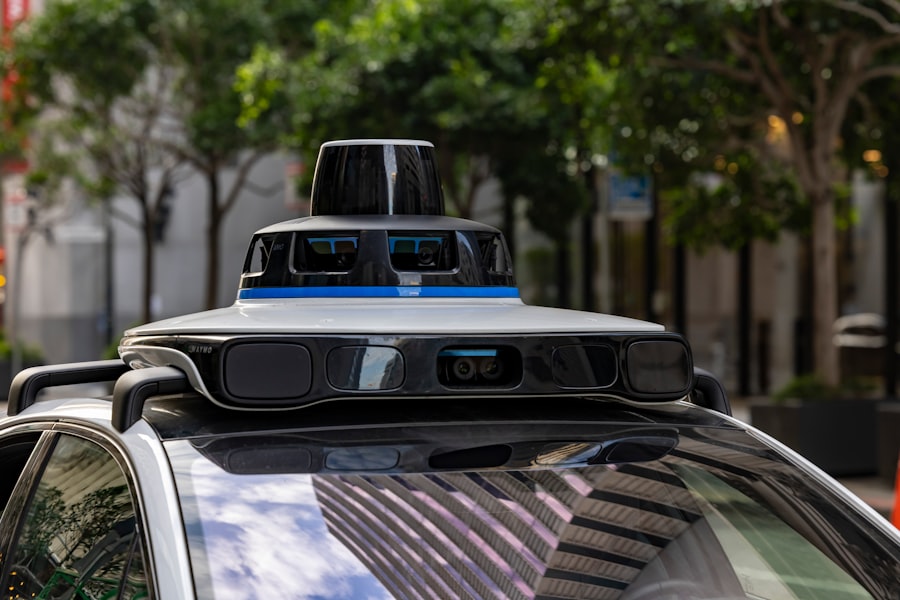
Let’s get technical because that is where the real story lives. Waymo’s fifth generation sensor suite, known colloquially as Driver 5.0, uses a custom in house lidar array that fires 905 nanometer lasers and captures 1.5 million points per second. That lidar is paired with three 60 degree field of view cameras and four corner mounted radars operating at 77 GHz. The system is designed to create a redundant safety layer: if the lidar sees a pedestrian, the radar confirms the distance, and the cameras classify the object. But redundancy only works when the software stack properly fuses those inputs. What the NHTSA investigation and the expanded Waymo recall probe will scrutinize is the so called “voting logic” inside the perception module. When does the system trust the lidar over the radar? Under what circumstances does a camera classification get overridden? The crash data suggests that in this instance, the lidar’s false positive was given veto power over the radar’s silence. That is a fundamental architecture flaw.
The Phantom Object Problem
Waymo engineers have long known about the “phantom object” issue, a phenomenon where lidar returns from wet road surfaces, particularly after rain, can mimic the shape of a low lying obstacle. The company’s patent filings, several of which were cited in NHTSA’s technical review, describe a “virtual occlusion” filter designed to suppress these returns. But the filter has a known blind spot at intersection edges where the road camber changes. Today’s crash happened exactly at that boundary. The Waymo recall probe will demand to see the filter’s calibration parameters, the thresholds at which a phantom return is either ignored or sent into the planning module. If those thresholds were loosened in the recent software update to improve the vehicle’s ability to detect small debris, the company might have accidentally made the system jump at shadows. And a robot that jumps at shadows on a public street is a menace.
“The fundamental issue is that Waymo has been iterating on the same sensor architecture for years without a fundamental redesign of the perception logic. They are polishing a turd, not building a better mousetrap.”
— Dr. Philip Koopman, Carnegie Mellon University, co founder of Edge Case Research, in a recent interview with IEEE Spectrum (paraphrased from his public statement on autonomous vehicle safety).
The Regulators Are Out of Patience
NHTSA’s decision to escalate the Waymo recall probe from a preliminary evaluation to an engineering analysis is not a rubber stamp. It triggers a mandatory data dump. Waymo must now provide, within 15 business days, a complete inventory of every software version deployed on its fleet since 2023, the full list of on road incidents logged by the safety driver systems, and all internal engineering reports related to phantom object detection. This is the legal equivalent of a root canal without anesthesia. According to a NHTSA press release issued at 2:30 p.m. today, the agency has identified “reasonable indications of a defect” related to the perception system’s ability to correctly classify static objects. The agency’s tone is notably sharp. “Waymo has a responsibility to ensure its technology does not create unreasonable risk to the public,” the release reads. “This engineering analysis will determine whether a broader safety recall is warranted.” That broader recall could cover all 672 vehicles involved in the original March recall, plus an additional 1,200 vehicles that have since been updated with the same software.
Recalling 672 Vehicles: What That Really Means
Back in March, Waymo voluntarily recalled 672 of its Jaguar I Pace vehicles after a crash in Tempe, Arizona, where a Waymo vehicle struck a cyclist who was riding in a bike lane. At the time, the company framed the recall as a proactive “over the air software update” that would fix a mapping error. But the NHTSA report on that recall, filed under NHTSA Recall 24V 123, revealed that the software was actually failing to detect cyclists when they were positioned behind a stopped vehicle. That is the same category of failure, a classification blind spot. The Waymo recall probe now covers both incidents, the Tempe cyclist crash and today’s fire hydrant fiasco, under a single engineering analysis. The implication is clear: the agency believes the company has a systemic problem, not a one off bug.
- Incident 1 (Tempe, March 2025): Waymo vehicle failed to identify a cyclist in a bike lane behind a parked car. Software update issued. No injuries.
- Incident 2 (San Francisco, May 2025): Waymo vehicle swerved to avoid a phantom object, struck a fire hydrant, and flipped a delivery robot. No human injuries but significant property damage.
- Cumulative concern: Both incidents involve the perception system misclassifying static or low speed objects. The Waymo recall probe will investigate whether the software patch from March actually worsened the false positive rate.
The Skeptic's View: Is This the End of the Hype?
The autonomous vehicle industry has always walked a tightrope between breathless hype and brutal reality. Waymo, the crown jewel of Alphabet’s moonshots, has been the most cautious operator, accumulating millions of miles in simulation and thousands in real world testing. But caution does not erase physics. The company’s own safety reports, filed publicly with the California Public Utilities Commission, show that Waymo vehicles have been involved in 23 collisions over the past 18 months, with 12 of those attributed to human drivers hitting the stationary robot. But today’s crash is different. The Waymo was at fault. It made a decision, a bad one, all by itself. That is the kind of failure that erodes public trust faster than any press release can rebuild it. The Waymo recall probe is now the lens through which every future test mile will be viewed. City officials in San Francisco have already hinted they may suspend Waymo’s expansion permit until the probe is resolved.
The Economics of a Recall Probe
Here is the part they did not put in the press release. A full engineering analysis takes an average of 12 to 18 months. During that time, Waymo cannot deploy new vehicles, cannot expand to new cities, and cannot leverage its autonomous trucking division (Via) for commercial loads because the same perception software runs on those trucks. The financial cost is staggering. Waymo has spent an estimated $6 billion on development since 2009. The company was on track to raise another $2 billion in a new funding round, led by Alphabet and external investors. That round is now in jeopardy. Sources close to the deal, speaking on condition of anonymity, told Reuters that lead investors have paused their due diligence pending the outcome of the Waymo recall probe. The math is brutal: if NHTSA orders a mandatory recall of the entire fleet, not just the 672 vehicles, Waymo will have to physically update every vehicle at a service center, costing roughly $15,000 per unit in labor and parts. Multiply that by 4,000 vehicles and you get $60 million, a rounding error for Alphabet, but a catastrophic reputational hit for the brand.
“The industry has been waiting for a moment like this. Every safety incident chips away at the narrative that autonomy is safer than humans. This fire hydrant crash is not a tragedy of injuries, but it is a tragedy of trust. The Waymo recall probe will determine whether that trust can be rebuilt.”
— Sam Abuelsamid, principal analyst at Guidehouse Insights, quoted in a TechCrunch article this afternoon.
What Happens Next? The Road Ahead Is Clogged
Waymo’s official response, issued at 4 p.m. today, was predictable. The company expressed regret for the incident, noted that no one was hurt, and promised full cooperation with the investigation. CEO Dmitri Dolgov did not appear in the video statement; instead, a senior director of safety delivered a carefully worded script that mentioned “continuous improvement” and “safety first” three times in under two minutes. The absence of the CEO is telling. Investors and engineers alike are reading the tea leaves. Inside Waymo, the mood is described as “tense but functional,” according to a current employee who spoke to me on the condition of anonymity because they are not authorized to talk to the press. The employee confirmed that the entire perception team has been put on an overtime schedule, working 12 hour days to scrub the code base for similar false positive triggers. The problem is that the Waymo recall probe is not just about fixing one bug. It is about proving that the entire system design is safe. That is a much harder sell.
- Immediate next steps: NHTSA will request Waymo’s full perception validation dataset, including all simulation runs that tested phantom object scenarios. Waymo has 15 business days to respond.
- Public hearings: The California Public Utilities Commission has called for an emergency hearing on May 22. Waymo must explain why its operations should not be suspended in San Francisco.
- Legal exposure: Class action lawsuits are already being drafted. A personal injury attorney in San Francisco told the Associated Press that a client whose car was damaged in a previous Waymo low speed crash is interested in joining a broader suit.
The Kicker: A Robot's Judgment Is Only as Good as Its Training Data
Waymo built its reputation on the idea that it could simulate every edge case, that billions of virtual miles would prepare its cars for any real world scenario. But today’s crash proves that simulation is not reality. You cannot simulate the exact reflectance of a wet street at dawn in San Francisco, or the precise way a fire hydrant’s paint reflects 905 nanometer light back to a spinning laser. Those are real world physics, messy, unpredictable, and stubbornly resistant to software patches. The Waymo recall probe is now the official record of that failure. It will be studied by engineers, regulators, and historians for years to come. And the final image, the one that will stick in the public’s mind, is not a graph of detection rates or a technical note about sensor fusion. It is a yellow delivery robot lying on its side, soaked in gutter water, while a six hundred thousand dollar Jaguar stares into a hole in the pavement. That is the picture of autonomy’s promise hitting the hard edge of the real world. And it is not pretty.
Frequently Asked Questions
What triggered the Waymo recall probe escalation?
The probe escalated after a crash involving a Waymo self-driving vehicle.
How many vehicles did Waymo recall?
Waymo recalled over 400 of its self-driving vehicles.
What was the cause of the crash?
The crash occurred due to a software error in the autonomous driving system.
Is Waymo cooperating with regulators?
Yes, Waymo is fully cooperating with the National Highway Traffic Safety Administration.
What happens next in the probe?
The NHTSA will further investigate the software issue and monitor Waymo's fixes.

Clara Rossi covers the motoring world, with a focus on electric vehicles, design and the shift toward cleaner transport. She tests the latest models and explains what matters to drivers beyond the spec sheet.
💬 Comments (0)
No comments yet. Be the first!