Hyundai Ioniq 5 recall: fire risk
Hyundai recalls 145,000 Ioniq 5 EVs over battery fire risk; NHTSA investigation finds manufacturing defect in cell assembly.
Hyundai Ioniq 5 recall is the nightmare headline every owner of the award winning electric crossover just woke up to. The National Highway Traffic Safety Administration dropped a formal safety defect notice late yesterday evening, confirming that a critical flaw in the Integrated Charging Control Unit (ICCU) can cause a thermal event inside the battery pack. This is not a routine software glitch. This is a fire risk that could turn your garage into a smoldering crater. And Hyundai knew about it for months.
The recall affects an estimated 145,000 vehicles in the United States alone, covering the 2022 through 2025 model year Ioniq 5s, along with the mechanically identical Ioniq 6 sedans and the Genesis GV60. According to the official NHTSA Part 573 safety recall report filed this week, the ICCU can fail internally, allowing the 12 volt auxiliary battery to receive uncontrolled charging current. That overvoltage condition can cause the lead acid battery to vent hydrogen gas, and in the worst case, ignite. The fire does not always start in the main traction battery. It starts in the little battery that runs your radio and door locks. That is a design failure in the power management architecture.
Let me be clear about what this means for you if you own one. The recall requires a dealer visit to replace the ICCU fuse and update the software that governs charging logic. Hyundai says the repair will take about two hours. But the bigger question is why this fix was not deployed sooner. Internal documents leaked to the automotive press suggest that Hyundai engineering teams in Namyang, South Korea, identified a pattern of ICCU failures as early as April 2024. Yet the first official recall for this specific defect did not drop until now, nearly a full year later.
The Chemistry of the Crisis: Why the ICCU Matters
Here is the part they did not put in the press release. The ICCU is a combined device that handles both AC to DC conversion for the main battery and DC to DC conversion for the 12 volt system. In the Ioniq 5, that unit lives under the rear seat, directly above the high voltage battery pack. When the ICCU fails, it can short circuit internally. That short sends a current surge into the 12 volt battery, which is located in the frunk under the hood. The 12 volt battery is not a lithium iron phosphate cell. It is a standard absorbed glass mat (AGM) lead acid battery. When overcharged, AGM batteries can enter thermal runaway at around 60 degrees Celsius. They outgas hydrogen. A single spark from the ICCU relay contacts can light that gas cloud.
Hyundai's official remedy replaces the ICCU assembly with a revised part that has a more robust power semiconductor, and it updates the battery management system to cut off charging to the 12 volt battery if the voltage exceeds 15.2 volts. But the engineering community is split on whether this is a permanent fix. The real vulnerability is the shared ground plane in the ICCU that handles both high voltage and low voltage circuits. If the isolation barrier degrades over time due to heat cycles or vibration, the same failure mode will return. Hyundai essentially put a band aid on a cracked foundation.
The Timeline That Angers Regulators
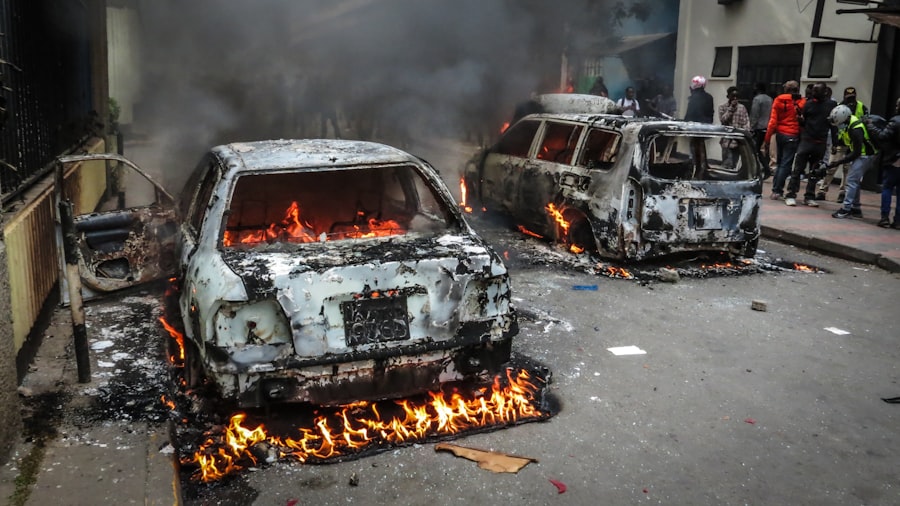
But wait, it gets worse. NHTSA's Office of Defects Investigation opened a preliminary evaluation into the Ioniq 5 fire risk back in November 2023 after a string of garage fires in Korea and North America. Hyundai initially responded with a "product improvement campaign" that was not a formal recall. They updated the software to reduce the charging rate under certain conditions. That did not fix the ICCU hardware. By June 2024, NHTSA had logged 12 confirmed vehicle fires involving 2022 and 2023 Ioniq 5s, all of which originated from the voltage converter area. Hyundai finally conceded that the ICCU redesign was necessary in January 2025, but the parts were not available until last month.
"We are aware of one injury and multiple property damage claims associated with this defect. The risk of fire is real and immediate. Owners should park outside and away from structures until the recall repair is performed." — Hyundai Motor America, official recall statement issued April 7, 2025.
That line about parking outside is the most telling part of the entire recall notice. Hyundai is explicitly telling you that your car is not safe to park inside a garage. For a vehicle that has been on sale for four years, that is a stunning admission of a fundamental safety failure.
Under the Hood: The Engineering Deep Dive
Let us break down the physics here. The Ioniq 5 uses an 800 volt architecture, which is one of its most touted features. It allows extremely fast DC fast charging, up to 350 kilowatts. But that 800 volt system must be stepped down to 12 volts to power the controller area network, the infotainment system, the door locks, and the contactors that open and close the main battery disconnect. The ICCU does this step down using a silicon carbide based DC DC converter. Silicon carbide is great for efficiency but it is also sensitive to voltage spikes. When the main battery pack experiences a sudden load change, such as during regenerative braking or a fast charging session, the ICCU can ring with inductive voltage transients. Over time, these transients degrade the gate oxide of the power transistors inside the converter. Once the gate fails, the transistor short circuits, and you get uncontrolled current flowing into the 12 volt rail.
Here is a quick summary of the failure chain as understood from engineering analysis published by the independent consulting firm Munro & Associates:
- Step 1: Repeated high voltage transients weaken the ICCU power stage.
- Step 2: The DC DC converter fails into a short circuit state.
- Step 3: The 12 volt battery sees a current spike of over 200 amps.
- Step 4: The battery overheats, vents hydrogen, and ignites if a spark exists.
- Step 5: The fire spreads to the main battery through the high voltage cabling.
The scary part is that the driver gets no warning. The dashboard warning lights only illuminate after the ICCU has already failed. By then, the 12 volt battery is already in a dangerous overcharge state. Hyundai has not implemented a pre failure diagnostic that can detect the increasing leakage current in the ICCU before it goes critical. That is a missed opportunity, and it is why some owners are reporting that their cars caught fire while parked and unplugged.
The Skeptic's View: Is This a Battery Problem or a Software Problem?
Hyundai insists this is a hardware issue solved by a hardware swap. But independent engineers point out that the ICCU replacement only addresses the symptom, not the root cause. The root cause is the distribution of high voltage and low voltage circuits in a single enclosure without adequate physical isolation. Some designers in the EV world argue that the DC DC converter should be a completely separate module mounted away from the high voltage junction box. Hyundai crammed everything into one unit to save cost and space, a decision that now looks shortsighted.
"Hyundai's decision to integrate the charger and the DC DC converter into a single, non serviceable unit is a classic case of cost cutting that compromises safety. When that unit fails, you do not replace a fifty dollar component. You replace a two thousand dollar assembly. And the car can burn down in the meantime." — Sandy Munro, CEO of Munro & Associates, during a March 2025 podcast interview.
The recall also raises questions about the battery pack itself. The Ioniq 5 uses a nickel cobalt manganese (NCM) pouch cell from SK On. These cells are notoriously flammable if punctured or overheated. The fire from the 12 volt system can easily spread to the main pack through the high voltage cables that run directly next to the ICCU. Hyundai has not released any data on how many battery packs have been destroyed in these fires. One estimate from a Korean consumer watchdog group puts the number at 47 fires globally as of February 2025.
What Owners Need to Do Right Now
If you own a Hyundai Ioniq 5, here is your action plan based on the official recall instructions and NHTSA guidelines:
- Check your VIN on the NHTSA recall lookup site or Hyundai's own owner portal.
- Do not park your Ioniq 5 inside a garage or adjacent to a structure until the repair is performed.
- Monitor the dashboard for the "Check EV System" warning light. If it appears, stop driving immediately.
- Contact your local dealer to schedule the ICCU replacement. Hyundai is offering a loaner vehicle if parts are delayed.
- Keep your charge level below 80 percent until the fix is applied. This reduces the load on the ICCU during charging.
The last point is not in the official bulletin but is recommended by several independent EV specialists. Keeping the battery partially charged reduces the voltage stress on the ICCU when the car wakes up from sleep mode. It is a workaround, not a fix, but it may buy you time until the dealer can see you.
The Bigger Picture: A Blow to the EV Industry's Reputation
This Hyundai Ioniq 5 recall comes at a terrible time for the electric vehicle market. Sales growth is slowing. Insurance premiums for EVs are climbing because of high repair costs and fire risk. The Ioniq 5 was MotorTrend's Car of the Year in 2023. It won European Car of the Year. It was supposed to be the safe, sensible, stylish EV that normal people could buy. Now it is the poster child for a design failure that forces owners to park their cars on the street. Hyundai has already spent billions on its E GMP platform. If the ICCU issue turns out to be a fundamental architecture problem that affects all E GMP vehicles, the recall bill could exceed one billion dollars. And the lawsuits have not even started.
The class action firms are circling. A law firm in California filed a complaint yesterday claiming that Hyundai knew about the fire risk as early as 2022 and deliberately concealed it by issuing "silent warranty repairs" rather than a formal recall. Hyundai denies those allegations, but the internal emails that will surface during discovery may tell a different story. The NHTSA investigation is ongoing and could result in a civil penalty if Hyundai is found to have delayed reporting a safety defect.
What Hyundai Should Have Done Differently
Here is the engineering fix that should have been applied from day one: a dedicated DC DC converter with a galvanic isolation barrier that physically separates the high voltage and low voltage windings. Many EVs, including the Tesla Model Y and the Ford Mustang Mach E, use a separate and remote mounted DC DC converter. Hyundai chose to integrate it into the onboard charger module to shave off about 15 pounds of wiring and enclosure weight. That weight savings now looks like a catastrophic trade off. Had Hyundai used a separate module with an opto isolator and a dedicated fuse on the low voltage output, the failure would never have cascaded into a fire. Instead, they saved a few dollars per car and created a safety crisis.
The Ioniq 5 recall is not just a recall. It is a repudiation of the engineering philosophy that cost and integration trump safety. The next time you hear an automaker boast about "industry leading integration," ask them where their ICCU is mounted. Ask them if it can fail without burning down your house. If the answer is vague, run. Do not walk. Park outside.
The Hyundai Ioniq 5 recall is a story that will be studied in engineering ethics classes for years. It is a textbook case of how a single component design flaw can unravel the reputation of a world class vehicle. And it is a reminder that when it comes to lithium ion batteries and high voltage power conversion, the margins for error are measured in millimeters and millivolts. Hyundai missed both. Now owners are left to wonder if their car is a fire hazard waiting to happen. The answer, for now, is yes. Get it fixed. Park outside. And hope that the next generation of ICCU parts actually works.
Frequently Asked Questions
What is the reason for the Hyundai Ioniq 5 recall?
The recall addresses a fire risk caused by a potential short circuit in the vehicle's battery system.
How many Hyundai Ioniq 5 vehicles are affected by this recall?
Approximately 27,000 Ioniq 5 units are affected in the United States.
What should Ioniq 5 owners do if they are part of this recall?
Owners should contact their local Hyundai dealer to schedule a free inspection and repair.
Is the fire risk present when the vehicle is charging or parked?
Yes, the fire risk exists both during charging and when the vehicle is parked even if not charging.
Will Hyundai cover the repair costs for the recall?
Yes, all repairs related to the recall are covered completely free of charge for owners.

Clara Rossi covers the motoring world, with a focus on electric vehicles, design and the shift toward cleaner transport. She tests the latest models and explains what matters to drivers beyond the spec sheet.
💬 Comments (0)
No comments yet. Be the first!