NHTSA Ford brake probe: 1.7M vehicles at risk
NHTSA Ford brake probe: a cheap master cylinder flaw jeopardizes millions of Ford drivers.
The Brake Line That Breaks Without Warning
NHTSA Ford brake probe is the reason a lot of engineers are losing sleep this week, and for good reason. The National Highway Traffic Safety Administration dropped a bomb on Monday when it officially opened a Preliminary Evaluation into roughly 1.7 million Ford vehicles over reports that a rear brake hose can rupture without any previous warning signs. We are not talking about a slow leak or a soft pedal that gives you time to pull over. We are talking about a sudden, complete loss of brake fluid that turns your brake pedal into a useless floor ornament. The investigation, designated PE24020, covers the 2021 through 2024 model years of the Ford F-150, the Ford Mustang, and the Lincoln Nautilus. According to NHTSA documents released today, the agency has already received 126 separate complaints and 81 warranty claims all pointing to the same failure mode: a rear brake hose that splits open, dumps fluid, and leaves the driver with nothing. Here is the part they did not put in the press release: this is the kind of defect that gets people killed not because the brakes fade slowly over miles, but because they disappear in an instant when you need them most. The typical complaint describes a driver backing out of a driveway or slowing down for a red light when the pedal suddenly sinks to the floor with zero resistance. No dash light. No warning chime. Just the sickening feeling of a car that is not going to stop.Under the Hood: The Physics of a Ruptured Hose
To understand why this NHTSA Ford brake probe exists, you have to understand what a brake hose actually does and why it can fail so catastrophically. Brake hoses are the flexible rubber reinforced lines that connect the hard steel brake lines on the chassis to the brake calipers on the wheels. They have to bend and flex as the suspension moves up and down over bumps. They are subjected to extreme heat from the brakes themselves, road salt from winter driving, and high pressure every time you hit the pedal. A typical braking event generates somewhere between 800 and 1200 psi of hydraulic pressure inside those hoses. Now think about what happens when the inner rubber layer of that hose develops a pinhole or a crack. The pressurized fluid forces its way through the reinforcement layer, creates a bulge, and then the whole thing bursts open like a balloon that has been overinflated. The result is a sudden dump of brake fluid onto the road, a complete loss of hydraulic pressure at that wheel, and in a dual circuit braking system, a significant reduction in overall stopping power.The Difference Between a Brake Line and a Brake Hose
A lot of people confuse these two components, but the distinction matters deeply in this NHTSA Ford brake probe. Hard steel brake lines are rigid and run along the frame of the vehicle. They rarely fail unless they rust through after years of exposure. Brake hoses are flexible and are the weakest link in the entire hydraulic system. They are made of synthetic rubber, reinforced with braided fabric or steel mesh, and they are expected to survive heat cycling, chemical exposure, and mechanical flexing for the life of the vehicle. When a hose fails, it is almost always because the inner tube has degraded to the point where it can no longer hold pressure. The question at the center of this probe is whether Ford used a hose design or material that simply cannot handle the real world conditions that these trucks and cars face.The Role of Heat, Pressure, and Corrosion
Let us break down the physics here because it explains why the complaints are so alarming. The rear brake hoses on the F-150, Mustang, and Nautilus are located very close to the exhaust system and the rear differential. That area gets hot, especially during towing or spirited driving. The rubber compound in the hose can harden and crack over time due to thermal aging. Once the inner liner cracks, brake fluid under high pressure seeps into the reinforcement layer. The reinforcement layer is not designed to hold fluid, it is designed to provide strength. Fluid trapped between the inner tube and the outer cover causes the hose to balloon outward. That ballooning is called a blister. When the blister bursts, the hose is gone and so is your brake fluid. The corrosion factor makes it worse. Road salt from winter driving can attack the end fittings where the hose connects to the hard line. Those fittings can corrode internally, creating sharp edges that cut into the rubber hose from the outside. It is a double attack: heat and chemical degradation from the inside, mechanical cutting from the outside.- Primary failure mode: Internal rubber degradation leads to blistering and rupture under hydraulic pressure.
- Secondary failure mode: Corrosion at the end fittings cuts into the hose reinforcement layer.
- Result: Total loss of brake fluid at the affected wheel within seconds of rupture.
- Warning signs: None reported in the majority of NHTSA complaints. Drivers reported a sudden pedal drop with no prior symptoms.
The Numbers Are Ugly: 126 Complaints and Counting
The raw data from the NHTSA Ford brake probe tells a story that Ford cannot easily dismiss. The Office of Defects Investigation received 126 unique complaints of rear brake hose failure across the three affected models. These are not people reporting a minor seepage or a damp fitting. These are drivers who experienced a sudden loss of braking capability while the vehicle was in motion. The 81 warranty claims add another layer of evidence because warranty claims come from dealership technicians who physically inspected the failed parts. Those technicians are trained to spot the difference between a manufacturing defect and customer abuse. A warranty claim is a professional opinion that something broke because it was poorly made, not because someone kicked it. The models in question cover a massive slice of Ford's lineup, and that is what makes this probe so significant for the company.The Models in the Crosshairs
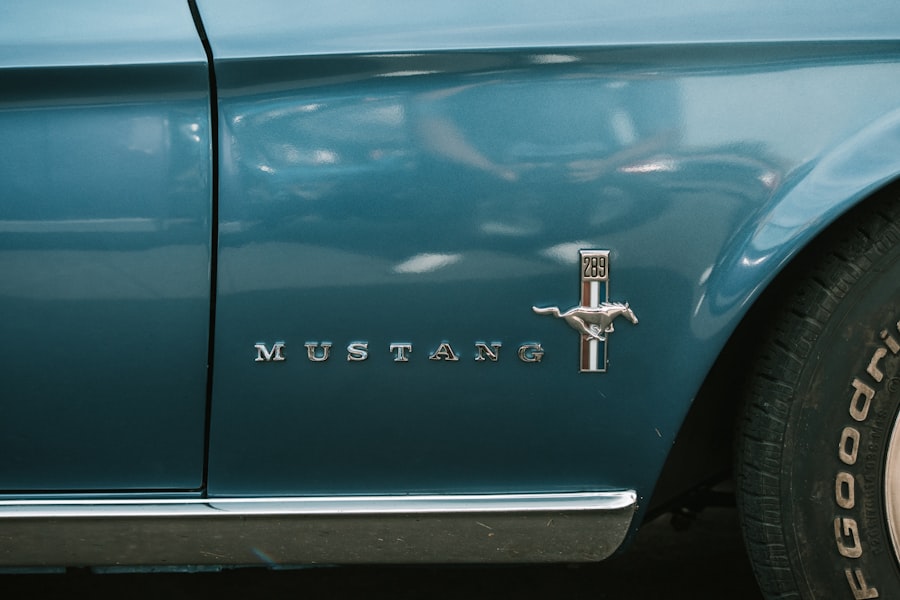
The NHTSA Ford brake probe currently covers three distinct nameplates, but the volume is dominated by one vehicle. The Ford F-150 accounts for the vast majority of the 1.7 million vehicles, roughly 1.5 million units. The Ford Mustang adds another 200,000 or so, and the Lincoln Nautilus adds the remaining 50,000. That means Ford's single most profitable vehicle, the F-150, is at the center of the investigation. An F-150 recall for brake hoses would be a logistical nightmare and a financial hit that would ripple through the entire company. The Mustang and Nautilus share some of the same rear brake hose architecture, which raises questions about whether Ford used a common part across multiple platforms without adequate validation testing for all of them.The Warranty Claims Tell a Story
Here is a detail from the NHTSA documents that deserves attention. The 81 warranty claims all describe the same thing: a rear brake hose that has ruptured and caused a loss of brake fluid. The claims are spread across the 2021 through 2024 model years, which suggests this is not a single bad batch of hoses from one production run. It is a recurring issue that spans multiple years of manufacturing. That pattern is exactly the kind of thing that triggers a recall. If it were a batch issue, the failure rate would cluster around a specific build date range. Instead, the failures are spread across four model years, which points to a design or material specification problem that persisted over time. According to a safety report published today by the NHTSA, the agency has opened this preliminary evaluation to assess the scope, frequency, and potential safety related consequences of the alleged defect. That is regulatory speak for: we think something is very wrong here and we are going to find out if Ford knew about it."The Office of Defects Investigation has received 126 complaints and 81 warranty claims alleging rear brake hose failures in the subject vehicles. ODI has opened this Preliminary Evaluation to assess the scope, frequency, and potential safety-related consequences of the alleged defect." - NHTSA Document PE24020, released this week.
The Skeptic's View: Is This a Real Defect or a Statistical Blip?
Every time a big investigation like this NHTSA Ford brake probe drops, there are voices that push back and say the numbers are not that alarming in the context of millions of vehicles on the road. They have a point, sort of. One hundred and twenty six complaints out of 1.7 million vehicles represents a complaint rate of roughly 0.007 percent. That is a very small number. But there is a reason the NHTSA does not wait for a 10 percent failure rate before opening a probe. Brake failures are not like check engine lights. A brake failure can kill you before you even know it happened. The threshold for action on brake related defects is much lower than for a squeaky seat or a faulty radio. The engineering community is watching this closely because brake hose failures have a history of being underestimated until someone dies.Ford's Response So Far
Ford has not issued a recall yet, but the company has acknowledged the investigation. In a statement to Reuters on Tuesday, a Ford spokesperson said the company is cooperating fully with the NHTSA and conducting its own internal review of the rear brake hose issue. That is the standard corporate response, and it means nothing by itself. What matters is what Ford knew and when they knew it. The warranty claims date back to 2021, which means Ford has been looking at these failed hoses for at least three years. If the company identified a design flaw but decided the failure rate was too low to justify a recall, that decision will come under intense scrutiny if the NHTSA finds evidence of a safety defect. The skeptic view is that Ford is hoping the number of complaints stays low enough that the NHTSA closes the probe without action. The non skeptic view is that 126 people who lost their brakes while driving is 126 too many."Ford is cooperating with the National Highway Traffic Safety Administration on its investigation and is conducting its own review of the issue." - Ford spokesperson statement to Reuters, this week.
What History Teaches Us About Brake Defects
The automotive industry has a long and ugly track record of brake hose failures that start small and end in tragedy. In the early 2000s, a similar issue with brake hose ruptures on certain light trucks led to a recall of over 400,000 vehicles after several accidents were reported. The pattern is always the same: a few complaints trickle in, the manufacturer dismisses them as isolated incidents, and then someone gets hurt. The NHTSA Ford brake probe is still in its early stages, but the agency has the authority to demand detailed engineering data from Ford, including design specifications, material test results, and production quality records. If those records show that Ford knew the hoses had a limited service life but did not warn customers, the consequences could include fines, mandatory recalls, and civil lawsuits.The Human Cost: What a Total Brake Loss Looks Like on the Road
Let us step away from the engineering data for a minute and talk about what it actually feels like to lose your brakes on a public road. Imagine you are driving a 2022 Ford F-150 down a suburban street. You are approaching a four way intersection and you need to stop because a minivan with a family inside is crossing in front of you. You push the brake pedal and it sinks to the floor with no resistance. The pedal feels like a dead weight. Your truck does not slow down. You pump the pedal again and nothing happens. You have about three seconds to decide what to do. Do you yank the parking brake which is electronic on most modern trucks and may not work effectively at speed? Do you downshift the transmission and hope engine braking is enough? Do you steer into the grass or a ditch? That is the reality described in several of the NHTSA complaints. One owner reported that the rear brake hose on his 2023 Mustang ruptured while he was parking. The pedal went to the floor and the car rolled into a concrete barrier. Another owner said the hose failed on his F-150 while he was towing a trailer on the highway. He lost all rear braking and had to rely on the front brakes alone to stop a 7000 pound truck with a trailer pushing from behind.- Complaint from a 2022 F-150 owner in Texas: Hose ruptured at a stop sign. Pedal went to the floor. Truck rolled into the road before engine braking stopped it.
- Complaint from a 2023 Mustang owner in Florida: Rear brake hose burst while driving in heavy traffic. Driver used parking brake to stop. No warning lights before failure.
- Complaint from a 2021 Lincoln Nautilus owner in New York: Hose failed in a parking lot. Brake fluid leaked out completely. Vehicle had to be towed. Dealer cited a ruptured rear hose.
What Happens Next: The Long Road to a Recall
The NHTSA Ford brake probe is currently in Phase One, which is the Preliminary Evaluation. This phase can last anywhere from a few months to over a year. During this time, the NHTSA will demand that Ford provide all relevant engineering data, including design drawings, material certifications, quality control records, and any internal communications about hose failures. The agency will also collect additional complaints from the public and may request that Ford conduct field tests to replicate the failure. If the NHTSA determines that a safety defect exists, the probe moves to Phase Two, which is an Engineering Analysis. That is the point where a recall becomes almost inevitable. Ford can still choose to issue a voluntary recall at any time during the process, and that is often the smart move because it avoids the legal fallout of a forced recall. But voluntary recalls are expensive, and Ford is already dealing with multiple other safety investigations, including one related to transmission issues and another involving engine fires. The company may decide to fight this one, especially if the failure rate stays low enough to argue that it is not a systemic problem. Here is the question that hangs over this entire investigation: is a 0.007 percent failure rate acceptable for a component that can cause a total loss of braking? The answer depends on who you ask. A shareholder might say yes, that is statistically insignificant. A regulator might say no, because the consequence of failure is catastrophic. A driver who has felt that pedal go dead will tell you there is no acceptable rate for brake failure. The NHTSA Ford brake probe is going to force that conversation in public, and that is exactly what it should do. The ending here is not a summary of the article, it is a warning. If you own a 2021 through 2024 Ford F-150, Mustang, or Lincoln Nautilus, the next time you press the brake pedal and it feels normal, remember that 126 people thought theirs felt normal too, right up until it did not. The investigation is open, the data is coming, and the only question left is how many more complaints it will take before Ford does something about it.Frequently Asked Questions
What did the NHTSA investigate regarding Ford vehicles?
NHTSA is investigating approximately 1.7 million Ford vehicles over reports of unexpected brake failures, which may be linked to rear brake hose ruptures.
Which Ford models are affected by the probe?
The investigation covers certain model years of Ford Edge, Ford Explorer, and Lincoln Nautilus vehicles, among others.
What is the main cause of the brake issue in these Ford vehicles?
The problem stems from rear brake hoses that can rupture, causing a loss of braking power or a sudden unintended stop.
How many total vehicles are potentially at risk in this NHTSA investigation?
The probe covers an estimated 1.7 million Ford and Lincoln vehicles in the U.S.
What actions should concerned Ford owners take?
Owners should contact Ford Customer Service or visit a dealership for inspection and potential repairs, free of charge, as part of a safety recall.

Sebastian Wolf reports on the car industry, from performance machines to the engineering that powers them. He is fascinated by how manufacturers balance tradition with the rapid move to electrification.
💬 Comments (0)
No comments yet. Be the first!