Xfce 4.22 and Old Linux Desktops Head to Wayland
Classic desktops are moving to Wayland. With Xfce 4.22 scheduled for 2027 and MATE gaining new options, options are expanding.

Change is coming. As traditional Linux desktops plot their roadmap toward Wayland, Xfce 4.22 is stepping into the spotlight if you manage Linux infrastructure or rely on lean workstations. The release engineering roadmap for Xfce 4.22 is set. But you'll need some patience. It's a project that follows a slow, steady schedule, often taking two years between stable releases.
Wayland support is changing. It's progressing step by step after the team laid the initial groundwork in version 4.20, while they are actively developing their own dedicated display server and window manager setup to replace legacy systems. So here is what you need to know about the timeline, the tech, and the alternative routes for old-school Linux environments. They're moving fast.
The Xfce 4.22 Roadmap and Development Timeline
Planning your software upgrades? If so, don't forget to mark your calendar for late 2026, because the roadmap schedules the first prerelease and feature freeze for Xfce 4.22 on December 15, 2026. And a second prerelease follows quickly on January 15, 2027.
A third prerelease remains optional. Although a launch in February or March 2027 might be plausible, the project hasn't set an official date for the final release, and the developers aren't making promises. But they're taking their time to get things right.
Xfce 4.22 expands Wayland support. The team is building a new compositor, xfwl4, which serves as a clear nod to xfwm4, the current X11 window manager that users have relied on for years within this desktop environment. But it's not ready. The development roadmap for xfwl4 doesn't promise complete feature parity with X11 out of the gate, so users shouldn't expect an immediate transition.
AI Assistance in Compositor Development
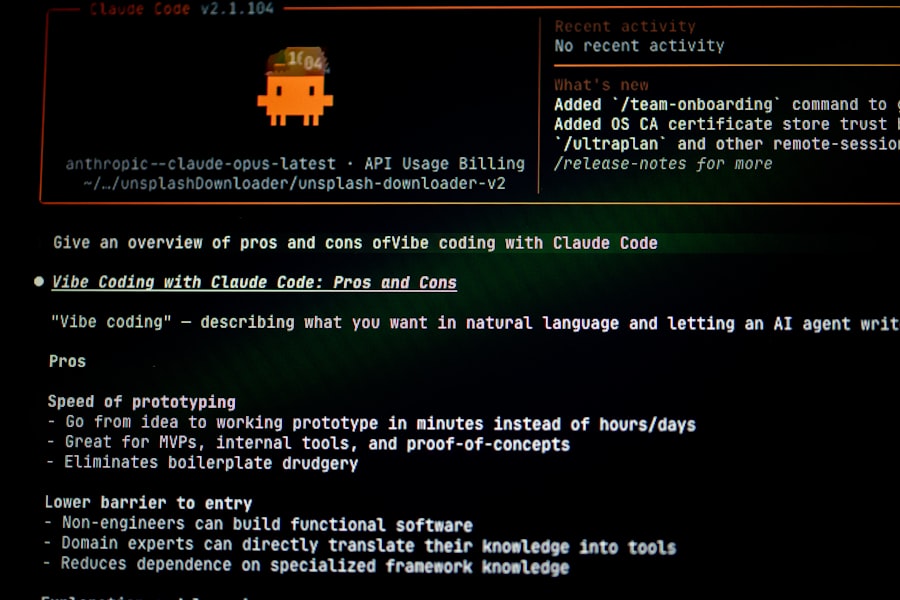
Brian Tarricone leads the work on the xfwl4 compositor. He's contributed since 2004. So he brings a quarter century of professional software experience to the table, having shared details regarding his use of generative-AI coding tools like Claude while building the compositor.
"So yes, I use Claude quite a bit while developing xfwl4. I don't vibe-code, ever, and I probably use the LLM to generate less code than most people do. After all, building things with code is my hobby and passion (and I'm lucky I got to do it professionally for a quarter century), and driving an LLM is kinda boring."
This approach keeps human expertise at the center of the build. IT leads face a scheduling nightmare, as release timelines between Xfce stable builds and distributions like Ubuntu LTS don't line up neatly. Stick with Xubuntu 26.04. It's a choice that removes any immediate requirement to shift to the new compositor. So, you can also simply keep running X11, though doing so long-term might mean moving to a distribution that maintains X11 support, perhaps via XLibre.
Alternative Compositors and Window Managers
You don't have to wait. So if you're set to run lightweight desktops on Wayland, independent efforts and alternative compositors offer choices today rather than forcing you toward a single official path.
- xfwm4-gl: An independent fork of xfwm4 in active development. It uses OpenGL directly for window compositing, replacing the old Xrender extension.
- Labwc: A flexible, X11-like compositor used in openSUSE Leap 16.0 to run Xfce on Wayland, replacing Xfwm4. It originated in PiOS 5.2.
- Wayfire: A 3D compositing window manager inspired by Compiz, complete with wobbly window effects. It serves as an option for running MATE on Wayland.
- Polo: A new, MATE-specific compositor designed by Kerem Soke as a direct replacement for Marco, MATE's fork of the GNOME Metacity window manager.
Different setups meet different needs. OpenSUSE Leap 16.0 ran Xfce over labwc with minimal friction, though it missed a few window management shortcuts that many users might eventually find useful. But X11 scaling often causes fuzzy visuals on different displays, whereas Wayland handles independent dots-per-inch ratios natively across multiple screens, which makes it a far better choice for complex setups. It's better.
MATE Desktop Expands Its Wayland Ecosystem
MATE users are getting fresh routes to modern display protocols right now. Scott Sturrock recently introduced the MATE Wayland Desktop project, an independent distribution combining an Ubuntu 26.04 base, MATE 1.29, and version 0.9 of the labwc compositor. While the main labwc release line jumped to version 0.20.3 to align with wlroots, the 0.9 series remains an active maintenance branch.
MATE traces its roots back to GNOME 2.32. The traditional GNOME 2 environment relied on the Metacity window manager, which lives on in GNOME Flashback at version 3.56.0. MATE's own fork of Metacity is named Marco.
Dedicated Compositors Take Shape
Replacing Marco requires careful handling of user configurations. Kerem Soke built the Polo compositor to feel entirely familiar to existing users. It reaches version 1.0.2 with clear operational goals.
- Picks up existing Marco keystrokes, configuration files, and Alt-Tab behaviors.
- Includes visual features like wobbly windows alongside a dedicated polo-tweaks utility.
- Maintains a structured project roadmap to improve deep integration between MATE and Wayland.
MATE Wayland Desktop is already packaged. It's ready for deployment. And if Polo proves successful, it's likely to land in the main Ubuntu repositories, which could potentially bring these separate development tracks together under one roof.
The Heritage of Modern Linux Desktops
It’s essential to understand where these desktops come from to explain why their transition matters. Xfce is about one year older than KDE. It wasn't open source. So, because early Xfce didn't start with an open source license, KDE remains the oldest Linux desktop environment that has been open source from its very first day of existence.
So they weren't the first. Proprietary commercial desktops like IXI X.desktop existed earlier on commercial Unix systems and were later ported to Linux, but those early commercial platforms vanished before the modern free and open-source software era took hold.
Classic environments are resilient today. And they're proving it. Whether you rely on upcoming releases like Xfce 4.22 or test MATE on labwc, old-school Linux desktops are building secure, flexible bridges to modern display servers.
Frequently Asked Questions
What is the expected release timeline for Xfce 4.22?
The roadmap schedules the first prerelease and feature freeze for Xfce 4.22 on December 15, 2026. A second prerelease is planned for January 15, 2027, though no official final launch date has been set.
Who is responsible for the development of the new xfwl4 compositor?
Brian Tarricone leads the development of the xfwl4 compositor. He brings 25 years of professional software experience to the project and has contributed to Xfce since 2004.
Why are developers building the new xfwl4 compositor for Xfce?
The team is creating xfwl4 to serve as a new compositor that replaces legacy X11 systems with Wayland support. It is designed as a nod to the current xfwm4 window manager, though it will not offer complete feature parity with X11 immediately.
How do Wayland-based display servers compare to X11 regarding multi-monitor setups?
X11 scaling often causes fuzzy visuals when used on different displays. In contrast, Wayland handles independent dots-per-inch ratios natively across multiple screens, making it a superior choice for complex setups.
What alternative options exist for users who want to run lightweight desktops on Wayland before Xfce 4.22 is released?
Users can utilize independent projects such as xfwm4-gl, which uses OpenGL directly for window compositing. Additionally, the labwc compositor is used by openSUSE Leap 16.0 to run Xfce on Wayland, while Wayfire serves as an option for the MATE desktop.

Julian Sterling reports on enterprise IT, data infrastructure and the vendors that keep modern business running. He has a long-standing interest in how organisations modernise their systems without breaking what already works.
💬 Comments (0)
No comments yet. Be the first!