Nvidia Blackwell export controls bypassed by Chinese AI labs
A report by ex-OpenAI engineer Will DePue provides forensic evidence Chinese AI labs are bypassing Nvidia Blackwell export controls, using restricted GPUs.
Nvidia Blackwell controls aren't working. Major Chinese AI research labs have reportedly discovered methods to utilize restricted Nvidia chips, thereby allowing them to train advanced models, even though stringent US export restrictions are in place. This troubling revelation comes from a forensic report. It's by Will DePue. He's a former OpenAI engineer who recently launched Unemployment Labs, an AI research consultancy. And his findings clearly indicate that prominent entities like DeepSeek, Moonshot AI, MiniMax, and Ant Group are actively accessing and deploying Nvidia’s Blackwell GPUs.
AI Fingerprints Uncovered
DePue found GPU fingerprints. His investigation employed a novel method, one that specifically identified how unique "fingerprints" are left on AI models by individual GPUs during their initial setup process. Each combination of a GPU and a seed number generates a distinct pattern, and it's always found in the starting values of a model's weights. Traces persist through training. They're detectable in the published model.
Weights need seeding. These critical parameters, which adapt as a model learns from data, don't just appear out of thin air; they must always begin with some value, a foundational step before any learning can actually occur, impacting subsequent model behavior and convergence speed. A common method involves a pseudorandom number generation (PRNG) algorithm called Philox, which, when given a seed value, consistently produces the same set of initial values. PyTorch initializes them. And this initialization, when processed in PyTorch, can be parallelized across multiple GPU threads with the assistance of Nvidia’s cuRAND library, significantly speeding up the often time-consuming setup phase for large neural networks. But, because this entire process isn't truly random, it creates a detectable imprint that's specific to the precise hardware used for generation.
It's insane," DePue posted. He shared a core new finding: almost every AI model carries a hidden signature of the GPU that trained it. DePue then scoured over six trillion combinations of chip layouts and seed numbers, cross-referencing them meticulously against publicly available open-weights models. His broad search yielded conclusive evidence: six Chinese AI models, including DeepSeek-V4-Pro, Kimi K3, and MiniMax-M3, were initialized on Nvidia Blackwell systems. But that's not all. Four of these models specifically matched configurations found in Grace Blackwell. These encompassed the GB200 and GB300 components. They're part of Nvidia's flagship liquid-cooled rack-scale systems.
Export Controls Under Scrutiny
Restrictions are failing. Weeks ago, Israeli security firm Lava identified 32 Nvidia B300 GPUs, part of Nvidia's Blackwell Ultra generation, with IP addresses in China, exposing a major gap in US export controls. These powerful GPUs were discovered via publicly exposed monitoring endpoints, systems meant for internal infrastructure management but carelessly left accessible to anyone on the internet. Both Lava's and DePue's discoveries highlight a considerable challenge to the effectiveness of current US policy.
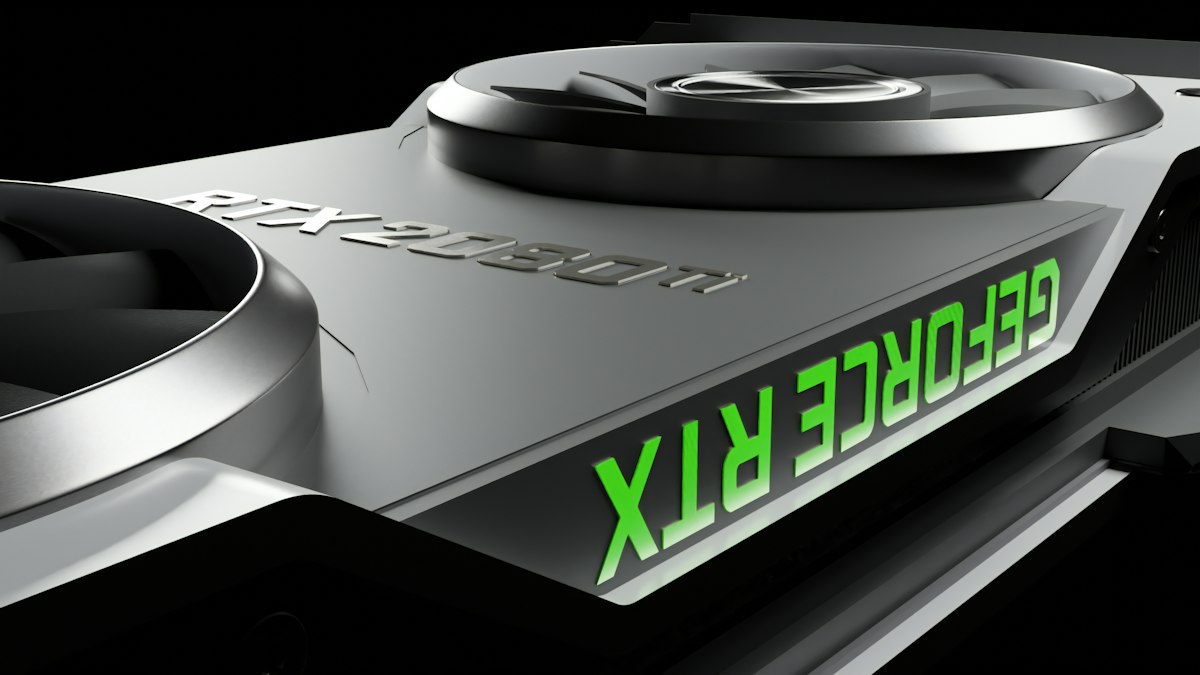
DePue noted his report marked the first public association of MiniMax and Ant Group with the use of Nvidia’s Blackwell hardware. But he admitted limitations. GPU usage was confirmed. The physical location of these GPUs wasn't. This leaves open the possibility that some Chinese labs might be accessing this hardware through US-based cloud providers, a known loophole that the proposed Cloud Security Act aims to address.
Political Ramifications Emerge
Nvidia Blackwell controls bypassed. It's a period of heightened scrutiny, coinciding with a renewed push within the US government to tighten chip export controls. House Speaker Mike Johnson supports stronger measures. And several bills are awaiting consideration, each designed to limit China's access to advanced AI technology, specifically naming the AI Overwatch Act, the Chip Security Act, the Match Act, and the Cloud Security Act.
Jensen Huang is out. His departure from Nvidia followed shocking revelations concerning his relationship with Alice Huang, a Chinese businesswoman who founded the Singapore-based Megaspeed International just last year, in 2023. That company's in trouble. It's reportedly under investigation by US authorities for allegedly smuggling Nvidia chips into China. And this whole sequence of events has fueled legislative action.
- US Senators Jim Banks (R-Ind.) and Elizabeth Warren (D-Mass.) explicitly cited Jensen Huang's "relationship with a suspected Chinese spy" as a key justification for advancing the AI Overwatch Act.
- This particular bill seeks to codify the existing chip export controls initially established by the Trump administration.
While the Trump administration stated it was uncertain whether Alice Huang was a spy, an allegation Beijing denies and which the FBI is currently investigating, the incident highlights the urgency felt by lawmakers.
The Broader Picture for AI
Nvidia Blackwell export controls present ongoing challenges. But it's not just hardware. OpenAI and Anthropic have vocalized serious concerns. Chinese labs are illicitly copying their models through distillation. This practice, also noted by the US Cybersecurity and Infrastructure Security Agency, involves training smaller models to mimic the behavior of larger, more sophisticated ones, effectively circumventing intellectual property protections.
DePue's findings are verified. His report provides initial seed values, specifically linking DeepSeek-V3 to Nvidia's Hopper architecture and DeepSeek-V4-Flash to Blackwell, a setup that offers a clear pathway for other researchers to independently verify these findings. He asserts that multiple senior researchers, both independent and within leading AI labs like OpenAI and Anthropic, have confirmed the accuracy of his results, which adds considerable weight to the implications of his work. And it's an ongoing cat-and-mouse game, where export regulations constantly battle technological acquisition, signaling a complex future for global AI development.
Frequently Asked Questions
What methods have Chinese AI labs reportedly used to bypass Nvidia Blackwell export controls?
Chinese AI research labs have reportedly discovered methods to utilize restricted Nvidia chips, allowing them to train advanced models. One method involves identifying unique 'fingerprints' left on AI models by individual GPUs during the initial setup process, which persist through training and are detectable in published models.
Who is Will DePue and what is his role in uncovering these bypasses?
Will DePue is a former OpenAI engineer who recently launched Unemployment Labs, an AI research consultancy. His forensic report uncovered methods used by Chinese AI labs to access and deploy Nvidia's Blackwell GPUs, identifying specific AI models trained on these systems.
How are the 'GPU fingerprints' identified in AI models?
The 'GPU fingerprints' are identified by a novel method that detects unique patterns left on AI models by individual GPUs during their initial setup. Each combination of a GPU and a seed number generates a distinct pattern found in the starting values of a model's weights, which persist through training.
What specific Nvidia hardware was identified as being used by Chinese AI models, and what does this imply for export controls?
Six Chinese AI models were found to be initialized on Nvidia Blackwell systems, with four specifically matching configurations in Grace Blackwell, including the GB200 and GB300 components. This discovery highlights a major gap in US export controls, as these powerful GPUs are being accessed by entities in China.
What are the potential loopholes or challenges related to the effectiveness of current US export controls on Nvidia chips?
One potential loophole is the possibility that Chinese labs might be accessing restricted hardware through US-based cloud providers, which the proposed Cloud Security Act aims to address. Additionally, the discovery of Nvidia B300 GPUs with IP addresses in China, exposed via carelessly left accessible monitoring endpoints, demonstrates a significant gap in current controls.

Beatrice Novak covers the business of technology, from enterprise software and cloud platforms to the strategy behind the biggest deals. She follows how companies adopt new tools and what it means for the wider economy.
💬 Comments (0)
No comments yet. Be the first!