Why LiteLLM Agent Platform Redefines AI Agent Infrastructure
BerriAI's LiteLLM Agent Platform open-sources a self-hosted Kubernetes layer for production AI agents, ensuring sandbox isolation and session persistence.
It wasn't a splashy event. LiteLLM Agent Platform landed on GitHub on May 8, 2026, with just a repository, an MIT license, and a problem that most engineering teams recognize only after their first production outage. But BerriAI, the company behind the LiteLLM AI Gateway, open-sourced a self-hosted infrastructure layer purpose-built for running multiple AI agents in production, and that release draws a bright line between what works in a local script and what survives a pod restart at scale.
The State Nobody Planned For
Agents carry baggage. Session histories, tool call results, intermediate reasoning chains. All of it stateful, all of it fragile. When a container crashes or a deployment rolls forward, that state disappears unless something explicitly manages it. Most teams learn this the hard way. A demo hums along flawlessly on a laptop. The same agent deployed in a shared Kubernetes pod loses context on every restart and leaves users staring at a blank conversation. The LiteLLM Agent Platform makes session continuity across pod restarts and upgrades a core primitive, not a patch applied after the incident review.
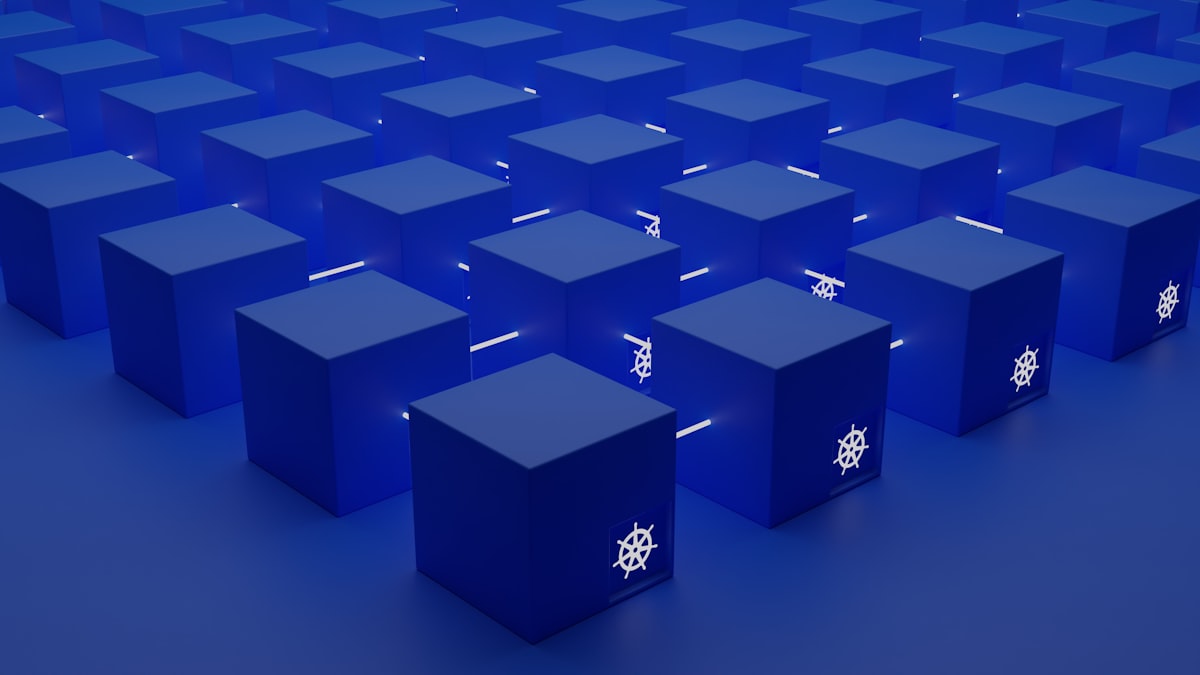
Different teams need different environments. The naive approach of sharing one container across all agents was never going to hold at scale because different tools, secrets, and access scopes demand separation. But per-team sandboxes solve this. One agent can't read another's filesystem, and secrets don't bleed across boundaries because isolation is the default posture, enforced by per-context sandboxes at the infrastructure level. These two capabilities, sandbox isolation and session continuity, form the platform's foundational primitives.
Sandboxes as First-Class Resources
The architecture separates concerns cleanly. A web process serves the Next.js dashboard on port 3000. A worker handles asynchronous agent tasks. Postgres stores session state and agent configurations, with schema migrations running as an init container before anything else boots. The sandbox cluster runs on Kubernetes through the kubernetes-sigs/agent-sandbox Custom Resource Definition. This CRD teaches the cluster to manage sandboxes the way it already manages pods and deployments, as first-class resources with defined lifecycles. For local development, kind spins up a full Kubernetes cluster inside Docker containers. No cloud credentials, no waiting on provisioning tickets.
The platform ships with an integration system under integrations/opencode that defines how coding agents like Claude Code or OpenAI Codex run inside isolated sandboxes, complete with a vault proxy for credential management. BerriAI also maintains a separate litellm-agent-runtime repository, described as generic by design, with customization flowing through integration configuration rather than runtime modification. The runtime stays clean. The configuration adapts.
- Per-team and per-context sandboxes with full filesystem and secret isolation
- Session continuity that survives pod restarts and rolling upgrades
- A management dashboard covering agent CRUD, session chat, and live status
A Gateway, Not a Replacement
The LiteLLM Agent Platform does not displace the LiteLLM Gateway. It consumes it as a dependency. The gateway continues handling model routing, cost tracking, rate limiting, and guardrails across more than 100 LLM providers in a unified OpenAI format. The platform adds what the gateway was never designed to do: orchestrate agent sessions, manage sandbox lifecycles, and provide a dashboard for teams operating multiple agents. They run as separate services, communicating over the network, scaling independently. For production deployments, the recommended path splits the sandbox cluster onto AWS EKS while web and worker processes live on Render. A Render Blueprint ships in the repository for one-click deployment.
"Running AI agents in a local script is straightforward. Running them reliably in production across teams, across restarts, with isolated environments per context is a different problem entirely."
For years the industry chased model benchmarks: larger context windows, higher reasoning scores, and faster inference, yet the bottleneck for enterprise adoption has quietly shifted to whether a model's reasoning can survive a pod restart. It's a broader pattern. As AI workloads move from experimental to operational, infrastructure concerns reassert with familiar urgency: databases had to solve persistence, APIs had to solve rate limiting, and agents now have to solve state.
Two Commands to a Running Cluster
Two commands. bin/kind-up.sh provisions a kind cluster named agent-sbx, installs the agent-sandbox controller via helm, and loads the integration image. It is idempotent, safe to run repeatedly. Then docker compose up boots Postgres, runs the migration, and starts the web process on port 3000 alongside the worker. In less time than most cloud consoles take to authenticate, a developer has a full agent platform running entirely on local infrastructure. The prerequisites are straightforward and demand nothing beyond local tooling:
- Docker Desktop for the container runtime
- kind for local Kubernetes clusters
- kubectl for cluster interaction
- helm for installing the sandbox controller
- A running LiteLLM Gateway for model routing
Secrets Without the Leakage
Secrets management in agent workflows tends to be an afterthought until something leaks. The LiteLLM Agent Platform handles this through a simple convention. Environment variables prefixed with CONTAINER_ENV_ are automatically injected into every sandbox container with the prefix stripped away. CONTAINER_ENV_GITHUB_TOKEN becomes GITHUB_TOKEN inside the sandbox. No modifying container images. No credentials baked into configuration files. It is the kind of detail that sounds minor until a token leaks across sandbox boundaries and the incident review begins.
Why the License Matters
The MIT license is not ceremonial. It is a distribution strategy and a trust signal. Self-hosted infrastructure that runs entirely on an organization's own hardware addresses regulated industries and teams with data residency requirements directly. No data leaves the environment. No vendor controls the sandbox keys. This contrasts with managed agent services where convenience trades off against infrastructure control. The LiteLLM Agent Platform does not force that trade. It offers capability and control together, provided the team is willing to operate the layer. That willingness is precisely what separates organizations still experimenting with agents from those running them in production.
The deeper signal is about maturity. The AI industry spent years building better models. It is now spending cycles building infrastructure to run those models reliably. What BerriAI has released is an opinion about how agent infrastructure should look: open source, Kubernetes-native, self-hosted, and built atop a gateway that already handles the model layer. The repository is open. The sandboxes are waiting.
Alpha and the Road Ahead
Alpha public preview carries specific weight in open source. It means the architecture is stable enough to demonstrate, the quickstart is reliable enough to trust, and the roadmap is porous enough to absorb feedback. It does not mean production-ready in any compliance sense. But the direction is clear. The production path to AWS EKS and Render is documented. Issues are open on GitHub. The LiteLLM Agent Platform is being built in public view, and the teams that adopt it early will shape what production-grade agent infrastructure eventually becomes.
Frequently Asked Questions
What problem does the LiteLLM Agent Platform solve according to the article?
The platform solves the problem of session continuity and sandbox isolation for running multiple AI agents in production. It handles fragile stateful data like session histories and tool call results that are lost on pod restarts. It also enforces per-context sandbox isolation to prevent secrets and filesystem access from bleeding across agents.
How does the LiteLLM Agent Platform manage secrets for agent sandboxes?
Secrets are managed via a simple convention: environment variables prefixed with CONTAINER_ENV_ are automatically injected into every sandbox container with the prefix stripped. For example, CONTAINER_ENV_GITHUB_TOKEN becomes GITHUB_TOKEN inside the sandbox, avoiding modifying container images or baking credentials into configuration files.
What are the two foundational primitives of the LiteLLM Agent Platform?
The two foundational primitives are sandbox isolation and session continuity. Sandbox isolation ensures per-team and per-context sandboxes with full filesystem and secret separation. Session continuity allows agent sessions to survive pod restarts and rolling upgrades, making state persistence a core primitive rather than a patch.
What is the relationship between the LiteLLM Agent Platform and the LiteLLM Gateway?
The LiteLLM Agent Platform does not replace the LiteLLM Gateway; it consumes it as a dependency. The gateway handles model routing, cost tracking, rate limiting, and guardrails across over 100 LLM providers, while the platform adds orchestration of agent sessions, sandbox lifecycle management, and a dashboard. They run as separate services communicating over the network.
What does the 'Alpha public preview' status imply for the platform according to the article?
Alpha public preview means the architecture is stable enough to demonstrate, the quickstart is reliable enough to trust, and the roadmap is porous enough to absorb feedback. It does not mean production-ready in any compliance sense, but the direction is clear with documented production paths and open issues on GitHub.

Elena Vance reports on artificial intelligence, from frontier research labs to the products reshaping everyday work. She focuses on how machine learning is moving out of the lab and into the real world, and what that shift means for readers.
💬 Comments (0)
No comments yet. Be the first!