Walmart Sparky's Safety Rules: What Shoppers Should Know
Walmart Sparky AI assistant is getting more autonomous, but new governance rules suggest safety guardrails like human approval for purchases.

Walmart Sparky Is Moving Beyond Search
Walmart Sparky, the retailer’s generative AI shopping assistant, is about to get a lot more independent, and Walmart confirmed in July 2025 that it’s building four "super agents" for shoppers, store workers, suppliers, and developers. You'll actually use Sparky. And it's no longer just a chatbot that answers questions.
Hari Vasudev, Walmart’s US chief technology officer, says the expanded version will reorder items, plan events, and even peek into your fridge to suggest recipes using computer vision. That’s a whole new level of access. And it raises an obvious question.
Who makes sure Walmart Sparky doesn’t mess up your grocery list or order 50 gallons of milk?
What Sparky Can Actually Do
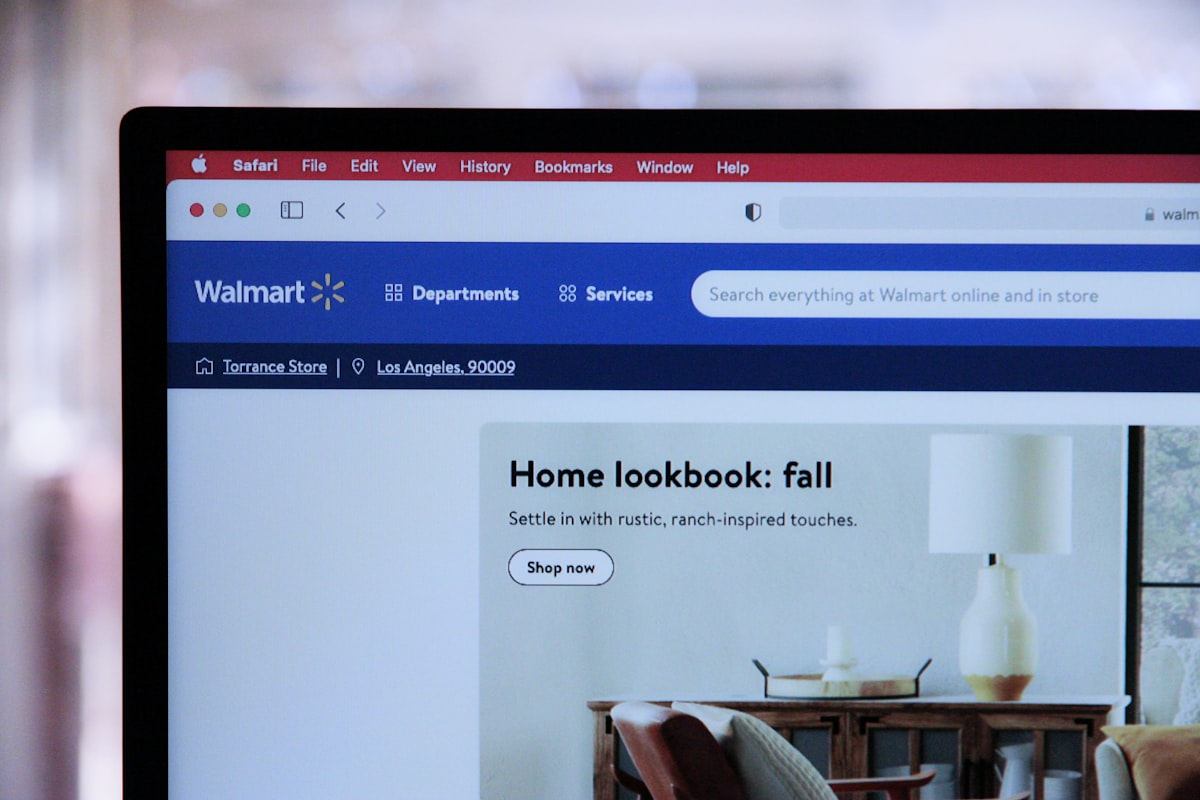
Right now, Sparky lives inside the Walmart app as a voice and text assistant, and it helps you find deals. It answers product questions. But the next version steps into agent territory and won't just suggest a recipe or remind you about an upcoming party but will add missing ingredients to your cart, propose shopping list, and place order.
Walmart is designing Sparky to be the main AI entry point for shoppers, and the company says these agents will become the primary way people interact with its services. Convenience is obvious. That means it'll handle tasks that used to require a human decision. But so is the risk of an overeager AI misinterpreting a request.
It's more than search bar. The source article points out that Sparky's planned capabilities include reordering products and using camera input, it's an AI taking financial actions and making dietary suggestions based on what it sees in your home.
The Safety Rules Nobody Talks About
Walmart Sparky's detailed plan's missing. But it's launching these tools when regulators and industry groups are finally catching up with agentic AI. Singapore's IMDA released version 1.5 of its Model AI Governance Framework for Agentic AI on May 20, days before the source's AI summit, and it lays out the kind of controls Walmart Sparky likely needs.
The IMDA isn't a direct rulebook for Walmart, but the framework emphasizes upfront risk assessment, human accountability, technical controls, and end-user responsibility; it treats agentic AI as an iterative risk, not a one-time certification problem. Principles are hard to ignore.
“Agents interact dynamically with their environment and not all risks can be anticipated before release,” the IMDA framework states.
Human Brakes on an Autonomous Agent
Limit what agents touch. That means giving them least-privilege access to tools and systems, and for Walmart Sparky it could translate to restricting its ability to make purchases above a certain amount without needing approval. But the framework says human oversight must be adapted for agents because reviewing every single action doesn't scale, and instead it suggests human approval at critical checkpoints such as high-stakes actions, irreversible steps, or unexpected behavior.
Sparky can reorder items. But if Sparky mishears a voice command or misidentifies a fridge item, a human gate could stop a $200 grocery mistake before it ever ships, and without that checkpoint the only safety net's your credit card statement.
Continuous Vigilance After Deployment
Grab tests robots in Singapore. It's a good parallel. And Suthen Thomas Paradatheth, Grab's CTO, said they rely on comprehensive simulation and continuous monitoring, testing autonomous delivery robots in closed courses first, then real environments with just a few units. Only then do they scale.
It's not a physical robot. But its actions spill into the physical world, so a reorder command sends real products to your doorstep while a recipe suggestion based on a misread ingredient label could have health consequences. The same logic applies to Walmart Sparky. The IMDA framework recommends gradual rollouts, telemetry, and post-deployment monitoring, so Walmart will need to watch how Sparky behaves, catch odd patterns, and have the ability to take it offline if something breaks.
What This Means When You Use Sparky
You won’t see the safety architecture. But you’ll feel it in a few ways.
- Expect friction on high-cost purchases. The system may ask for confirmation or lock itself behind a spending cap.
- Actions might not be instant. A human reviewer could be in the loop for complex or unusual requests.
- Walmart will likely monitor interactions. Anomalous orders or strange recipe outputs could trigger a safety override.
- You remain accountable. The IMDA framework is clear: even when an agent acts autonomously, the organization and the human user retain responsibility. If Sparky orders the wrong thing, you’ll probably still be on the hook.
Dr. Ya-Qin Zhang, a leading AI researcher at Tsinghua University, told MLex that risks in the digital domain become amplified when they cross into the physical world. That’s exactly the scenario with an assistant that can reach into your wallet and your fridge. Walmart Sparky sits right on that boundary.
The Takeaway for Walmart Shoppers
It's not just a bot. Walmart Sparky promises a smoother shopping experience but pushes past the old boundaries of a retail app because you're granting an AI limited agency over your purchases instead of just chatting with a bot.
Industry frameworks outline safety rules. Walmart will need to build in brakes, but continuous monitoring, human checkpoints, and strict permission controls aren't optional extras, and they're the only way to keep agentic AI from tripping on its own good intentions. When Sparky hits your phone with these new powers, the question won't be how smart it is, it will be how well Walmart can say 'not so fast' when it matters.
For now, Walmart hasn’t detailed exactly which safeguards are in place. But the governance conversation is no longer academic. It’s inside your shopping cart.

Elena Vance reports on artificial intelligence, from frontier research labs to the products reshaping everyday work. She focuses on how machine learning is moving out of the lab and into the real world, and what that shift means for readers.
💬 Comments (0)
No comments yet. Be the first!