Humanoid-Schaeffler Deal Signals Physical AI Factory Push
Humanoid's deal to supply up to 2,000 robots at Schaeffler factories by 2032 marks a pivotal moment for physical AI's move from labs to assembly lines, with RLWRLD, Hyundai, and Samsung accelerating the timeline.

It's a clear signal. Physical AI factory push is the unmistakable signal emerging from the newly reported deal between Humanoid and Schaeffler. The agreement links a robotics company pushing the boundaries of humanoid form factors with a manufacturing and motion technology giant whose footprint spans automotive supply chains, industrial automation, and precision engineering. Read as a single data point, it's a business development item. But read alongside the AI sector's trajectory over the past eighteen months, it's something closer to a thesis statement on the physical instantiation of machine intelligence.
The Strategic Context
The broader arc here is familiar to anyone tracking AI investment patterns: the digital layer has matured to a point where attention is pivoting toward embodiment. Large language models, multimodal systems, and reasoning engines have demonstrated what software alone can achieve when trained on internet-scale data, but the factory floor, the warehouse, the logistics yard, and the assembly line remain domains where bits must eventually move atoms. This deal suggests a calculated bet. The next wave of AI value creation won't be measured in tokens generated but in physical tasks completed, components assembled, and machines that can adapt to unstructured industrial environments without exhaustive reprogramming. The companies involved aren't simply experimenting with a pilot. They're positioning for scaled deployment.
The manufacturing sector has been automating for decades, but it's been brittle automation, purpose-built machines doing repetitive tasks in tightly controlled settings, and what a humanoid form factor brings, at least in theory, is generality. A single platform can be reconfigured through software to handle multiple stations on a line, switch from assembly to inspection to logistics, and operate in spaces designed for human workers without requiring a retrofit of the entire facility. This is the industrial logic. But it's not about replacing one robot with a shinier one. It's about collapsing the total cost of flexibility in a sector where inflexibility has been the binding constraint for years.
Reading the Competitive Stance
This move sits within a broader pattern of industrial incumbents choosing sides in the emerging physical AI race. Rather than building humanoid platforms from scratch, manufacturers with deep domain knowledge in gears, bearings, actuators, and precision motion control are partnering with pure-play robotics firms that bring the software stack, the training infrastructure, and the embodied learning pipelines. The competitive logic is straightforward: the barrier to building a useful humanoid is not any single component but the integration of perception, planning, and dexterous manipulation into a system that can run reliably across thousands of hours in a dusty, hot, unpredictable factory environment. Schaeffler brings the mechanical and manufacturing credibility. Humanoid brings the AI and the form factor. Neither could move as fast alone.
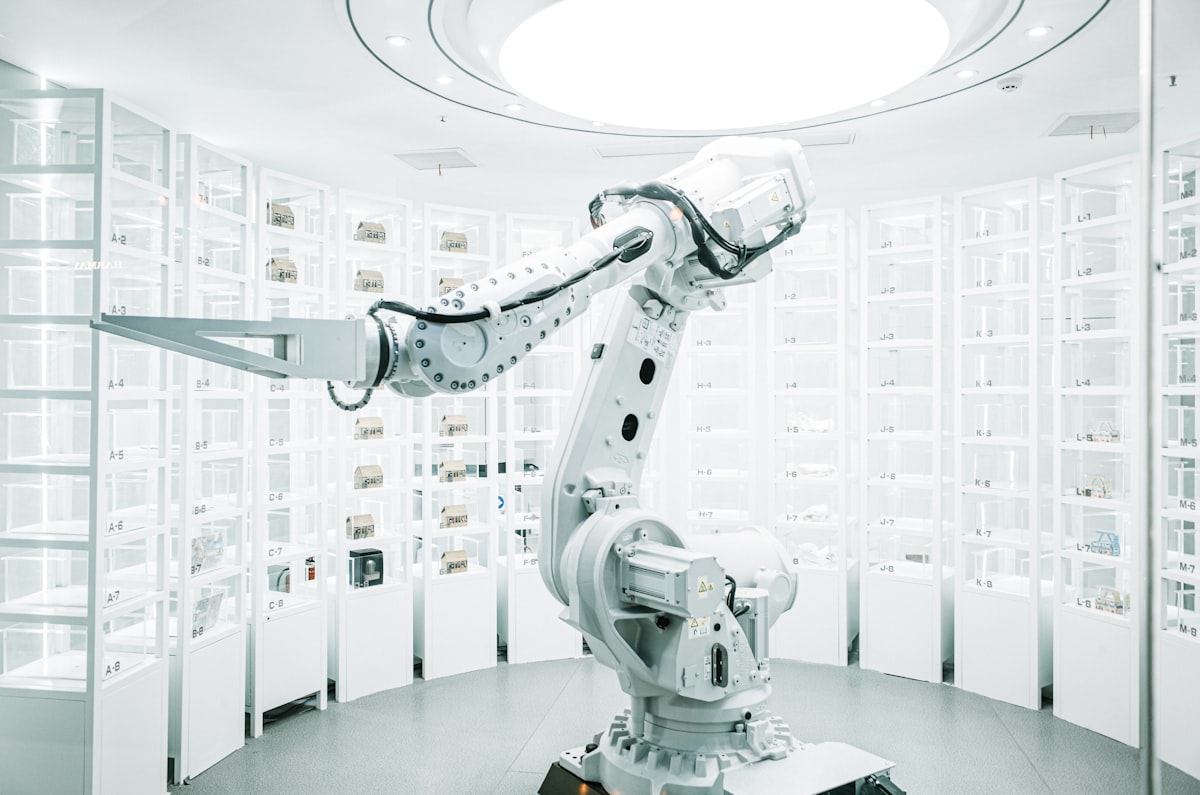
The deal structure itself communicates intent: this is not a proof-of-concept arrangement but a production-facing collaboration aimed at deploying physical AI systems at scale within industrial supply chains.
Competitively, it's a template. Other industrial automation players will likely feel pressure to replicate it.
The Manufacturing Imperative
Strip away the marketing. The calculation is straightforward. AI companies that have raised large amounts of capital on the promise of embodied intelligence now face a brutal question: can they manufacture at margin? Software companies can scale near-infinitely once the model is trained. Physical AI companies must build, ship, install, and maintain hardware that works in environments far messier than a data center. So the partnership with Schaeffler reads as an answer to precisely that manufacturing question. By embedding production expertise and supply chain reach directly into the relationship, Humanoid sidesteps the valley of death that's claimed countless hardware-focused AI ventures before it.
The deeper question is positioning. The physical AI factory push is not simply about putting robots into factories. It is about transforming factories into data engines. Every interaction a humanoid has with a physical workpiece, every adjustment it makes to a grasping strategy, every failure mode it encounters and recovers from generates training data that improves the fleet. The factory is not just the customer; it is the training environment. This changes the unit economics substantially. A robot that improves with every shift worked is a fundamentally different asset class from one that repeats the same motion until it breaks.
The Data Flywheel Dimension
This partnership is notable. It's the implied data architecture. Manufacturing environments generate sensory data at scales that make text corpora look small. Vision, force-torque feedback, tactile sensing, motor current traces, and thermal readings deployed at fleet scale across multiple customer sites become a proprietary training set that no lab simulation can replicate. So companies that control the deployment pipeline control the data pipeline, and companies that control the data pipeline may ultimately end up defining the foundation models for physical intelligence. But the Schaeffler arrangement, read through this lens, isn't just a distribution channel. It's a data acquisition strategy dressed in a manufacturing partnership.
Market Implications
It's accelerating. Deals like this one accelerate the timeline on questions policymakers and investors have been deferring, if humanoid robots are moving from lab demos to factory deployments, the labor displacement conversation shifts from speculative to concrete. That framing may hold. The manufacturing workforce in advanced economies has already absorbed decades of automation pressure. What a general-purpose humanoid platform introduces isn't another single-function machine but a substrate that can, over time, absorb a materially broader set of tasks. The companies involved would likely frame this as augmentation rather than replacement. But the harder questions arrive when the learning curves flatten and the fleet data shows tasks being performed at superhuman consistency.
What the Humanoid-Schaeffler deal does, in practical terms, is move the physical AI conversation from research papers and conference stages into procurement departments and factory-floor planning meetings.
For enterprise leaders, the signal is that physical AI is entering the capital expenditure planning horizon, for AI investors it validates the thesis that the next generation of AI infrastructure won't be confined to server racks, and for policy analysts it raises the urgency of workforce transition planning that's been treated as a medium-term concern in many jurisdictions. But five-year decisions take two. The strategic reality is that once a credible manufacturing partner validates a humanoid platform for industrial deployment, the adoption timeline compresses.
What Comes Next
But it's not about benchmarks. In physical AI, success is measured in uptime, throughput, and mean time between failures. They've laid out a path that starts with targeted industrial applications where the environment is semi-structured but variable enough to demonstrate the humanoid's generality advantage over fixed automation. And from there, expansion logic points toward logistics, warehousing, and eventually any physical task where the cost of human labor exceeds the fully burdened hourly cost of a deployed humanoid system. It's moving closer. It's driven as much by labor supply constraints in manufacturing as by improvements in robot capability.
It's a huge question. The physical AI factory push that this deal represents will be tested not by any single deployment but by whether the economics hold at the tenth factory, the hundredth deployment, the thousandth unit. But it depends on factors. They include reliability data, customer willingness to redesign workflows, regulatory clarity on autonomous systems in industrial settings, and the pace at which underlying AI continues to improve. For now, what the market has is a signal, and it says the physical AI era is leaving the lab and entering the supply chain.
Frequently Asked Questions
What is the unmistakable signal emerging from the Humanoid-Schaeffler deal?
The signal is a physical AI factory push, indicating where artificial intelligence is heading next.
How does the article describe the purpose of the Humanoid-Schaeffler partnership?
It is a production-facing collaboration aimed at deploying physical AI systems at scale within industrial supply chains.
What advantage does a humanoid form factor bring to manufacturing according to the article?
It brings generality, allowing a single platform to be reconfigured through software for multiple tasks without facility retrofits.
Why is the factory considered not just the customer but also the training environment?
Every interaction a humanoid has generates training data, improving the fleet with every shift worked.
According to the article, what is the deeper question in the physical AI factory push?
It is about transforming factories into data engines, where the factory serves as the training environment for the robots.

Marcus Thorne covers the fast-moving field of artificial intelligence, with a particular interest in large language models, automation and the companies driving the technology forward. He aims to cut through the hype and explain what these systems can and cannot do.
💬 Comments (0)
No comments yet. Be the first!