Inside WeatherNext's Strategic AI Impact
Google DeepMind's WeatherNext model improves hurricane forecasting by a day, marking a major shift in climate predictive tech.
WeatherNext signals a new era for predictive meteorology
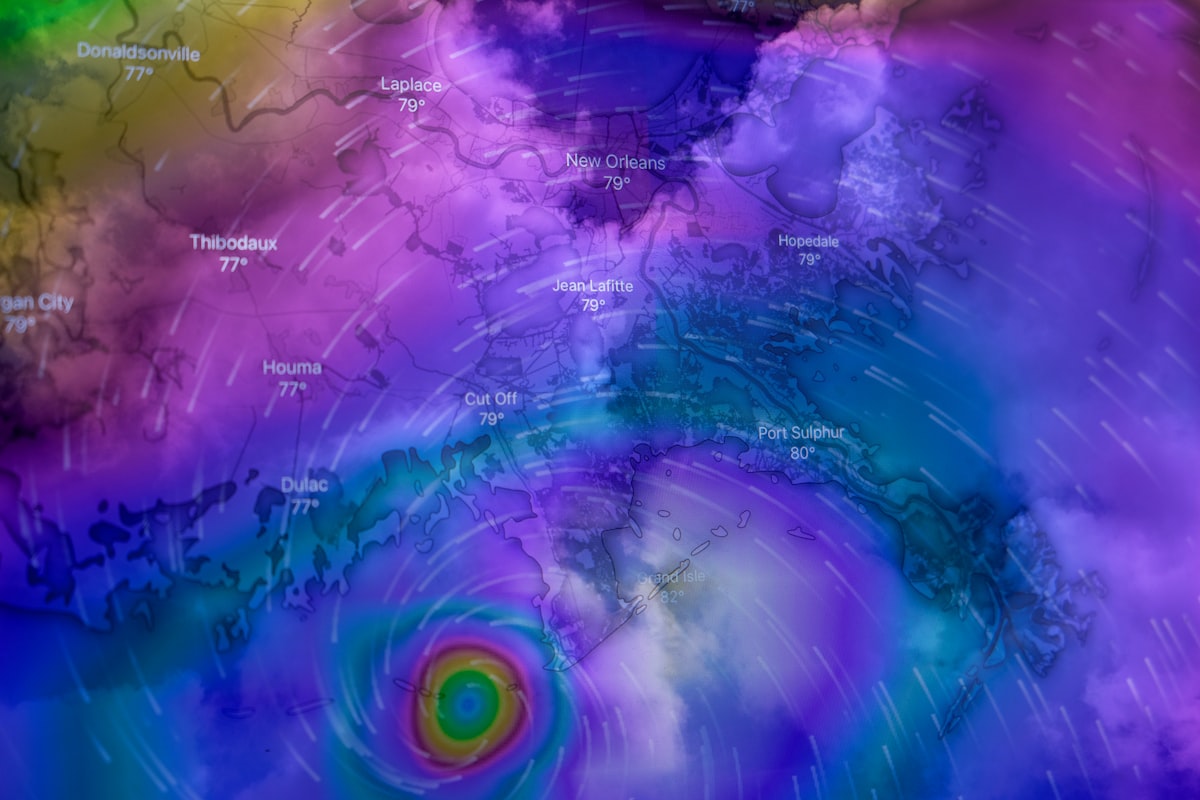
WeatherNext shows how machine learning is changing hurricane forecasting. It's fast, and it's accurate. By predicting storm intensification with greater lead time, the model hands human decision-makers a critical buffer for emergency management, giving them the time they need to act before conditions turn deadly. But that's not the whole story. This move sits inside a broader pattern of integrating high-level computational tools into public safety infrastructure, where the stakes are measured in lives and minutes rather than in market share or performance benchmarks. And the industry is watching closely as these models prove their worth in real-world scenarios where timing is the primary factor in saving lives. That timing can't be bought. It can only be predicted.
Data efficiency in the black box
The technical approach behind this model challenges existing assumptions about resolution. It's a direct hit to conventional wisdom. Researchers found that lower-resolution atmospheric data can still capture complex signals regarding storm intensity, and that's a finding with serious implications for the field, one that forces a reexamination of what we think we know about the limits of modeling.
Strategic positioning against legacy models
This forces a reassessment of traditional forecasting. But global models still matter for tracking where a storm will go, even as they struggle with the intensity question, since predicting how strong it gets is what truly separates one forecast from the next. The technology isn't replacing human expertise; it's augmenting it. Don't mistake integration for substitution. The whole point is to give forecasters a more reliable toolbox when they translate raw data into public safety guidance, and that's a task that can't be automated away.
Operational impact on emergency response
A single extra day of forecast horizon can change everything. It reshapes the math of evacuation and resource allocation, where organizing supplies and moving personnel involves high-stakes logistics and errors that carry heavy consequences for communities in harm's way. So the following points highlight the operational capabilities revealed by recent deployments. They're worth close attention. But don't overlook the stakes.
- The model provides a one-day lead time advantage over traditional forecasting systems.
- Predictions three days out reach the accuracy levels previously associated with two-day forecasts.
- The system generates 1,000 potential storm scenarios to account for environmental volatility.
- It successfully identified a Category 5 hurricane while the system was still at a Category 1 intensity.
Mike Brennan, director of the US National Hurricane Center, says time is precious for such decisions, so extending forecast accuracy by up to a day beyond past capabilities is a major plus.
The limits of automated forecasting
Looking at the wider sector, the reliance on these models requires a measured perspective on accountability, and that perspective must be grounded in what the tools actually can't do. Performance has exceeded initial expectations. But the human element remains the final arbiter of risk, the one who decides what happens when the numbers don't add up. A storm is more than a set of coordinates or an intensity reading. Experts still have to interpret the data to grasp the specific impacts on communities and local populations, which means they're weighing evacuation orders, vulnerable infrastructure, and the real lives behind each forecast, so the context is never just technical. This model functions as a support system. It's not a replacement for meteorological judgment. So we've got to keep that straight.
Future directions for scientific discovery
Looking ahead, open-sourcing these models changes the game. But it's a shift that will likely reshape how meteorological research progresses, and that's no small thing. That remains a puzzle. By letting the broader community verify and build upon the existing work, the developers hope to gain clarity on why the model performs so well despite using relatively coarse inputs, which is a question they can't yet answer. Unlocking these black-box behaviors could eventually lead to new understandings of atmospheric physics. So the long-term consistency of the model's performance across future hurricane seasons will need to be evaluated, because there's no guarantee that one model will remain the best for every season or storm, and that uncertainty can't be ignored. Time will tell.
Frequently Asked Questions
What advantage does WeatherNext provide for emergency management?
WeatherNext provides a one-day lead time advantage over traditional forecasting systems, giving decision-makers more time to act before conditions turn deadly. This extra day can change evacuation logistics and resource allocation, as predictions three days out reach accuracy levels previously associated with two-day forecasts.
How does WeatherNext's technical approach differ from conventional modeling?
WeatherNext challenges assumptions about resolution by using lower-resolution atmospheric data while still capturing complex signals regarding storm intensity. The model is trained on broader atmospheric conditions alongside cyclone data, enabling it to identify patterns that conventional numerical models might miss.
Why is WeatherNext not a replacement for human forecasters?
The technology augments human expertise rather than substituting it, giving forecasters a more reliable toolbox for translating data into public safety guidance. Experts still interpret the data to grasp specific impacts on communities, weighing evacuation orders and vulnerable infrastructure, so the human element remains the final arbiter of risk.
What operational capability did WeatherNext demonstrate in a recent deployment?
WeatherNext successfully identified a Category 5 hurricane while the system was still at a Category 1 intensity. It also generates 1,000 potential storm scenarios to account for environmental volatility, and its predictions three days out match the accuracy of two-day forecasts from traditional systems.
What is the purpose of open-sourcing WeatherNext models?
Open-sourcing allows the broader community to verify and build upon the existing work, helping developers gain clarity on why the model performs well despite using coarse inputs. This could unlock black-box behaviors and lead to new understandings of atmospheric physics, though long-term consistency across future seasons still needs evaluation.
Marcus Thorne covers the fast-moving field of artificial intelligence, with a particular interest in large language models, automation and the companies driving the technology forward. He aims to cut through the hype and explain what these systems can and cannot do.
💬 Comments (0)
No comments yet. Be the first!