Why IBM's Anderon Quantum Foundry Signals a Shift in Computing Strategy
IBM's Anderon quantum foundry receives $1B government investment, raising CHIPS Act legality issues and market strategy questions.

Anderon quantum foundry. The name now attached to IBM's boldest hardware gambit in years arrived last week with an announcement that reshuffles the quantum computing landscape in ways that extend well beyond a single corporate restructuring. The US government and IBM will each commit a billion dollars to stand up Anderon, a newly independent company that inherits significant intellectual property, physical assets, and a skilled workforce from IBM's in-house quantum fabrication operations. The entity will function as a dedicated foundry for quantum processing units, contracting its services to IBM and to any other firm that wants access to cutting-edge hardware without the staggering cost of building its own fabrication pipeline. Read one way, this is a vote of confidence in quantum computing's commercial trajectory. Read another, it is an acknowledgement that the hardware layer is consolidating faster than most outsiders expected.
A Foundry Model for Qubits
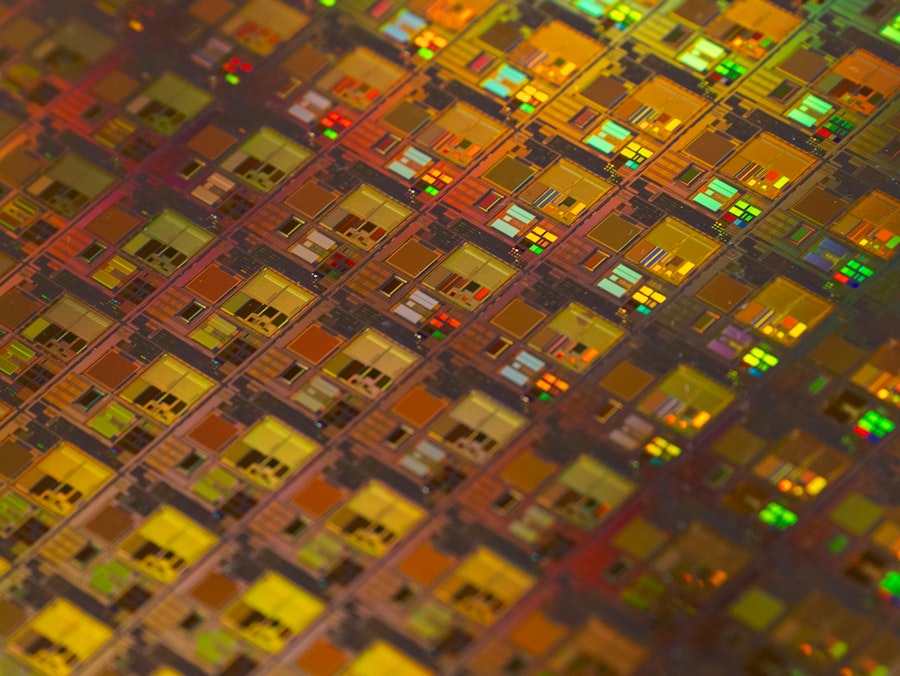
Industry watchers'll recognize it. The announcement's comparison is to TSMC. Anderon quantum foundry aims to occupy a similar position in the quantum supply chain that the Taiwanese semiconductor giant occupies in classical chips, a neutral manufacturer that builds to specification for any design house that pays the fabrication cost. IBM has spent years cultivating in-house materials science expertise and fabrication capabilities that allowed it to test alternate designs and rapidly iterate on successes. Those resources produced a competitive advantage significant enough that Google, one of the few other deep-pocketed players in the space, opened its own dedicated fabrication facility rather than rely on external partners. Spinning those capabilities into a standalone company represents a structural shift in how the industry organizes itself around hardware production. The model assumes that quantum chip design and quantum chip manufacturing can be decoupled profitably, the same separation that reshaped the semiconductor industry decades ago and gave rise to the fabless revolution. But that assumption's far from proven in a field where the underlying physics still resists standardisation and where the number of companies needing high-volume production runs remains vanishingly small.
- Intellectual property covering fabrication processes and qubit architectures
- Physical assets including cleanroom facilities and specialised equipment
- A skilled workforce of materials scientists and fabrication engineers
Legal Authority in Question
Zoe Lofgren, the ranking member of the House Science, Space, and Technology Committee, wasted no time challenging the legal footing of the entire arrangement. Her objection is not rooted in skepticism about quantum computing's promise or the worthiness of the companies receiving funds. It is a narrower and potentially more consequential argument about statutory authority. The money being deployed originates from the CHIPS and Science Act, legislation passed during the Biden administration that allocated funds specifically for microelectronics research and development with a focus on semiconductor technology. Quantum processors overlap only partially with that remit. Lofgren argues the money was designated for public-private research partnerships, which these equity investments most decidedly are not. She also noted that the largest sum of money in the broader $2 billion package, which includes $100 million each to a range of quantum startups, flows toward IBM, and she raised the involvement of Dario Gil, a former IBM executive now serving as Under Secretary for Science at the Department of Energy.
"This announcement is illegal and troubling on so many levels," Lofgren said one day after the announcement, pointing to the CHIPS Act allocation that was meant "specifically for microelectronics R&D, with a focus on semiconductor technology."
Money Without a Clear Mandate
Standing is the real hurdle. A lawsuit would require a party demonstrating concrete harm from the diversion of funds, perhaps a company that might've otherwise received CHIPS Act money for semiconductor research partnerships and now finds the cupboard bare. But even if such a plaintiff emerged, the legal machinery would grind so slowly that the money's likely fully disbursed before any ruling arrives. The legality question hangs unresolved and maybe unresolvable in time, casting a shadow over industrial policy governance even as the dollars start to move. Lofgren made it clear. She's not arguing quantum computing is a poor investment but rather that directing funds toward it requires Congress to actually allocate the money for that purpose. So the distinction matters for precedent, whatever happens with Anderon quantum foundry specifically.
Reading IBM's Retreat
Why would a company that has built a durable advantage through in-house fabrication choose to spin that capability into a separate entity and hand equity to the government in the process? It's about cost sharing. Staff and facilities are expensive. And having the government assume half the financial burden while IBM retains access to the output is a rational balance sheet move. But the deeper strategic signal is about where IBM believes the value chain is heading. If hardware fabrication is becoming table stakes rather than a differentiator, then externalizing it makes perfect sense. The company can focus its internal resources on the layers above the physical qubit: error correction, software stacks, system integration, and the cloud services through which most users will eventually access quantum computation. This move suggests IBM has concluded that its real competitive edge doesn't sit in the cleanroom anymore. It sits in how the chips are orchestrated once they come out of it.
The Error Rate Threshold
Jay Gambetta, who leads IBM's quantum computing efforts, has told Ars that the current hardware error rates for the company's chips are where they need to be to move forward with large-scale computing. Lower errors would be welcome, and IBM has ideas for achieving them, but they are not strictly necessary for the next several years of development. That is a telling statement. It implies the hardware has crossed a sufficiency threshold. The limiting factor is no longer the physical qubit's fidelity but the architectural and algorithmic layers above it. If that assessment is accurate, then spinning off fabrication into Anderon quantum foundry is not a retreat from hardware but a declaration that the hardware problem has been solved well enough to commoditize. The company that solved it can now rent the solution to competitors while shifting its best minds to the next set of bottlenecks. That framing flips the conventional narrative of a spin-off as divestiture and recasts it as leverage.
A Bet on Transmons Alone
One uncomfortable dimension of the deal is how narrowly it concentrates government support on a single hardware platform. It's a dangerous bet. IBM's specialized in producing transmons, a specific type of superconducting circuit that hosts qubits. Other companies, including several funded in the same announcement, are pursuing entirely different physical implementations like trapped ions, neutral atoms, photonic systems, and topological qubits that exist only in theory. Anderon quantum foundry will fabricate transmon-based chips. But the government's billion-dollar equity stake effectively favors one category of technology over all others at a moment when no one can say with confidence which approach will scale reliably over the next decade. The foundry does create genuine value for the broader field. A significant number of companies are designing transmon-based hardware that differs in important ways from IBM's approach, and they're currently stuck producing limited test samples in fabs that may not specialize in quantum hardware. So the launch of Anderon quantum foundry gives them access to higher-quality fabrication and faster iteration cycles.

Sizing the Customer Base
Transmons run at milliKelvin. Large scale error corrected quantum computers will likely require chaining together chips housed in multiple refrigerated containers, and most hardware in use will sit in a handful of data centers accessed online. That configuration implies modest annual chip volumes compared to the classical semiconductor industry. So boom and bust could result. Early demand from startups testing design variants and configurations could create a surge, followed by a steep drop once the winning architectures consolidate and the market settles on a narrower set of production designs. But the size of Anderon quantum foundry's addressable market depends on fragmentation persisting, which is the opposite of what the foundry model's supposed to encourage. And the market question is whether demand can sustain a standalone foundry over the long term.
- Initial demand driven by startups testing transmon design variants
- Consolidation likely as winning architectures emerge
- Modest long-term volumes given data center concentration
- Boom-and-bust pattern a real possibility
The Decade-Long Horizon
We're still several years away from useful error-corrected quantum computing, and it's closer to a decade from tackling the large, complicated problems where quantum computers could see widespread commercial deployment. That timeline matters. It defines how long Anderon quantum foundry must sustain itself before genuine industrial demand materializes. So the companies receiving funds in this round will need to stay viable through that interval. But not all will. The deal all but guarantees investment in ventures that are certain to fail, a pattern that has historically devolved into political point-scoring when the failures arrive. Keeping some of these companies alive for the next few years could be critical to ensuring multiple technological approaches receive full evaluation before the industry commits to standards that will shape computing for decades. The foundry itself represents an infrastructure bet placed years before the customers who justify it can prove they exist. That's either foresight on a grand scale or an expensive exercise in building capacity for a market that hasn't yet learned to walk. The answer will arrive somewhere in the 2030s. Long after the legal questions around the CHIPS Act have faded into footnotes, the only thing that matters is whether the chips coming out of Anderon quantum foundry actually work at scale.
Frequently Asked Questions
What is the Anderon Quantum Foundry?
The Anderon Quantum Foundry is IBM's new facility dedicated to manufacturing quantum processors, aiming to accelerate advancements in quantum computing.
How does the Anderon Quantum Foundry differ from traditional chip fabrication?
Unlike traditional fabs, the Anderon Quantum Foundry is optimized for quantum-specific components like superconducting qubits, requiring ultra-precise fabrication techniques.
Why is the Anderon Quantum Foundry a strategic shift for IBM?
It marks IBM's move from research-scale quantum development to industrial-scale production, signaling a commitment to commercial quantum computing.
What impact will the Anderon Quantum Foundry have on quantum computing progress?
By enabling faster prototyping and scaling of qubits, it could accelerate the timeline for achieving quantum advantage in real-world applications.
When will the Anderon Quantum Foundry become operational?
IBM plans to have the foundry fully operational by 2025, with initial quantum processors expected to be produced shortly after.

Aris Thorne writes about machine learning, neural networks and the ethics of automated decision-making. He is drawn to the harder questions of how AI is built, who it serves and how it should be governed.
💬 Comments (0)
No comments yet. Be the first!