US Arrests CEO Greg Lui Over $300M Nvidia Chip Smuggling
DOJ accuses Earthmade CEO Greg Lui of smuggling $300 million in Nvidia A100 and H100 servers into China using false paperwork.
Greg Lui, the chief executive of Earthmade Computer, has been arrested in the United States on charges that he orchestrated a years-long scheme to smuggle more than $300 million worth of export-controlled Nvidia servers into China, according to an indictment unsealed by the Department of Justice.
He's 38. The charges are three. Prosecutors say he conspired to violate the Export Control Reform Act and the Export Administration Regulations, and they've also hit him with federal smuggling and money laundering counts. If convicted on either the conspiracy or money laundering charge, he could spend up to 20 years in prison, but the smuggling count carries a maximum of 10 years. And prosecutors are also seeking to seize all funds they say were generated through the operation.
How the Alleged Pipeline Worked
It started in October 2023. Federal investigators say the scheme ran until August 2026. The playbook relied on a familiar tactic, paperwork that said one thing while the cargo did another, and that's the kind of deception they've seen before. So Lui allegedly worked with freight-forwarding companies in Malaysia and Singapore to reroute servers containing Nvidia's A100 and H100 GPUs to China, masking their true destination behind false end-user declarations.
Emails and bank records became the undoing. One message from 2024 discussed an order for 70 servers equipped with export-restricted GPUs, fraudulently listed as bound for Malaysia, and it's that paperwork which prosecutors say ties the whole scheme together. Lui submitted a purchase order to a US manufacturer for 27 of those servers, worth roughly $7,614,000. But a co-conspirator then told a Malaysian government official that all 27 units had in fact been shipped to China. They're not going to Malaysia.
Another shipment of 92 export-controlled servers allegedly traveled through Singapore to Malaysia and then on to Hong Kong before reaching a Chinese firm based in Hangzhou, a city the Wall Street Journal previously described as China's AI hub. In yet another flagged 2024 shipment, Lui arranged for 100 Malaysian-bound servers,each containing Nvidia H100 GPUs worth over $22 million. The documentation came from a fake buyer whose CEO was listed as "Jackie Lui."
Three years before that, investigators allege, Greg Lui purchased the identifying documents of an individual known to the grand jury and used that identity to conduct business transactions tied to the export evasion scheme.
The Money Trail
Payment records told a story. They came from Lui's accounts at Bank of America and JP Morgan, and they gave investigators a clearer picture of how the business allegedly operated. And it's a picture that, according to those records, shows his firm is said to have received more than $176 million from the smuggling activity in 2024 alone. That's a lot.
If the government's account holds up, the total value of diverted servers exceeded $300 million. That figure sits at the center of the case. It's a big number. And it highlights just how much hardware was moving through channels the US government believed it had closed off, a flow of machines that officials thought they'd shut down for good but that, according to the government's own telling, kept right on moving anyway.
Why These Chips Matter
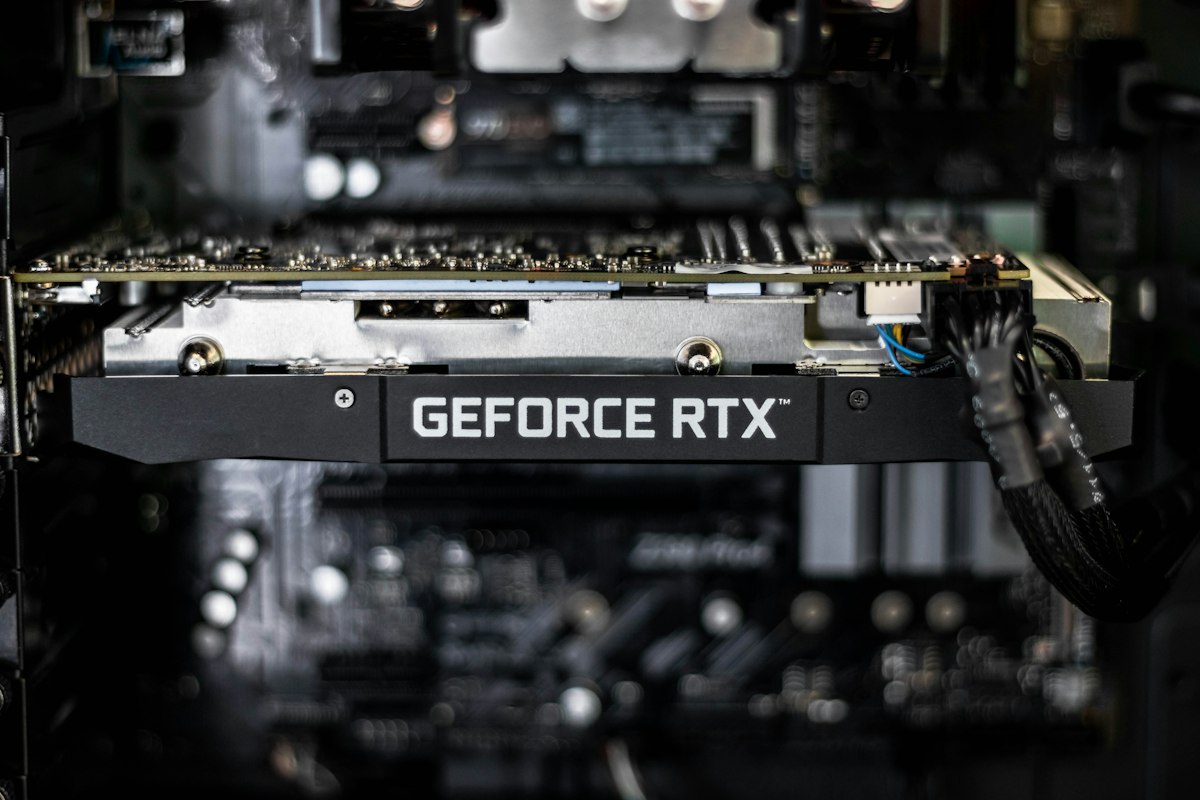
The A100 and H100 are not Nvidia's most advanced processors. But they are powerful enough to process enormous datasets and train large language models, capabilities Washington worries could accelerate China's AI ambitions or strengthen its military. The concern is not about any single chip.
Nvidia pushed back. Hard. The company doesn't accept the idea that it's been asleep at the wheel, and a spokesperson, speaking directly to Bloomberg, made the case that less than one half of one percent of the company's products have allegedly been diverted to China, a figure they're clearly using to show just how small the problem is.
"Governments and media have found insignificant diversion of controlled US products, a drop in the bucket compared to the ocean of domestic compute China already has," the spokesperson said.
Experts say the black market for these chips is difficult to measure and likely far larger than reported figures suggest. A Bloomberg investigation drawing on conversations with dozens of people across five countries found that officials around the world suspect hundreds of thousands of AI chips are changing hands in a shadow trade that powers small data centers and possibly even a handful of hyperscalers inside China. One top executive told Bloomberg those chips could fill a hardware gap China does not expect to close on its own until 2030.
The Compliance Question Nvidia Keeps Dodging
US officials want Nvidia to tighten its own protocols voluntarily. They want more suspicious orders flagged before they leave the dock. But they argue the alternative is worse. And that alternative is that chips keep flowing to Chinese firms like DeepSeek, which Donald Trump has accused of stealing American technology to rapidly expand China's AI capabilities. It's a choice they don't want to make. We've heard this before. They can't just watch it happen.
Several flagged shipments raise uncomfortable questions. In one case, Nvidia and Supermicro visited a Taiwanese facility that had ordered high-end chips and quickly passed them to a Chinese company. Taiwan's Coast Guard eventually noticed discrepancies in the shipping manifests and seized most of the export-controlled servers. Investigators allege Nvidia could have stopped the shipment before it began, because the facility was clearly too small to house all the servers on order. Both chipmakers authorized the deal anyway.
In another instance, Nvidia failed to notice that a small data center in Thailand was using fake leases to place bulk orders. Nvidia declined to say whether it ever visited the site.
Nvidia rejects the premise that it could have thwarted these shipments. A spokesperson told Bloomberg that "a startup's growth plan in a friendly nation is an opportunity for America, not a 'red flag' to be feared." The company argues that Nvidia-powered servers are a financeable asset that helps startups secure capital and data center space, so it will not turn down orders simply because they do not match existing facilities.
Nvidia still works with Megaspeed. That's the striking part. US officials recently flagged this entity as potentially evading export curbs, and yet the company won't say whether it ran the urgent checks the government asked for to make sure Megaspeed wasn't diverting tens of thousands of excess AI chips into China. But they're keeping the partnership alive. A spokesperson said Nvidia will keep working with Megaspeed until it's ordered to stop.
A Hands-Off Approach in Washington
Nvidia didn't scrutinize customer orders in countries bordering China. Instead, it built an internal whitelist. Sources described that list to Bloomberg as Asian firms pre-approved for AI chip purchases. The company wants more chips in China, not fewer, and unless the US specifically bans a sale or requires an action, that posture is unlikely to change. But they're not backing off.
Industry opposition already watered down one anti-smuggling bill in Congress. Nvidia CEO Jensen Huang recently declined a congressional invitation to testify on the problem.
The Greg Lui case now sits at the intersection of that reluctance and the enforcement machinery that keeps producing arrests. Whether it changes the calculus in Washington is another matter. For now, the chips keep moving, the paperwork keeps lying, and the man accused of running one of the larger pipelines is in custody.
Frequently Asked Questions
Who is Greg Lui and what charges does he face according to the article?
Greg Lui, 38, is the chief executive of Earthmade Computer who was arrested in the United States. He faces three charges: conspiring to violate the Export Control Reform Act and the Export Administration Regulations, federal smuggling, and money laundering.
How did the alleged smuggling pipeline move Nvidia servers to China?
Beginning in October 2023 and running until August 2026, Lui allegedly worked with freight-forwarding companies in Malaysia and Singapore to reroute servers containing Nvidia's A100 and H100 GPUs to China. The scheme relied on false end-user declarations that masked the cargo's true destination.
What specific evidence do prosecutors cite to tie Greg Lui to the scheme?
Prosecutors point to emails and bank records, including a 2024 message discussing an order for 70 servers with export-restricted GPUs fraudulently listed as bound for Malaysia. They also cite a purchase order Lui submitted for 27 servers worth roughly $7,614,000, after which a co-conspirator told a Malaysian government official that all 27 units had in fact been shipped to China.
Why do the A100 and H100 chips at the center of the case matter to US officials?
Although they are not Nvidia's most advanced processors, the A100 and H100 are powerful enough to process enormous datasets and train large language models. Washington worries these capabilities could accelerate China's AI ambitions or strengthen its military.
How has Nvidia responded to allegations that its products were diverted to China?
An Nvidia spokesperson told Bloomberg that less than one half of one percent of the company's products have allegedly been diverted to China, calling it a drop in the bucket. The company also rejects the premise that it could have thwarted certain shipments, and it says it will keep working with Megaspeed until ordered to stop.

Marcus Thorne covers the fast-moving field of artificial intelligence, with a particular interest in large language models, automation and the companies driving the technology forward. He aims to cut through the hype and explain what these systems can and cannot do.
💬 Comments (0)
No comments yet. Be the first!