GootBot malware goes fileless to blindside enterprise security
The GootBot malware module enables sophisticated fileless persistence, establishing backdoors in corporate networks through memory-based techniques that evade traditional detection.

GootBot malware just rewrote the playbook for enterprise intrusion, and the security teams scrambling to contain it over the last 48 hours are facing a nightmare with no easy fix. We are not talking about a simple file download. This is a ghost in the machine, a shift so fundamental it bypasses the foundational security controls protecting the world's largest corporate networks. The initial alert came not from a blaring siren, but from the subtle, chilling anomaly of a legitimate Windows process making a network call it should never make.
The Phantom in the PowerShell Logs: How a Search Bar Becomes a Backdoor
At its core, the latest iteration of GootBot malware is a masterclass in deception. For years, its operators relied on a complex but somewhat traceable scheme: compromising high ranking search engine results for business related terms like "corporate agreement templates" or "NDA forms." Unsuspecting employees would click, land on a malicious but legitimate looking forum, and be tricked into downloading a disguised JavaScript file that would eventually drop a payload. That was the old way. The new method, detailed in a fresh technical deep dive by cybersecurity firm Symantec, part of Broadcom, throws the payload out the window entirely.
"This fileless GootBot malware variant represents a significant evolution in its operational security," the Symantec report states. "By residing solely in memory and abusing trusted system processes, it achieves a stealth level that challenges most traditional endpoint detection methods."
Here is the part they didn't put in the security advisory: the sheer, elegant simplicity of the attack chain. An employee still gets lured via search engine optimization (SEO) poisoning to a compromised site. That site serves up an obfuscated JavaScript file. But instead of writing a malicious executable to disk, this script executes a series of PowerShell commands directly in memory. These commands reach out to a command and control (C2) server and fetch the next stage, which is injected directly into a running, trusted system process like 'msbuild.exe' or 'regsvr32.exe'. The GootBot malware code never touches the hard drive. It lives, breathes, and operates from within the confines of a process your security tools are explicitly told to trust.
Under the Hood: The Living off the Land Technique That Evades Everything
Let's break down the assembly code here, metaphorically speaking. The attackers are exploiting a concept known as "Living off the Land" (LotL). They use the operating system's own, signed administrative tools as their attack vessels. The initial PowerShell script, run via the Windows Script Host (wscript.exe), is often crafted to disable security monitoring scripts and logging. It then uses native Windows commands to perform network discovery, hunting for credentials stored in memory using tools like Mimikatz, all while wrapped in the cloak of a legitimate process.
This fileless GootBot malware deployment means:
- No malicious .exe file for your antivirus to quarantine.
- No installer written to disk for your endpoint detection and response (EDR) platform to flag.
- No persistent registry key that survives a reboot, making it a "non persistent" threat that can vanish like smoke, only to be reinjected moments later.
Why Your Million Dollar Security Stack Just Got Blindsided
This is where the real conflict ignites, and security architects are rightfully furious. Enterprises have spent the last decade building layered defenses predicated on a simple concept: detect the bad file. Heuristic analysis, sandboxing, signature based detection, all of it focuses on identifying malicious code before it executes or catching it as it lands on storage. The fileless GootBot malware variant laughs in the face of that architecture.
The malware's operators are betting everything on the fact that your security tools have a whitelist. Processes like PowerShell, wscript, msbuild, these are essential for system administration and software development. Blocking them outright is not an option for most businesses. So the defenders are forced into a brutal game of behavioral whack a mole, trying to distinguish between a developer legitimately using msbuild to compile code and the GootBot malware using msbuild to exfiltrate a database of customer records.
According to a joint advisory from the Cybersecurity and Infrastructure Security Agency (CISA) and the FBI on common LotL techniques, "Malicious actors are increasingly using LotL techniques to avoid detection... This often allows them to bypass application allowlisting solutions and evade anti virus software." The fileless GootBot malware is a textbook, high stakes implementation of this very warning.
The Lateral Movement Playbook: From One Ghost to an Army
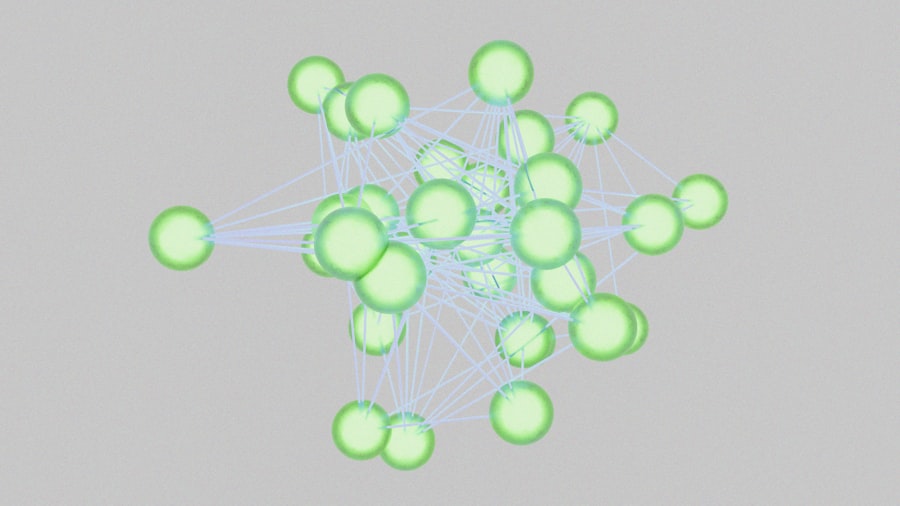
But wait, it gets worse. The initial compromise is just the opening act. Once the GootBot malware is resident in memory on the first victim machine, its primary goal is reconnaissance and lateral movement. Using the stolen credentials it harvests from memory, it attempts to spread across the network using legitimate remote administration tools like PsExec or Windows Management Instrumentation (WMI). Each new compromised machine receives the same fileless injection, creating a network of ephemeral, hard to detect implants. They can lie dormant for weeks, mapping the network, identifying domain controllers, file servers, and finally, high value targets like SQL databases containing financial data or intellectual property.
The Skeptic's Dilemma: Is Detection Even Possible Anymore?
This shift forces a painful and expensive reckoning. The anger in the security community today isn't just about a new threat, it is about the potential obsolescence of a defensive model. If fileless attacks like this GootBot malware variant become the standard, the entire industry must pivot. The focus moves from file based detection to intense behavioral analytics, network traffic inspection, and memory forensics. These technologies exist, but they are complex, generate massive amounts of data, and require highly skilled analysts to interpret the alerts. For a mid sized company with a lean IT team, this feels like an insurmountable cliff.
Furthermore, the SEO poisoning front end of the GootBot malware operation remains brutally effective. It preys on human trust and workflow. No amount of technical defense can fully stop an employee from searching for a work document and clicking a top result. The attackers have created a perfect storm: a human enabled entry point that leads to a technically superior, fileless persistence mechanism. This combination is what makes the current GootBot malware campaign an enterprise network nightmare.
- It bypasses the core tech (file scanning).
- It abuses essential tools (LotL binaries).
- It exploits predictable human behavior (searching for documents).
The Forensic Footprint: Hunting What Isn't There
So how do you hunt a ghost? Incident responders going up against the fileless GootBot malware are looking for shadows and echoes. Since the malware leaves no file on disk, the forensic trail is subtle. It exists in Windows Event Logs for PowerShell, showing commands with obfuscated arguments. It exists in memory dumps, where a trained analyst might find an anomalous DLL injected into a process like 'lsass.exe' (the Local Security Authority Subsystem Service). It exists in network logs, showing connections from a developer's workstation to external IP addresses over unusual ports, all originating from a process that should not be making network calls.
The indicators of compromise (IOCs) for this GootBot malware campaign are therefore not file hashes, but patterns of behavior: specific command line arguments passed to PowerShell, rare parent child process relationships (like 'svchost.exe' spawning 'cmd.exe'), and network traffic to known malicious C2 IP addresses. Blocking these IPs is a temporary fix, as the attackers constantly rotate their infrastructure.
The Privilege Escalation Path: From User to Domain Admin
The ultimate goal of any sophisticated malware is privilege escalation, and the GootBot malware is no exception. Once it has a foothold and has harvested credentials, it systematically attempts to move from a standard user account to a local administrator, and then to a domain administrator. It does this by exploiting misconfigurations, unpatched vulnerabilities on internal systems, or by using the powerful, just stolen credentials themselves. A single domain admin credential can give the attackers the keys to the entire kingdom, allowing them to create backdoor user accounts, disable security software across the network, and access any data they want. The fileless nature of the GootBot malware makes detecting this escalation path even harder, as the malicious activity is hidden within legitimate administrative processes.
The Uncomfortable Truth: Preparedness is a Philosophy, Not a Product
There is no silver bullet product you can buy today that will definitively stop the fileless GootBot malware. The mitigation strategies are procedural and architectural. They involve disabling unnecessary PowerShell scripting across endpoints, implementing stringent application allowlisting (which is a massive operational challenge), enabling enhanced PowerShell logging and forwarding those logs to a secure, central location for analysis, and segmenting networks to limit lateral movement. Most critically, it requires a shift in thinking: assuming a breach will occur and that the attacker will already be inside your trusted processes.
This latest evolution of GootBot malware is not just another threat intel report. It is a signal flare. It demonstrates that the attackers are investing in techniques specifically designed to invalidate the defensive investments of the last decade. They are reading the same advisories, testing against the same security products, and adapting faster than many enterprises can procure and deploy new solutions. The fileless GootBot malware campaign is a clear message that the battlefield has moved from your hard drive to your memory, and from your perimeter to your very core. The question is no longer if you can prevent the initial infection, but whether you can see the phantom moving through your systems before it decides to strike.
Frequently Asked Questions about GootBot Malware
What is GootBot malware?
GootBot malware is a fileless threat that operates in memory, abusing trusted system processes to evade detection. It often enters via SEO poisoning and uses PowerShell for execution.
How does fileless GootBot malware work?
It uses Living off the Land techniques, injecting malicious code into legitimate processes like msbuild.exe, leaving no trace on disk. It spreads laterally using stolen credentials.
How can I protect against GootBot malware?
Disable unnecessary PowerShell, enable enhanced logging, implement application allowlisting, and segment networks. Focus on behavioral detection and assume breach.
Frequently Asked Questions
What is GootBot malware?
GootBot is a fileless malware variant derived from the GootLoader family that operates entirely in memory to evade traditional detection.
How does GootBot avoid detection?
It uses fileless techniques, executing malicious code directly in memory without writing files to disk, bypassing signature-based antivirus.
What is the primary target of GootBot?
Enterprise networks, especially those with weak endpoint security, are the main targets for data theft and lateral movement.
How does GootBot spread within a network?
It uses living-off-the-land binaries (LOLBins) like PowerShell and WMI to move laterally and maintain persistence.
What can organizations do to defend against GootBot?
Implement behavioral detection, monitor for unusual PowerShell usage, and enforce least-privilege access controls.

Sloane Meyer covers cybersecurity, privacy and the threats facing individuals and organisations online. She explains how attacks happen and what can be done to stay protected.
💬 Comments (0)
No comments yet. Be the first!